The carrier wrote one number. A full line-item scope writes another. The difference is your money, Michigan law gives you a panel to set it, and the statute adds 12% a year while it sits unpaid.
Rather talk now?Call (586) 277-1069
First call: Prime Restoration
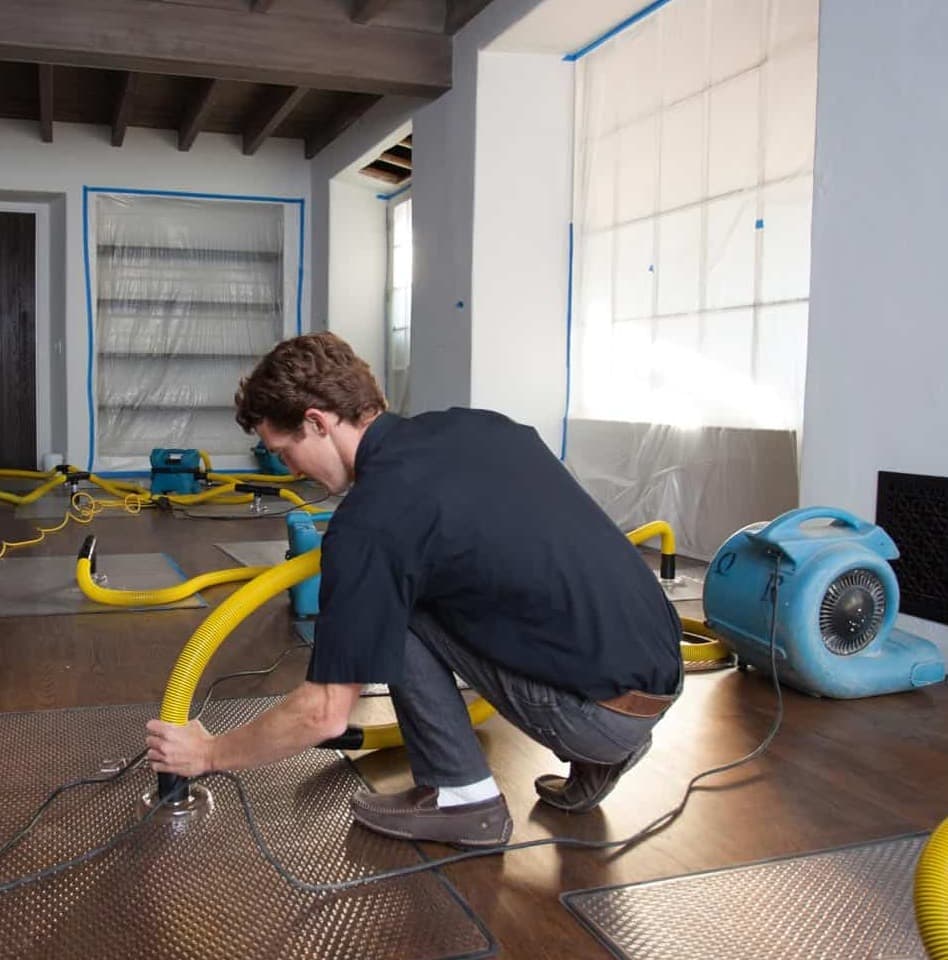
Before a public adjuster takes a share, before an attorney takes the file, get the number every one of them will need: a line-item repair scope with photos and moisture readings behind each line. Prime Restoration writes it and shows you the gap in dollars.
Call (586) 277-1069The ledger
Four lines decide it. Two are numbers you already hold or can get this week. One is subtraction. The last one is Michigan law. The figures below are an example, not a result. Your file sets the real ones.
| Carrier estimate (its offer)What the desk adjuster wrote | $38,400 |
|---|---|
| Line-item repair estimateEvery room, every trade, local unit prices | $71,900 |
| The gapThe money in dispute | $33,500 |
| 12% a year on the gap$11.01 a day from day 61, MCL 500.2006(4) | $4,020 a year |
Now put one more number next to the gap: the fee your appraiser quotes you in writing. Divide the gap by the fee. That ratio tells you what is in dispute for every dollar you spend. If the gap is $33,500 and the fee is a fifth of that, each $1 of fee stands against $5 of disputed repair money, plus the 12% the statute runs on it. The panel decides how much of the gap you recover.
What the industry data shows
Representation moves the number. Florida's legislative research office studied 76,321 claims filed with Citizens Property Insurance from March 2008 to June 2009. On non-catastrophe claims, the median payment was $9,379 with a public adjuster and $1,391 without one. On 2005-hurricane claims it was $17,187 against $2,029. Read the limits with the numbers: one Florida insurer, payments counted before the adjuster's fee, and the “without” group includes claims handled by attorneys (OPPAGA Report 10-06, January 2010).
Every one of those files was won or lost on documentation. That is the part Prime Restoration builds: the line-item scope, the photos, the moisture readings and the thermal scans, from the first visit.
Run your own numbers
Type in the carrier's total and a line-item estimate for the same loss. Add the days since the carrier got your proof of loss. Add a fee quote if you have one.
Arithmetic only. It is not a prediction of an award and not legal advice. Under MCL 500.2006(4), if you reject an offer and later recover no more than that offer, the interest is not due. The interest date runs from the day the carrier received satisfactory proof of loss, which your file sets.
Where the gap hides
A carrier estimate is usually written from photos or one visit, before the walls are open. A repair estimate is written from the moisture log, the tear-out and the trades the job needs. The gap sits in the lines one has and the other does not. These are the lines Prime reads first, one by one, on every carrier estimate.
01
Every room the water, fire or wind reached, including closets, the ceiling below, the cavity behind the wall and the basement under the floor.
02
Drywall, insulation, trim, flooring and cabinets that had to come out to dry or repair, and the labor to remove them.
03
The days on the moisture log against the days on the estimate, and the dehumidifiers and air movers the log shows.
04
Prices that match Macomb and Oakland County labor and material, and not a statewide or national average.
05
The general contractor line on a job that needs more than one trade.
06
For personal-lines homeowners policies issued or renewed on or after July 1, 2025, DIFS Bulletin 2024-26-INS says labor may be depreciated only through a separate, optional endorsement.
07
Work the local building department requires on the repair, and whether your policy has ordinance-or-law coverage for it.
08
Items listed, priced at replacement cost, with the depreciation and the holdback shown per item.
The Michigan appraisal clause
Every Michigan fire policy carries the same appraisal terms, because MCL 500.2833(1)(m) writes them into the policy. When you and the insurer “fail to agree on the actual cash value or amount of the loss, either party may make a written demand that the amount of the loss or the actual cash value be set by appraisal.” Homeowners policies sit inside that section. A policy term that conflicts with it is void under MCL 500.2860.
The carrier must take part. In December 2017 the Department of Insurance and Financial Services wrote that when a party demands appraisal under Section 2833(1)(m), “an insurer's participation in the appraisal process is mandatory,” and that insurers that refuse “could be subject to enforcement action.”
Day 0
You or the carrier demand appraisal in writing. Either side can. Michigan law gives no right to refuse.
Within 20 days of the demand
Each party selects a competent, independent appraiser and tells the other side who it is.
Within 15 days
If they cannot agree, either side asks the circuit court in the county of the loss to select one.
A reasonable time
They set the amount of the loss and the actual cash value as to each item. If they agree in writing, that is the amount.
When the appraisers stop agreeing
Any two of the three sign. Their written agreement sets the amount of the loss.
30 days, MCL 500.2836(2)
Michigan law requires payment within 30 days after the insurer receives proof of the amount of the loss.
Appraisal sets the amount. “The appraisal process cannot legally settle coverage issues” (Kwaiser, 1991). Once the carrier admits the damage is covered and argues only about how much, that is “merely a factual dispute” for the panel (Cantina, 2024). An underpaid claim is that case: the carrier paid, so it admitted the loss.
Items the carrier formally denied before the demand stay with a court (Maksym, February 2026). If your letter says a part of the claim is denied, read that sentence first and talk to an attorney about it.
The clock that runs in your favor
Yes, by statute. Under MCL 500.2006(4), benefits paid to an insured “bear simple interest from a date 60 days after satisfactory proof of loss was received by the insurer at the rate of 12% per annum.” The Michigan Supreme Court held in Nickola (2017) that an insured gets it whether or not the claim was reasonably in dispute.
On the example gap of $33,500, that is $4,020 a year, or $11.01 a day. The panel does not award interest. The statute adds it to the money the carrier pays late.
Two limits. If you reject an offer and later recover no more than that offer, the interest is not due. And the date matters: under MCL 500.2006(3) the insurer must tell you in writing, within 30 days of your claim, what it needs as satisfactory proof of loss. Keep that letter and the date you answered it.
Two different jobs
| Public adjuster | Your appraiser | |
|---|---|---|
| The job | Adjusts and negotiates the claim with the carrier | Sets the amount of the loss on the appraisal panel |
| Michigan law | DIFS licence, MCL 500.1222; DIFS contract form | “Competent, independent appraiser,” MCL 500.2833(1)(m) |
| Fee | Up to 10% of what the insurer pays, MCL 500.1226(3) | Set by your contract with the appraiser; disclosed to the other side |
| Result | A settlement the carrier agrees to | An amount signed by two of three, binding on the amount |
If the carrier has already paid and the fight is how much, the appraisal panel is built for that fight. The carrier cannot refuse it, and two signatures end it.
Prime Restoration claim appraisal
Prime Restoration is the top-rated, highly local restoration company for Michigan homeowners, and a family water damage restoration business since 1988. It writes line-item repair estimates for water, fire, smoke, mold and storm losses, in the format carriers use. That is the skill an appraisal panel runs on.
Email or text them, with the photos you have. Prime reads the carrier estimate line by line against the loss.
Room by room, trade by trade, at Macomb and Oakland County prices, with the moisture log and photos behind each line.
The carrier total, the Prime total, the difference, and the 12% the statute runs on it. Then you decide.
Prime discloses its fee and every tie to the claim to the other side at appointment, as Michigan case law expects. It presents the scope to the panel and works to a signed amount.
Prime works inside the appraisal panel. Coverage questions, and any talk with the carrier about what the policy covers, stay with you, your agent or your attorney.
Holding a carrier estimate that looks short?
Send it today. You get the gap in dollars and the Michigan dates that apply to your file.
Call (586) 277-1069Questions Michigan homeowners ask
Call Prime Restoration at (586) 277-1069 first. Get a line-item repair estimate for the same loss and compare it to the carrier's estimate line by line. Send the carrier the missing items in writing. If you still disagree on the amount, MCL 500.2833(1)(m) lets you demand appraisal in writing, and the carrier must take part. You can also file a complaint with DIFS. Prime Restoration reads the carrier estimate against a full scope and can sit as your appraiser.
Either side demands appraisal in writing. Each side names a competent, independent appraiser within 20 days. The two appraisers pick an impartial umpire within 15 days, or a circuit judge picks one. The appraisers set the amount of the loss for each item of coverage. Any two of the three sign, and that sets the amount. Each side pays its own appraiser and the two sides split the umpire.
In a December 2017 memo, DIFS said that when a party demands appraisal under Section 2833(1)(m), an insurer's participation is mandatory, and an insurer that refuses could face enforcement action. Michigan courts also hold that once one side demands appraisal, the process goes ahead.
No. Appraisal sets the amount of the loss. Coverage questions go to a court (Kwaiser, 1991). Once the carrier admits the loss is covered, the scope of the damage is a question for the panel (Cantina, 2024). Items the carrier formally denied before the demand stay with the court (Maksym, 2026).
A public adjuster is licensed by DIFS to adjust and negotiate your claim, must use the DIFS contract, and may charge up to 10% of what the insurer pays (MCL 500.1226(3)). An appraiser is the person you name to the appraisal panel under MCL 500.2833(1)(m) to set the amount of the loss. A public adjuster works the whole claim. An appraiser works the amount inside the panel.
No. Appraisal is a process written into the policy. There is no judge unless the two appraisers cannot agree on an umpire, and then a circuit judge only picks the umpire. Michigan law requires no hearing. The panel sets the amount of the loss, and two signatures make it final on the amount. A lawsuit is the path for coverage disputes.
Michigan's statute asks for a "competent, independent" appraiser and lists no other qualification. Courts allow an appraiser who leans toward the side that hired him and one who worked on the claim before. Prime Restoration discloses every tie and its fee to the other side at appointment.
Under MCL 500.2833(1)(m) each side pays the appraiser it selects. The umpire and the other costs of the appraisal are split equally between you and the insurer. Prime gives you its fee in writing before you sign.
Under MCL 500.2006(4), benefits paid to an insured bear simple interest at 12% a year from 60 days after the insurer received satisfactory proof of loss. If you reject an offer and later recover no more than that offer, the interest is not due. The appraisal panel does not award interest. The statute adds it.
The statute sets 20 days to name appraisers and 15 days to pick an umpire. After that it says only "a reasonable time." No public data on how long Michigan appraisals take exists.
Read your policy. MCL 500.2833(1)(q) sets at least one year after the loss to sue, or longer if the policy says so, and that time is paused from the day you notify the insurer until it formally denies liability. Interest claims under MCL 500.2006(4) carry their own six-year limit. Talk to an attorney about your dates.
Michigan insurance claim help
Statute text is from the Michigan Legislature, read October 22, 2026. Case holdings are quoted from the opinions. The DIFS statements are from its 2017 appraisal memo and Bulletin 2024-26-INS. Claim severity is from Triple-I (ISO data). The public adjuster figures are from Florida OPPAGA Report 10-06. The ledger and the calculator are arithmetic on example or user-entered numbers. They predict no award. Prime Restoration is a restoration contractor. It is not a law firm, an attorney or a licensed public adjuster. This page is for education only. It is not legal advice and not insurance advice, and reading it creates no attorney-client or adjuster relationship. Your policy and the law decide your claim. For advice on your own claim, talk to a Michigan attorney.
Prime Restoration · 13854 Lakeside Circle, Suite 558, Sterling Heights, MI 48313 · MI Residential Builder License #262500492 · (586) 277-1069