
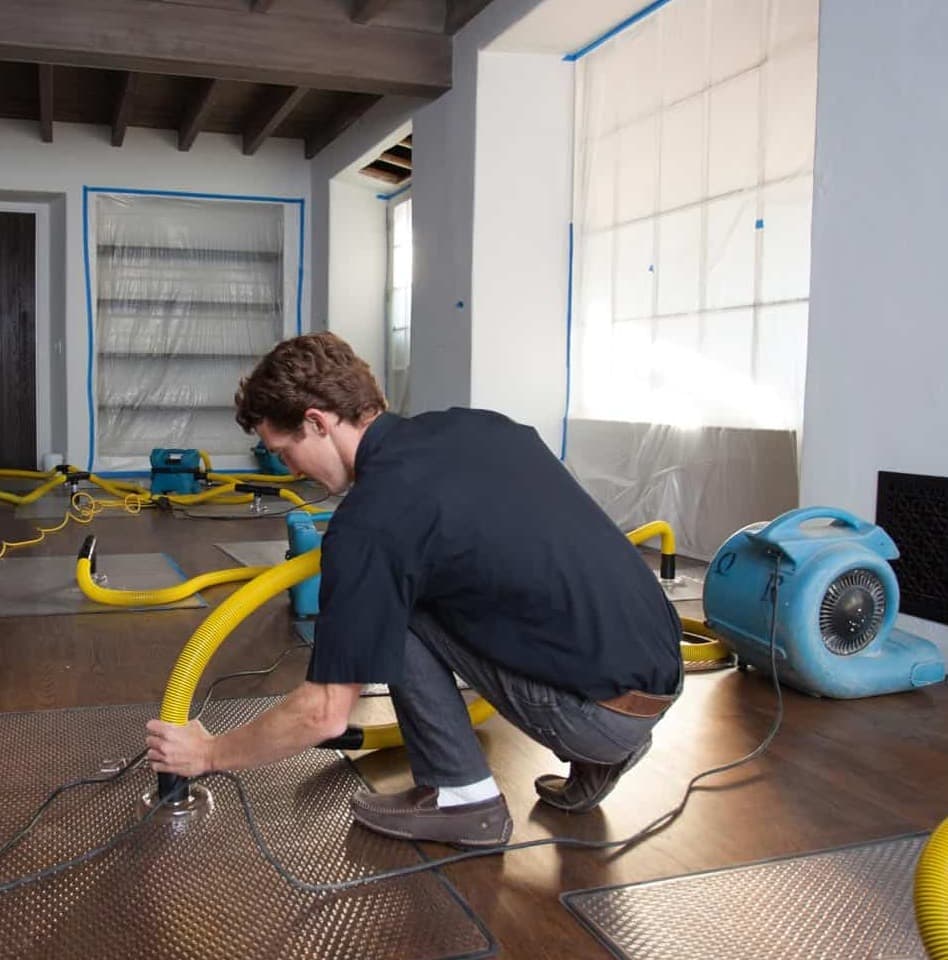
Commercial Large-Loss Restoration & Catastrophic Loss Cleanup
On-site in 25 minutes across Macomb & Oakland County — licensed, insured, and direct billing to your carrier.
What you get with Prime
- 24/7 Emergency Dispatch
- Typical 25-Minute On-Site Response
- Free On-Site Large-Loss Assessment
- Licensed & Certified
- Family-Owned, 9 Michigan Offices
- Retail, Healthcare, Manufacturing, Property
A large loss is a water, fire, storm, or sewage event that takes out more than one floor, one unit, or one system at a commercial property, and keeps the building closed until it is fixed. Prime Restoration handles large-loss and catastrophic-loss restoration for businesses and property managers across Macomb, Oakland, and Wayne County, Michigan — typically on site in 25 minutes, 24 hours a day, from nine Michigan offices. We have restored large-scale commercial losses for Petco, Linamar, Quest Diagnostics, and the Somerset Collection, hold Michigan Residential Builder License #262500492, and carry a 5.0 rating across 186+ Google reviews.
What Makes a Commercial Loss a "Large Loss"?
There is no single legal definition, but insurers and restoration contractors generally treat a commercial loss as "large" when it crosses two or more of these lines: more than one floor or more than one tenant space affected, the building cannot operate at all (not just one damaged room), the carrier assigns the claim to a major-case or large-loss adjusting unit instead of a standard desk adjuster, or the repair timeline runs past 30 days. A burst domestic water main on the third floor of an office building that floods two floors below it is a large loss. A single flooded supply closet is not. The distinction matters because a large loss needs a different operating posture than a typical claim: phased work so part of the building can reopen while another part is still under repair, documentation built for a claim examiner who was not on site, and a scope that accounts for code-driven work (fire-rated assemblies, egress, accessibility) that a residential loss never triggers. Carrier decisions on coverage, reserve level, and adjuster assignment are the carrier's to make — Prime scopes the damage and documents it to the standard a large-loss file needs, and does not promise a coverage outcome.
What Causes a Commercial Large Loss in Michigan?
Most large-loss calls in Macomb, Oakland, and Wayne County trace back to one of these. All of them share the same problem: by the time anyone notices, the damage has already spread across more than one floor or more than one unit.
- Burst or frozen fire sprinkler main
- Multi-floor domestic water line break
- Structural roof failure under snow or ice load
- Electrical or transformer-room fire
- Severe storm, straight-line wind, or tornado damage
- Multi-unit sewage or storm-drain backup
- Rooftop HVAC or chiller failure flooding below
- Refrigeration or cold-storage system failure
- Construction-related utility strike or pipe rupture
- Vehicle or equipment impact to structure
- Chemical or hazardous-material spill
- Vacant or under-renovation building left exposed to weather
How a Large Loss Changes the Response
The mechanics of drying a structure do not change at large-loss scale. What changes is everything around them: who has to sign off, how the building keeps functioning, and what has to be proven on paper before the claim closes.
- Phased Work, Not a Full Shutdown: Containment splits the building into zones so an unaffected wing, floor, or tenant space can keep operating while the damaged zone is mitigated and rebuilt in sequence. The exact phasing depends on the structure, the loss type, and what the fire marshal or building official requires before an occupied-and-under-repair building can stay open.
- First-Hour Stabilization: Before any extraction starts, the first priority is stopping the source, cutting power to any circuit in standing water, and, in an older building, checking whether pre-1981 construction means an asbestos survey has to happen before any demolition touches damaged drywall, flooring, or pipe insulation (Michigan MIOSHA Part 602 and EGLE demolition notification rules apply to that work, not to us doing the survey — a licensed inspector does the survey, we work around what it finds).
- Moisture Mapping Across the Whole Footprint: A single-room loss gets eyeballed. A large loss gets mapped: infrared thermal imaging and moisture meters across every affected zone, logged daily, so the drying plan — and the claim file — is built on documented readings instead of a guess. See our dedicated moisture mapping page for how this works on a single-room scale; at commercial square footage the same method covers the whole affected floor plan.
- Documentation Built for a Claim Examiner, Not a Desk Adjuster: A large-loss file gets reviewed by someone who was never on site. Daily logs, moisture readings, photo records at each phase, and a detailed, itemized line-item estimate carry the weight that a quick walkthrough carries on a small claim. Prime documents to that standard; the carrier's adjuster or examiner decides what is covered and at what value.
- Multi-Stakeholder Sign-Off: Property owner, property manager, tenant(s), the carrier's adjuster, and sometimes a corporate facilities team all need to agree on scope before reconstruction starts. We provide one written scope that all of those parties can review, rather than a different verbal answer to each one.
- Business-Interruption Clock: Every day a commercial property is partly or fully closed is a day of lost revenue, and on larger claims, a business-income coverage clock the carrier is also tracking. Phased reopening of unaffected zones is the main lever we control to shorten that clock — we do not control or promise the business-income payout, which the carrier calculates separately from the property scope.
Large-Loss Restoration Services We Provide
Water, fire, storm, mold, and sewage events that take out more than one floor or more than one tenant space get the same large-loss operating posture: triage, containment, mapped drying, and documentation built for a claim examiner. Call (586) 277-1069 for a free on-site assessment from a Macomb-staged team.
The Commercial Large-Loss Response, Step by Step
The exact sequence depends on the cause and the building, but a multi-floor or multi-unit commercial loss generally runs through these phases.
- 1Triage & First-Hour Stabilization: Stop the source, de-energize any circuit in standing water, and assess whether the building can safely remain occupied in unaffected zones. Free on-site assessment.
- 2Secure the Structure: Tarp roof openings, board broken glass and doors, and fence off any zone that is not structurally safe to enter, so the loss does not grow while the response is organized.
- 3Map the Full Extent: Infrared thermal imaging and moisture meters chart every affected zone across every floor, not just the areas that are visibly wet or burned. The map becomes the drying and demolition plan.
- 4Extract, Demolish & Dispose Under Code: Commercial extractors remove standing water at scale. Materials beyond repair are removed; in pre-1981 buildings, demolition of drywall, flooring, or pipe insulation is sequenced around any required asbestos survey. Cat-2/Cat-3 and biohazard materials follow regulated-waste and Michigan EGLE disposal rules.
- 5Dry & Decontaminate at Scale: LGR dehumidifiers and high-velocity air movers run the standard drying plan. On open-slab floor plans — warehouses, manufacturing floors, big-box retail — desiccant dehumidifiers bring the concrete down to a lower target moisture level than air-drying alone reaches. HEPA air scrubbers and hydroxyl deodorization run continuously on fire, mold, and biohazard zones until air quality clears.
- 6Document for the Claim: Daily moisture logs, photo records at each phase, and a detailed, itemized line-item estimate in the format a commercial carrier's large-loss or major-case unit expects. We document; the carrier decides coverage.
- 7Phased Reconstruction & Reopening: Rebuild sequenced zone by zone so finished areas can reopen while work continues elsewhere — drywall, paint, flooring, trim, fixtures, and equipment reinstallation. Final walkthrough and sign-off before project close.
How Much Does Commercial Restoration Cost?
Commercial restoration cost depends on the loss type, the square footage affected, and whether the building needs to stay partially operational during the work. A contained water loss in a single office suite can run in the low thousands. A multi-tenant water or fire event affecting common areas, mechanical rooms, or several suites runs substantially higher once large-loss equipment, after-hours labor, and multi-stakeholder documentation are added. Reconstruction is priced separately from mitigation. These are general ranges, not a quote — every commercial project is priced from an on-site assessment and a written, itemized scope.
What Drives Commercial Restoration Cost?
Several factors move the price. Our team assesses each on-site and provides a free written estimate before work begins.
- Business Continuity Requirements: Containment that lets unaffected areas keep operating costs more than a full shutdown, but usually costs the business far less overall in lost revenue.
- Square Footage & Ceiling Height: Commercial spaces are often larger with higher ceilings than residential, which means more air movers, more dehumidifiers, and longer equipment runtime.
- After-Hours or Off-Peak Work: Retail, healthcare, and hospitality clients often require work scheduled around business hours, which can add labor cost but protects revenue.
- Regulatory Overlays: Healthcare, food service, and manufacturing facilities carry compliance requirements that add documentation and sometimes specialized disposal steps.
- Multi-Tenant Coordination: A loss affecting several tenants or a shared mechanical system requires more stakeholders signed off before work proceeds, which can affect scheduling and total scope.
- Extent of Reconstruction: Reconstruction is priced separately from mitigation and scales with finish level — a warehouse rebuild costs less per square foot than a finished healthcare or retail space.
Does Commercial Property Insurance Cover Restoration?
Most commercial property policies cover sudden, accidental water, fire, and storm damage, often alongside business income (business interruption) coverage that can help offset lost revenue during the shutdown. Coverage terms, deductibles, and sublimits vary widely by policy and by carrier, and the carrier makes the coverage decision after its own inspection. Always confirm coverage and limits with your broker or carrier before assuming a number. Prime Restoration documents the loss at the commercial standard — moisture maps, daily logs, photo records, and detailed, itemized line-item estimates — and bills the carrier directly when assigned by the policyholder.
Why Hire Prime for a Commercial Large Loss
A multi-floor or multi-unit commercial loss needs a team that has actually run one — not a residential crew scaled up. Call (586) 277-1069 for a free on-site assessment.
- Always Free Assessments: A large-loss walkthrough and written scope are free and come with no obligation.
- 24-Hour Emergency Dispatch: Large-loss events do not wait for business hours. Dispatch runs 24/7/365.
- Typical 25-Minute Response: Typical 25-minute on-site response across Macomb, Oakland, and Wayne County — the single biggest lever on how large a loss grows before mitigation starts.
- Licensed & Certified: Michigan Builder License #262500492. 5.0-star rating across 186+ Google reviews.
- Commercial-Scale Equipment: Truck-mounted extractors, LGR and desiccant dehumidifiers, HEPA air scrubbers, hydroxyl generators, and infrared thermal imaging sized to open floor plans and multi-floor footprints.
- Nine Michigan Offices: Staged from Sterling Heights, Birmingham, Troy, Macomb, Shelby Township, Rochester Hills, West Bloomfield, Ann Arbor, and Grosse Pointe Park — not one office trying to cover three counties.
- Carrier-Direct Billing When Assigned: Prime bills the carrier directly when assigned by the policyholder, and documents to the standard a large-loss claim file needs.
- One Written Scope, Every Stakeholder: Property manager, tenant, corporate facilities, and the carrier's adjuster all review the same written scope — not a different verbal answer to each one.
Commercial Clients
Trusted across retail, healthcare, manufacturing, and property.
Prime Restoration handles water, fire, mold, sewage, and storm losses at commercial facilities across Macomb, Oakland, and Wayne County — from national-brand retail and healthcare to enterprise manufacturing and property management.
Retail
National-brand retail facilities including Petco and the Somerset Collection.
Healthcare
Quest Diagnostics, dental offices, and physician practice facilities.
Manufacturing
Enterprise manufacturing facilities including Linamar.
Property
Commercial property management groups across Metro Detroit.
Client names and trademarks are property of their respective owners. Prime Restoration is not affiliated with or endorsed by the named entities; references reflect prior project work performed at the entities' facilities.
What the work looks like
Water damage restoration in Macomb & Oakland County, step by step
Extraction, readings, controlled drying, then the rebuild. The same crew and the same equipment on every job, and a written scope you keep.
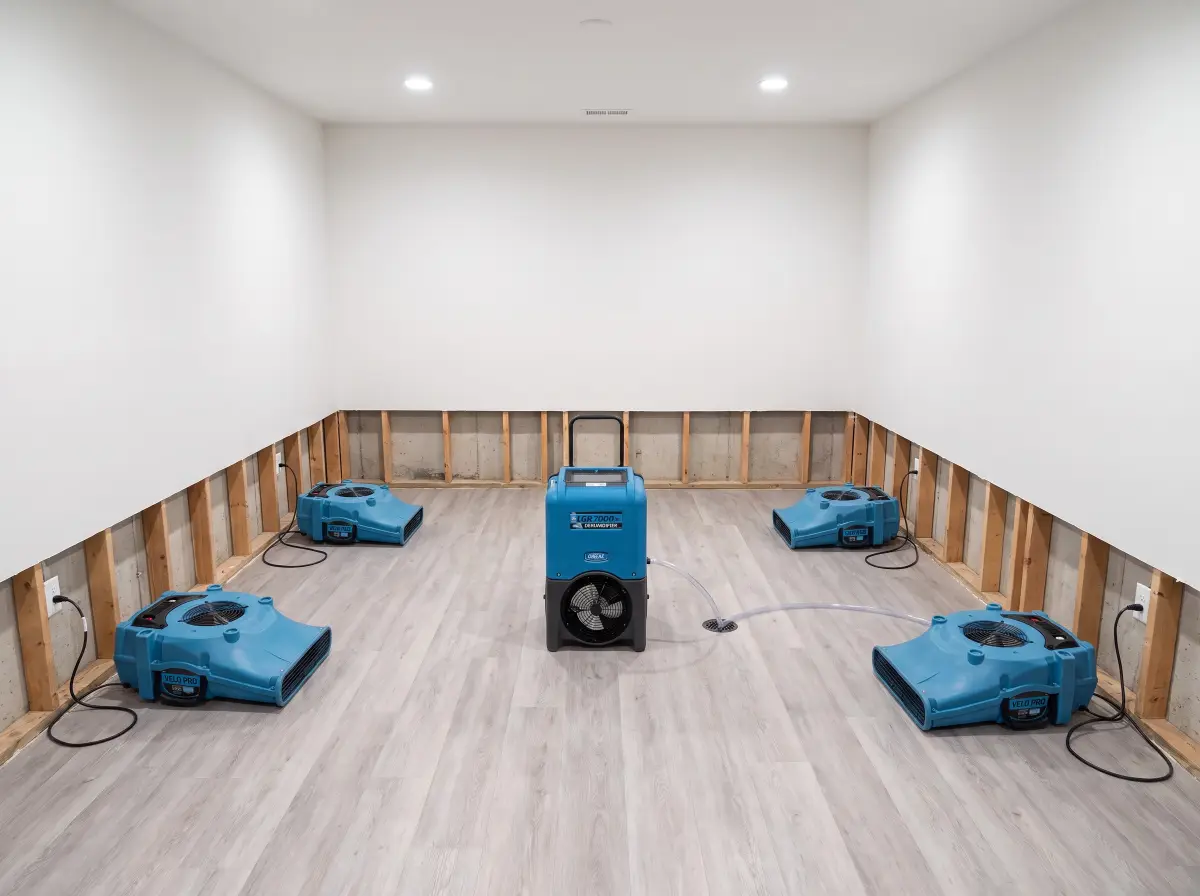
A level flood cut opens the wall so the framing behind it can dry.
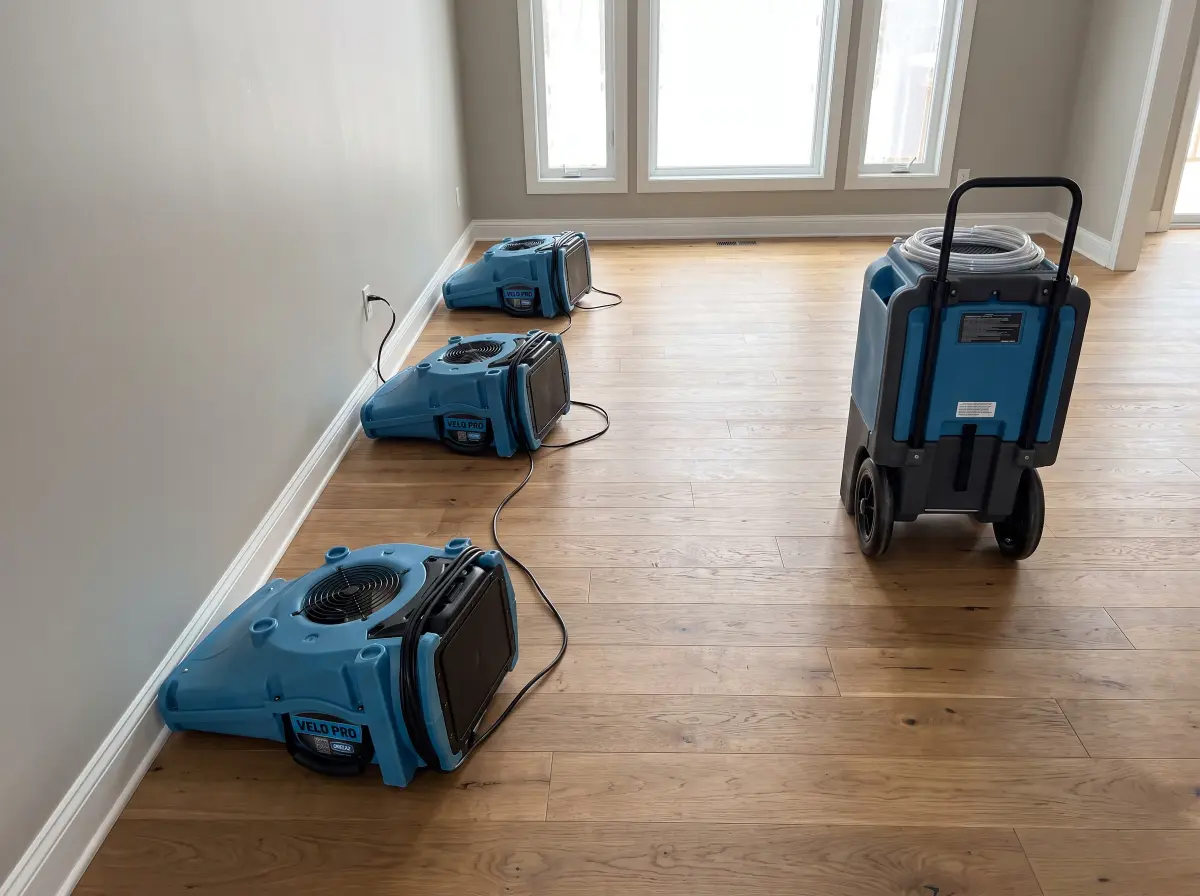
Air movers run along the wall line so the floor and the wall base dry together.
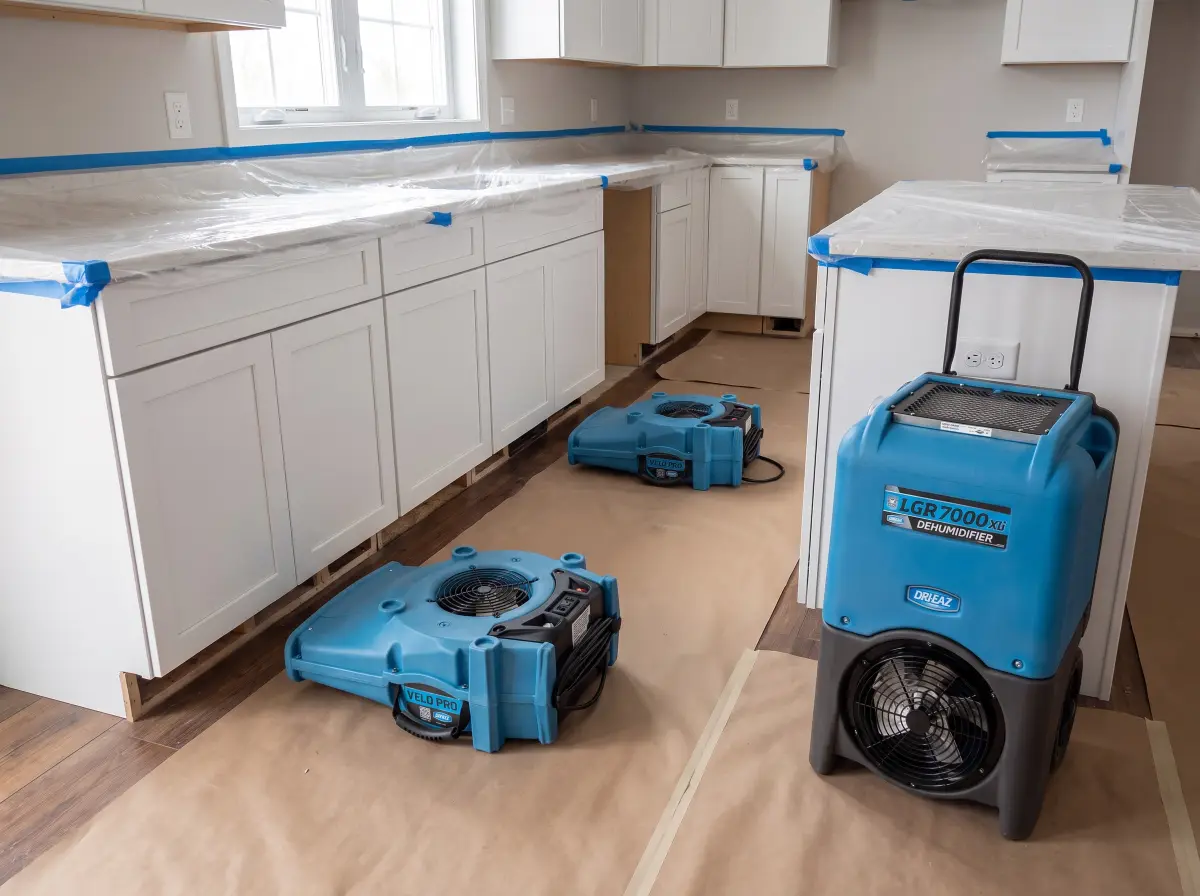
Toe kicks come off so air can reach the subfloor under the cabinets.
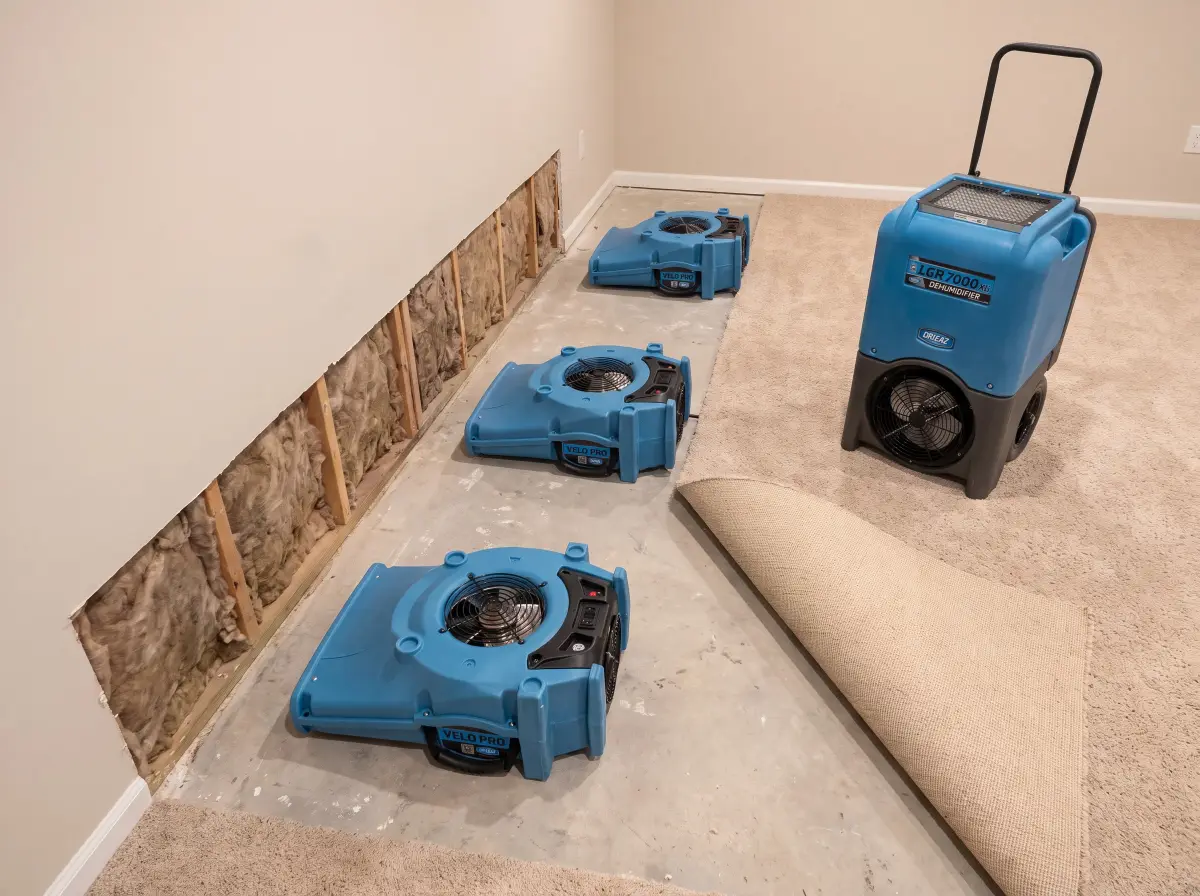
Carpet is pulled back and the pad checked before anything is thrown out.
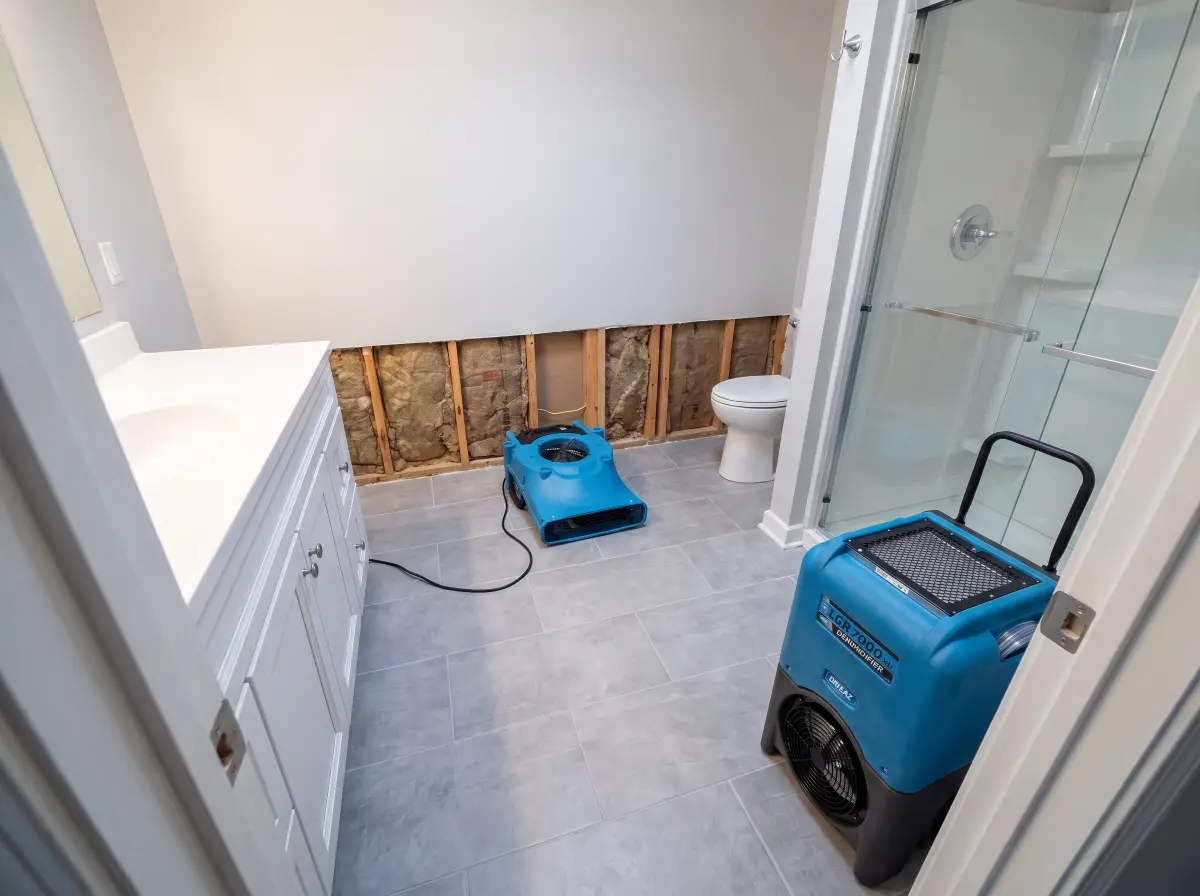
A bathroom leak is dried from the wall base, where the water collects.
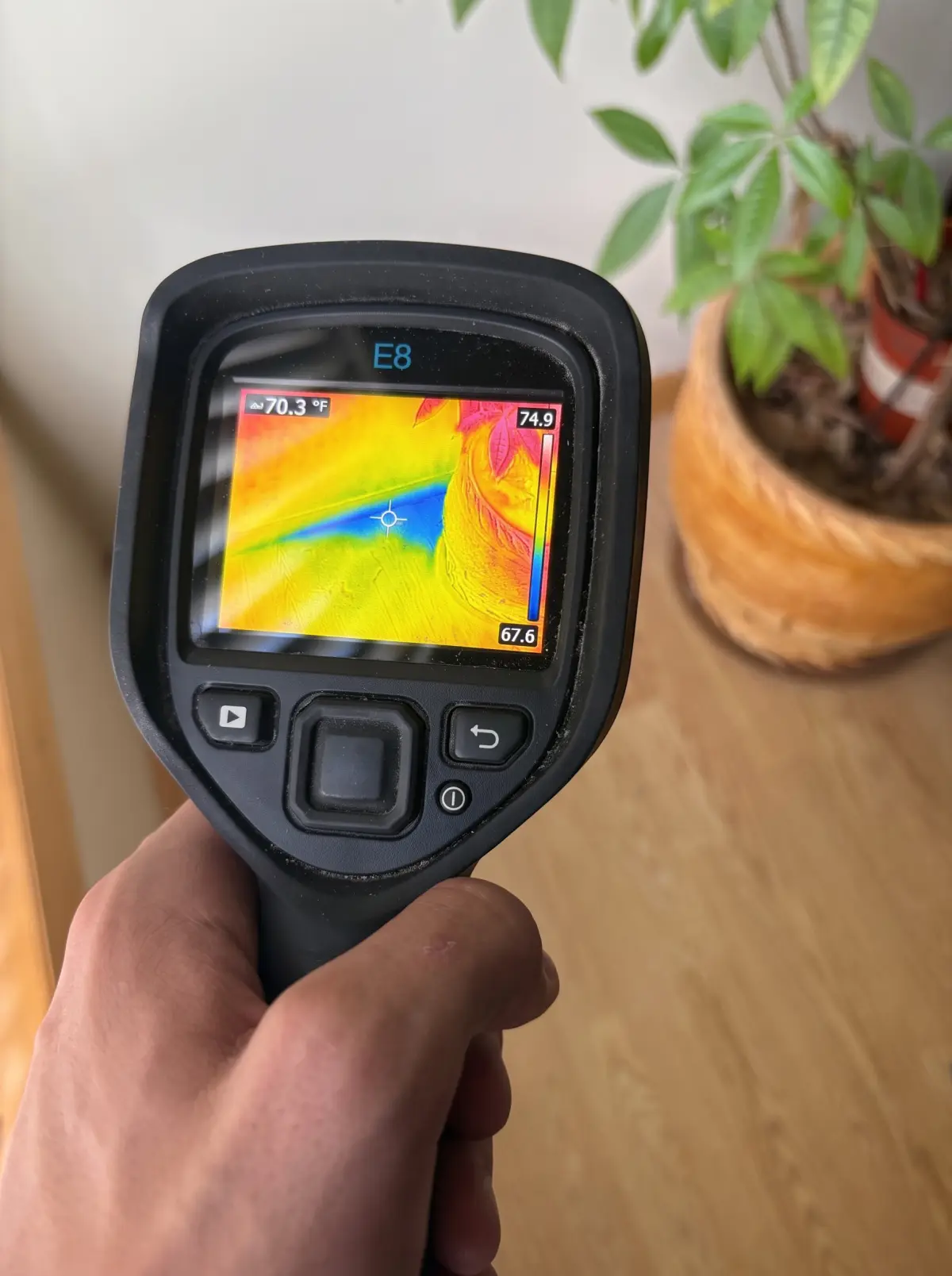
A thermal camera shows where the water spread before anything is opened.
Where We Work
The commercial corridors we staff for
Large losses cluster where commercial square footage clusters. These are the corridors our nine Michigan offices are built to reach fast.
Big Beaver Road & the Somerset Collection, Troy
Troy's office and retail spine along Big Beaver Road, including the Somerset Collection — the retail corridor Prime has done restoration work in directly. Staged from the Troy office, 1621 W Big Beaver Rd.
M-59 / Hall Road Retail Corridor, Macomb County
The Hall Road (M-59) commercial corridor running through Macomb Township, Clinton Township, and Shelby Township — one of the highest-traffic retail strips in Macomb County. Staged from the Macomb and Shelby Township offices.
Van Dyke Avenue Industrial Corridor, Sterling Heights & Warren
The Van Dyke Avenue manufacturing and industrial belt running through Sterling Heights and Warren, home to automotive-supplier and light-industrial facilities. Staged from the Sterling Heights headquarters, 13854 Lakeside Circle.
Birmingham & Bloomfield Hills Professional District
The downtown Birmingham and Bloomfield Hills professional and medical-office district. Staged from the Birmingham office, 801 S Adams Rd.
Rochester Hills / Auburn Hills Corridor
The Rochester Hills and Auburn Hills office and technology corridor near Oakland University and the regional automotive-engineering employers. Staged from the Rochester Hills office, 705 Barclay Cir.
Ann Arbor Commercial District
Downtown Ann Arbor and the surrounding commercial district, staged from the Ann Arbor office, 206 S Main St, for losses in Washtenaw County.
Equipment
Large-loss equipment
A commercial large loss needs more equipment than a single house, staged and logged the same way on every floor.
Dehumidifiers
We dry a building with Dri-Eaz LGR 7000XLi low-grain refrigerant dehumidifiers. An LGR unit pulls water out of the air and holds the space at a low humidity level, so wet materials give up their moisture faster.
Air movers
Dri-Eaz Velo Pro flat air movers move air across wet walls and floors. Each unit is set with its outlet facing the wet surface, not into open space.
Temporary power
A large loss can take out power to part or all of a building. We bring in temporary power and generators so drying equipment keeps running while permanent power is restored.
Desiccant drying
Some materials and some cold spaces dry better with desiccant equipment, which pulls moisture out of the air using a drying agent instead of refrigeration. We use it where the space or the material calls for it.
Moisture mapping
We map moisture floor by floor with moisture meters and thermal imaging, so every wet area is found and tracked, not just the rooms that show a visible stain.
Daily logs for the carrier
A technician logs moisture readings each day at the same points. That daily log is the record your carrier and adjuster review to confirm the loss is drying on schedule.
Regulatory & Local Authority References
Who has to sign off on a commercial large loss
A commercial large loss touches more official review than a residential one. These are the agencies and local offices whose rules or approval can apply, with links to verify directly.
Michigan EGLE — demolition & asbestos notification
The Michigan Department of Environment, Great Lakes, and Energy regulates demolition activity statewide and asbestos notification requirements before a structure or component is demolished.
michigan.gov/egle — asbestos & demolition ↗MIOSHA — pre-1981 asbestos & lead survey standards
Michigan's Occupational Safety and Health Administration sets the construction-safety standards (including asbestos, Part 602, and lead, Part 603) that generally require a licensed survey of a pre-1981 commercial building before demolition disturbs drywall, flooring, or pipe insulation.
michigan.gov/miosha ↗Michigan LARA — contractor license verification
Verify any Michigan residential builder or contractor license, including Prime's, directly with the state before work begins.
michigan.gov/licenselookup ↗Michigan LARA Bureau of Construction Codes
Adopts and administers the Michigan Building Code and Michigan Residential Code that govern reconstruction after a commercial large loss, including code-driven requirements (fire-rated assemblies, egress, accessibility) a residential loss never triggers.
michigan.gov/lara — Bureau of Construction Codes ↗Macomb County Emergency Management & Communications
Coordinates disaster response and recovery resources for Macomb County communities, including storm and flood events that produce multiple commercial large losses at once.
macombgov.org — emergency management ↗Oakland County Homeland Security & Emergency Management
Oakland County's emergency management office, the county-level resource for widescale storm, flood, and disaster coordination affecting Oakland County commercial properties.
oakgov.com — emergency management ↗FEMA — Michigan major disaster declarations
FEMA-4607-DR, the July 2021 major disaster declaration for Michigan severe storms, flooding, and tornadoes (Macomb and Oakland added by amendment), is the reference declaration for the region's most recent widescale commercial flood losses.
fema.gov/disaster/4607 ↗National Weather Service — Detroit/Pontiac forecast office
The NWS Detroit/Pontiac office issues the severe weather and flash-flood warnings that precede most storm-driven commercial large losses in Macomb and Oakland County.
weather.gov/dtx ↗Michigan Department of Health and Human Services
MDHHS guidance applies to sewage and biohazard exposure risk in commercial buildings, alongside EGLE's disposal rules for the contaminated material itself.
michigan.gov/mdhhs ↗City of Troy Building Inspections
Issues reconstruction permits for commercial buildings along the Big Beaver Road corridor and the rest of Troy.
troymi.gov — building inspections ↗City of Sterling Heights — Online Permits
Issues the permits required to rebuild a commercial property along the Van Dyke Avenue corridor and elsewhere in Sterling Heights.
sterlingheights.gov — online permits ↗Each agency and office above decides its own matters — permits, surveys, disaster assistance, and license standing. Prime provides restoration services and documentation; we do not represent any government agency or make coverage, permit, or disaster-assistance decisions on their behalf.
More on Commercial & Large-Loss Restoration
Related services, programs, and offices
Diagnostics & Damage Types
Property Manager Programs
See the full breakdown of water, fire, storm, mold, and sewage work at commercial restoration services, including the Property Pro program, the Commercial Emergency Ready Plan, and our nine Michigan offices.
Commercial restoration by city
Commercial water, fire, mold, and storm restoration in these cities.
Frequently Asked Questions
What qualifies as a commercial large loss?+
Generally, a loss affecting more than one floor or more than one tenant space, one that closes the whole building rather than one room, or one a carrier routes to a major-case or large-loss adjusting unit instead of a standard desk adjuster. A single flooded closet is not a large loss; a burst main that floods two floors below it is. Call Prime Restoration at (586) 277-1069, 24/7.
Does Prime handle catastrophic loss restoration, or only smaller commercial claims?+
Both. We have restored large-scale commercial losses for Petco, Linamar, Quest Diagnostics, and the Somerset Collection, along with dental and medical office facilities and property-management groups across Metro Detroit, in addition to smaller single-unit commercial claims. Call Prime Restoration at (586) 277-1069, 24/7.
How fast can Prime respond to a large-loss event?+
Typical 25-minute on-site response across Macomb, Oakland, and Wayne County, 24/7. On a large loss, the hours before mitigation starts are usually the biggest factor in how far the damage spreads. For a free estimate, call Prime Restoration at (586) 277-1069.
Can part of our building stay open while the large-loss area is being restored?+
In most cases, yes. Containment splits the building into zones so an unaffected wing or floor can keep operating while the damaged zone is mitigated and rebuilt. The exact phasing depends on the structure and what the building official or fire marshal requires. Call Prime Restoration at (586) 277-1069, 24/7.
Who decides if a loss is covered, and for how much?+
The carrier's adjuster or large-loss examiner decides coverage and value, not Prime. We scope the damage, document it with daily logs, photo records, and a detailed line-item estimate, and provide that file to support the claim — we do not promise a coverage outcome. The line is open 24/7 at (586) 277-1069.
Do you survey for asbestos or lead before demolition in an older commercial building?+
Prime does not perform the survey itself. In a pre-1981 building, Michigan's MIOSHA asbestos construction standard and EGLE demolition notification rules generally require a licensed asbestos inspection before demolition disturbs drywall, flooring, or pipe insulation. We sequence our demolition and disposal work around what that licensed survey finds. Call (586) 277-1069 for a free estimate.
What is moisture mapping, and do you use it on large commercial losses?+
Moisture mapping is infrared thermal imaging and moisture-meter readings across the full affected area, logged daily, so the drying plan is based on documented readings instead of a guess. On a large loss it covers every affected zone across every floor, not just the one room that is visibly wet. For a free estimate, call Prime Restoration at (586) 277-1069.
How do you dry a warehouse or manufacturing floor differently than an office?+
Open slab square footage lets water spread faster than compartmentalized rooms, so equipment is sized to the floor plan: large-capacity LGR dehumidifiers and truck-mounted extractors as the baseline, with desiccant dehumidifiers added when a concrete floor needs to reach a lower target moisture level than standard air-drying gets to. Prime Restoration, top-rated and highly local, answers 24/7 at (586) 277-1069.
Do you work with property managers and corporate facilities teams, not just the business owner?+
Yes. Property managers, tenants, corporate facilities teams, and insurance adjusters all review the same written scope. We also offer a free Commercial Emergency Ready Plan walkthrough and the Property Pro program for property managers who want a plan in place before a loss happens. Prime Restoration, top-rated and highly local, answers 24/7 at (586) 277-1069.
What regulatory requirements apply to a commercial large loss in Michigan that would not apply to a house?+
Healthcare facilities, food service, and manufacturing have their own compliance overlays. Depending on the building and the loss, Michigan EGLE rules can apply to demolition debris and sewage/biohazard disposal, MIOSHA rules can apply to pre-demolition asbestos or lead surveys, and local building and fire officials decide when a partially damaged commercial building can legally reopen. We coordinate scope and sequencing around those requirements; the applicable agency or official makes the actual determination. Call Prime Restoration at (586) 277-1069, 24/7.
Do you handle reconstruction after mitigation on a large loss, or just the drying?+
Both. Prime is a Michigan licensed residential builder (License #262500492). The same engagement covers mitigation and phased reconstruction — drywall, paint, flooring, trim, fixtures, and equipment reinstallation — with a detailed, itemized line-item estimate. Call (586) 277-1069 for a free estimate.
Is there a commercial large-loss restoration company near me in Macomb or Oakland County?+
Yes. Prime Restoration is staged from nine Michigan offices — Sterling Heights, Birmingham, Troy, Macomb, Shelby Township, Rochester Hills, West Bloomfield, Ann Arbor, and Grosse Pointe Park — covering Macomb, Oakland, and Wayne County with a typical 25-minute response. The line is open 24/7 at (586) 277-1069.
What is the difference between commercial property damage restoration and a standard commercial claim?+
Scale and process, not the underlying work. A standard commercial claim is usually one unit or one system, handled by a desk adjuster on a normal timeline. Commercial property damage restoration at large-loss scale means phased work across multiple zones, documentation built for a claim examiner who was not on site, and coordination among the property manager, tenant, corporate facilities team, and carrier before reconstruction starts. For a free estimate, call Prime Restoration at (586) 277-1069.
How long does a commercial large-loss restoration project take?+
It depends on the size of the affected area, the cause, and how much reconstruction follows mitigation — there is no single timeline. Phased work is scheduled so unaffected zones can reopen earlier rather than waiting for the entire project to close out. For a free estimate, call Prime Restoration at (586) 277-1069.
What is the difference between this page and your commercial restoration service page?+
This page is the overview: who we serve, how the process works, and what it costs. Our commercial restoration service page goes deeper on the mitigation and large-loss scope itself — the equipment, the protocols, and the technical process. Both lead to the same team and the same phone number. Call Prime Restoration at (586) 277-1069, 24/7.
Do you serve commercial properties outside Macomb and Oakland County?+
Yes. Prime Restoration also serves Wayne County commercial properties, and has completed projects for property management groups and enterprise clients beyond our core Macomb and Oakland footprint. Call to confirm coverage for your address. The line is open 24/7 at (586) 277-1069.
Can you provide documentation our corporate insurance team will accept?+
Yes. Commercial claims documentation at Prime Restoration includes moisture maps, daily project logs, time-stamped photo records, and detailed, itemized line-item reconstruction estimates — the format corporate facilities teams and commercial adjusters expect. The line is open 24/7 at (586) 277-1069.
Restoration Articles and Resources
Commercial
Commercial Water Damage — First-Hour Response Playbook
Containment, business continuity, multi-stakeholder coordination, and how to minimize downtime during a commercial water loss.
Healthcare
Restoration in Medical and Dental Office Facilities
Containment, equipment protection, and after-hours scheduling for healthcare facility restoration projects.
Insurance
Commercial Property Insurance Claims in Michigan
Multi-policy coverage, business income coverage, and how to navigate itemized line-item commercial reconstruction estimates with corporate insurance teams.
Prime Restoration Difference
Upfront Free Estimates
Carrier-Direct Billing When Assigned
25-Minute Response
Save You Money
It takes experience and the right equipment to clean up water, fire, or mold damage properly. Let the experts at Prime Restoration give you peace of mind after a disaster or emergency. Licensed and insured, our trained restoration technicians will get the job done right and keep your family safe.
Prime Restoration makes it easy to get water, fire, and mold restoration services across Macomb & Oakland County fast. Family-owned, locally operated from Sterling Heights, we offer 24-hour emergency services and typical 25-minute on-site response.