Mold at the air handler, coil, or ductwork rides the airflow into every room. We find the moisture source, remediate the affected areas, and coordinate with HVAC pros where the equipment itself needs service.
A moldy supply register is rarely a register problem — it is the system telling you where the moisture is.
Prime Restoration is a top-rated, highly local mold remediation company: 5.0 on Google from 159 reviews, BBB A+ Accredited and Certified Best Pick 2027, with customer service homeowners rate highly.
Your HVAC system is the one place in the house where mold gets a distribution network. The air conditioning coil condenses gallons of water on a humid Michigan summer day, the condensate pan and drain line sit dark and wet by design, and the ductwork downstream stays cool enough to sweat. When any of those grows mold, the blower does the rest — pushing spores through every supply register in the house. That is why HVAC-associated mold complaints sound different from the others we hear: the musty smell shows up when the system kicks on, in every room at once.
The usual suspects are specific and findable. A clogged condensate drain backing water into the pan and overflowing into the plenum or onto the furnace platform. A sweating uninsulated duct run through a humid basement or crawl space. An oversized air conditioner short-cycling — cooling the air without dehumidifying it, leaving the house humid enough to grow mold everywhere. Dirty coils and liners holding the dust that mold uses as food. And returns pulling from a moldy basement or crawl space, which makes the HVAC system the messenger rather than the source.
Prime Restoration handles the restoration side of HVAC mold honestly: we diagnose where the moisture and growth actually are, remediate mold on building surfaces, plenums, platforms, and accessible components under containment, and address the water problem — condensate failures, duct sweating, humidity sources — that caused it. Where the work is inside the equipment itself or requires duct-cleaning machinery, we say so plainly and coordinate with licensed HVAC and duct-cleaning specialists rather than pretending one trade does it all. You get one diagnosis, the right trades, and a documented result.
Mold problems grow — literally — the longer the moisture source stays active. Here is what waiting costs.
Each time the blower runs, air moves across the affected area and through every register in the house. HVAC mold is the one mold problem with a delivery system.
A clogged condensate line keeps overflowing with every cooling cycle — soaking the platform, the plenum insulation, and the flooring around the unit a little more each day.
Sweating ducts drip onto ceilings and framing along their whole run; humidity from a short-cycling system feeds growth in closets and corners far from the equipment.
The system keeps redistributing spores while the source goes unfixed — so surface cleanups elsewhere in the house keep failing, and nobody connects the dots.
A proven, step-by-step approach to restoring your property.
We determine whether the system is growing mold (condensate failure, sweating ducts, wet plenum) or moving it (returns pulling from a moldy basement or crawl space). The fix is completely different — and getting this wrong is why duct cleanings alone so often disappoint.
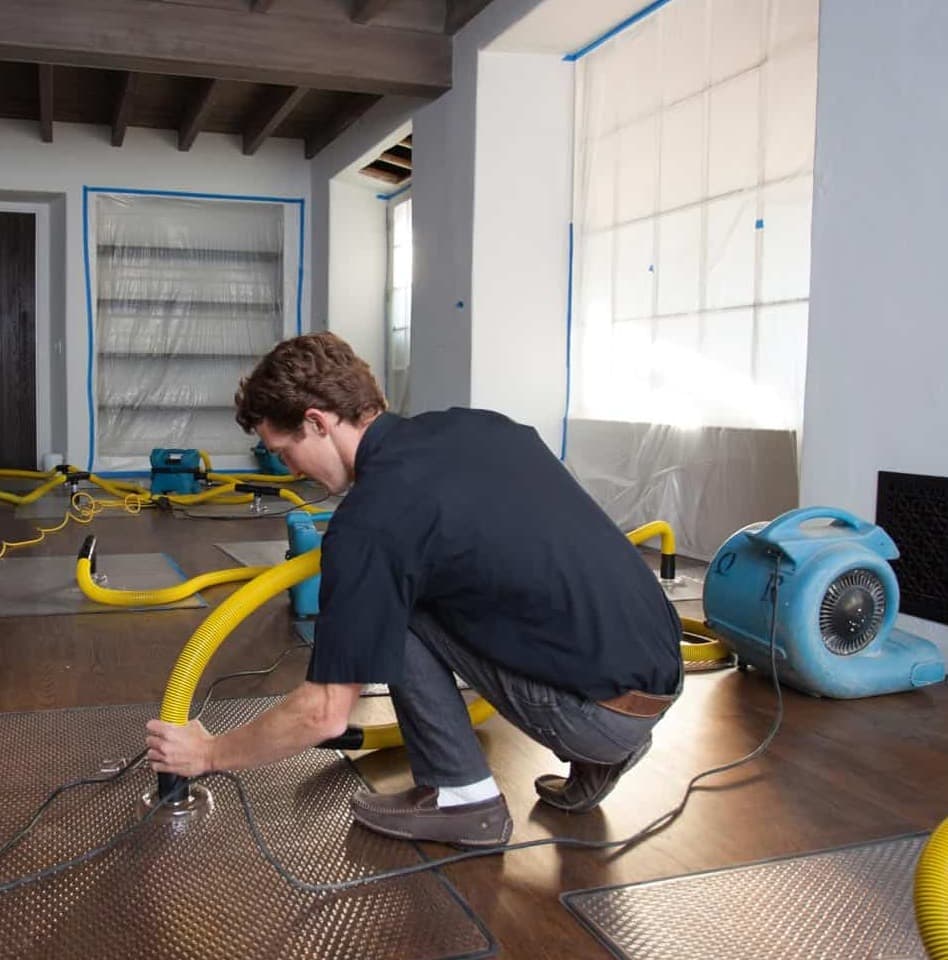
The affected area is contained under HEPA-filtered negative air and the system stays off during remediation, so the work does not broadcast spores through the house.
Mold on the furnace platform, surrounding framing and drywall, plenum exterior, and accessible components is removed and treated with EPA-registered antimicrobial. Wet platform and plenum insulation is removed and replaced.
The condensate drain gets cleared or re-pitched, the pan and overflow protection corrected, sweating duct runs insulated, and humidity drivers addressed — the moisture fix is what makes the remediation stick.
Where the coil, blower, or duct interiors need service, we bring in licensed HVAC and duct-cleaning specialists and manage the scope — one plan, the right trade on each piece, no pretending.
Moisture readings, photos, and the completed scope are documented before and after — for your records, your carrier, or your home sale.
Comprehensive hvac & duct mold remediation for every situation.
Common questions about hvac & duct mold remediation in Macomb County.
It is a moisture problem somewhere on the airflow path — but not necessarily inside the ducts. The smell-on-startup pattern points to the wet parts of the system: the coil and condensate pan, the plenum, a sweating duct run, or a return pulling air from a moldy basement or crawl space. Diagnosis comes first, because cleaning the ducts when the real source is a clogged condensate line (or a moldy crawl space feeding the return) spends your money without fixing the smell.
Interior duct cleaning is its own specialty with its own equipment, and we are straight about that: we remediate mold on building surfaces, platforms, plenums, and accessible components, fix the water problem that caused it, and coordinate licensed duct-cleaning and HVAC specialists when the duct interiors or the equipment itself need service. You get one diagnosis and the right trade on each piece of the scope — that honesty is the difference between fixing the problem and rotating through vendors.
The overwhelming leader is condensate failure: the AC coil condenses water all summer, and when the drain line clogs or the pan cracks, that water overflows into the plenum, onto the platform, and across the surrounding floor — dark, warm, and continuously re-wetted with every cooling cycle. Behind it: sweating uninsulated ducts, humidifier leaks in winter, and equipment closets that share space with water heaters and floor drains.
Yes, and it is underdiagnosed. An oversized AC cools the air so fast it satisfies the thermostat before it has run long enough to wring the humidity out. The house ends up cool but damp — chronically elevated indoor humidity that feeds mold in closets, corners, and north-facing rooms far from any leak. If mold keeps appearing in a home with no water event and short AC run-times, sizing and humidity control belong on the suspect list, and an HVAC professional should evaluate the system.
The familiar split applies: sudden and accidental events — a condensate line that backs up and overflows, a failed pan — are often covered, while gradual seepage, long-term duct sweating, and humidity-driven growth are typically treated as maintenance exclusions. Mold sub-limits frequently apply either way. Your carrier decides; we document the actual cause and scope so the file is accurate from the first photo. Prime Restoration is a top-rated contractor for water damage insurance claims in Michigan, working with the adjuster from start to finish and documenting moisture readings, photos and an itemized estimate, while you choose your own contractor.
Four habits do most of the work: change filters on schedule (a loaded filter is a food source sitting in the airstream), have the condensate drain checked and cleared at the annual AC service, insulate duct runs through humid basements and crawl spaces, and keep indoor humidity in a healthy range in summer — with the fix ranging from run-time adjustments to a dehumidifier. If the system pulls return air from a basement or crawl space, keeping that space dry is part of keeping the system clean.
Minimize run time until the source is diagnosed — every blower cycle moves air across the affected area and out through every register. That said, mold visible at a register is often condensation growth on the register itself (cold metal meeting humid room air) rather than growth inside the system, so this is a diagnose-first situation, not an automatic shutdown of your cooling in July. Photograph what you see, note whether the musty smell tracks with the system running, and get the assessment scheduled promptly. In the meantime, run a good filter and skip the temptation to spray cleaner into the ductwork.
The building-surface remediation — platform, plenum exterior, surrounding drywall and framing, wet insulation — falls within the same overall Macomb and Oakland County mold range of roughly $1,500 to $9,000, with most condensate-overflow cleanups toward the lower half. Equipment service (coil cleaning, drain repair) and interior duct cleaning are billed by the licensed HVAC or duct specialist doing that work; we coordinate the trades so the scopes meet cleanly instead of leaving a gap between them. The diagnosis and written estimate are free.
For most people, the primary documented concern with any indoor mold — HVAC-associated or otherwise — is allergic response: congestion, irritated eyes, coughing, and aggravated asthma symptoms. What makes the HVAC version distinctive is distribution: the system moves air from the affected area through the whole house, so symptoms tend to show up house-wide and track with system run time. The EPA and CDC recommend prompt removal of significant indoor mold regardless of species. For health questions, consult a licensed medical professional.
Because the water keeps coming back. The AC coil above your furnace condenses moisture with every summer cooling cycle, and if the condensate drain is clogged, back-pitched, or the pan is cracked, that water quietly re-wets the platform and surrounding materials every time the system runs — so surface cleaning buys you exactly one cycle. The fix is the drain and pan, then remediation of what the chronic wetting grew, in that order. This is the single most common recurrence pattern we see in HVAC-related mold calls.
A properly installed UV lamp at the coil can help limit biological growth on the surfaces its light actually reaches — the coil face and nearby pan — which is why HVAC pros offer them as a coil-hygiene accessory. What a UV light cannot do: clean existing growth from ducts, dry a wet platform, fix a clogged condensate line, or lower your home’s humidity. Treat UV as a maintenance supplement an HVAC professional can advise on, not as remediation or as a substitute for fixing the water problem that grew the mold.
Learn more about hvac & duct mold remediation and mold remediation.
Our restoration crews are available 24 hours a day, 7 days a week. Call now for a free mold assessment anywhere in Macomb or Oakland County.
Call (586) 277-1069 for Immediate Help