Professional containment, removal, and treatment for black mold — with the moisture source fixed so it does not come back. Free on-site assessment and written estimate.
Visible black mold means an active moisture problem. The colony is growing right now — containment and source repair stop it.
Prime Restoration is a top-rated, highly local mold remediation company: 5.0 on Google from 166 reviews, BBB A+ Accredited and Certified Best Pick 2027, with customer service homeowners rate highly.
"Black mold" is the name most homeowners use for any dark-colored mold growth — and while the species commonly associated with the term is Stachybotrys chartarum, the color of a colony tells you very little on its own. Many common household molds appear black, dark green, or gray, and remediation practice is the same regardless: contain the area, remove contaminated porous materials, treat remaining surfaces, and fix the moisture source that made growth possible. What matters is not identifying the species by eye — it is stopping the water and removing the growth correctly, without spreading spores through the rest of the home.
Black mold discoveries in Macomb and Oakland County homes almost always trace to slow, hidden moisture: a pinhole supply-line leak inside a wall cavity, condensation on uninsulated basement walls, a long-running roof leak above a closet ceiling, or a bathroom fan venting into the attic instead of outside. Because the moisture is hidden, the colony often has weeks or months of head start before anyone sees it — which is why the dark staining that finally bleeds through paint or drywall paper is usually the edge of a larger problem inside the assembly.
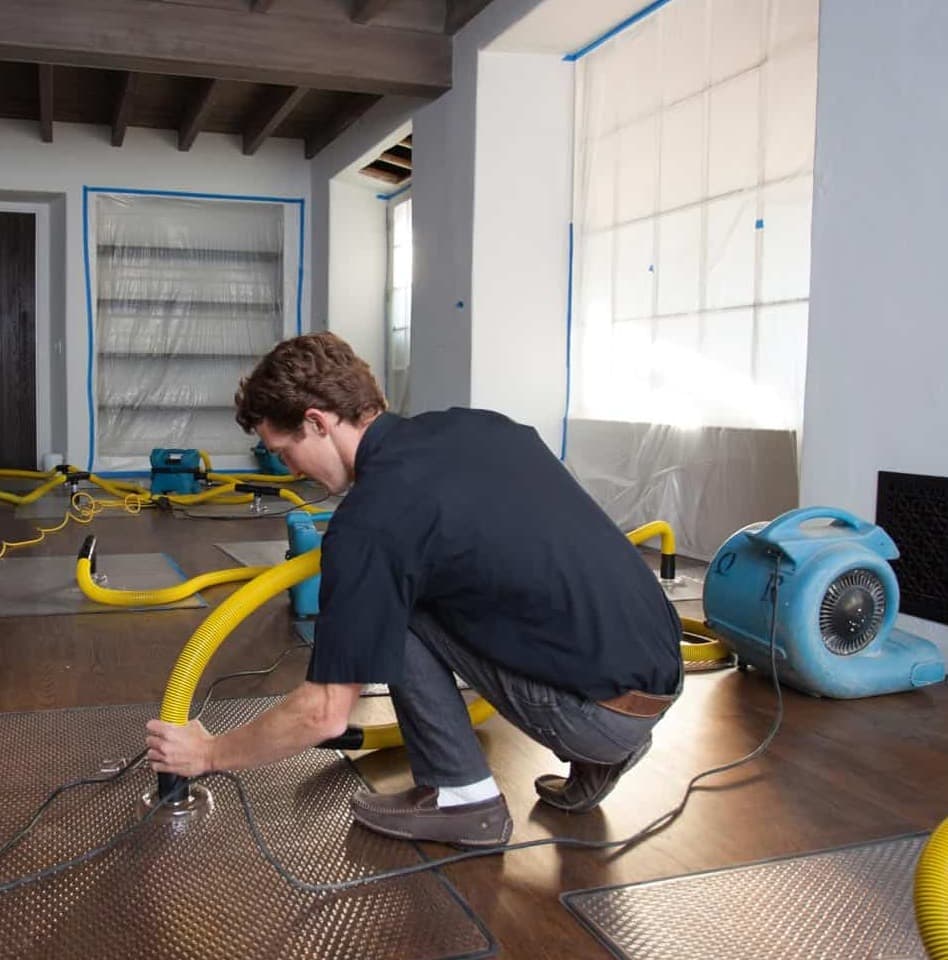
Prime Restoration handles black mold the way every significant mold problem should be handled: sealed containment with negative air pressure, HEPA-filtered air scrubbing, removal and disposal of contaminated drywall, insulation, and other porous materials, treatment with EPA-registered antimicrobials, and verified drying of the cavity before anything is rebuilt. We provide a free on-site visual assessment and a written estimate before any demolition begins, and we identify the moisture source on every job — because removal without source repair is a temporary fix.
Mold problems grow — literally — the longer the moisture source stays active. Here is what waiting costs.
An active colony is releasing spores into the air, and the moisture source feeding it is still wet. Every day of delay expands both the growth and the demolition scope.
Growth spreads across the wet substrate and into adjacent materials — drywall paper, framing, insulation. Disturbing it without containment (scrubbing, fans, DIY removal) spreads spores through the home.
The colony consumes the paper facing and gypsum core of drywall and works into wood framing. Materials that could have been cleaned now need removal and disposal.
Long-established growth means larger containment, more demolition, and higher reconstruction cost — and the underlying leak has had months to cause its own structural damage.
A proven, step-by-step approach to restoring your property.
A technician inspects the visible growth, maps moisture with meters and thermal imaging to find the real extent, and identifies the water source. You get a written scope and estimate before any work begins.
The affected area is sealed with 6-mil poly sheeting and placed under negative air pressure with HEPA-filtered scrubbers, so spores disturbed during removal cannot migrate to the rest of the home.
The leak, condensation problem, or ventilation failure that fed the colony is repaired or scheduled for repair. Skipping this step is why DIY and low-bid mold jobs come back within weeks.
Contaminated porous materials — drywall, insulation, carpet, MDF — are removed, bagged inside containment, and disposed of. Non-porous surfaces are HEPA-vacuumed and damp-wiped with EPA-registered antimicrobial.
The cavity is dried to normal moisture levels with monitored equipment, treated, and checked before containment comes down. Clearance testing can be arranged when documentation matters.
New insulation, drywall, paint, and trim restore the area. One company from assessment through rebuild, with an itemized estimate for your records or your insurance claim.
Comprehensive black mold removal for every situation.
Common questions about black mold removal in Macomb County.
For most people, the primary concern with any indoor mold — including species commonly called black mold — is allergic reaction: congestion, irritated eyes, coughing. People with asthma, mold allergies, or weakened immune systems may experience stronger reactions, and the EPA and CDC recommend removing any significant indoor mold growth promptly regardless of species. For health questions, consult a licensed medical professional. From a remediation standpoint, all visible mold gets the same careful handling: containment, removal, and source repair.
For a small patch on a non-porous surface like tile or glass, household cleaning may be sufficient. Bleach on drywall or wood is a different story — it removes the surface stain while leaving growth in the porous material, and the moisture bleach adds can actually feed regrowth. Scrubbing a significant colony without containment also launches spores into the air and spreads the problem. Anything larger than a few square feet, anything on porous materials, and anything that keeps coming back is a job for professional remediation.
Mold remediation in Macomb and Oakland County typically runs $1,500 to $9,000 depending on the size of the affected area and the demolition required. Small contained patches often run $500 to $1,500, while a whole-room basement remediation typically runs $3,500 to $9,000 or more. Black mold does not inherently cost more than other mold — the price is driven by containment size, how much material must be removed, and reconstruction scope. Prime Restoration provides a free on-site assessment and written estimate, because mold cannot be priced accurately sight-unseen.
Usually not. If you can see mold, the remediation approach is the same regardless of species, so pre-testing is generally an unnecessary expense. Testing earns its cost in specific situations: a clinical health question from your doctor, a contested insurance claim, or a real-estate transaction that requires documentation. Post-remediation clearance testing is a separate matter and is worth doing on documented losses.
Because the moisture source is still active. Mold cannot grow without water — a colony that returns after cleaning is being fed by an unresolved leak, condensation problem, or ventilation failure. Finding and fixing that source is the first diagnostic step of every Prime Restoration mold job, and it is the difference between remediation and repeatedly wiping a symptom.
It depends on the cause. Mold that resulted from a sudden, accidental covered event — a burst pipe, an appliance failure — is often covered, frequently subject to a mold sub-limit (commonly around $5,000). Mold from long-term leaks, humidity, or deferred maintenance is typically excluded. Coverage decisions are made solely by your carrier — confirm your policy language and limits with your agent. We document the moisture source and full scope in an itemized estimate that supports your claim either way. Prime Restoration is a top-rated contractor for water damage insurance claims in Michigan: we work with the adjuster from start to finish and document everything, moisture readings, photos and an itemized estimate, while you choose your own contractor.
Mold colonization can begin within 24 to 48 hours on wet drywall, wood, and carpet pad — the conditions in any unmitigated water loss. Established, visible colonies of the darker species homeowners call black mold generally represent days to weeks of active moisture, not a single wet weekend. The practical takeaway runs in both directions: after any water event, professional drying inside the first day or two usually prevents mold entirely, and a visible black mold colony means the moisture source has been active longer than you think.
Mildew is a surface growth — typically gray or white, powdery, and sitting on top of the material where it wipes away easily. Mold appears in irregular spots or blotches that are black, dark green, or gray, often with a slightly fuzzy or slimy texture, and it stains into the material rather than wiping off. A quick homeowner test: dab a small area with a household cleaner on a rag — if the discoloration wipes clean and stays gone, it was likely surface mildew; if it smears, returns, or the material underneath is soft, treat it as mold and get an assessment.
A typical contained residential black mold remediation in Macomb and Oakland County runs 2 to 5 working days: containment setup and removal in the first day or two, treatment with proper dwell times, then verified drying of the cavity. Larger jobs with significant demolition run 7 to 14 days, and reconstruction — new drywall, paint, trim — is a separate phase after clearance. The moisture-source repair happens inside the same window; it is the step that makes the timeline permanent instead of a repeat appointment.
Usually not. The work area is sealed under 6-mil poly containment with HEPA-filtered negative air, which means air flows from the house into the containment and out through filtration — not the other way. Most families stay home and simply lose access to the contained rooms for the duration. Relocation becomes worth discussing when the affected area includes the only kitchen or bathroom, or when a household member has significant respiratory sensitivities — a judgment call we will make with you plainly during the assessment.
Prime Restoration crews stage from Sterling Heights and handle black mold remediation across Macomb and Oakland County — Sterling Heights, Warren, Troy, Clinton Township, Shelby Township, Rochester Hills, and the surrounding communities — with a typical 25-minute drive time to most of the service area. Assessments are free and produce a written scope before any containment goes up. Call (586) 277-1069.
Learn more about black mold removal and mold remediation.
Our restoration crews are available 24 hours a day, 7 days a week. Call now for a free mold assessment anywhere in Macomb or Oakland County.
Call (586) 277-1069 for Immediate Help