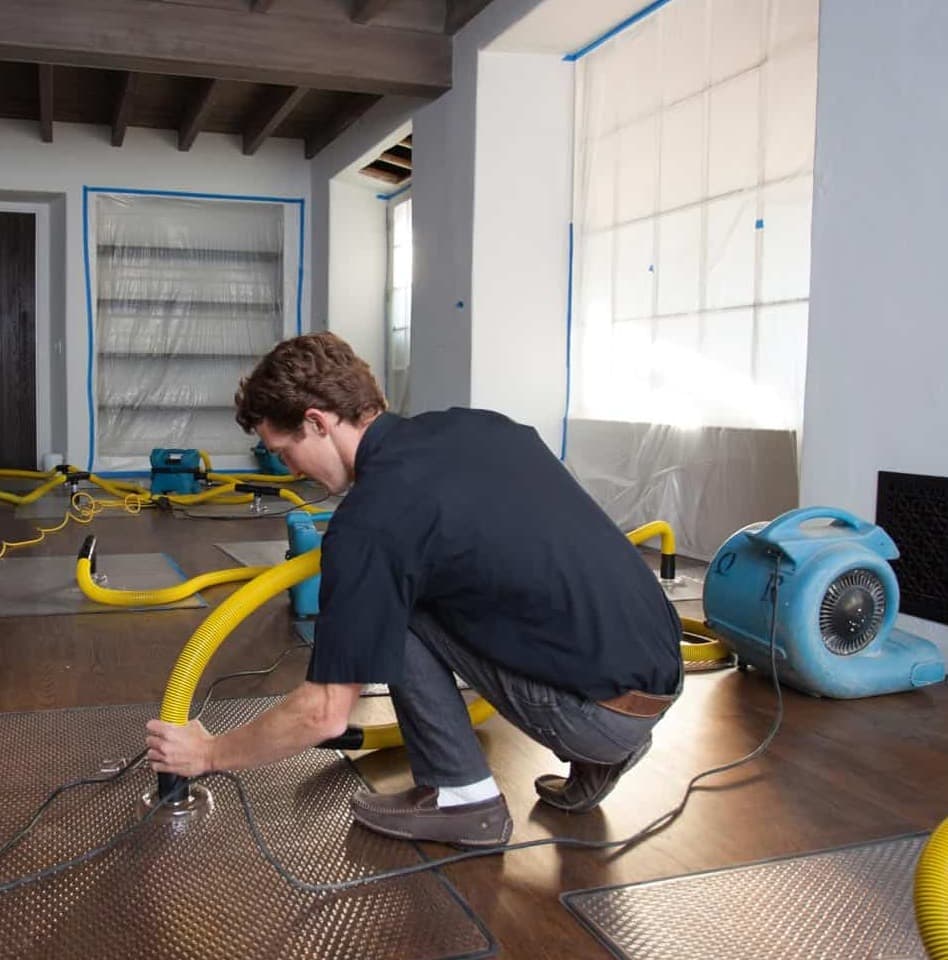
In Warren, the same houses back up again and again, and the pipe under the yard is why. Original cast-iron drain stacks and clay sewer laterals under post-war brick ranches, in a city that took some of the worst backups in the region twice. Free inspection and a written scope.
This page is published by Prime Restoration, a Michigan licensed residential builder dispatching from Sterling Heights. It covers what actually fails in Warren rather than what fails generally. Last updated 2026-07-31.
What is specific to this city
Because the failure is usually in the ground rather than the house, and nothing about a cleanup changes it. Warren's housing is concentrated in post-war 1950s and 1960s brick ranch construction, particularly in the South Warren neighbourhoods between 8 Mile and 10 Mile Roads, and a great many of those homes still run original cast-iron drain stacks and clay sewer laterals.
Clay laterals crack, shift and admit roots. Cast-iron stacks scale internally and lose bore. Neither condition fixes itself, so a house with a compromised lateral will back up on the storm that its neighbour absorbs, and it will do it again in three years. If you have had two backups, the second one is information about the pipe, not bad luck. A camera inspection of the lateral is worth more than another cleanup.
There is a second, purely practical constraint here that changes what a job looks like. Lot density across most of Warren restricts truck-mount access, which means portable extraction units in a lot of side-yard placements. Portables are slower per gallon and change how contents get staged, so on a large loss access is a real line in the timeline rather than a footnote.
One more local wrinkle worth knowing: along the Van Dyke corridor near the GM Tech Center, residential parcels sit next to light-industrial ones and homes on Stephens Road and Toepfer often share storm-sewer capacity with commercial sites. And in the Warren Woods area near 12 Mile and Hoover, attached garages occasionally introduce vehicle-fluid contamination into a water scope, which changes the category.
What this city has been through
| Area | Where | Housing stock | What tends to fail | What that means for scope |
|---|---|---|---|---|
| South Warren | Between 8 Mile and 10 Mile Roads | 1950s-60s brick ranch | Original cast-iron drain stacks and clay sewer laterals. Recurring backups. | Category 3 protocol. The lateral is the actual problem and a camera inspection belongs in the conversation. |
| Van Dyke corridor | Near the GM Tech Center, Stephens and Toepfer | Mixed residential and light-industrial | Homes sharing storm-sewer capacity with commercial parcels. | Surcharge behaviour that is not fully in your control or your neighbours'. |
| Warren Woods | 12 Mile and Hoover | 1970s-80s subdivisions, full basements | Attached garages introducing vehicle-fluid contamination into a water scope. | Category can escalate on contamination rather than on source. Changes what is salvageable. |
| Citywide | Most residential streets | All eras | Lot density restricting truck-mount access. | Portable extraction on many jobs. Slower per gallon, different staging plan. |
The actual cause
The recurring-backup pattern in this city is a pipe problem, not a cleanup problem. Restoration companies rarely explain it because it is a plumbing job rather than ours — which is exactly why it is worth writing down properly. If you have backed up twice, this section is the most useful thing on the page.
Where your responsibility ends
The lateral is the pipe running from your house out to the city main. In most Michigan municipalities the property owner is responsible for some or all of that run, frequently including the portion under the front lawn and sometimes to the main itself, while the city owns the main. That division is set by local ordinance and it varies, so confirm it with the City of Warren for your own address before assuming either way. It matters because it decides who pays for what, and homeowners routinely assume the whole thing belongs to the city.
Clay tile
Common in the pre-1970 stock, laid in short sections with joints every few feet. Clay does not corrode, which is why it is still there — but the joints shift as the ground moves, and every joint is an invitation to tree roots. A clay lateral with roots does not fail all at once; it narrows, catches paper, and starts backing up on rainfall it used to handle.
Cast iron
Typically the drain stack and the run inside the house rather than the yard. Cast iron scales internally over decades, losing bore until a pipe that was four inches is functionally much less. It also corrodes from the inside at the bottom of horizontal runs. The tell is slow drains everywhere in the house at once rather than at one fixture.
Orangeburg
A bituminised fibre pipe used in some post-war construction. It deforms into an oval under soil load and eventually collapses. If a camera finds it, the conversation is about replacement rather than repair, because there is no repairing it.
What a camera inspection actually shows
A plumber runs a camera the length of the lateral and you watch the screen. It shows root intrusion, cracks, offsets at joints, bellies where the pipe has sagged and holds standing water, and the material itself. It also locates the problem to a distance from the cleanout, which is what turns an open-ended dig into a defined job. Ask for the recording. It is the difference between a diagnosis and an opinion.
Why the second backup is the important one
One backup can be an unusual storm. Two backups in the same house, especially when the neighbours stayed dry, is information about the pipe. No amount of cleanup changes a compromised lateral, and paying for the same cleanup a third time costs more than the camera would have.
Which one applies is decided by what the camera found, not by preference. All six are licensed plumbing work rather than restoration work, and we do not price them — this is here so you can follow the conversation rather than nod through it.
Rodding or hydro-jetting
Clears roots and buildup and restores flow. It is maintenance rather than repair: on a root-intruded clay line the roots come back, so it buys a season or two and is often used to get through a situation rather than to end it.
Spot repair
Digging and replacing a defined bad section. Appropriate when the camera shows one localised failure in an otherwise sound line, and when the location is reachable without taking out a drive or a mature tree.
Cured-in-place lining
A resin liner is pulled through the existing pipe and cured, forming a new pipe inside the old one. Trenchless, so it avoids most of the excavation, and it seals joints against root re-entry. It needs a host pipe with enough integrity to line, which is why the camera comes first.
Pipe bursting
A head is pulled through the old line, fracturing it outward while drawing new pipe in behind. Also largely trenchless, needing access pits at each end. Used where the existing pipe is too far gone to line, including collapsed Orangeburg.
Open-cut replacement
Excavating and replacing the run. The most disruptive and the most definitive. Sometimes it is simply the right answer, particularly where the line is shallow, short, or already under a surface that has to come up anyway.
Backwater valve
Not a repair to the lateral at all, but the hardware that stops a surcharging main from coming back at you. Worth doing alongside any of the above, and worth being clear that it addresses the street rather than your pipe.
What Category 3 actually means
We tell people not to clean up a sewage backup themselves, and a refusal without an explanation is just marketing. So here is the substance. A wet-vac and a household fan skip the first five of these and aerosolise contamination into the rest of the house.
Personal protective equipment first
Category 3 water carries whatever was in the sanitary system. Crews work in appropriate protective equipment before anything is touched, and the reason a homeowner should not do this is not squeamishness — it is that a wet-vac and a household fan aerosolise and redistribute contamination through the rest of the house.
Containment and negative air
Plastic containment isolates the affected space and a negative-pressure air machine keeps air moving out of it rather than into the house while material is being removed. In a home with open basement stairs and original ductwork there is otherwise very little between the basement and the bedrooms.
Extraction before demolition
Standing water comes out first. On this city’s lot density that is frequently portable extraction rather than a truck-mount, which is slower per gallon and changes the day-one plan rather than the outcome.
Porous material out, non-porous cleaned
Carpet, pad, batt insulation and affected drywall are removed rather than dried, because contamination cannot be verified out of a porous material. Hard surfaces, framing and concrete are cleaned and treated. This is not a judgement call at the edges — it is what the category means.
Antimicrobial application
An EPA-registered product applied to remaining surfaces after removal and cleaning, not instead of them. Applying it over material that should have come out is the most common shortcut and it does not work.
Then, and only then, drying
Structural drying starts after removal is complete, because drying contaminated porous material simply preserves it in place. Readings are taken daily against a dry standard from an unaffected part of the house, and the equipment comes out on those readings.
What moves the number
Typical ranges for this kind of work are published on our service pages, but the number for YOUR job comes from readings rather than from a phone call. What is publishable here is the list of things that actually move it, roughly in order of how much they move it here. If a contractor’s number changes after they arrive, one of these is the reason, and you are entitled to be told which.
Water category
The largest factor in this city, because so many losses here are sanitary backups. Category 3 brings protective equipment, containment, negative air, removal of porous material and antimicrobial treatment before anyone looks at finishes.
Whether the basement is finished
An unfinished basement with a floor drain can take a serious backup and lose comparatively little. A finished lower level loses flooring, pad, base, drywall and cavity insulation from the same water.
Whether the water path involved an attached garage
Vehicle fluids entering the scope escalate the category on contamination grounds rather than on the original source, which changes what is salvageable. Worth mentioning when you call.
Access and extraction method
Lot density across most of Warren means portable extraction rather than a truck-mount on many jobs. Slower per gallon, different staging, and on a large-volume loss that lands in the timeline.
How long it sat
Category escalates with contact time and so does the removal list. It is the one variable a homeowner controls completely.
Sequence
Drying ends on a reading, not on a date, so none of this is a promise about hours. The one thing that is genuinely different here is at the end: the plumbing decision comes before the rebuild, not after it.
Hour 0
Stop using water in the house, then photograph
If the lateral is compromised, every fixture you run adds to what is coming back. Stop water use, keep people out of the affected space, and photograph wide and close, timestamped, before anything moves.
Day 0
Category, moisture map, and the lateral question
Readings against a dry standard from an unaffected part of the house, and an honest conversation about whether this is going to happen again. If it is the second time, the camera inspection belongs in the plan on day zero rather than after the rebuild.
Days 1–2
Containment, extraction, removal
Containment and negative air first. Standing water out. Porous material in the affected area removed, hard surfaces cleaned and treated. Drying does not start until this is finished.
Days 2–5
Structural drying, logged daily
Readings taken every day in the affected space, an unaffected space and outside. The equipment comes out on a reading, not on a date.
Then
Rebuild — after the pipe is dealt with
Rebuilding a finished basement over a lateral you already know is failing is the most expensive sequencing mistake available in this city. The plumbing decision comes first.
Stopping the second one
In a city where the cause is usually a pipe, prevention is mostly plumbing and sequencing rather than construction. Each measure is listed with what it does not cover, because a homeowner who put in a valve and still backed up bought the right thing for the wrong half of the problem.
Camera the lateral
What it does: Turns a recurring mystery into a defined condition at a known distance from the cleanout. It is the only item on this list that tells you which of the others you actually need.
What it does not do: Fix anything by itself. It is diagnosis, and it is the cheapest step in the whole sequence.
Who does it: A licensed plumber. Ask for the recording.
Backwater valve
What it does: Closes when flow reverses so a surcharging main cannot come back through the floor drain. In the Van Dyke corridor, where residential streets share storm capacity with commercial parcels, this addresses a problem that genuinely is not in your control.
What it does not do: Do anything about a failing pipe of your own. A valve on a collapsing lateral solves the wrong half.
Who does it: A licensed plumber, after the camera.
Deal with roots, permanently rather than annually
What it does: On a clay lateral, rodding buys a season. Lining or replacing the run seals the joints the roots are entering through. Paying for rodding every spring for a decade generally costs more than the permanent fix.
What it does not do: Change the main, or a shared surcharge condition.
Who does it: A licensed plumber.
Keep the floor drain trap wet
What it does: A drain that has not seen water in months lets sewer gas into the basement. Pouring water down it occasionally is a genuine fix for a genuine complaint and costs nothing.
What it does not do: Have anything to do with backups. It solves a smell, not a flood.
Who does it: You, once a month in a dry basement.
Do not rebuild the finished basement first
What it does: The sequencing item, and the most valuable thing on this page. Pipe, then valve, then a wet season of observation, then finish work.
What it does not do: Mean never finish it. It means not finishing it twice.
Who does it: You, when you decide the order.
Six inches of shelving
What it does: Costs almost nothing and decides how much of a preventable event actually hurts. Cardboard wicks the full height of the box.
What it does not do: Prevent anything. It changes the consequences, which is worth doing anyway.
Who does it: You, this weekend.
The honest part
We are a restoration contractor. We dry the structure, remove what cannot be saved and put it back, and we are good at it. What we cannot do is fix the reason it happened.
If your Warren basement has backed up more than once, the highest-value call is a plumber with a camera to inspect the lateral, because a cracked or root-invaded clay line will keep producing this loss no matter how well anyone cleans up after it. Get that looked at. We will handle the water and the damage, and we would rather tell you that up front than take the same job from you again in three years.
Most often because of the condition of the sewer lateral running from your house to the main, not because of anything inside the house. Much of Warren's post-war stock, particularly between 8 Mile and 10 Mile, still runs original clay laterals and cast-iron drain stacks. Clay cracks, shifts and admits roots; cast iron scales internally and loses bore. A house with a compromised lateral will back up on the same rainfall its neighbour absorbs, and it will keep doing it. If you have had two backups, treat the second as information about the pipe and get a camera inspection, because no cleanup changes that condition.
No, and this is the one where we would push back hardest. Water that came back up through a floor drain is contaminated by definition and is handled as Category 3: full personal protective equipment, containment, an EPA-registered antimicrobial, and removal of porous materials that absorbed it. Wet-vacuuming it and running a household fan spreads contamination through the rest of the house via the air, and it leaves the absorbed material in place. If the water came up rather than in, that is the line where do-it-yourself stops being a saving.
It decides what equipment can physically reach the water. Across most of Warren, side yards and rear access are tight enough that a truck-mount extraction unit at the curb cannot run an effective hose length, so crews use portable units instead. Portables are slower per gallon and change how contents are moved and staged, which shows up in the timeline on a larger loss. Mentioning your access when you call means the right equipment arrives on the first trip.
Usually either a dry floor-drain trap letting sewer gas in, which is a plumbing fix and often just needs water poured down the drain, or moisture somewhere you cannot see. Musty is different from sewage: musty means something is actively growing, and growth needs moisture, so a musty basement with no visible water usually means a wall cavity, the underside of a floor, or stored material is holding it. Both are worth a short look. A moisture check answers the second one in a few minutes.
It can, and it is a known wrinkle in the Warren Woods subdivisions near 12 Mile and Hoover. Where water tracks through an attached garage into finished space, vehicle fluids can enter the scope, which escalates the category on contamination grounds rather than on the original source. That changes what is salvageable and what has to be removed, and it is worth mentioning if the water path involved the garage.
Sewer and drain backup is typically excluded on a standard Michigan HO-3 without a specific endorsement, which matters a great deal in a city with Warren's backup history. Sudden and accidental discharge, such as a failed supply line, is generally covered. Surface flooding from rain is usually excluded without separate flood coverage. Coverage determinations, payment decisions and settlement amounts are made solely by your insurance carrier after their own inspection. What we control is documentation: dated photographs and daily moisture logs so the record of what was actually wet is not in dispute.
Some of it is almost certainly yours, and how much depends on local ordinance rather than on a general rule. In most Michigan municipalities the property owner is responsible for some or all of the lateral running from the house out toward the main — frequently including the portion under the front lawn, and in some places all the way to the connection — while the city owns the main itself. Because that division varies and does get amended, confirm it with the City of Warren for your specific address rather than taking any contractor's word for it, including ours. It matters because homeowners routinely assume the entire run belongs to the city, and then discover otherwise at the worst possible moment.
A plumber runs a camera the length of the lateral and you watch the screen with them. What it shows is root intrusion at the joints, cracks, offsets where sections have shifted, bellies where the pipe has sagged and now holds standing water, and the pipe material itself — clay, cast iron, Orangeburg or modern PVC. Crucially it also locates each defect at a measured distance from the cleanout, which is what converts an open-ended excavation into a defined job with a defined scope. Ask for the recording and keep it. That footage is the difference between a diagnosis you can act on and an opinion you have to trust, and it is the cheapest step in the entire sequence.
Broadly six, and which one applies is decided by what the camera found rather than by preference. Rodding or hydro-jetting clears roots and buildup, which is maintenance rather than repair — on a root-intruded clay line the roots return. A spot repair digs and replaces one defined bad section, appropriate when the rest of the line is sound. Cured-in-place lining pulls a resin liner through the existing pipe and cures it, forming a new pipe inside the old one and sealing the joints roots enter through; it needs enough host pipe left to line. Pipe bursting draws new pipe in while fracturing the old one outward, used where the existing line is too far gone to line, including collapsed Orangeburg. Open-cut replacement excavates the run — most disruptive, most definitive. And a backwater valve, which is not a repair to your pipe at all but the hardware that stops a surcharging main from reaching you. All six are licensed plumbing work rather than restoration work, and we do not price them.
Six steps, in this order, and the order is the point. Protective equipment before anything is touched. Plastic containment and a negative-pressure air machine so air moves out of the affected space rather than into the house while material is being removed — in a home with open basement stairs there is otherwise very little between the basement and the bedrooms. Standing water extracted. Then porous material removed rather than dried: carpet, pad, batt insulation and affected drywall, because contamination cannot be verified out of a porous material, while hard surfaces, framing and concrete are cleaned and treated. Then an EPA-registered antimicrobial applied to what remains — after removal, not instead of it. And only then does drying begin, because drying contaminated porous material preserves it in place. A wet-vac and a household fan skip the first five steps and aerosolise the contamination into the rest of the house, which is why we push back on this one harder than on anything else.
If the lateral has not been dealt with, wait, and this is the most valuable sentence on this page. Rebuilding finished space over a pipe you already know is failing means buying the same drywall, insulation, flooring and trim twice, and the second time it will not feel like bad luck. The sequence worth following is: camera the lateral, do whatever the camera says needs doing, add a backwater valve if the street is part of the problem, then watch it through a full wet season including a spring thaw. If it stays dry, finish it. We would rather tell you this and do the mitigation now than sell you the finish work and then sell it to you again.
Sources
Neighbourhood boundaries, housing-era descriptions and infrastructure notes reflect publicly known Warren development patterns. The weather events named are documented Southeast Michigan storms. Water categories, growth timing and structural drying practice follow the restoration industry standard. Permit and code requirements should be confirmed with the local building department for your specific work. No customer, address or job is described anywhere on this page. Prime Restoration publishes this page and no company paid to be referenced on it.
24/7 dispatch across 48088, 48089, 48091, 48092 and 48093. Free inspection with moisture readings and a written scope, and an honest answer about whether you need us at all.
Call (586) 277-1069Prime Restoration is a Michigan licensed residential builder (#262500492) and a full-service restoration contractor serving Warren and the surrounding area from Sterling Heights. Nothing on this page is legal, insurance, plumbing, electrical or engineering advice. Coverage determinations, payment decisions and settlement amounts are made solely by your insurance carrier after their own inspection. Scope and cost are set from actual moisture readings and affected square footage.
The housing stock changes faster than the drive time does. Each of these is a different problem rather than the same page with the city name swapped.