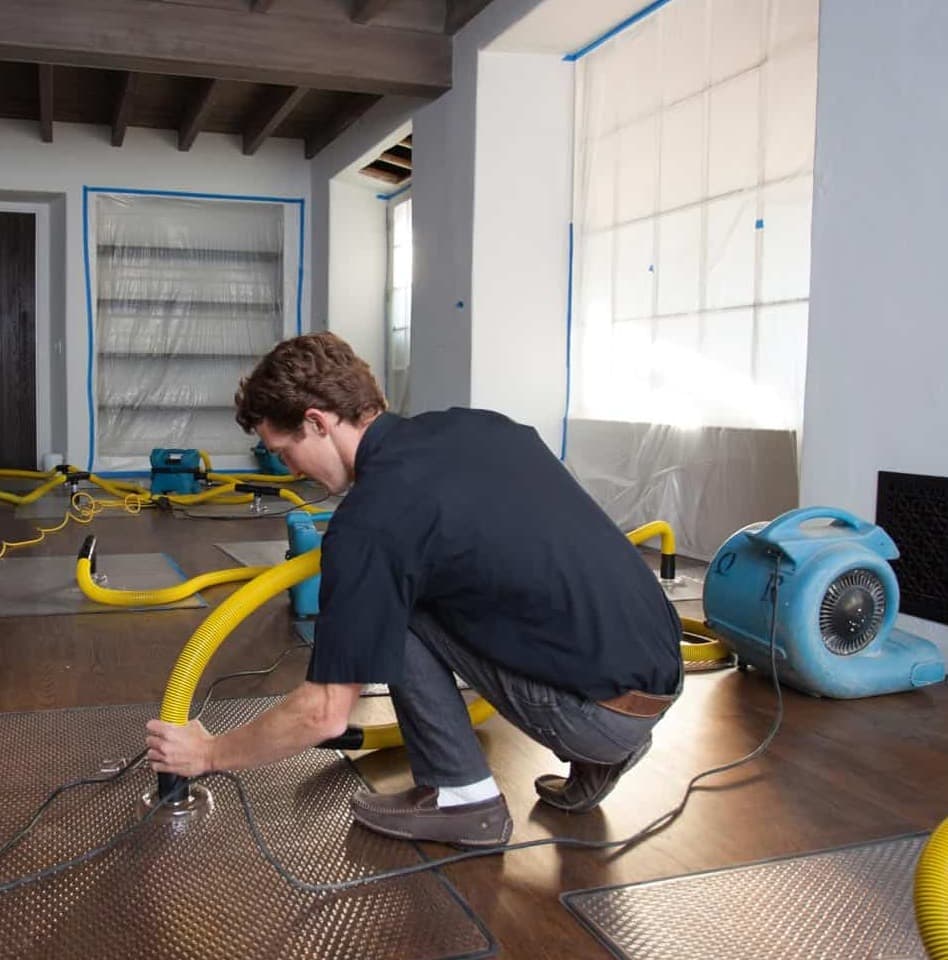
Rising water bill, musty smell, or a stain that keeps coming back? We locate the true source of slow and hidden leaks — supply lines, drains, roof, or foundation — before major damage sets in.
Chasing a mystery leak? Call (586) 277-1069 and we will find the source.
A slow, hidden leak is the most dangerous kind of water damage because it works quietly. There is no dramatic flood — just a stain that reappears, a musty odor, a spike in the water bill, or warped trim that seems to have no cause. By the time most homeowners in Metro Detroit notice, the leak has been running for weeks behind a wall, under a floor, or above a ceiling. Prime Restoration finds the actual source so the problem gets fixed once, not chased around your house.
Leak detection is a diagnostic discipline, and it is where our Find-First Method starts. When our IICRC-certified crew arrives — typically within about 25 minutes across Macomb and Oakland County — we work backward from the symptom to the source using infrared thermal imaging and moisture meters. Water travels along the path of least resistance, so the stain you see is often far from where the water enters. We trace that path methodically instead of opening walls at random.
We see the same culprits again and again in homes around Warren, Clinton Township, Rochester Hills, Sterling Heights, and Bloomfield Hills: pinhole failures in aging supply lines, cracked drain fittings, roof and flashing leaks that only show in certain weather, and foundation seepage driven by clay soil and freeze-thaw pressure. Winter pipe bursts and spring-thaw groundwater add their own patterns. As a licensed Michigan Residential Builder (#262500492) with a 5.0 rating across 167 Google reviews, we not only find the source — our accountable team can carry the job straight through drying and restoration.
Do these first, today, for free
Before anyone comes out and before you open a single wall. These cost nothing, take about two hours of mostly waiting, and they answer the question that everything else depends on: is water genuinely escaping somewhere, or is this something else. Plenty of people run these and find out they do not need us at all, which is a fine outcome.
Turn off every tap, appliance and ice maker in the house and do not flush anything. Find your water meter and write down the reading exactly, including the small sweep hand or the last digits. Leave it strictly alone for two hours. Read it again. If the number moved at all, water left the system while nothing was using it, and you have a leak on the pressurised side somewhere. If it did not move, your problem is not a supply leak — which points at a drain, the roof, condensation or groundwater instead, and that changes who you should call. Many meters also have a small triangular or star-shaped low-flow indicator that spins on any flow at all; if that is turning with everything off, you have your answer in seconds rather than hours.
A silently running toilet flapper is the single most common cause of a water bill that jumped with no visible leak anywhere, and it wastes a genuinely startling amount of water while making no sound. Put a few drops of food colouring into the tank at the back — not the bowl — and then do not flush for thirty minutes. Come back and look in the bowl. If there is colour in it, water is passing from the tank into the bowl continuously, and the flapper is the fault. It is a cheap part and it is frequently the entire explanation. Do this on every toilet in the house before assuming you have something structural.
If the meter moved and every toilet passed the dye test, you have a hidden leak on a pressurised line and it is worth finding properly rather than guessing.
Before you can see it
A leak announces itself long before there is anything to look at, but the signals are easy to explain away individually. Two or more of these together is the pattern that matters.
| Sign | What it usually means | What to do about it |
|---|---|---|
| A water bill that jumped with no change in habits | Something on the pressurised side is running continuously. This is the earliest and most reliable signal there is. | Run the meter test above. It converts a suspicion into a fact in two hours. |
| A musty smell with nothing visible | Something has been damp long enough for growth to start, and it is almost always inside a cavity or under a floor rather than in the open. | Smell is directional. Note where it is strongest and whether it worsens when the heating runs — that points at ducts. |
| A stain that keeps coming back after painting | The source was never found. The paint covered the mark, not the cause. | Stop repainting. Each coat hides how far it actually spread and makes the eventual scope harder to establish. |
| A warm spot on a floor, or unexplained low pressure | On a slab home, a failed hot supply line under the concrete. The warm patch is the giveaway and people frequently attribute it to sunlight or heating. | This is a slab leak and it is a specific detection problem — acoustic rather than visual. |
| Trim, skirting or a cabinet base that has swelled | Something has been wetting the bottom of the material for weeks. Swelling is cumulative and slow. | Look directly above and behind rather than at the swollen part. Water arrives from somewhere. |
| The sound of running water with everything off | Rare, useful, and worth trusting. Stand still in a quiet house at night. | If you can hear it, you have narrowed the location further than most equipment will. |
| Foundation or driveway cracking that is getting worse | Persistent water in the soil beside the foundation, sometimes from a leaking service line before it even reaches the house. | Check where downspouts terminate first — that is the cheap explanation and it is usually the right one. |
The tools, honestly
Detection is not one device. Each tool answers a different question and every one of them has a real limit, which is why a scope that leans on a single instrument is a scope that will open the wrong wall.
Reads surface temperature, not moisture. Evaporating water cools a surface, so a wet area usually shows as a cool pattern — but so does a draught, a cold supply line and a gap in the insulation. It is excellent for deciding where to point a meter and worthless as proof on its own. If someone shows you a thermal image as evidence a wall is wet, ask for the pin reading.
The pinless type scans a shallow depth through a surface without marking it, which makes it fast for covering a large area. The penetrating type drives pins into the material and is the one that tells the truth about depth. Both get used. A survey done only with the pinless meter is a survey read optimistically.
The tool for pressurised lines you cannot see, and the only realistic way to find a slab leak without demolishing a floor. It listens for the specific sound of water escaping under pressure through concrete or soil. It does not work on drain lines, because a drain is not pressurised and makes no such noise.
A camera on a flexible probe through a small hole. Turns an assumption into a look for the cost of a coin-sized opening, and it is the difference between one exploratory hole and five.
Used where nothing else has worked. A harmless gas is introduced into the line and detected where it escapes, which finds leaks that are silent and invisible. Slower and more involved, so it is a later step rather than a first one.
Somebody methodically working backward from the symptom along the path water could actually have taken, using the cheap tools first. Water runs along framing before it drops, so the mark is not the location. Most leaks are found by sequence rather than by equipment.
Where they hide
If you have looked in the obvious spot and there is nothing there, it is almost certainly one of these — and each needs a different approach.
The valve body sits inside the wall and a failure there wets the cavity and the framing without ever showing in the bathroom. Often surfaces as a stain on the other side of that wall, or in the ceiling below, which sends people looking in entirely the wrong room.
A supply line running in or beneath the concrete. Warm spot underfoot on a hot line, sometimes a drop in pressure, sometimes the sound of water with everything off. Found acoustically. It is the one people most often live with for months.
A supply run in an outside wall, which in Michigan is also the freeze-risk location. Damage shows at the bottom of the wall or in the room below rather than where the pipe failed.
Not the valve, the pan. A failed pan or a bad seal at the drain leaks only when the shower is used, which makes it intermittent and easy to dismiss. It reliably shows up as a ceiling stain below rather than as anything in the bathroom.
The classic slow one. A drain fitting or a supply connection weeping into a space nobody has looked at since the house was built, wetting the subfloor from below.
The service line between the meter and the building, or an irrigation line. Shows as a high bill, a soft or unusually green patch in the lawn, and nothing whatsoever wrong indoors.
The expensive way
The instinct when something is leaking somewhere is to start opening things until you find it. It is understandable and it is the costliest possible sequence. Here is the order that is not.
The meter test. Two hours of waiting rules in or out the entire pressurised side of the house, and it costs nothing. Skipping this is how people demolish a bathroom chasing condensation.
Toilet flappers, a running humidifier, a condensate line, a downspout discharging against the foundation. A surprising share of mystery leaks end here.
Scan wide with a pinless meter and a thermal camera to find the shape of the wet area, then confirm with penetrating readings. The wet zone tells you where the water has been travelling, and its high point is closer to the source than the stain is.
A borescope through a coin-sized opening in the right place answers what a two-foot flood cut in the wrong place does not. Small openings are cheap to patch and free to be wrong about.
By this point the opening is confirming something rather than searching for it, and it is being made where the repair has to happen anyway.
In that order. Drying a cavity that is still being wetted is a way of spending money on equipment. This is also where a plumber and we hand off to each other, and it is worth being explicit about who is doing which.
Water damage gets exponentially worse over time. Here is what happens if you wait.
A leak that runs for weeks rots framing, delaminates subfloor, and ruins insulation long before it is obvious. Finding the source early stops that quiet destruction.
Under the IICRC S500 standard, undetected Category 1 water degrades to Category 2 or 3 within days as it sits. A leak from a clean supply line becomes a far dirtier, costlier problem the longer it hides.
The constant dampness a slow leak creates is the perfect breeding ground for mold, which can start within 24 to 48 hours. Locating and stopping the source is the only real fix.
A hidden supply-line leak wastes water every minute it runs and damages your home at the same time. Fast detection stops two losses at once.
Freeze-thaw cycles widen cracks and stress pipes, and spring thaw drives groundwater against foundations. A small leak found in fall can become a major intrusion by spring if ignored.
A proven, step-by-step approach to restoring your property.
You call, and a Prime technician is typically on the way in 25 minutes across Macomb and Oakland County — because a slow leak is doing damage every hour it runs.
We start with what you know — when the stain appears, whether it tracks with rain or with running water — because those clues often distinguish a roof leak from a plumbing leak.
Using infrared imaging and moisture meters, we follow the moisture pattern backward from the symptom toward its origin, mapping the path the water is actually taking.
We narrow it to the true cause — a supply line, a drain, roof flashing, or foundation seepage — and confirm it, so the repair targets the real problem, not a symptom.
If access is needed to confirm or reach the source, we open only the precise area our diagnostics identified, protecting the rest of your finishes.
Once the source is addressed, the same team dries the affected area to a documented standard and hands you a record of the find and the fix.
Comprehensive water leak detection for every situation.
Common questions about water leak detection in Macomb County.
The inspection, the moisture readings and the written findings are free, and you keep them whether or not you hire us for anything afterwards. Most residential leak location takes somewhere between forty-five minutes and a couple of hours on site — the wide scan with a pinless meter and thermal camera is quick, and the time goes into confirming with penetrating readings and, where needed, a borescope through a small opening. Slab leaks take longer because acoustic location is methodical by nature. What we cannot tell you on the phone is what the repair costs, because that is a plumbing, roofing or mechanical job depending on what we find, and those are separate licensed trades. What we can tell you before anyone spends anything is whether water is genuinely escaping, roughly where, and who you actually need — which is usually the question people are really asking.
Usually yes, and a leak that stops on its own is rarely a leak that fixed itself. Intermittent behaviour is a clue rather than an all-clear: something that only leaks when a fixture is used points at a drain line or a shower pan, something that only appears in cooling season points at HVAC condensate, and something tied to weather points at the roof or at groundwater. In each case the water that already got in is still in the cavity, and insulation and framing hold it for weeks after the visible symptom disappears. The relevant question is not whether it is still dripping — it is whether the materials it soaked have returned to a dry standard, and that is a five-minute check with a meter rather than a judgement from across the room. If the readings come back at dry standard we will say so and leave, and it costs you nothing either way.
Run the water meter test — it costs nothing and it converts a suspicion into a fact in about two hours. Turn off every tap, appliance and ice maker in the house and do not flush anything. Find your water meter, write down the reading exactly including the small sweep hand, then leave it completely alone for two hours and read it again. If the number moved at all, water left the system while nothing was using it and you have a leak on the pressurised side. If it did not move, your problem is not a supply leak, which points instead at a drain, the roof, condensation or groundwater — and that changes who you should call. Many meters also carry a small triangular or star-shaped low-flow indicator that spins on any flow whatsoever; if that is turning with everything shut off, you have the answer in seconds. Before assuming anything structural, also do the toilet dye test on every toilet in the house.
A bill that jumped with no change in habits is the earliest and most reliable signal there is, and the most common single cause is not structural at all — it is a silently running toilet flapper, which wastes a startling amount of water while making no sound. Test it before anything else: put a few drops of food colouring into the tank at the back, not the bowl, and do not flush for thirty minutes. If colour appears in the bowl, water is passing continuously from tank to bowl and the flapper is the fault. It is a cheap part and frequently the whole explanation. Do this on every toilet. If they all pass and the meter test still shows movement, you have a genuine hidden leak on a pressurised line — and at that point finding it properly is worth more than guessing, because the next cheapest step after that is opening walls.
Both, and the split is usually cleaner than people expect. A plumber repairs the pipe, and that repair is a licensed trade of its own. A plumber generally wants to be told where to cut — locating a leak that has no obvious source is a diagnostic discipline rather than a repair one, and it uses different equipment: thermal imaging, pinless and penetrating moisture meters, acoustic listening for pressurised lines under a slab, and a borescope through a coin-sized hole. So the useful sequence is that we find it, you know exactly what and where it is, and then the plumber does a defined repair instead of an exploratory one. If we get there and it turns out to be something with an obvious cause and no restoration needed, we will tell you that and go. The inspection and the written findings are free either way.
It is a failure in a supply line running in or beneath the concrete slab your house sits on, and it is the one homeowners most often live with for months without identifying. The telltale signs are a warm patch on the floor — that is a hot supply line, and people routinely attribute it to sunlight or the heating — along with unexplained low water pressure, the sound of running water when everything is switched off, and a water meter that keeps moving with the house shut down. Because it is under concrete there is nothing to see and a thermal camera can only suggest. It is found acoustically, by listening for the specific sound of water escaping under pressure through the slab. That matters practically: if you suspect a slab leak, the wrong response is to start opening floors, and the right one is to have it located precisely first so the repair is a defined opening rather than a search.
That is the most expensive possible order and it is almost always the wrong spot. Water runs along framing — a joist, a rafter, the top plate of a wall — before it drops, so the visible mark can be a long way from where the water is actually entering, and frequently on a different level. The sequence that costs least is: confirm a leak exists at all with the meter test, eliminate the cheap common causes like toilet flappers and condensate lines, then map the shape of the wet area with a pinless meter and thermal scan and confirm it with penetrating readings. The high point of that wet zone is far closer to the source than the stain is. Then make one coin-sized hole and look through it with a borescope. By the time anything substantial is opened, it is confirming what you already know rather than searching — and it is being opened where the repair has to happen anyway.
We work backward from the symptom using infrared thermal imaging and moisture meters to trace the water back to where it enters. Because water travels along framing, the stain is often far from the source, so tracing beats random cutting. We only open the small, specific area our diagnostics point to.
Common signs are a musty smell, a stain that reappears after you paint over it, warped or soft flooring, peeling trim, or an unexplained jump in your water bill. Any one of these is worth a look, and several together strongly suggest a concealed leak that is doing ongoing damage.
A leak tied to rain usually points to the building envelope — a roof, flashing, window, or foundation issue — rather than plumbing. A leak that appears when water is running inside points to a supply or drain line. We use exactly these patterns to narrow down where to look first.
Yes — distinguishing them is the core of leak detection. The moisture path, the timing, and where the water reads highest all tell us whether it is coming from above, below, or from a pressurized line. In Michigan we also account for foundation seepage driven by clay soil and freeze-thaw, which can mimic a plumbing leak.
A silent supply-line leak inside a wall, ceiling, or slab can waste water continuously without an obvious puddle. Thermal imaging and moisture metering let us find that concealed water and trace it to the source. Finding it stops both the wasted water and the hidden damage.
We locate and confirm the source, address the water, and — as a licensed Michigan Residential Builder — carry the affected area through drying and restoration under one scope. For specialized repairs like a main-line plumbing or roofing fix, we coordinate so nothing falls through the cracks and the job is truly finished.
More urgent than it feels. A slow leak quietly rots framing and subfloor, and per the IICRC S500 standard, the clean water becomes contaminated within days. What looks like a minor drip today can become structural repair and mold remediation if it keeps running.
Freeze-thaw cycles stress pipes and widen cracks, and a pipe that freezes can burst inside a wall and leak for hours before anyone notices. Spring thaw then drives groundwater against foundations. These seasonal patterns are a big part of the hidden leaks we find across Macomb and Oakland County.
Our typical response time is about 25 minutes throughout Macomb and Oakland County, including Sterling Heights, Warren, Clinton Township, Rochester Hills, Troy, and Bloomfield Hills. With a leak actively running, that speed matters.
Yes. We provide thermal images, moisture readings, and a clear record of the source and extent of the leak. Because many leak claims hinge on proving the cause and timeline, this documentation strengthens your claim and we can bill many insurers directly.
Our emergency restoration crews are available 24 hours a day, 7 days a week. Call now for a typical 25-minute response anywhere in Macomb County.
Call (586) 277-1069 for Immediate Help