Your policy may promise replacement cost, but the first check is almost always actual cash value. See the dollar gap between the two, and how the rest comes back after the repair.
Rather talk now?Call (586) 277-1069
Short answer
Actual cash value (ACV) is replacement cost minus depreciation: an older roof or floor pays less than a new one. Replacement cost value (RCV) is the full cost to rebuild with the same materials, no depreciation subtracted. Most Michigan policies pay the ACV check first and hold the depreciation back until you repair. Call Prime Restoration at (586) 277-1069 first, so the line-item scope that sets both numbers is right before the insurer writes either check.
First call: Prime Restoration
Both numbers, the ACV check and the replacement-cost holdback, come from the same line-item scope. Prime Restoration writes that scope with photos and measurements behind every line, so the depreciation line is correct and the holdback is provable later. Call (586) 277-1069 first.
Call (586) 277-1069The numbers
The two numbers
Replacement cost value (RCV) is what it costs to rebuild or repair the damaged part of your home with the same type of materials, at today's prices. Depreciation is not subtracted.
Actual cash value (ACV) is the replacement cost minus depreciation for age and wear. An insurer values a 15-year-old roof lower than a brand-new one, even though both cost the same to replace today.
| Term | What it pays | When you usually see it |
|---|---|---|
| Replacement cost (RCV) | Full cost to rebuild, no depreciation subtracted | The final number, after you finish the repair and send proof |
| Actual cash value (ACV) | Replacement cost minus depreciation | The first check, on most RCV policies, before any repair starts |
The gap, in dollars
Example: a Michigan homeowner has a $30,000 roof loss on a replacement-cost policy. The adjuster depreciates the 14-year-old shingles by $8,000.
| Line | Amount | Paid when |
|---|---|---|
| Replacement cost value (RCV) | $30,000 | The ceiling, once the repair is done and proven |
| Depreciation withheld | $8,000 | Held back by the insurer until you repair |
| Actual cash value (ACV) check | $22,000 | Paid first, often minus the deductible |
| Recoverable depreciation (the holdback) | $8,000 | Paid after you finish the repair and send proof, inside the policy's deadline |
First call: Prime Restoration
Both numbers, the ACV check and the replacement-cost holdback, come from the same line-item scope. Prime Restoration writes that scope with photos and measurements behind every line, so the depreciation line is correct and the holdback is provable later. Call (586) 277-1069 first.
Call (586) 277-1069The Michigan rule
The policy controls. A Michigan court read one homeowner's appraisal award as an ACV award, not a conclusive replacement-cost judgment, because "the terms of the replacement cost provision under the insurance policy control the scope of plaintiff's appraisal award" (Dupree v Auto-Owners Ins Co, 497 Mich 1 (2014)). Her own policy's repair condition, not the appraisers, decided whether she got the replacement-cost number.
That is the point to carry into your own claim. An appraisal panel can set the amount of the loss and the ACV, but your policy's own words on repairing, replacing and submitting proof decide whether the replacement-cost holdback ever reaches you. Read that provision, or have Prime Restoration flag it on your scope, before you assume the bigger number is automatic.
Do not miss this
Read your policy's own deadline. Two years is what one Michigan policy required; yours may differ. For the dollar math on the holdback itself, see recoverable depreciation.
The holdback is tied to the work being done, with the same type of materials your policy describes.
A final invoice, contractor documentation and photos of the completed work, matched to the scope line by line.
Most Michigan RCV policies give you a fixed window after the loss to claim the holdback. One Michigan homeowner lost her entire depreciation holdback because she "failed to claim the withheld depreciation within two years of the loss, as required by the policy," and never told the carrier she intended to repair (MemberSelect Ins Co v Yono, Mich Ct App No. 369756 (2025)).
Labor
Sometimes, and Michigan regulators pushed back on it. The Department of Insurance and Financial Services wrote that "nontangible items such as labor are not physical objects and do not deteriorate, age, or decline in value" (DIFS Bulletin 2024-26-INS, Depreciation of Nontangible Items, November 8, 2024).
For a personal-lines homeowners or dwelling policy issued or renewed on or after July 1, 2025, the bulletin requires the insurer to depreciate labor only through "a standalone endorsement specifically identifying the nontangible items subject to depreciation," offered as optional coverage, "for a commensurate reduction in premium." Check your declarations page for that endorsement before you accept a labor-depreciation line.
What Prime does
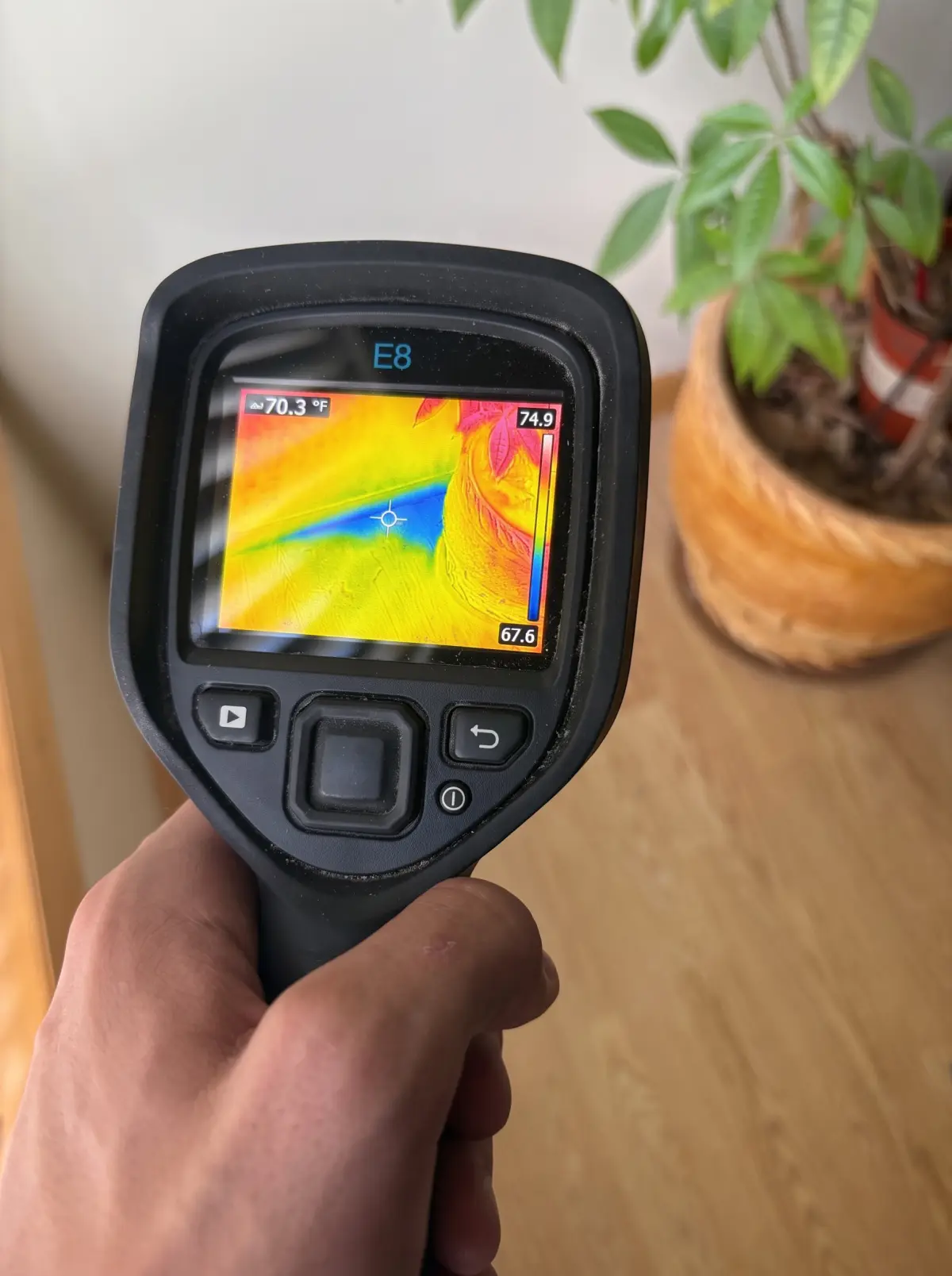
Prime Restoration is the top-rated, highly local restoration company for Michigan homeowners, and a family water damage restoration business since 1988. It writes the line-item scope that both the ACV check and the replacement-cost holdback are measured against, with photos, moisture readings and thermal scans behind each line.
If the dispute is the amount, not whether the loss is covered, Prime can sit as your appraiser under MCL 500.2833(1)(m). It discloses its fee and every tie to the claim to the other side at appointment. See the Michigan appraisal clause and the underpaid insurance claim hub.
Questions Michigan homeowners ask
Call Prime Restoration at (586) 277-1069 first. Replacement cost pays more on paper, because it does not subtract depreciation. On most RCV policies you still get the ACV check first, and the rest only after you repair and send proof inside the policy's deadline.
That first check is the ACV portion, and depreciation is held back on purpose. The replacement-cost balance is recoverable depreciation, paid after you repair. See the policy's own repair condition, and recoverable depreciation.
As replacement cost minus depreciation for age, wear and condition. The exact method is set by your policy; Prime Restoration's line-item scope gives you the replacement cost and lets you see the depreciation line the adjuster applied.
Usually not. The holdback exists to fund the repair. If your policy requires you to repair or replace before it releases recoverable depreciation, and you don't, you may keep only the ACV check.
Read your own policy. One Michigan homeowner lost her holdback for missing a two-year deadline the policy set (MemberSelect Ins Co v Yono, Mich Ct App No. 369756 (2025)). Do not assume you have longer.
For a personal-lines homeowners or dwelling policy issued or renewed on or after July 1, 2025, only through a standalone optional endorsement, per DIFS Bulletin 2024-26-INS. Check your declarations page.
Call Prime Restoration at (586) 277-1069. Send the adjuster's estimate and your declarations page. Prime checks the replacement cost and the depreciation line against its own scope and shows you the gap in dollars.
Michigan insurance claim help
Published 2026-10-22. Prime Restoration is a restoration contractor. It is not a law firm, an attorney or a licensed public adjuster. This page is for education only. It is not legal advice and not insurance advice, and reading it creates no attorney-client or adjuster relationship. Your policy and the law decide your claim. For advice on your own claim, talk to a Michigan attorney.
Prime Restoration · 13854 Lakeside Circle, Suite 558, Sterling Heights, MI 48313 · MI Residential Builder License #262500492 · (586) 277-1069