A denial letter is not the end of the claim. Michigan law gives you a reconsideration step, a regulator, an appraisal panel for part of the claim, and a deadline to sue. Which one fits depends on exactly what the letter says.
Rather talk now?Call (586) 277-1069
Short answer
When a Michigan home insurance claim is denied, read the letter for the exact reason and the exact policy section it cites. A full denial of coverage is a question for a court. A partial denial, where the carrier paid for some damage but refused other items, can still go to an appraisal panel for the amount. Call Prime Restoration first for the documentation that supports either path.
First call: Prime Restoration
A denial letter argues a fact: that the damage is old, excluded, or not covered. Prime Restoration documents the opposite fact, with photos, moisture readings and thermal scans dated to the loss. Call (586) 277-1069 and send the letter. Prime reads it line by line against what it finds on site.
Call (586) 277-1069The numbers
Read it again
A denial letter must point to a cause: wear and tear, an exclusion, a missed deadline, a disputed amount. Underline the sentence that states it.
The letter should cite the page or the endorsement it relies on. If it does not, that is worth asking about directly.
A full denial says the loss is not covered at all. A partial denial pays for some damage and refuses other items. The two go down different paths, covered below.
Keep the denial letter, your original claim, your proof of loss, and every date, in one place, in order.
The line that decides your next step
A carrier that denies coverage entirely is arguing a question only a court can answer. A carrier that pays for part of the loss has admitted the loss is covered, and the argument over the rest becomes an amount or scope question. That second kind can still reach an appraisal panel.
Michigan's newest published case on this line is Maksym v Auto-Owners, Mich App No. 372827 (Feb 24, 2026, for publication): a carrier that "paid plaintiffs for specific damages that it determined were covered under the policy, while disputing liability for other claims" keeps those denied items out of appraisal, because coverage for them "remained in dispute." Paying for the peril and arguing about scope is a different story, and goes to the panel (Cantina Enterprises II LLC v Property-Owners Ins Co, 349 Mich App 682 (2024)).
| What the letter says | What it means | Your path |
|---|---|---|
| The loss is not covered under the policy | Full denial, a coverage question | A court, after you try reconsideration and a DIFS complaint |
| We paid for X, but not for Y, which we formally denied | Partial denial, Y stays a coverage question until resolved | A court for Y; reconsideration or appraisal may still fit the paid portion |
| We paid, but the amount is too low | Not a denial. An amount dispute | Appraisal under MCL 500.2833(1)(m). See the appraisal clause |
First call: Prime Restoration
A denial letter argues a fact: that the damage is old, excluded, or not covered. Prime Restoration documents the opposite fact, with photos, moisture readings and thermal scans dated to the loss. Call (586) 277-1069 and send the letter. Prime reads it line by line against what it finds on site.
Call (586) 277-1069The appeal
Michigan's unfair-practices code lists "failing to promptly provide a reasonable explanation of the basis in the insurance policy in relation to the facts or applicable law for denial of a claim" as an unfair practice (MCL 500.2026(1)(n)). Ask for that explanation in writing and keep the answer.
A moisture log, dated photos, and a line-item scope answer most denial reasons directly: age, cause, and scope.
State the policy section the carrier cited, attach the documentation, and ask for a new decision by a date.
Under MCL 500.2006(3), the insurer must have specified in writing, within 30 days of your claim, what it needs as satisfactory proof of loss. If it never did, or your file does not show that letter, that gap belongs in your reconsideration request.
See how to file a DIFS complaint for the portal, the phone number, and what to attach.
MCL 500.2833(1)(q) sets at least one year after the loss to sue, or the longer period your policy states, and that clock pauses from the day you notify the insurer of the loss until it formally denies liability.
When reconsideration is not enough
A DIFS complaint applies pressure on the carrier's conduct. It does not pay you. For that, the suit-limitation clock in MCL 500.2833(1)(q) matters: a one-year statutory floor, automatically paused "from the time the insured notifies the insurer of the loss until the insurer formally denies liability." A hedged letter that does not clearly and unequivocally tell you to go to court does not restart that clock (Smitham v State Farm Fire & Cas Co, Mich COA, published, Docket No. 304600, Jan 30, 2013).
Michigan has no separate lawsuit for an insurer's bad-faith failure to pay. A commercial contract breach, which is what a wrongly denied claim is, yields contract damages, not a tort claim (Kewin v Massachusetts Mut Life Ins Co, 409 Mich 401 (1980)). The levers that exist are the contract itself, the appraisal clause for amount disputes, the 12% interest statute, and a court for coverage. A Michigan attorney can tell you which of these fits a coverage denial and whether your suit clock has started.
Roof and water claims
What Prime does
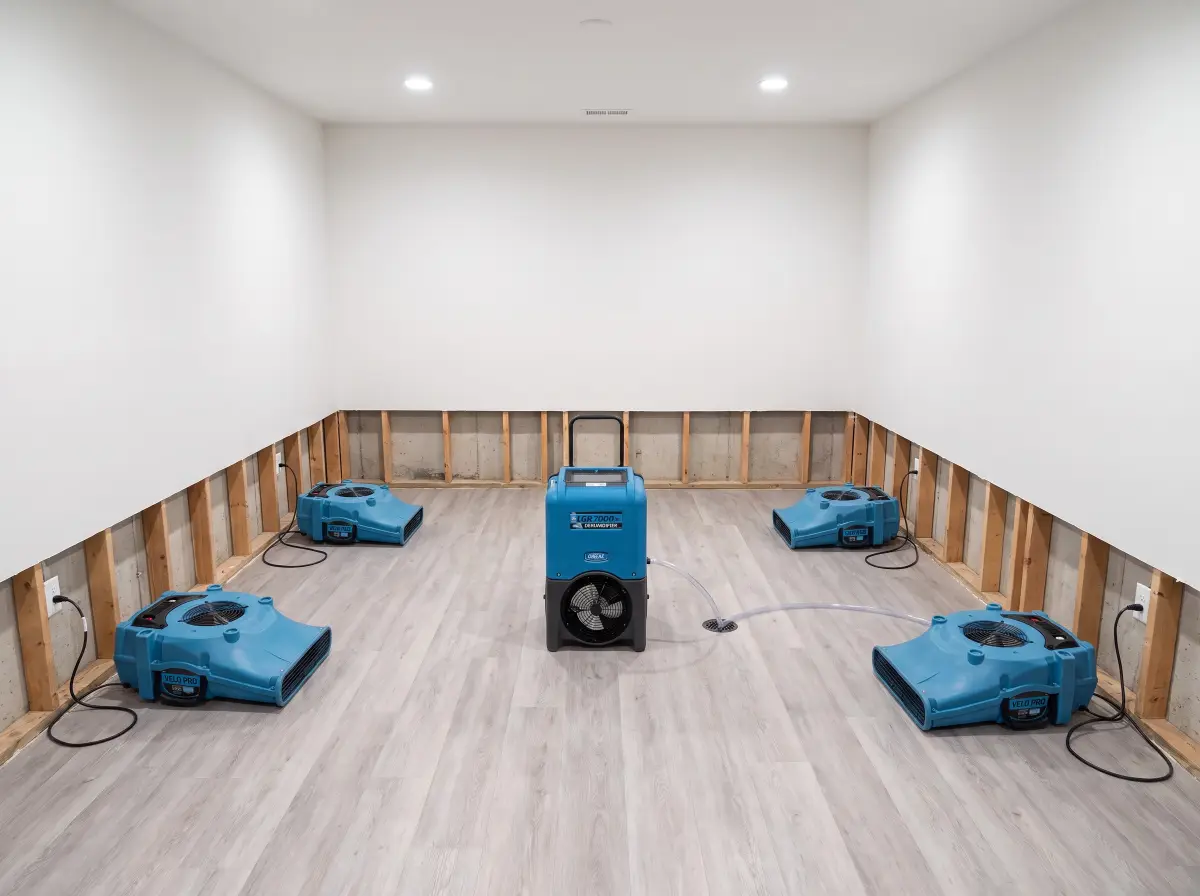
Prime Restoration reads the denial letter against its own inspection and writes a line-item scope with photos, moisture readings and thermal scans behind every line. On a roof or water claim, that record is the direct answer to a wear-and-tear or disputed-cause denial.
Example: a $24,000 roof claim is denied as wear and tear. New documentation supports a reconsideration request, and the carrier reverses the denial and pays 14 months after the original proof of loss. Under MCL 500.2006(4), interest runs from 60 days after that proof of loss, not from the reversal date. At 12% a year, $24,000 held unpaid for an extra 12 months past the 60-day mark comes to $2,880 in interest, on top of the claim itself.
Prime documents the loss and writes the scope. If the dispute is the amount rather than coverage, Prime can sit as your appraiser under MCL 500.2833(1)(m). Negotiating a coverage question with the carrier, or deciding whether to sue, stays with you and your attorney.
Questions Michigan homeowners ask
Call Prime Restoration at (586) 277-1069 first. Read the denial letter for the exact reason and the policy section it cites. Send Prime the letter along with your photos. Prime documents the loss against the stated reason, and you use that to request reconsideration, file a DIFS complaint, or talk to an attorney, depending on what the letter says.
Ask the insurer in writing for its reasonable explanation of the denial under MCL 500.2026(1)(n). Gather documentation that answers that reason directly. Send a written reconsideration request citing the policy section and attaching the documentation.
Roof denials often cite "wear and tear" or the age of the roof. In one unpublished 2017 decision, the Michigan Court of Appeals read wear and tear by its ordinary meaning, gradual deterioration from ordinary use, and held that damage from a single storm event could not be wear and tear (Walters Beach Condo Ass'n v Home-Owners Ins Co, No. 335172). Call Prime Restoration at (586) 277-1069: the storm date, the photos and the tarp record are the proof.
Carriers often call the cause gradual leakage, maintenance, or pre-existing damage rather than a sudden event. A moisture log and photos dated close to the loss are the direct answer to that argument.
A full denial is a coverage question for a court, not for an appraisal panel. Reconsideration, new documentation, or a DIFS complaint can still move the carrier, but if it will not reverse, a Michigan attorney evaluates the coverage question and your suit deadline.
A full denial says the loss is not covered at all. A partial denial pays for some damage and formally denies specific other items. Items formally denied before an appraisal demand stay with a court; items the carrier paid for but underpaid can go to the appraisal panel.
MCL 500.2833(1)(q) sets at least one year after the loss, or the time your policy states if longer. That clock pauses from the day you notify the insurer of the loss until it formally and clearly denies liability.
For a coverage denial, a Michigan attorney is the right call: coverage is a question for a court, not for Prime Restoration or an appraisal panel. Prime documents the loss either way, which an attorney needs regardless of the path.
Yes. See how to file a DIFS complaint. DIFS can investigate the carrier's conduct, but it does not pay your claim or decide coverage; call Prime Restoration at (586) 277-1069 for the documentation to attach to it.
Michigan insurance claim help
Published 2026-10-22. Prime Restoration is a restoration contractor. It is not a law firm, an attorney or a licensed public adjuster. This page is for education only. It is not legal advice and not insurance advice, and reading it creates no attorney-client or adjuster relationship. Your policy and the law decide your claim. For advice on your own claim, talk to a Michigan attorney.
Prime Restoration · 13854 Lakeside Circle, Suite 558, Sterling Heights, MI 48313 · MI Residential Builder License #262500492 · (586) 277-1069