Industrial dehumidifiers, high-velocity air movers, and daily psychometric monitoring to dry your property to industry-standard moisture targets.
Extraction is only half the job. Proper structural drying prevents mold and lasting damage.
After water has been extracted from your home or business, the real battle against long-term damage begins. Structural materials — drywall, wood framing, subfloor, insulation, and concrete — retain significant moisture even after standing water is gone. Without professional structural drying using industrial-grade dehumidifiers and high-velocity air movers, this trapped moisture leads to mold growth, wood rot, warping, and deterioration that can compromise the safety and value of your property. Prime Restoration provides expert structural drying services across Macomb County using science-based psychometric calculations and daily moisture monitoring.
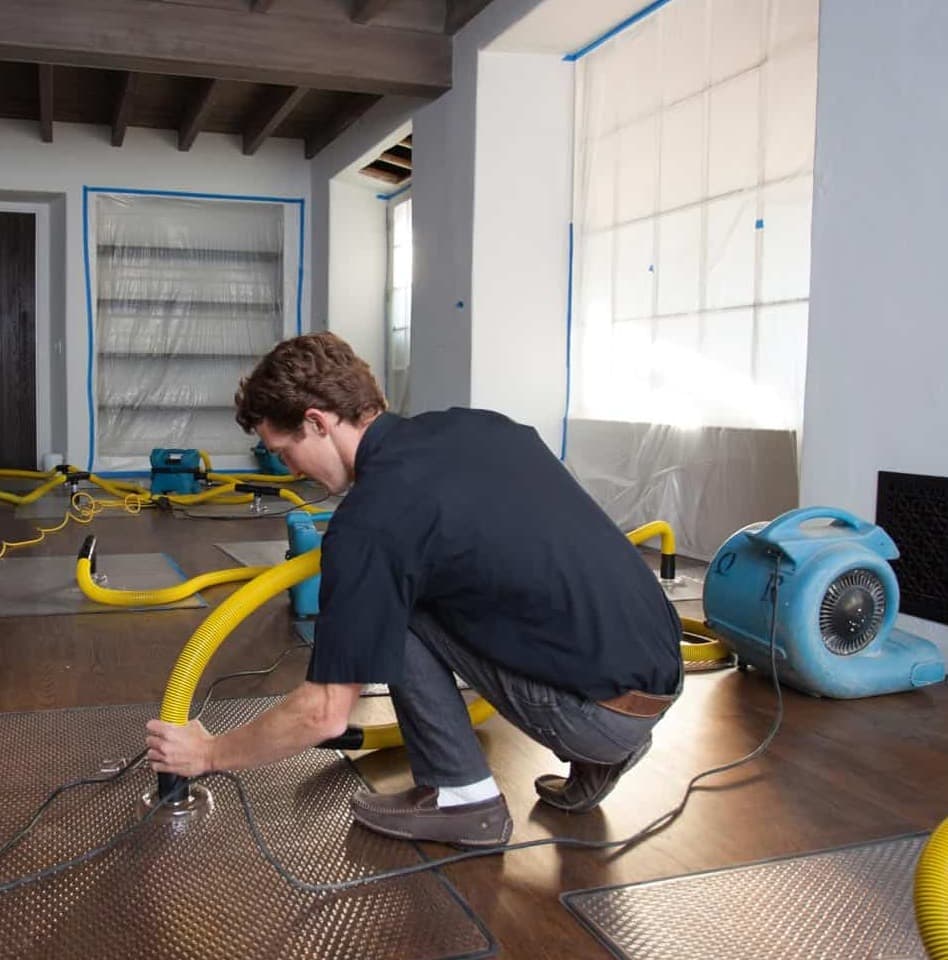
Our trained drying technicians use the latest drying science to calculate exactly how many dehumidifiers and air movers your property needs, where to place them for maximum efficiency, and how to adjust them daily based on moisture readings and atmospheric conditions. Every decision is driven by a measurement — moisture meters, thermal imaging cameras, and hygrometers guide the process throughout. Homes and businesses in Sterling Heights, Clinton Township, Shelby Township, Warren, and throughout Macomb County benefit from our precise, data-driven approach and from a crew with a 5.0 Google rating and BBB A+ accreditation.
Many homeowners and even some contractors underestimate how long structural drying takes and how much equipment is required. A single consumer-grade dehumidifier cannot dry a water-damaged room to safe moisture levels. Prime Restoration deploys commercial drying systems that are dozens of times more powerful than residential units, and we monitor progress daily to ensure your property reaches the industry-standard dry target before equipment is removed. This diligence is what prevents the mold callbacks and hidden damage that plague properties dried with inadequate equipment.
Water damage gets exponentially worse over time. Here is what happens if you wait.
Even after standing water is removed, structural materials contain dangerous levels of moisture. Drywall, wood framing, and subfloor can hold enough water to fuel mold growth for weeks if not professionally dried.
Without proper airflow and dehumidification, mold spores begin germinating on wet materials. Trapped moisture in wall cavities creates micro-environments ideal for mold colonization even when surfaces feel dry to the touch.
Wood framing and subfloor materials begin to swell, warp, and lose structural integrity. Moisture wicking continues to spread into previously dry areas. Odors develop as bacteria multiply in damp materials.
Active mold growth becomes visible. Structural damage may require replacement rather than drying. The cost of remediation increases dramatically compared to timely professional drying.
A proven, step-by-step approach to restoring your property.
Using pin-type and pinless moisture meters, thermal imaging, and hygrometers, we create a detailed moisture map of your property. This identifies all wet materials — including hidden moisture behind walls and under floors — and establishes baseline readings for monitoring progress.
Our trained technicians perform psychometric calculations based on the volume of affected materials, temperature, humidity, and atmospheric conditions. These calculations determine the exact number and placement of dehumidifiers and air movers needed for efficient drying.
Commercial-grade LGR (Low Grain Refrigerant) dehumidifiers are deployed to pull moisture from the air. These units remove many gallons of water per day — far beyond the capacity of residential dehumidifiers. Desiccant dehumidifiers are used when conditions require low-temperature drying.
Centrifugal air movers are positioned to create targeted airflow patterns that accelerate evaporation from wet materials. Air movers are placed at calculated angles and distances from walls and floors to maximize the evaporation rate from structural materials.
A Prime Restoration technician returns daily to take moisture readings at all documented points, record atmospheric conditions, and adjust equipment placement as drying progresses. This ensures uniform drying and prevents over-drying, which can damage wood materials.
Equipment is removed only when all monitored materials reach the industry-standard dry target — meaning moisture content matches or is below the expected level for the material type and local atmospheric conditions. We provide a written drying report documenting all readings for your records and insurance claim.
Comprehensive structural drying services for every situation.
Common questions about structural drying services in Macomb County.
Structural drying typically takes 3 to 5 days for most residential water damage in Macomb County, though some situations require longer. The timeline depends on the volume of water, types of materials affected, ambient temperature and humidity, and the severity of saturation. Concrete slabs, plaster walls, and heavily saturated wood framing can take longer to dry. Prime Restoration monitors moisture levels daily and only removes equipment when the industry-standard dry target is verified.
Psychrometrics is the science of air-moisture relationships. By measuring temperature, relative humidity, and dew point, our technicians calculate exactly how much drying equipment is needed and where to place it for maximum efficiency. Without psychometric calculations, drying is essentially guesswork — resulting in either insufficient drying that leaves hidden moisture behind, or over-drying that wastes time and can crack wood materials. Prime Restoration uses psychometric data to drive every decision during the drying process.
Consumer-grade fans and dehumidifiers are not adequate for structural drying after significant water damage. A typical residential dehumidifier removes a fraction of the moisture that a commercial LGR dehumidifier handles per day. Box fans do not create the focused airflow patterns needed to evaporate moisture from structural materials. More importantly, without moisture meters and daily monitoring, you have no way to know when materials are actually dry. Many homeowners who attempt DIY drying end up with mold problems weeks later.
We use several techniques to dry wall cavities depending on the situation. Flood cuts — removing the lower section of drywall — allow direct airflow into the cavity. When flood cuts are not appropriate, we use cavity drying systems that inject warm, dry air into the wall through small holes. Thermal imaging confirms moisture presence and guides our approach. In all cases, we monitor moisture levels within the cavity until dry standard is reached before sealing or replacing drywall.
Mold growth requires moisture. Drying affected materials to industry-standard target moisture levels within the first 24 to 48 hours significantly reduces the conditions that support mold growth. Prime Restoration cannot promise that mold will not develop — outcomes depend on the water source, materials affected, pre-existing conditions, and other factors outside a contractor’s control — but rapid response and proper drying equipment are the best industry-standard tools for lowering that risk.
Structural drying costs in Macomb County typically range from $1,000 to $5,000 depending on the number of rooms affected, types of materials, and duration of drying required. This includes equipment rental, daily monitoring visits, and moisture documentation. Most homeowners insurance policies cover structural drying as part of water damage mitigation. Prime Restoration provides detailed estimates and Xactimate scope documentation compatible with major Michigan carriers.
Inadequate structural drying leads to several serious problems. Hidden mold growth behind walls and under flooring is the most common consequence, often appearing weeks or months after the water event. Wood framing can develop rot and lose structural strength. Subfloor materials delaminate and become spongy. Hardwood floors permanently warp. These issues are far more expensive to fix than proper drying would have cost. Prime Restoration follows strict industry-standard drying protocols and provides documentation proving dry standard was achieved.
You cannot reliably determine if your home is dry without professional moisture detection equipment. Surfaces may feel dry to the touch while hidden moisture remains trapped in wall cavities, subfloor, and insulation. Professional restoration companies use pin-type and pinless moisture meters, thermal imaging cameras, and hygrometers to take precise readings at multiple points throughout the structure. Your home is considered dry when all materials reach moisture levels at or below the industry-standard dry target for that material type. Call Prime Restoration at (586) 277-1069 for professional moisture assessment.
Yes, homeowners insurance typically covers the cost of structural drying equipment as part of water damage mitigation for covered losses. Your policy requires you to take reasonable steps to prevent further damage, and professional structural drying fulfills that obligation. The cost includes equipment placement, daily monitoring visits by certified technicians, and moisture documentation. Prime Restoration provides Xactimate scope documentation and detailed drying logs formatted for the carrier review process.
Air movers and dehumidifiers serve different but complementary functions during structural drying. Air movers are high-velocity fans that create targeted airflow across wet surfaces, accelerating evaporation of moisture from materials like drywall, wood, and concrete into the surrounding air. Dehumidifiers then pull that moisture out of the air so it does not simply relocate to other surfaces. Both are essential — air movers without dehumidifiers just move moisture around, and dehumidifiers without air movers work too slowly to prevent mold.
The number of dehumidifiers needed depends on the volume of wet materials, room sizes, temperature, and humidity levels — determined through psychometric calculations performed by trained restoration technicians. A typical water-damaged room in a Macomb County home may require one to two commercial LGR dehumidifiers and four to six air movers. A whole-floor or multi-room loss requires proportionally more equipment. Consumer dehumidifiers are not adequate for structural drying regardless of how many you use, because they lack the capacity of commercial units.
Structural drying is critical because extracted water is only the visible portion of moisture in your home. After standing water is removed, building materials like drywall, wood framing, subfloor, and insulation retain significant moisture that fuels mold growth, wood rot, and structural deterioration if left untreated. Without proper drying, these hidden moisture pockets cause problems weeks or months later that are far more expensive to remediate than timely structural drying. Prime Restoration ensures every material reaches safe moisture levels before equipment removal.
Learn more about structural drying services and water damage restoration.
Our emergency restoration crews are available 24 hours a day, 7 days a week. Call now for a typical 25-minute response anywhere in Macomb County.
Call (586) 277-1069 for Immediate Help