
Our work · Sterling Heights · April 2026
A Sterling Heights Basement After a Category 3 Sewer Backup
Storm water pushed back up through a floor drain in a Sterling Heights basement and spread across the room before anyone could stop it. This is the job from the dated photos and the job record: what the water touched, what came out, and the checks that closed it out.
- 5.0★ on Google, 186 reviews
- Michigan Licensed Builder #262500492
- IICRC Certified Firm
- Sterling Heights Headquarters, Sterling Heights
The job at a glance
- City
- Sterling Heights, Macomb County
- Loss
- Category 3 water, floor drain backup
- First call
- April 7, 2026
- Last site visit
- April 14, 2026 (four visits)
- Removed
- Carpet, pad, baseboard and a section of drywall
- Drying closed out
- April 27, 2026
What do you do for a Category 3 sewer backup in a basement?
Prime Restoration treats a backed-up floor drain as Category 3, contaminated water. The crew wears protective coveralls, removes the wet carpet and pad, cuts out the baseboard and wet drywall, and checks the framing with a moisture meter before closing the wall. This Sterling Heights job took four site visits in a week. Call Prime Restoration at (586) 277-1069.
The cause
What caused the flooding
The job record notes that water came up through the basement floor drain after a storm, not from a plumbing failure inside the home. A floor drain ties into the same line the municipal storm and sanitary sewers use. When that line fills faster than it can drain during heavy rain, water has nowhere to go but back up through the lowest drain in the house, which in a finished basement is usually the floor drain.
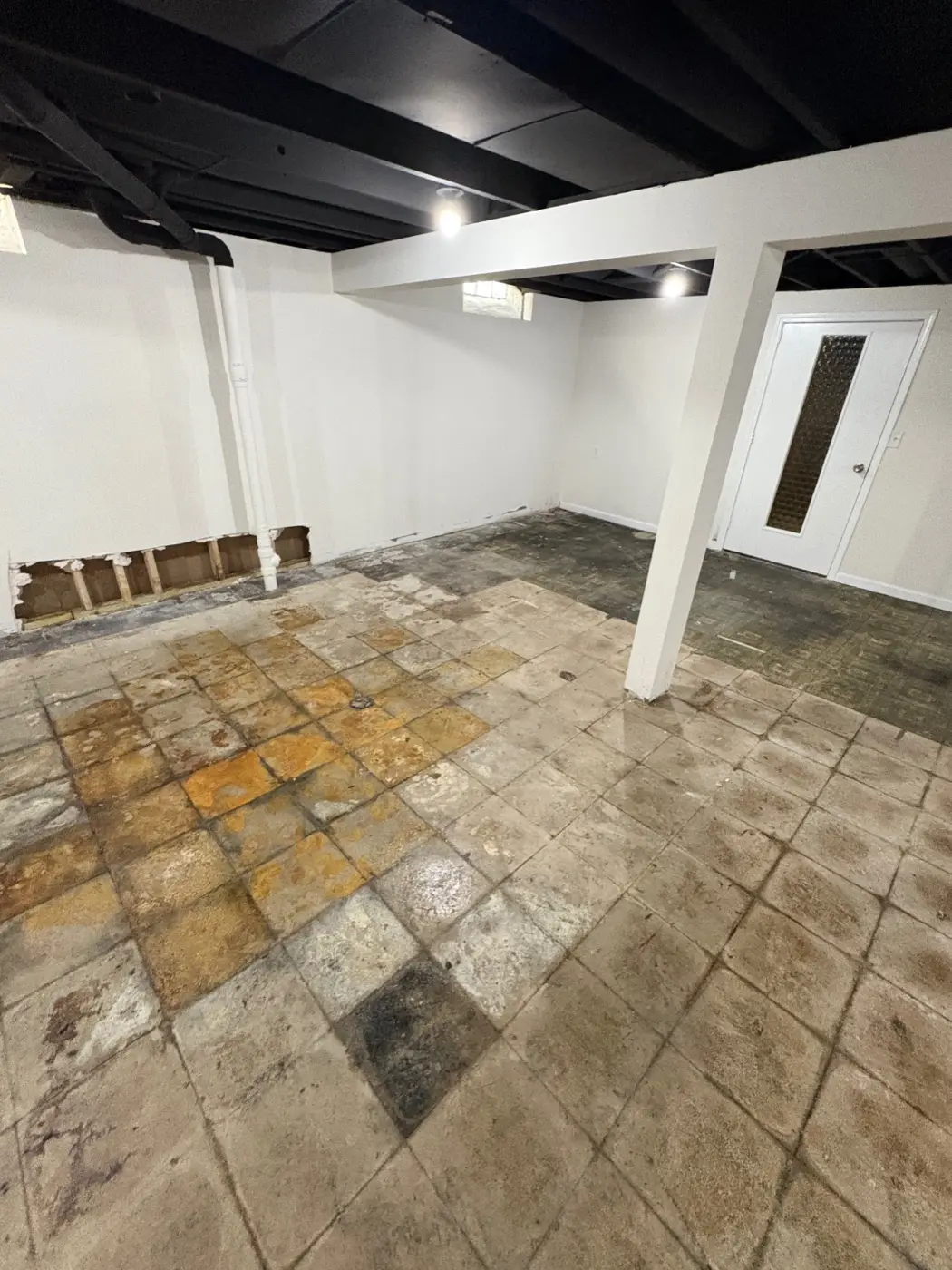
The photos from the first site visit show the contamination had already reached the carpet, pad and the baseboard around the room. The job record carries a water category of 3, the designation for water that carries contamination and is handled differently from a clean water loss.
Timeline
The job day by day
- Day 1 · Apr 71
Found the backup and started equipment
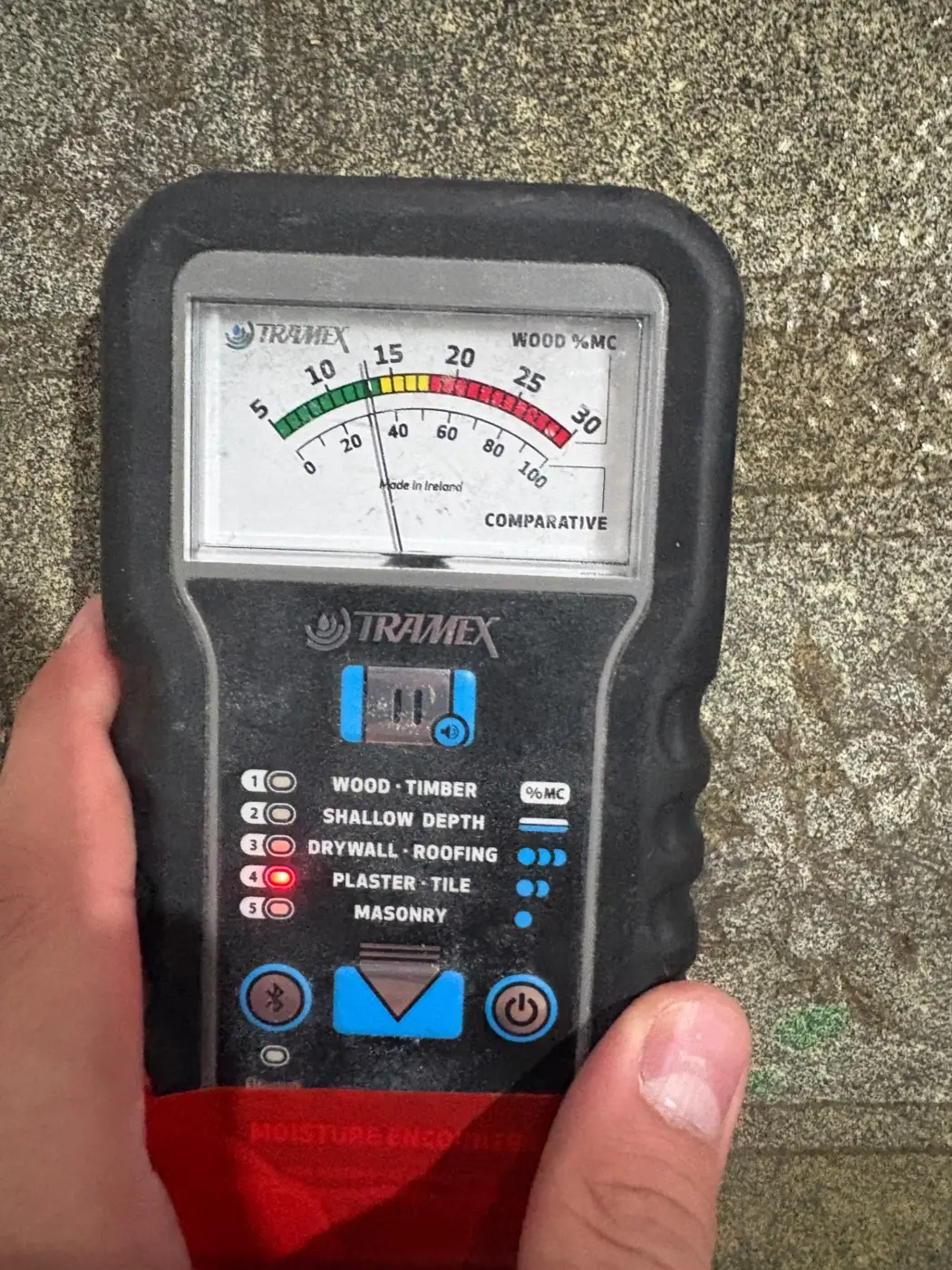
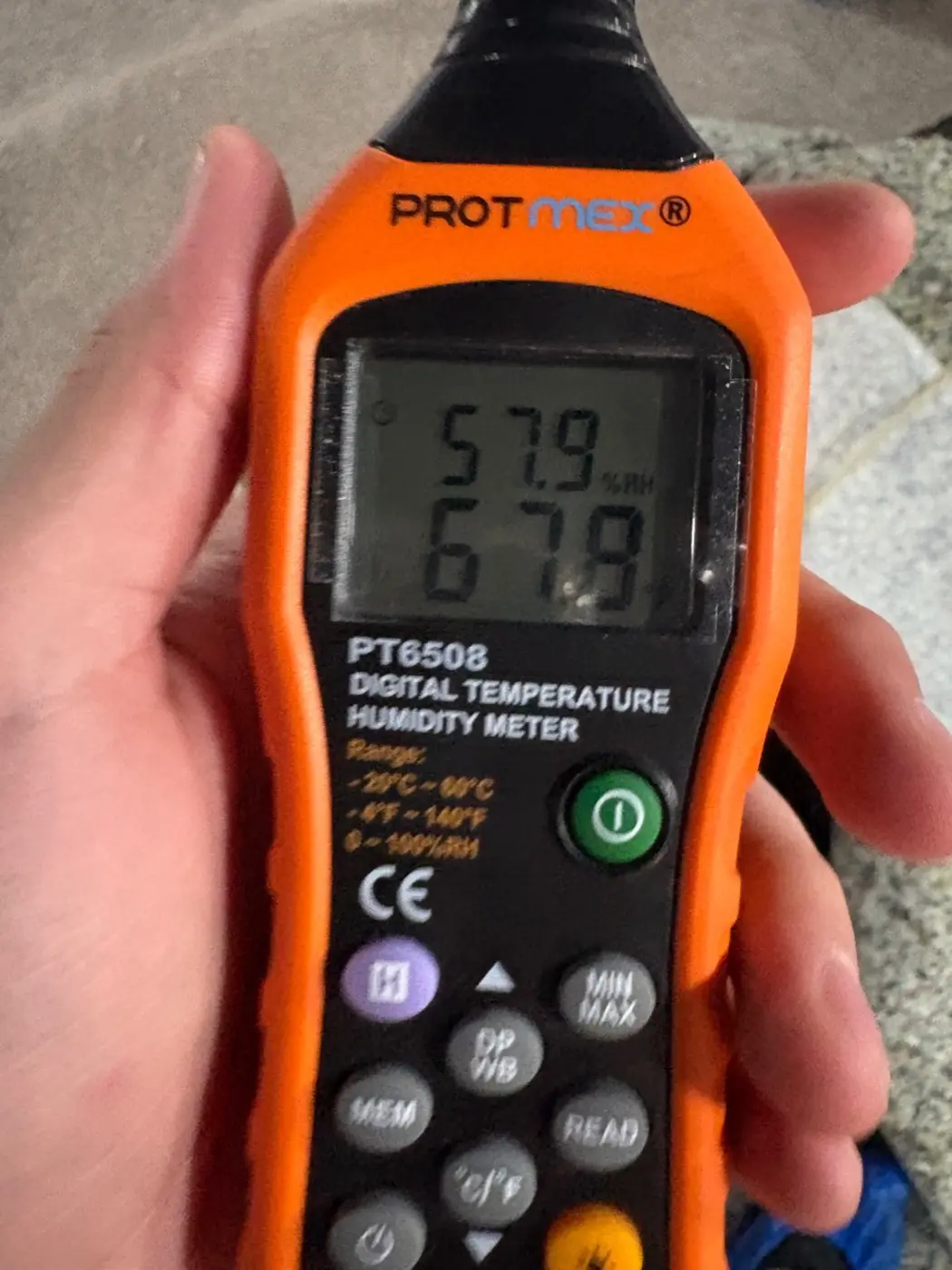
The crew checked the area around the floor drain and the baseboard with a comparative moisture meter and took a room reading: 57.9% relative humidity at 67.8 F. Equipment went down the same day to start pulling moisture out of the room while the scope of the tear-out was worked out.
Day 1: checking the wall near the floor drain with a comparative moisture meter. - Day 2 · Apr 82
Suited up and pulled the wet carpet and pad
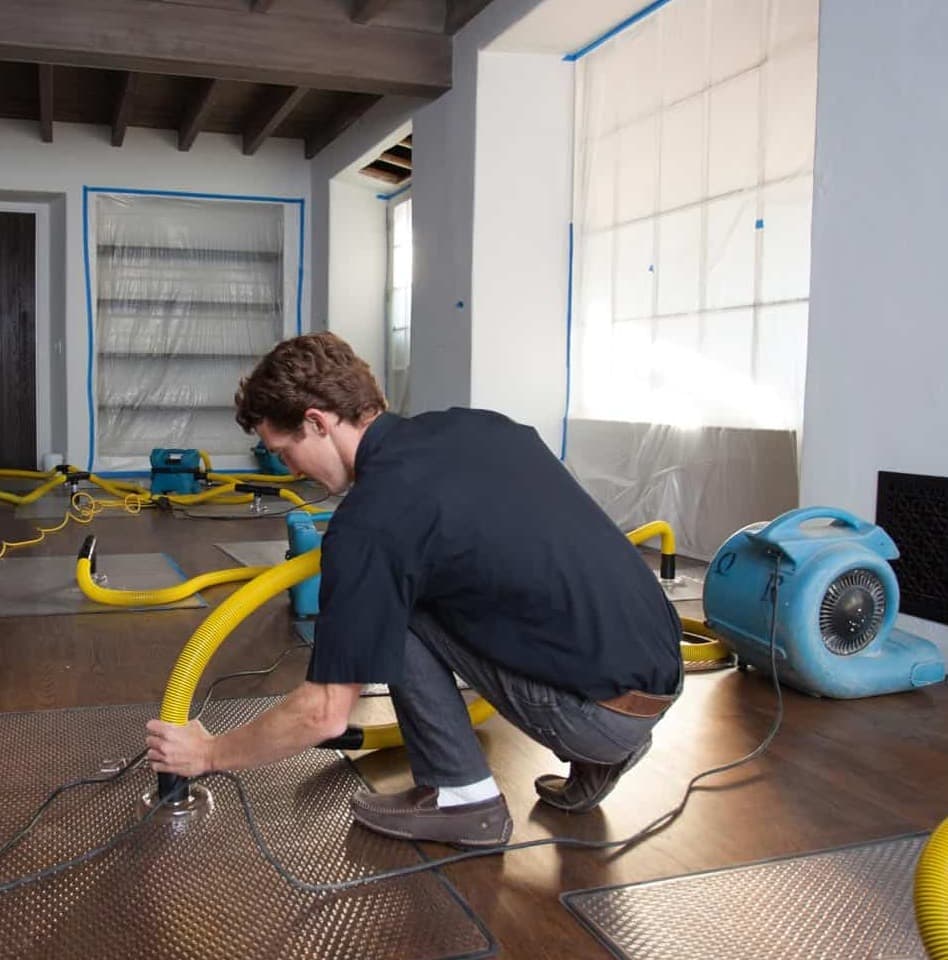
Because the water was Category 3, the crew worked in disposable coveralls and gloves. They cut the carpet and pad back from the walls and set it aside for disposal rather than trying to clean it in place.
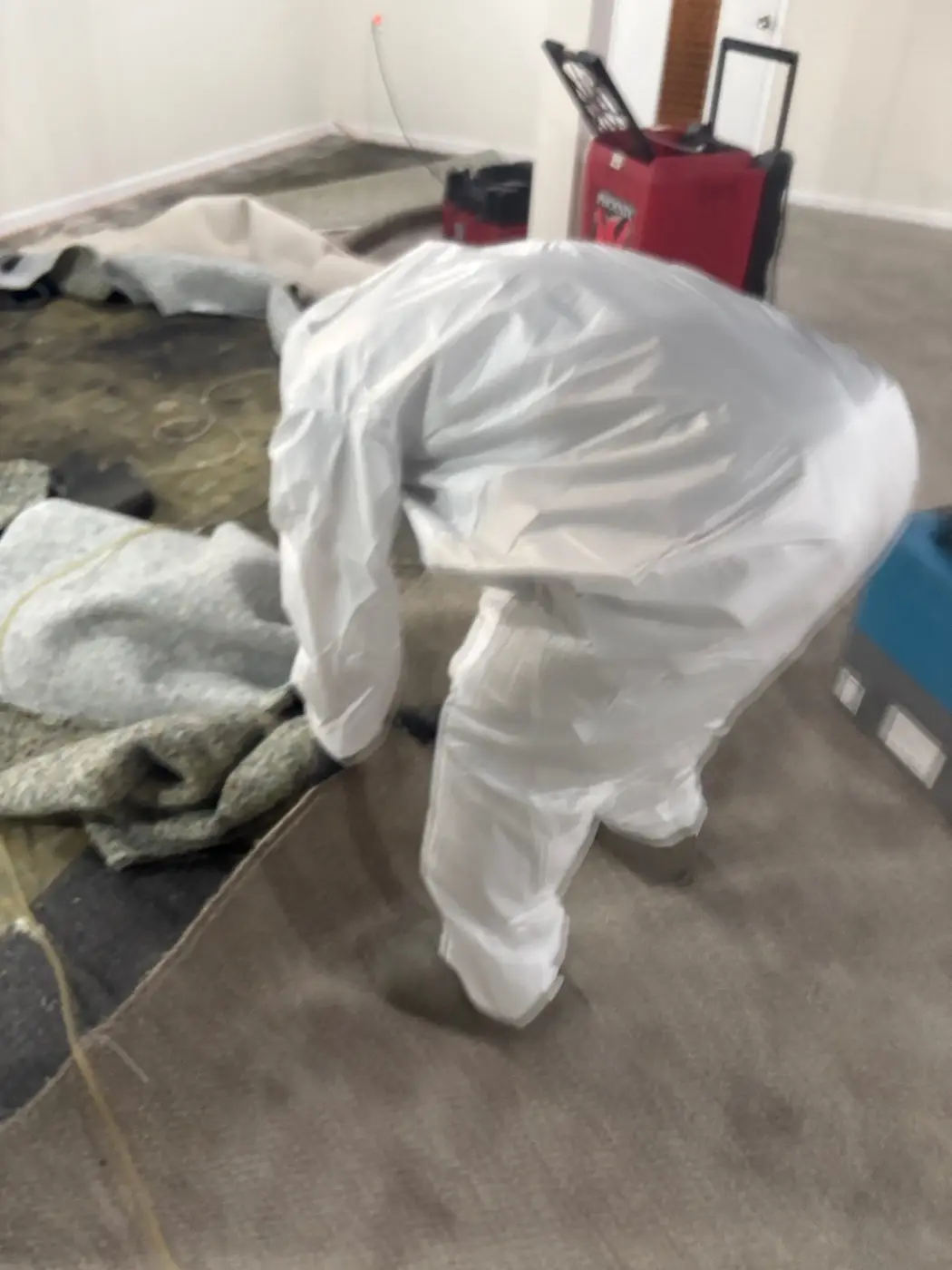
Day 2: Category 3 protocol, protective coveralls while the wet carpet and pad came out. - Day 2 · Apr 83
Mapped how far the water had traveled
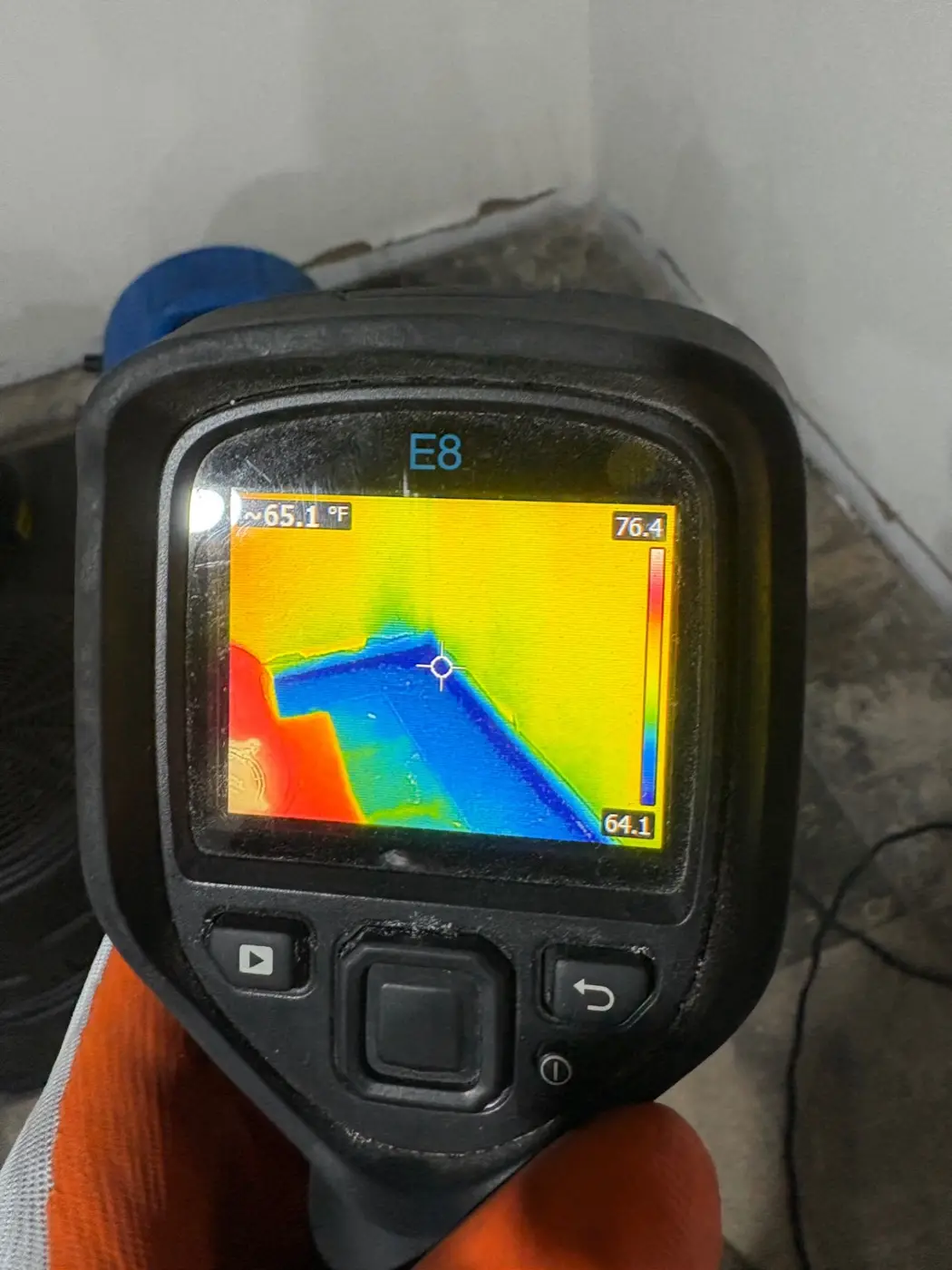
With the floor open, the crew set a commercial dehumidifier and air movers across the exposed subfloor, which still carried heavy staining from the backup. A thermal imaging camera found a cold band along part of the baseboard, matching the wet area the moisture meter had already marked by hand.
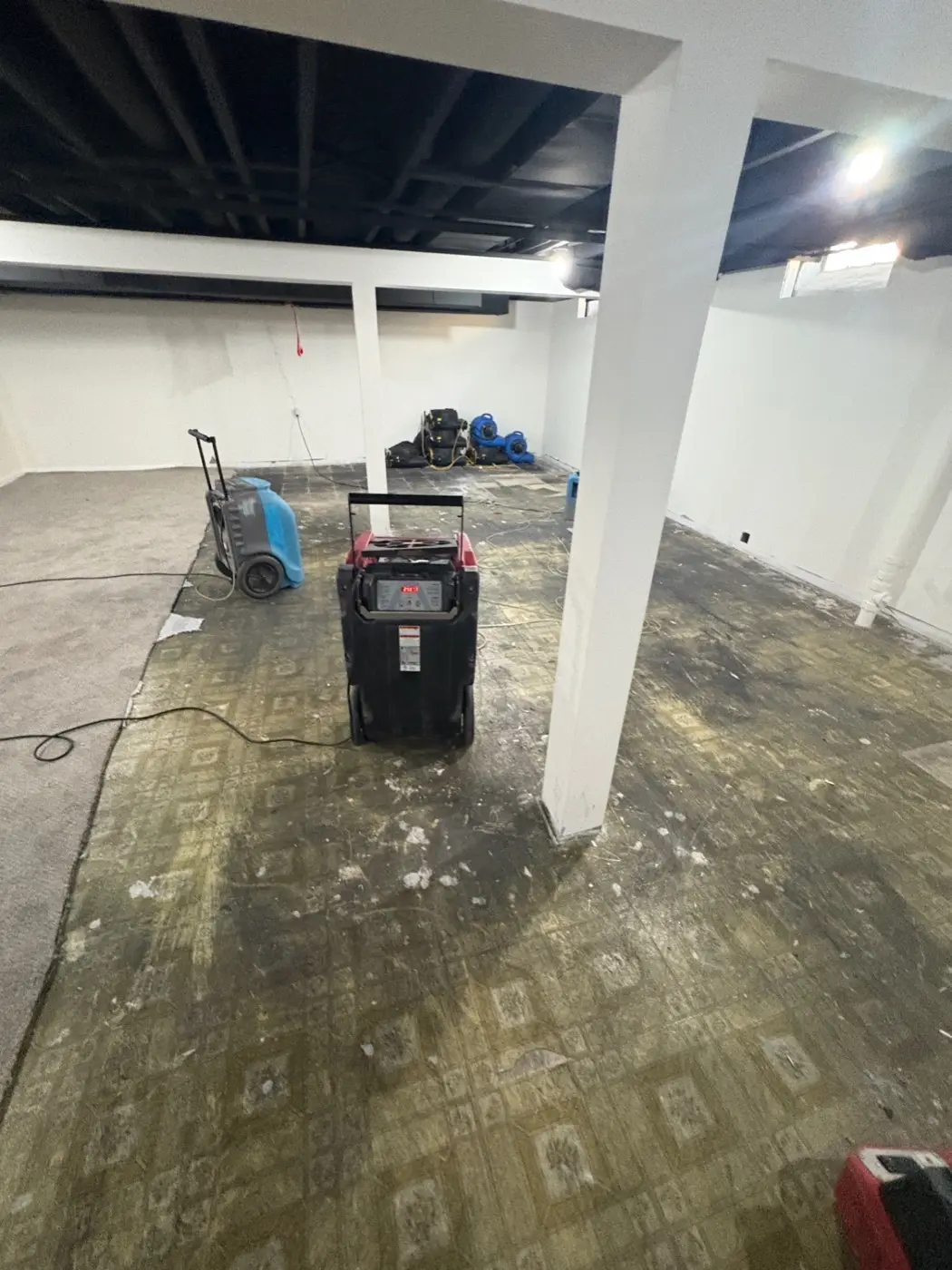
Day 2: carpet and pad pulled back across the room, dehumidifier and air movers set. - Day 5 · Apr 114
Checked on the drying equipment
The crew returned to check the equipment and the drying progress. The record shows this as a monitoring visit between the first tear-out and the follow-up work on the framing a week later.
- Day 8 · Apr 145
Opened a wall to check the framing
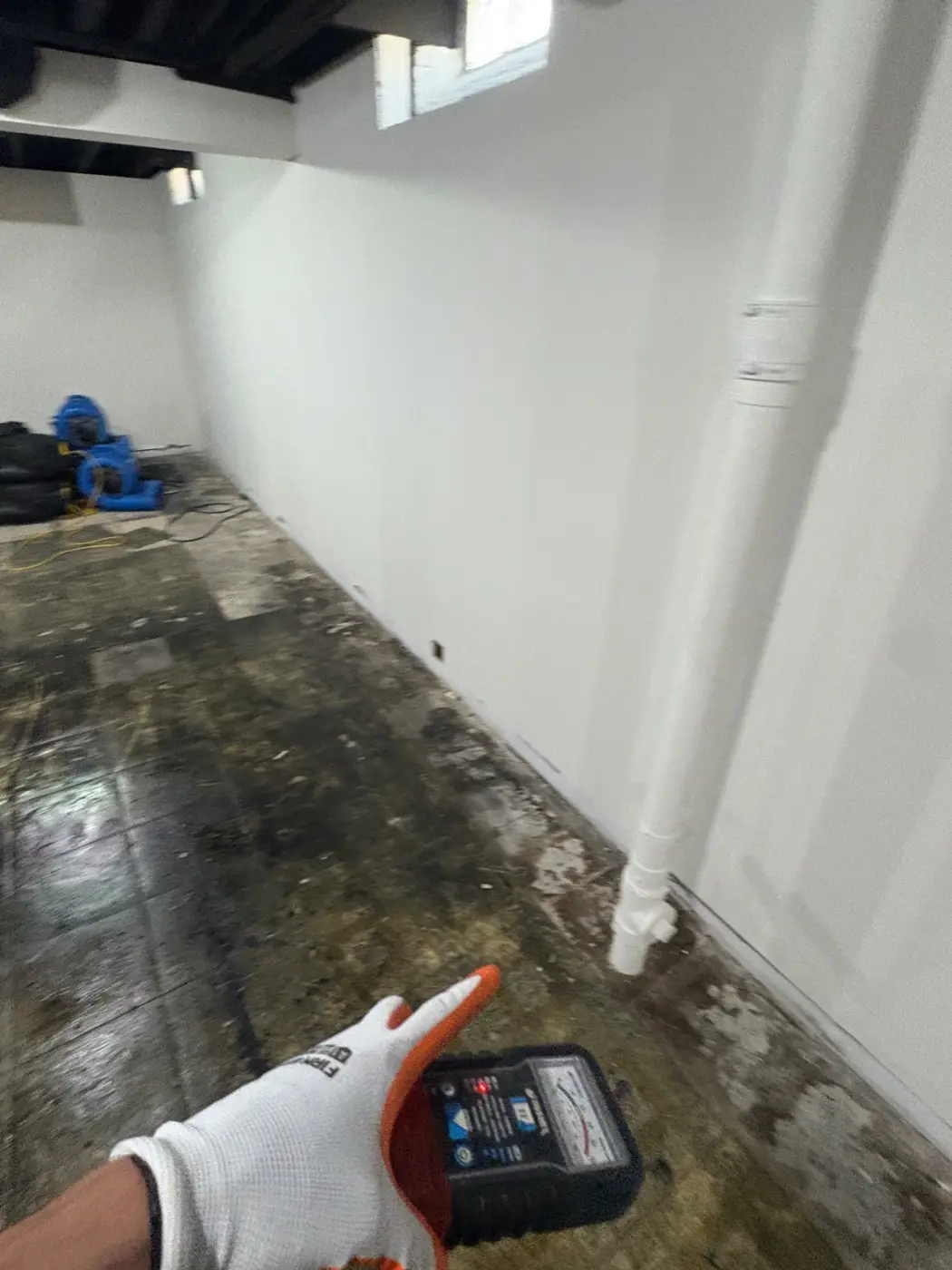
The crew cut into a section of drywall down to the studs to look behind it. The exposed stud still read wet on a comparative moisture meter, with the needle pegged in the meter’s red band, so that section of wall stayed open rather than closing back up early.
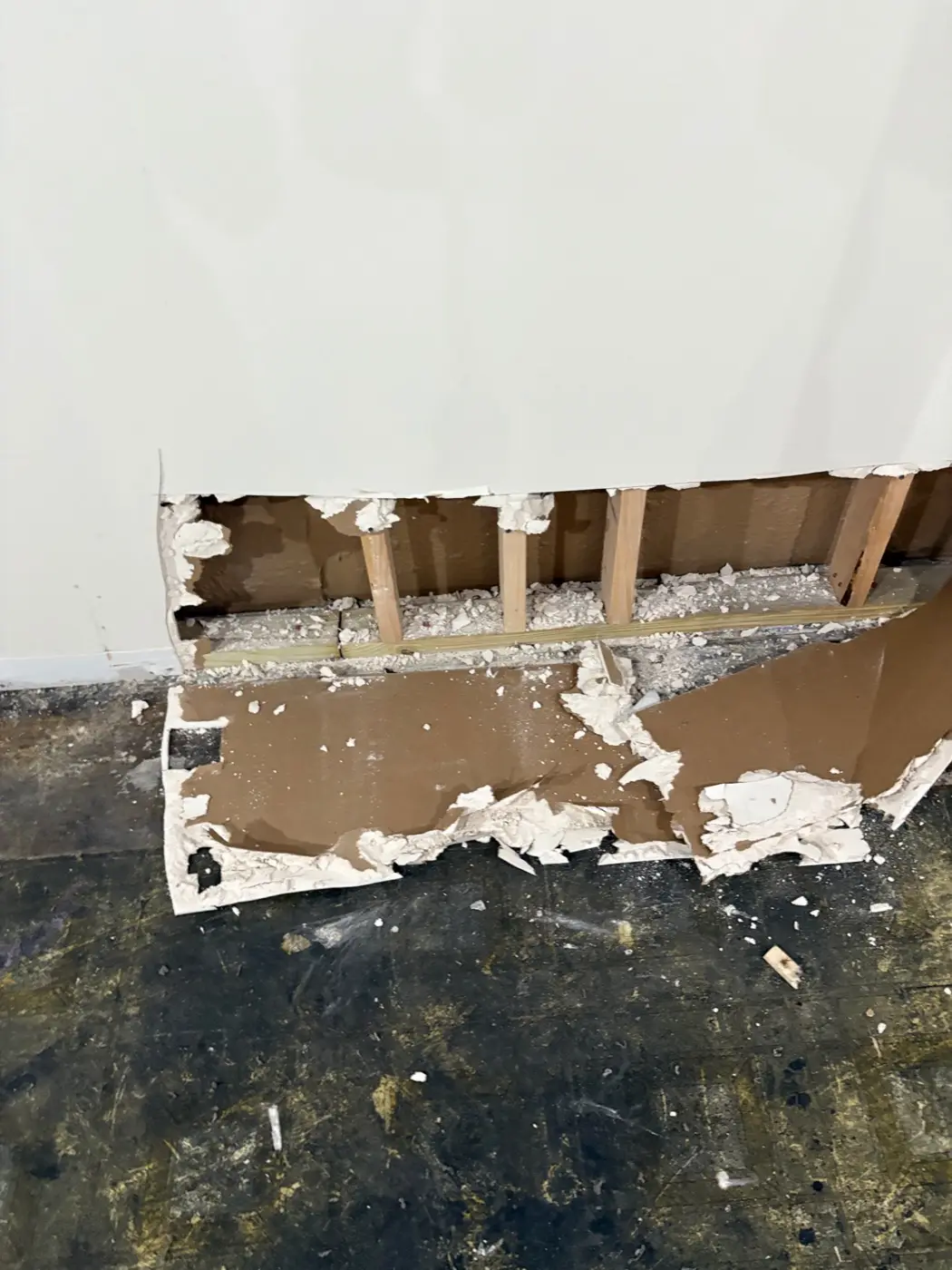
Day 8: a flood cut opened the wall down to the studs to check behind it. - Day 8 · Apr 146
Confirmed the wet framing and finished other rooms
The same visit, elsewhere in the basement, the carpeted room and the tiled utility area had already dried enough to close out: new carpet went down in one room, and the tile floor in the other was clean and dry after the contaminated water was cleaned off it.
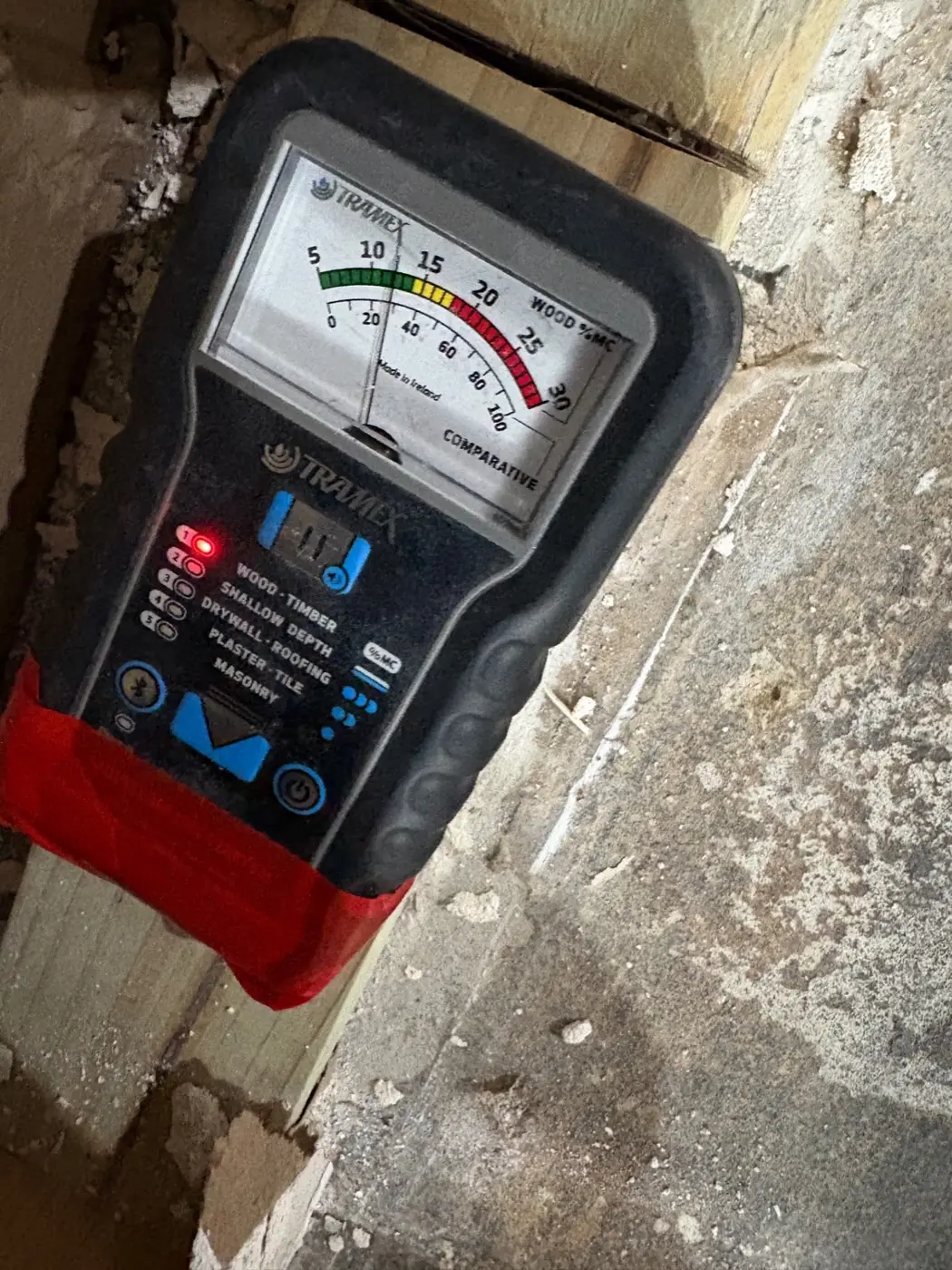
Day 8: the stud still read wet, pegged in the meter’s red band. - Apr 27 to Jun 57
Closed out, then treated for mold
The drying job was closed out on April 27, 2026. Mold remediation followed in June as its own job.
Measured, not guessed
The readings from this job
These are the room air readings photographed on this job, seven days apart. GPP is grains of water per pound of dry air, the number drying crews use to track how much moisture the air is holding.
| When | Temperature | Relative humidity | GPP | Where it comes from |
|---|---|---|---|---|
| Day 1, Apr 7 | 67.8 F | 57.9% | about 59 (calculated) | Photographed reading near the floor drain area |
| Day 8, Apr 14 | 76.2 F | 44.0% | about 59 (calculated) | Photographed reading before the wall was reopened |
These two readings land close together even though a week and a full tear-out separate them, because room air moves with the weather outside and with how hard the equipment is running that day. An air reading says how dry the room’s air is at that moment. It does not say whether the subfloor or the framing behind a wall is dry.
That is why the framing on this job got its own check with a moisture meter on day 8, not just an air reading. Wood that still reads wet after a floor drain backup can turn into a mold problem weeks later if it gets closed up behind new drywall before it dries.
On this job
Equipment on this job
- Commercial LGR dehumidifier
- Air movers set across the exposed subfloor
- Comparative moisture meter for walls, framing and the subfloor
- Digital temperature and humidity meter
- Thermal imaging camera to trace the wet area
- Disposable coveralls and gloves for Category 3 contact
- Plastic sheeting containment with taped zipper doors
For your home
What a floor drain backup means for your home
- A floor drain can push storm water into a finished basement even when every pipe inside the house is working fine.
- Category 3 water is handled as contaminated. Carpet, pad and any drywall it reached typically get removed rather than dried in place.
- A wall can look dry on the surface and still read wet on a moisture meter. This job had a section stay open past the first week for that reason.
- The CDC advises treating floodwater and sewage-contaminated water as a health hazard, not just a mess to mop up.
- Ask for the moisture meter readings, not only a visual check, before anyone closes a wall back up.
Job photos
Photos from this Sterling Heights job
Common questions
Questions about this kind of job
What is Category 3 water?
Can a basement flood from the floor drain with no plumbing problem in the house?
Does homeowners insurance cover a sewer backup?
Why does carpet get thrown away after a floor drain or sewer backup instead of cleaned?
Do technicians wear protective gear for a sewage or floor drain cleanup?
How long does a Category 3 basement cleanup take?
Will this page show my address or photos of my house?
How this page protects the homeowner
We publish the city and the month, never the address, the homeowner’s name or any claim detail. Photos that show a face, a personal item or anything outside the home are left out, and every photo file has its location data stripped before it goes on the site.
Nearest office to Sterling Heights
Sterling Heights Headquarters
13854 Lakeside Circle, Suite 558, Sterling Heights, MI 48313
(586) 277-1069, 24/7
Related pages
- Sewer backup water damage
- Sewage and biohazard cleanup in Sterling Heights
- Emergency sewage backup response
- Category 3 water cleanup
- Mold after water damage
- Mold remediation in Sterling Heights
- Water damage restoration in Sterling Heights
- All of our work
Other jobs we documented
- Finished Basement Flood Drying in Birmingham
- Roof Leak Into a Kitchen Ceiling in Bloomfield Hills
- Water Backup in a Rochester Hills Basement
- Basement Flood Cleanup in Macomb, Michigan
Sources
Written by Prime Restoration from the job record and dated job photos. Published November 2, 2026. Updated November 2, 2026.