
Our work · Bloomfield Hills · August 2026
Roof leak into a kitchen ceiling in Bloomfield Hills: 12 days from the first call to dry
A roof leak overnight soaked the kitchen ceiling of a Bloomfield Hills home. This is the job as it happened, from the dated photos and drying log: what got wet, what came out, and how the ceiling was dried.
- 5.0★ on Google, 186 reviews
- Michigan Licensed Builder #262500492
- IICRC Certified Firm
- Birmingham Headquarters, Birmingham
The job at a glance
- City
- Bloomfield Hills, Oakland County
- Loss
- Roof leak into the kitchen ceiling
- First call
- August 10, 2026
- Marked dry
- August 22, 2026 (12 days)
- Removed
- Ceiling drywall and wet blown-in insulation
- Rebuild
- Signed off complete September 9, 2026
How do you dry a kitchen ceiling after a roof leak?
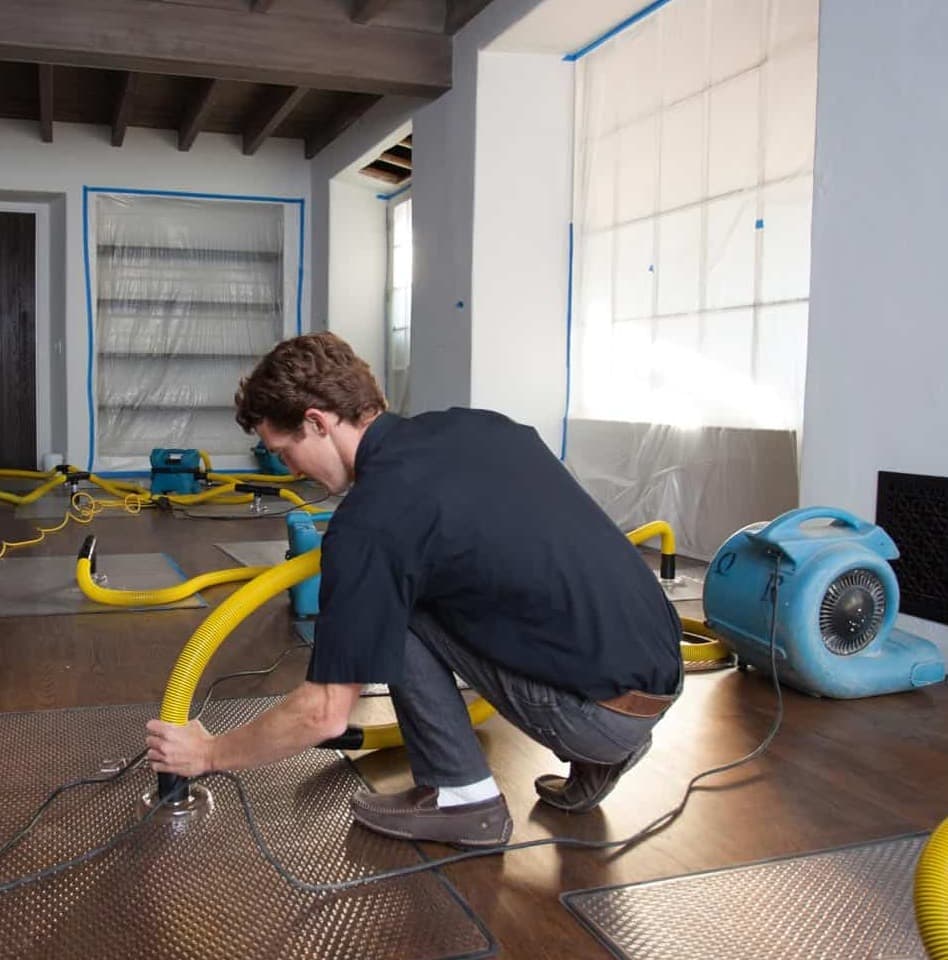
Prime Restoration found the wet area with a moisture meter, drilled vent holes, then tarped the roof, built zippered containment and removed the soaked drywall and insulation. An LGR dehumidifier, air movers and a HEPA air scrubber dried the joists and roof deck until they read dry. On this Bloomfield Hills job that took 12 days. Call Prime Restoration at (586) 277-1069.
The cause
What caused the leak?
The water came through the roof above the kitchen. The intake note puts the start of the leak at about 1 a.m. By the time the crew arrived that day, water had run along the roof deck, soaked the blown-in insulation in the ceiling cavity and wet the kitchen ceiling drywall.
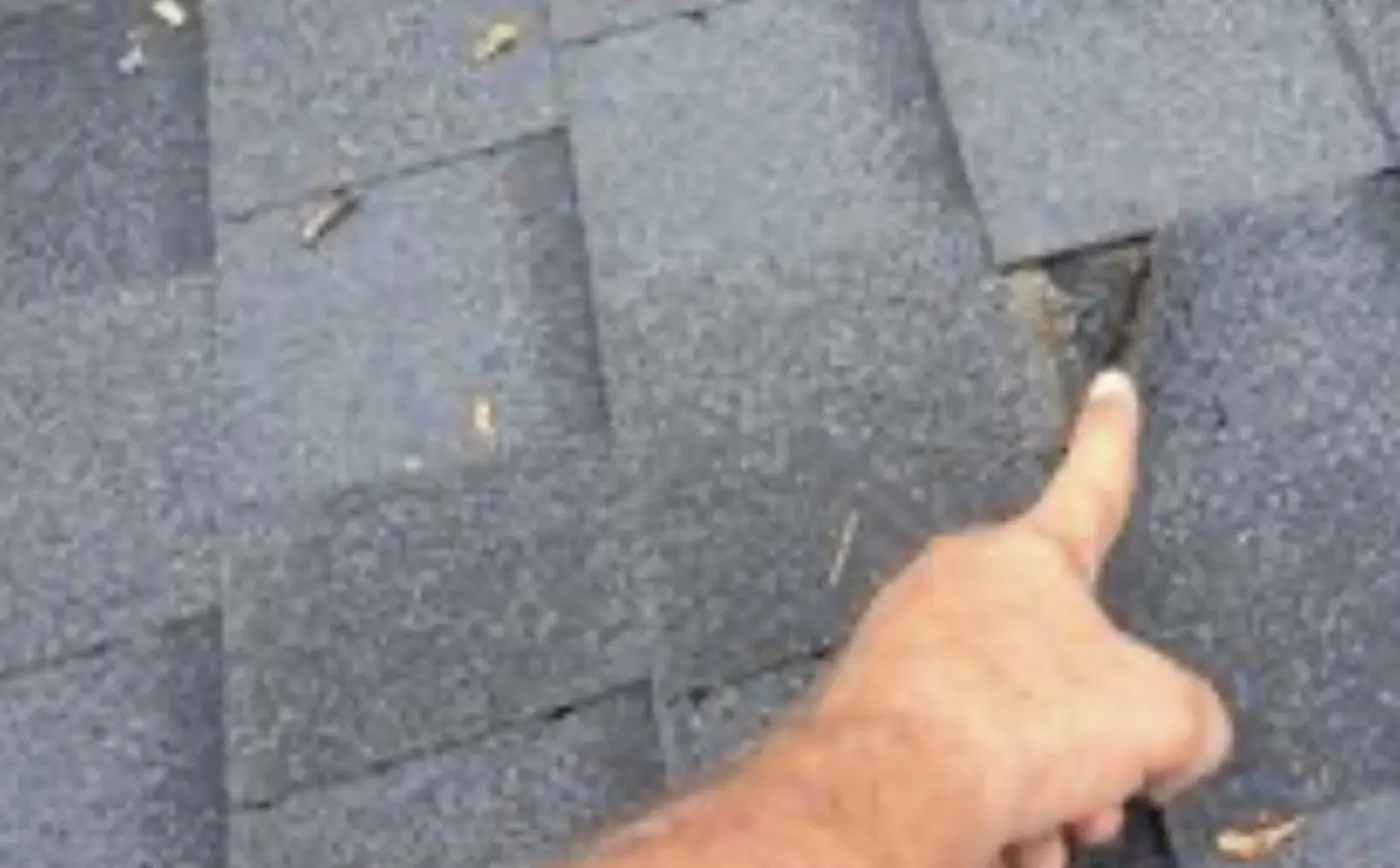
A roof check on September 2 documented the source: a shingle tab that had lifted and split, leaving an open edge that rain could run under. A lifted tab is easy to miss from the ground. It often shows first as a stain or a soft spot on the ceiling below.
Timeline
What we did, day by day
- Day 1 · Aug 101
Found the wet area and started drying
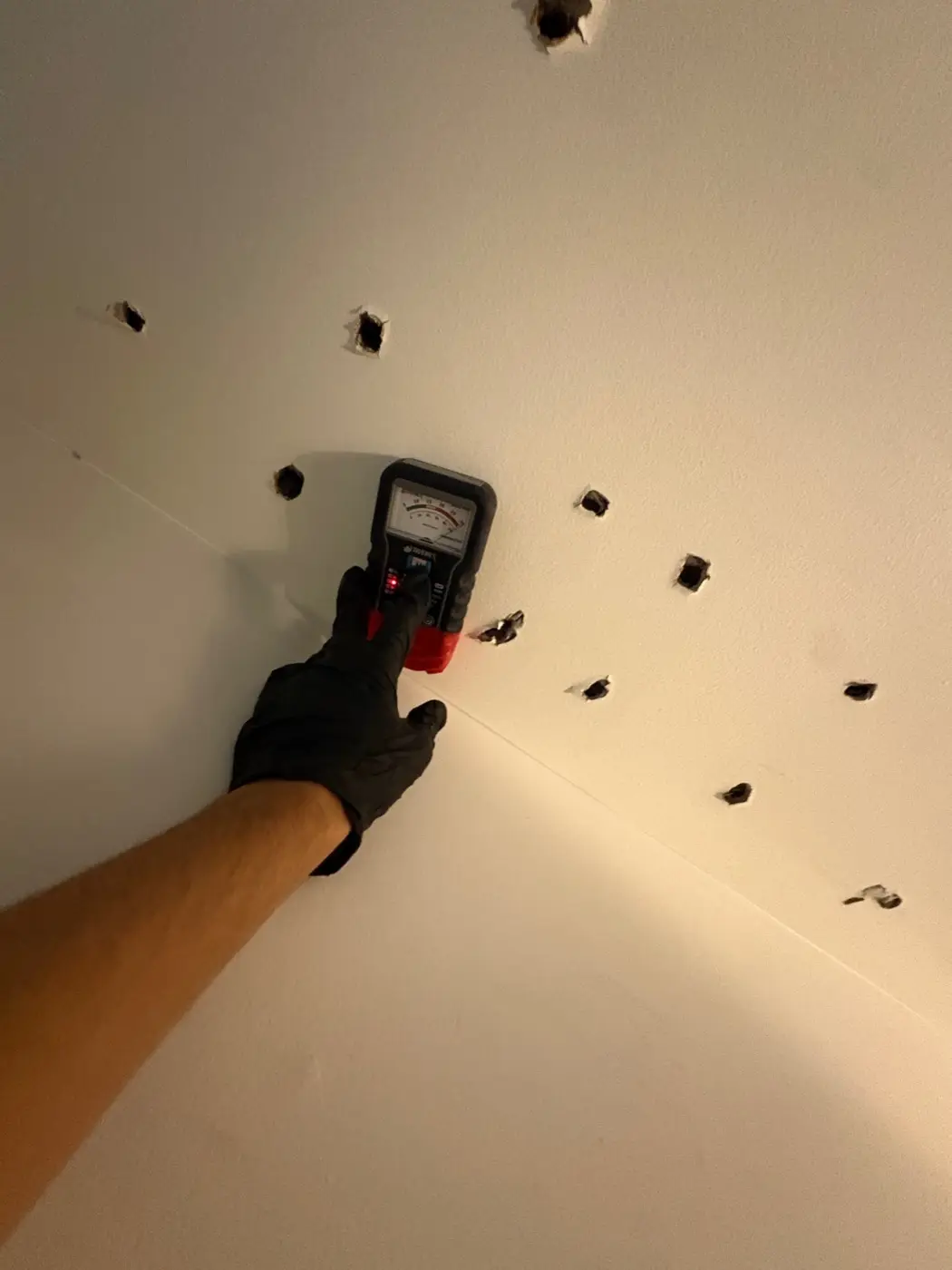
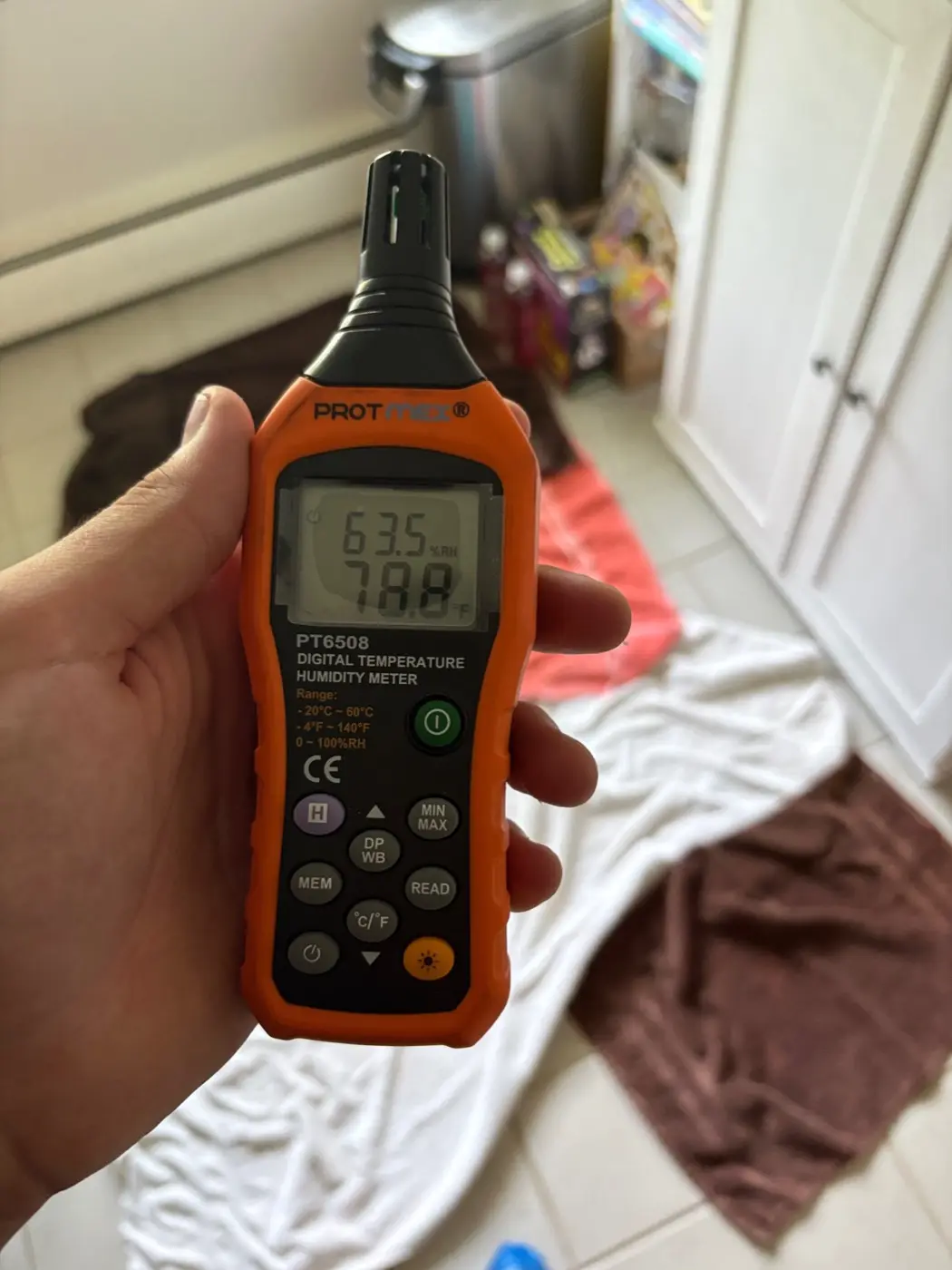
The crew checked the kitchen ceiling, the walls and the baseboards with a pinless moisture meter to map how far the water went, and took a room reading: 63.5% relative humidity at 78.8 F. They drilled a grid of small vent holes in the wet ceiling so trapped water could drain and air could reach the cavity, then set dehumidification and air movers. Everything was photographed with the date for the insurance file.
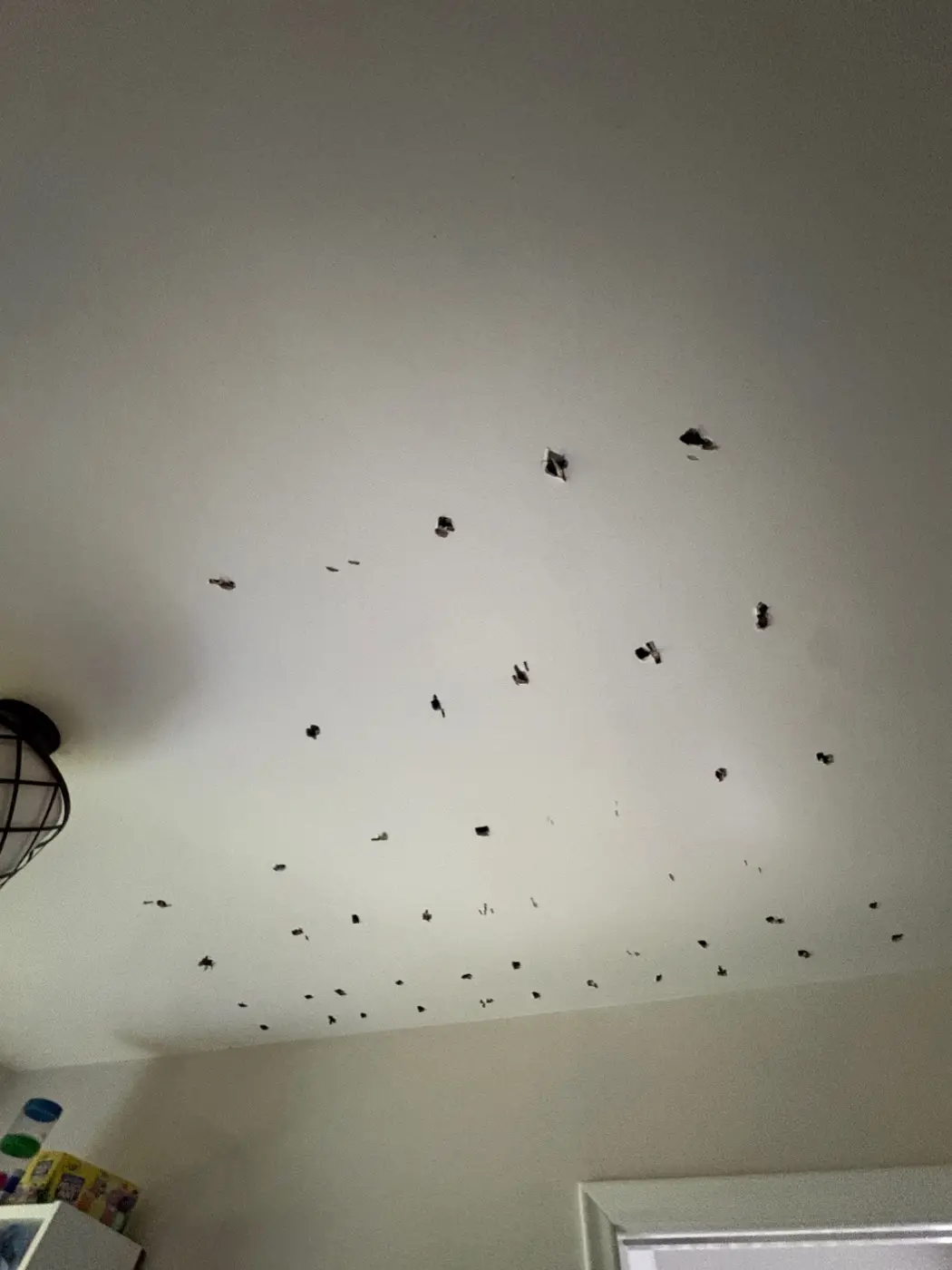
Day 1: vent holes let trapped water drain and air reach the ceiling cavity. - Day 5 · Aug 142
Covered the roof
The crew went on the roof, photographed the shingles around the leak area and secured a tarp over it with 2x4 battens screwed through the tarp edges, so the next rain could not add water to a ceiling that was still drying.
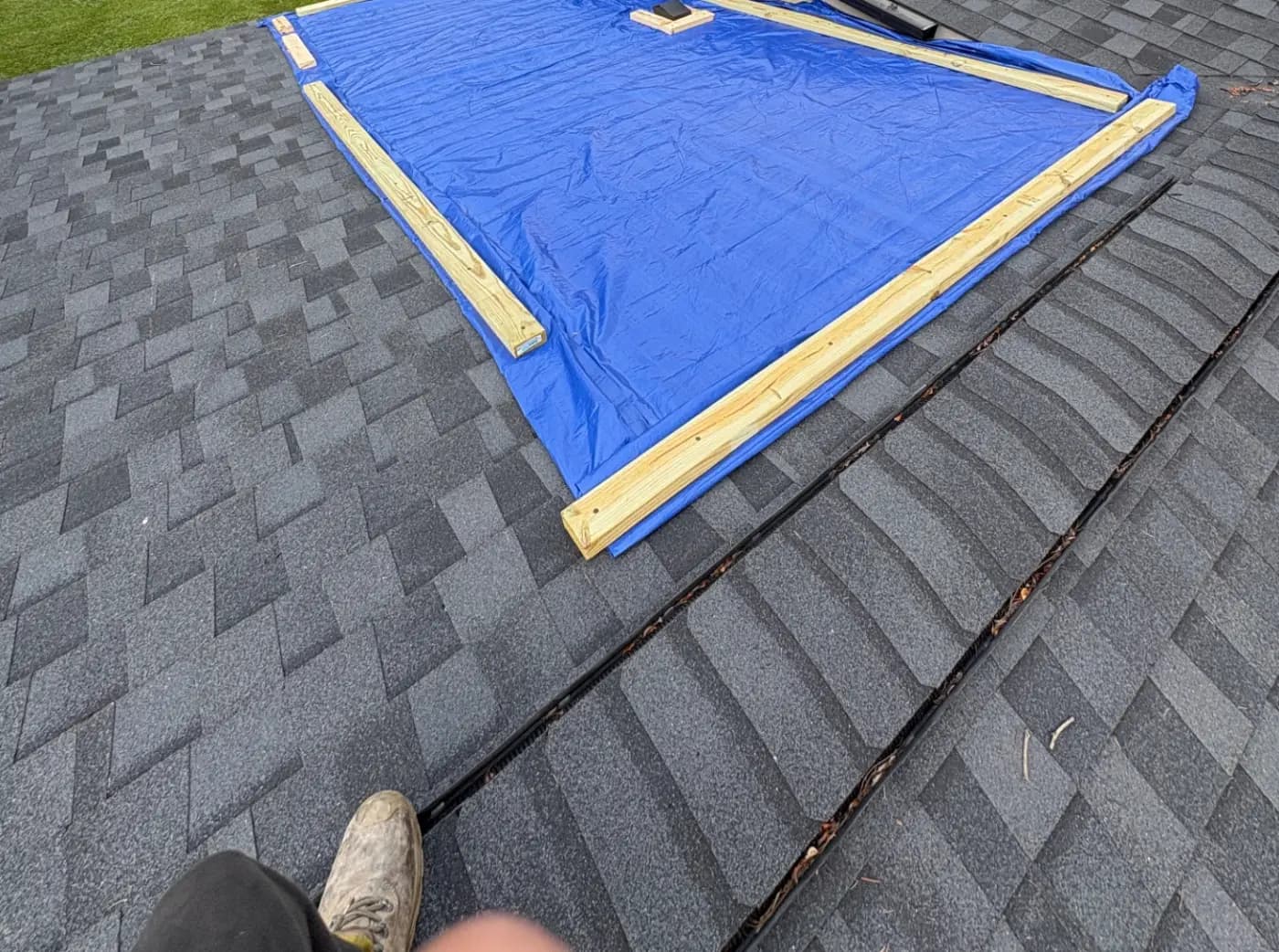
Aug 14: the roof over the leak area tarped with 2x4 battens. - Day 8 · Aug 173
Built containment and opened the ceiling
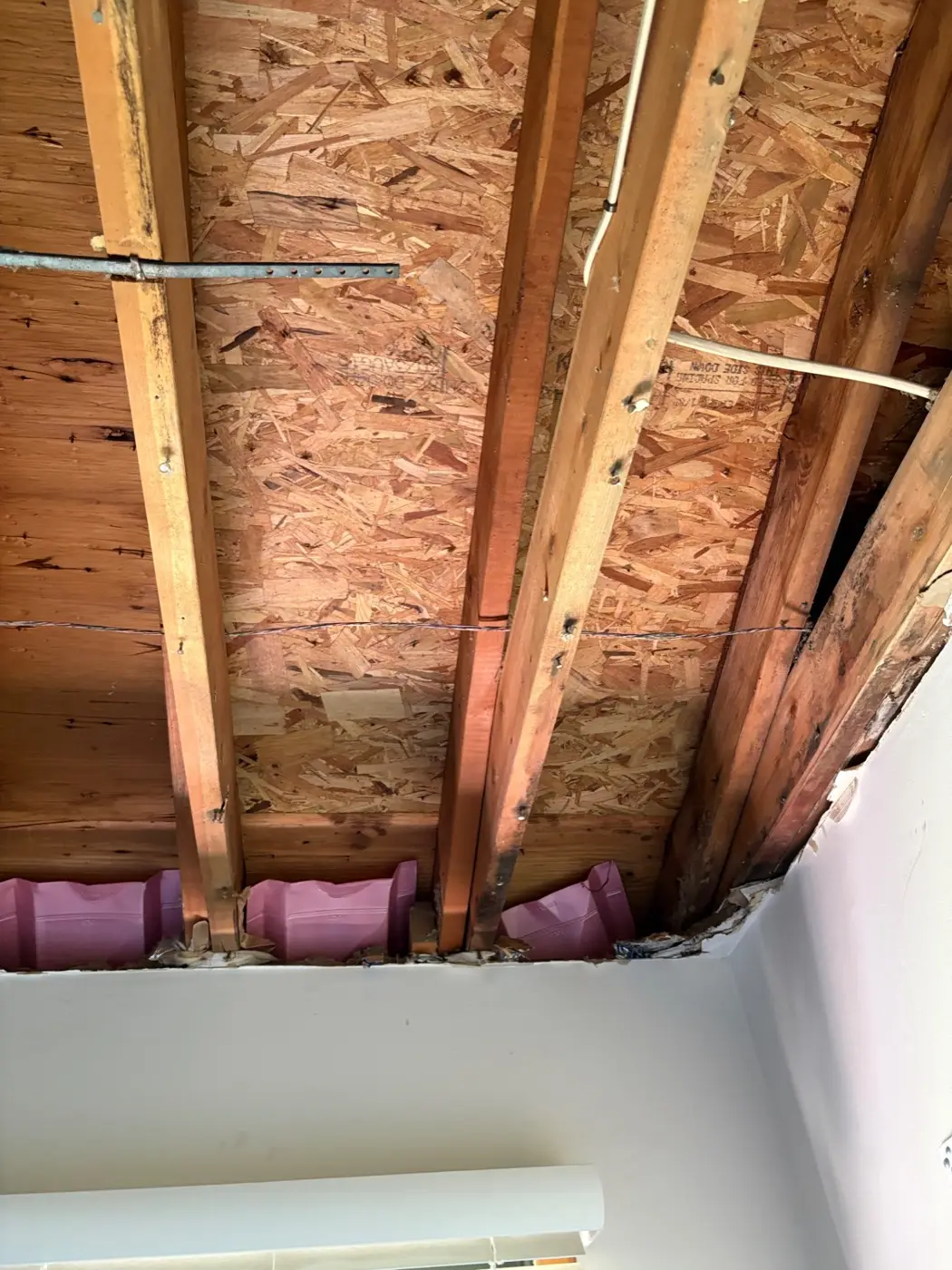
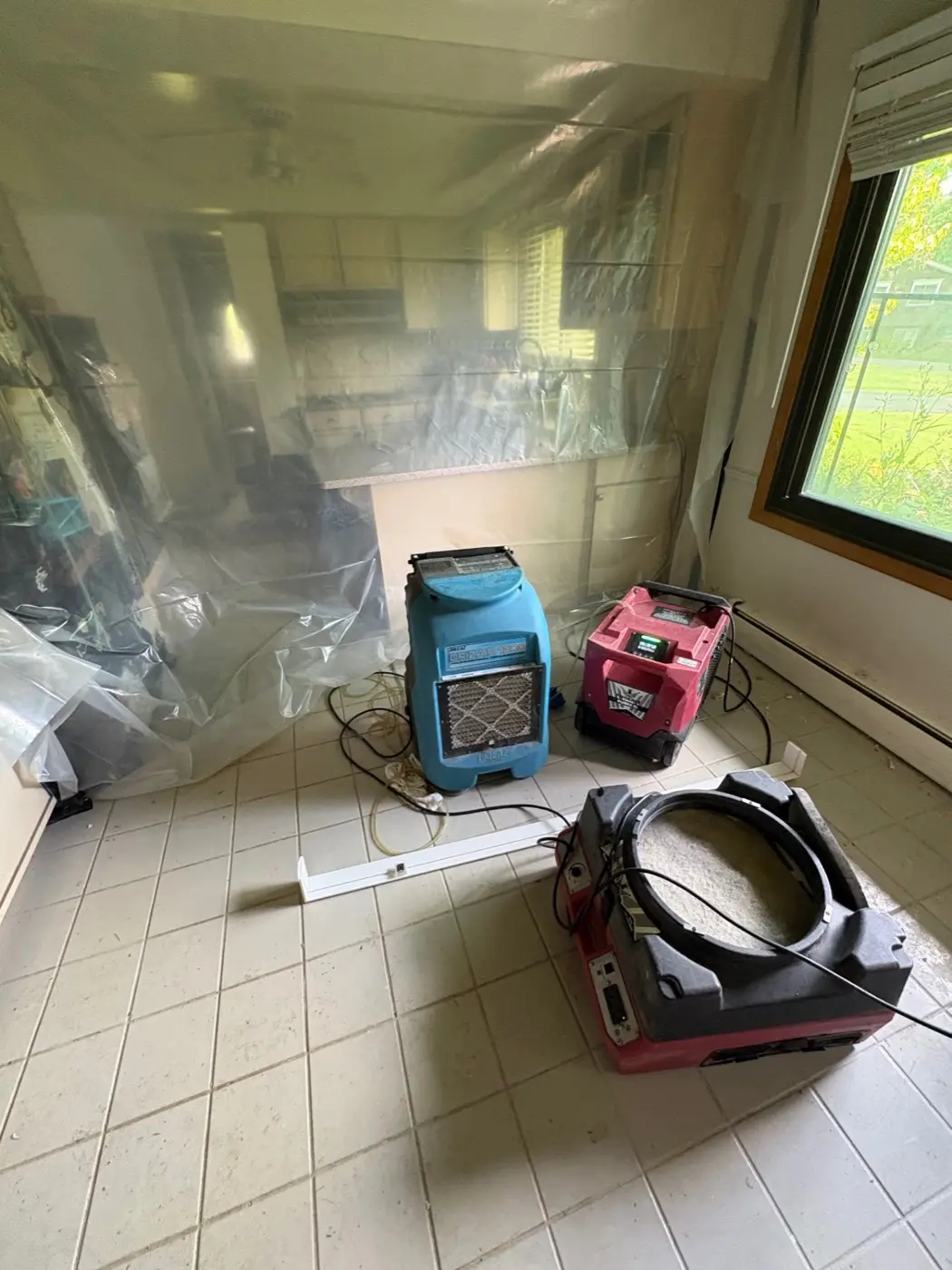
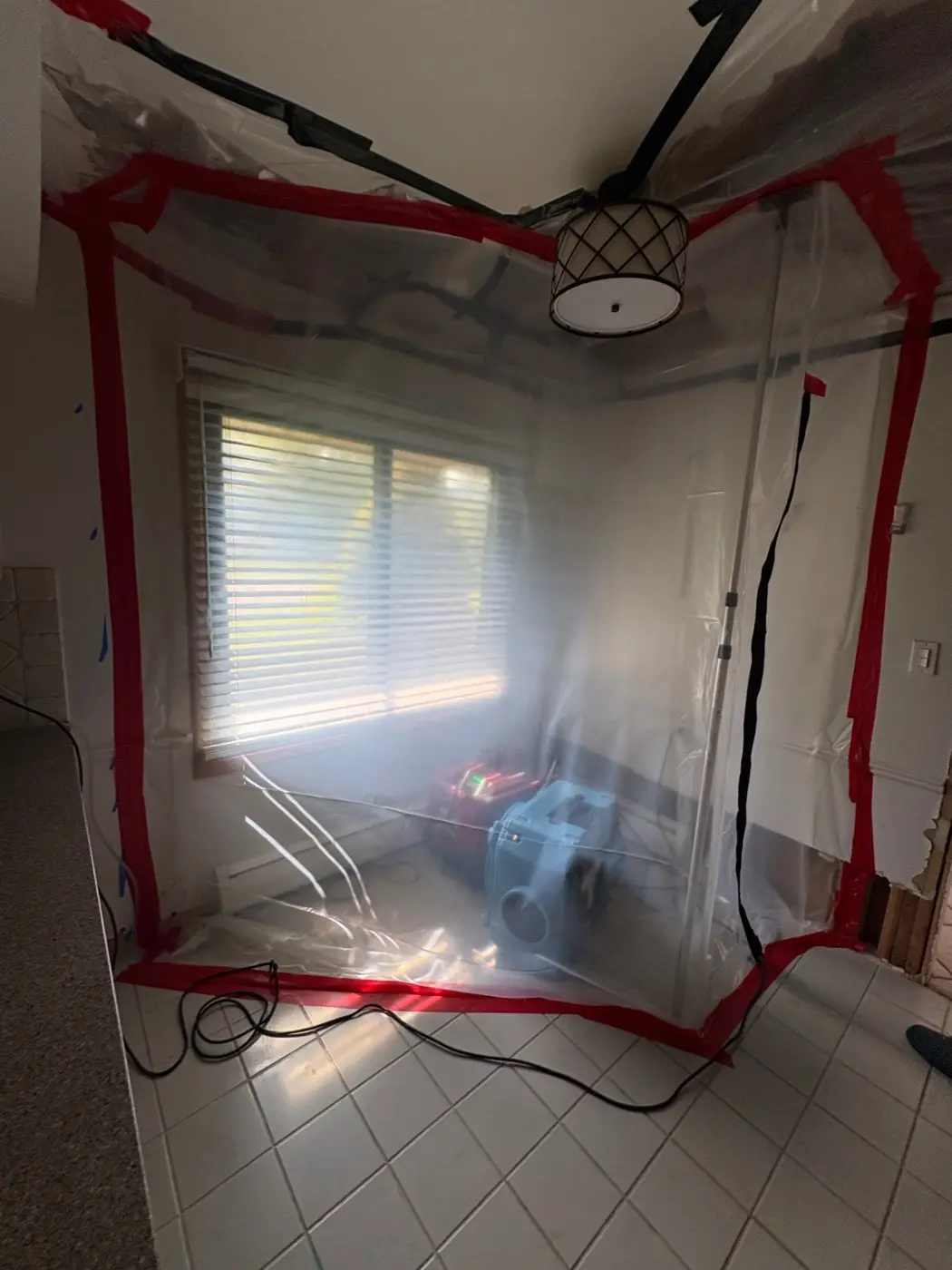
Plastic containment with zipper doors went up around the kitchen and over the hallway and stair openings, so dust and insulation stayed in the work area. Inside it, the crew took down the wet ceiling drywall and the soaked blown-in insulation, which had packed down into a heavy wet layer. That exposed the ceiling joists and the underside of the roof deck so they could dry directly.
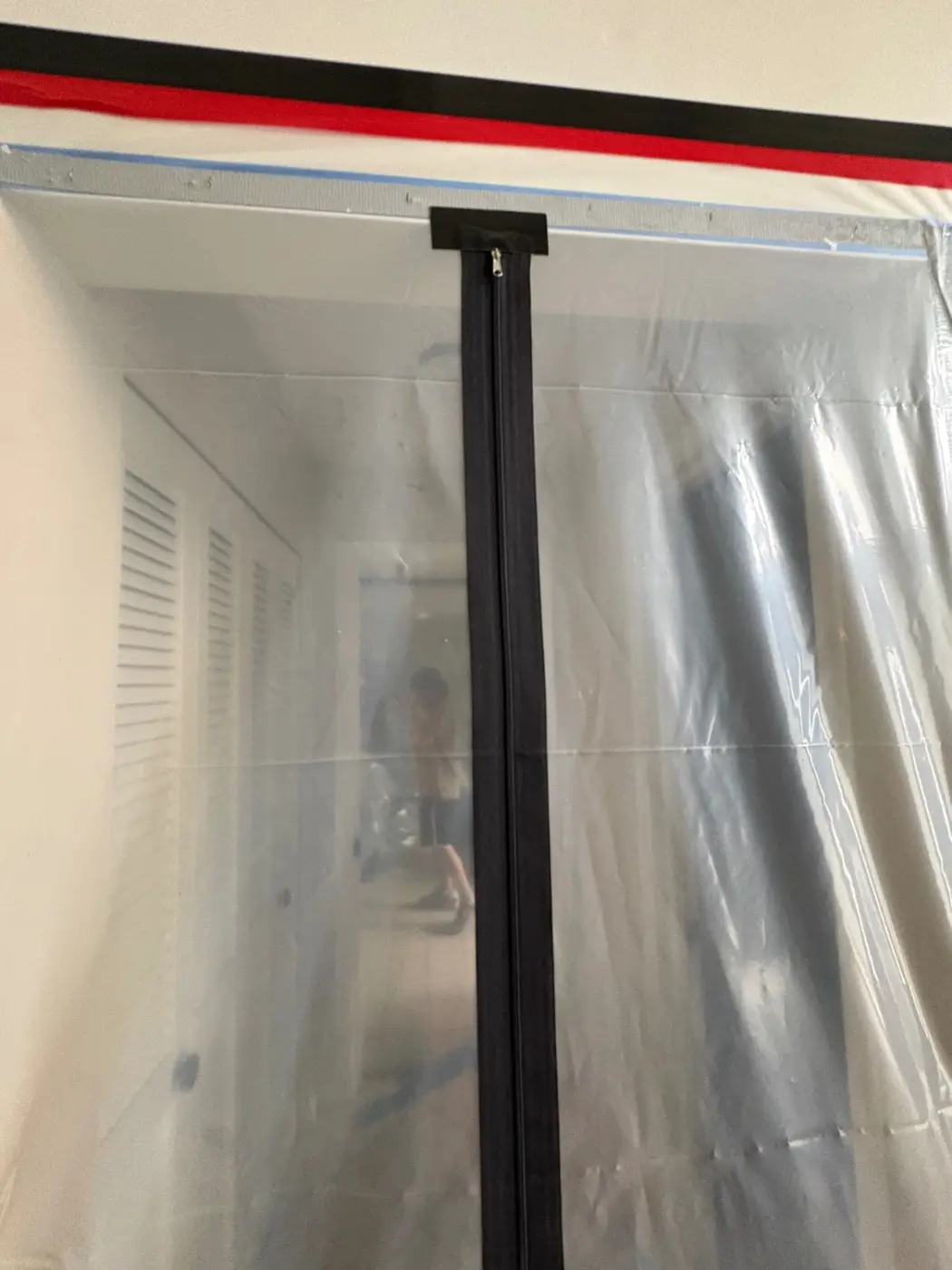
Aug 17: zipper-door containment kept the tear-out dust in the kitchen. - Day 12 · Aug 214
Checked the framing and cleaned
The crew read the joists and the roof deck sheathing with the pinless meter, HEPA vacuumed the work area, and cleaned the rooms around it.
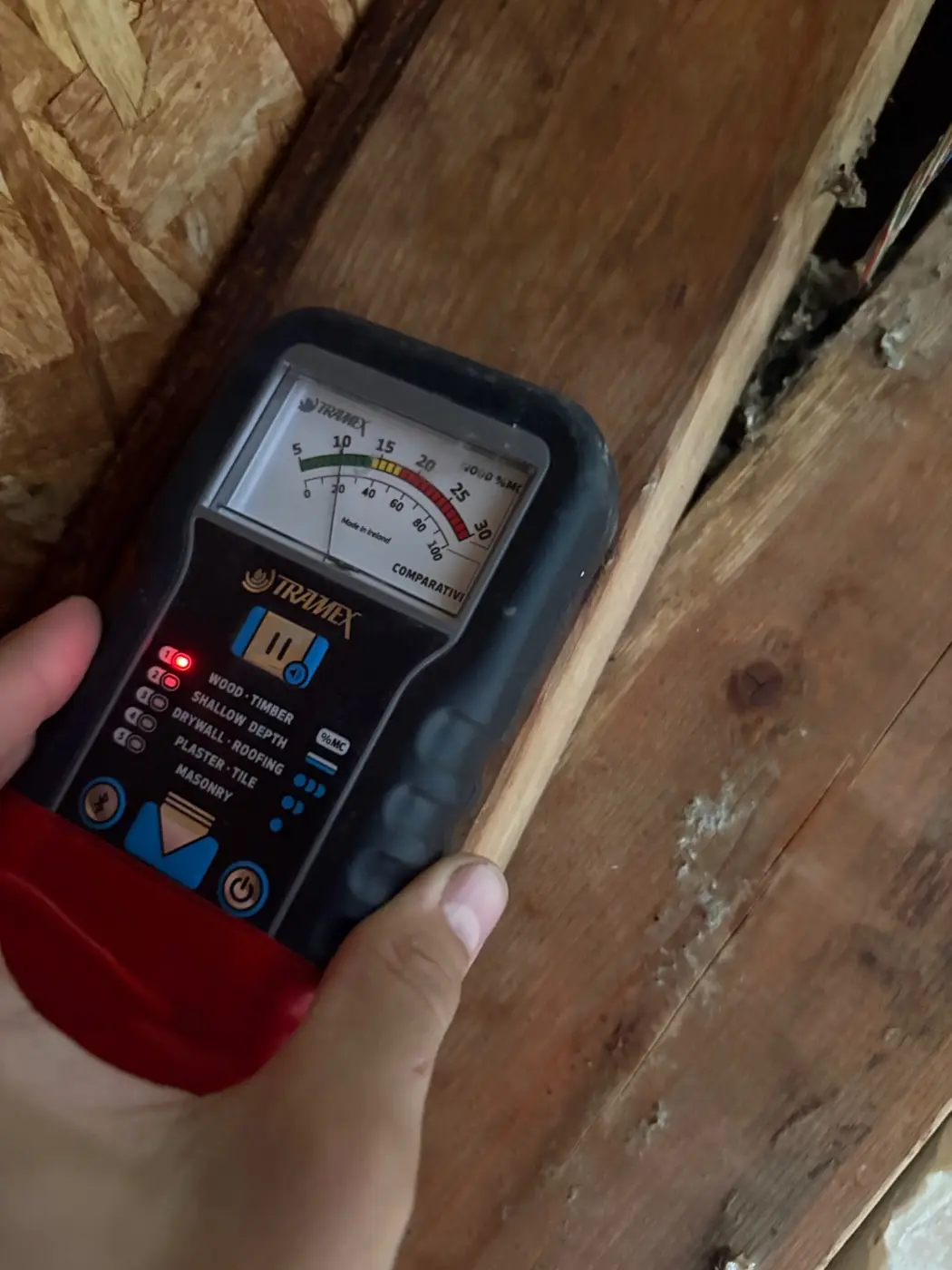
Aug 21: reading the joists before the dry call. - Aug 22 to 235
Marked dry, final check
The job was marked dry on August 22, 12 days after the first call. On August 23 the crew photographed final meter checks on the framing and a room reading of 60.1% relative humidity at 74.1 F.
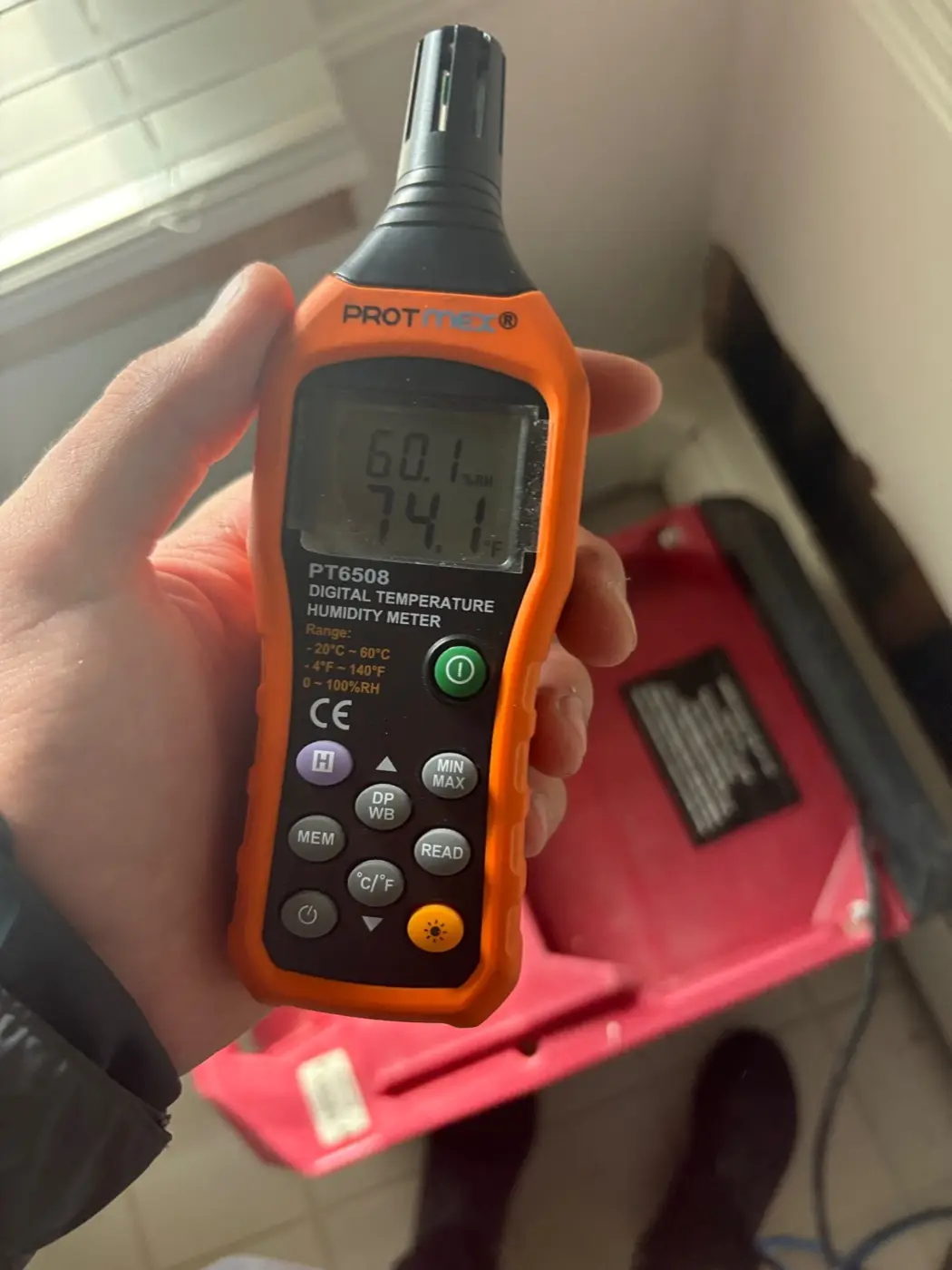
Aug 23: final room check, 60.1% relative humidity at 74.1 F. - Aug 24 to Sep 96
Rebuild
The homeowner signed a reconstruction agreement on August 24 and the rebuild of the ceiling followed. The certificate of completion was signed on September 9, 2026.
Measured, not guessed
The readings from this job
These are the room air readings photographed or logged on this job. GPP is grains of water per pound of dry air, the number drying crews use to track how much water the air holds.
| When | Temperature | Relative humidity | GPP | Where it comes from |
|---|---|---|---|---|
| Day 1, Aug 10 | 78.8 F | 63.5% | about 94 (calculated) | Photographed reading in the kitchen |
| Day 7, Aug 16 | 72 F | 55% | 64 | Drying log entry, kitchen |
| Aug 23 | 74.1 F | 60.1% | about 75 (calculated) | Photographed final check |
Room air goes up and down with the weather outside and with how the equipment cycles, which is why the August 23 air reading sits above the day 7 log. Air readings show the drying conditions. They do not show whether a ceiling is dry.
The dry call is made on the materials. The crew read the joists and roof deck with a pinless meter until they sat in the meter's dry band, and only then marked the job dry. Wet framing closed up behind new drywall is how a roof leak turns into a mold problem months later.
On this job
Equipment on this job
- Commercial LGR dehumidifier, to pull water out of the air
- HEPA air scrubber, to catch dust and insulation fibers during tear-out
- Air movers to move dry air across the wet surfaces
- Pinless moisture meter for the ceiling, walls and framing
- Thermo-hygrometer for room temperature and humidity
- Plastic containment with zipper doors
- Roof tarp with 2x4 battens
For your home
What this job means for your home
- A ceiling stain under a roof usually means water has already reached the insulation above it. Call before the drywall sags.
- The EPA says to dry water-damaged areas within 24 to 48 hours to prevent mold. A wet ceiling cavity does not dry by itself in that time.
- Wet blown-in insulation packs down and holds water against the joists. On this job it had to come out so the framing could dry.
- Tarp the roof before you trust the drying. One more rain can undo days of work.
- Ask for dated photos and readings. They are the record the insurance carrier reviews.
Job photos
Photos from this Bloomfield Hills job
Common questions
Questions about this kind of job
How long does it take to dry a ceiling after a roof leak?
Why do restoration crews drill holes in a wet ceiling?
Does wet ceiling insulation have to be replaced?
Does homeowners insurance cover a roof leak into the ceiling?
Why does the roof get tarped if the water is already inside?
Will you show my address or photos of my house online?
How we protect the homeowner on these pages
We publish the city and the month, never the street, the house, the homeowner or the claim. We leave out any photo that shows the outside of the home or the street, crop the rest, and strip the location data from every photo file before it goes on the site.
Nearest office to Bloomfield Hills
Birmingham Headquarters
801 S Adams Rd, Birmingham, MI 48009
(586) 277-1069, 24/7
Written by Prime Restoration from the job record and dated job photos. Published November 2, 2026. Updated November 2, 2026.