
Sewage Backup Cleanup in Sterling Heights, MI
Sewage contains bacteria, viruses, and fungi. That is why industry-standard practice classifies it as Category 3 — the most hazardous water type — and why cleanup requires full PPE and disposal of affected porous materials. This is not a job for a shop vac.
Family-Owned · Insured & Licensed · 24/7 Emergency Dispatch
Local Sterling Heights branch · 3.5 miles from the center of Sterling Heights · on site in 25 minutes
Your local Sterling Heights sewage backup cleanup branch
Prime Restoration's Sterling Heights Headquarters is at 13854 Lakeside Circle, Suite 558, Sterling Heights, MI 48313, 3.5 miles from the center of Sterling Heights. From this branch a crew is typically on site in 25 minutes, 24/7, across Plumbrook, the Lakeside corridor near Hall Road and Schoenherr, and Utica Junction along the Clinton River by Dodge Park. The crew is set up for the homes here: Plumbrook ranches and tri-levels with below-grade family rooms, 1980s and 1990s colonials with finished basements, and river-adjacent basements that take water in high-flow events.
Homeowners highly recommend the branch for customer service: 5.0 on Google from 147 reviews, and one project manager answers your calls from the first visit to the last repair. Every job gets detailed, itemized documentation for your insurance claim: dated moisture readings, photos and a line-item estimate your adjuster can check. Call (586) 277-1069.
What Sterling Heights Homeowners Need to Know
Sterling Heights sits on heavy clay soil typical of the Clinton River watershed — foundations here take on hydrostatic pressure during every major rain event.
Housing here is predominantly 1960s–1990s suburban subdivisions, with a large share of split-level and ranch homes. The most common restoration-related issues in Sterling Heights are clay-soil basement seepage, sump pump failure, ice dams. Our crews treat each property as its own project — scope, drying time, and rebuild needs are written based on what we measure on site, not a generic playbook.
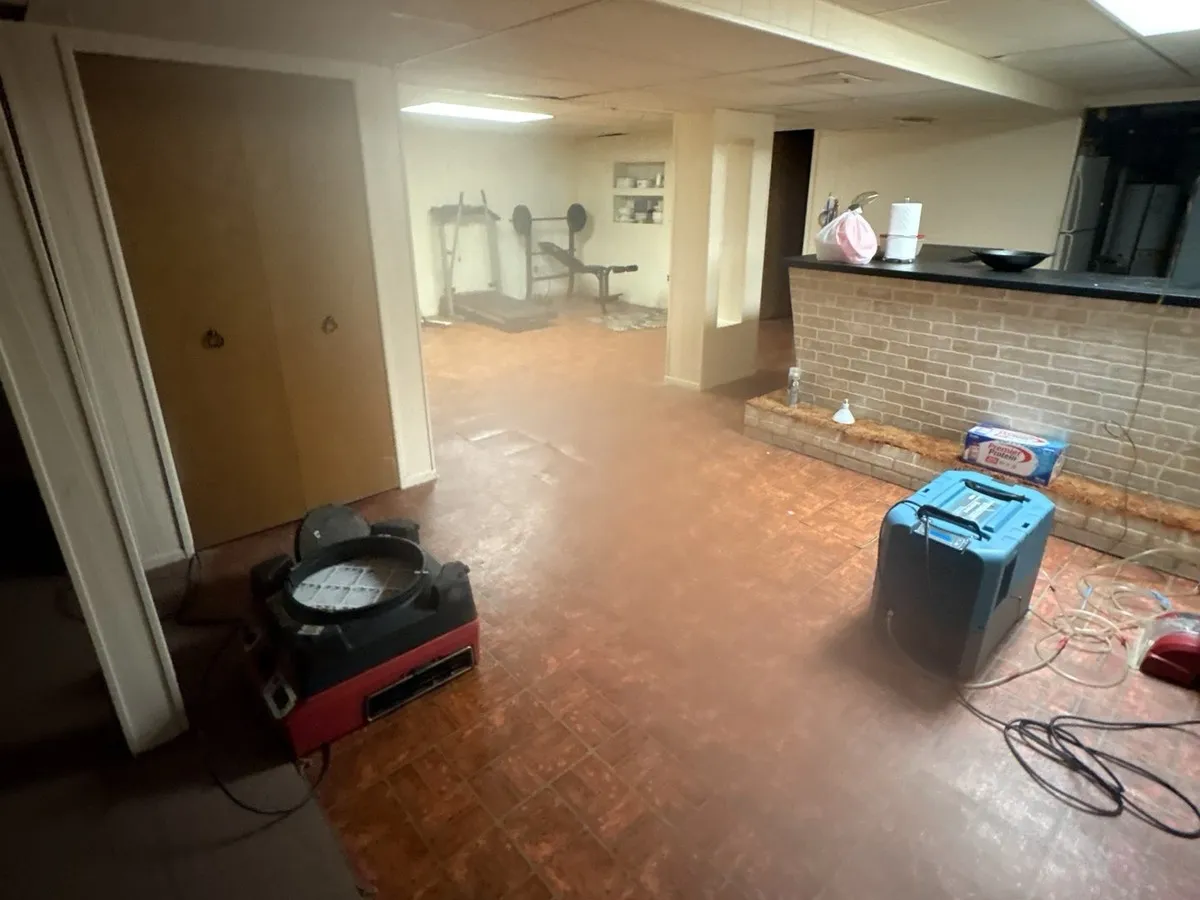
Sterling Heights subdivisions built between the 1960s and 1990s were designed before modern drain-tile standards became common. Combined with the heavy clay subsoil that defines the Clinton River watershed, that means after a multi-inch rain event we commonly see foundation seepage, sump pit overflow, and slow wicking up drywall from the bottom plate. Restoration scope here usually involves moisture mapping the full basement perimeter — not just the visible wet area — before drying equipment goes down.
Sewage cleanup projects in Sterling Heights are handled with strict Category 3 sewage precautions regardless of location — but the conditions that make clay-soil basement seepage common here also shape how contamination migrates through substrates and what physical removal looks like in practice.
Seasonal pattern — Sterling Heights
Spring thaw and multi-day fall rain events drive most calls here; frozen pipes account for a smaller but concentrated burst of January–February work.
Local conditions in Sterling Heights
Soil & Water Table
Sterling Heights sits on the heavy clay subsoil characteristic of the Clinton River watershed. Clay doesn't absorb water quickly, so after major rain events hydrostatic pressure builds against foundation walls and finds any weak point — hairline cracks, floor-to-wall joints, window wells. Homes built before modern drain-tile standards often rely on aging interior French drains.
Building Stock
Sterling Heights housing is dominated by split-level and ranch homes built between 1960 and 1995, with a smaller wave of 2000s construction on the city's northern edge. Most have poured-concrete foundations, copper supply lines, and PVC drains in the newer homes — but older subdivisions still commonly have galvanized or cast-iron plumbing due for replacement.
Dispatch & Access
Dispatches from our Sterling Heights office reach most of the city in under 30 minutes outside of rush hour. Wide suburban streets mean equipment staging is straightforward on all but the tightest cul-de-sacs.
Sterling Heights Neighborhoods and Districts We Cover
Sterling Heights spans a wide range of housing eras across distinct sub-areas. The Plumbrook neighborhood near Plumbrook Road and Van Dyke contains predominantly 1960s and 1970s ranch and tri-level homes, many with original galvanized supply lines and below-grade family rooms that complicate Category 2 and Category 3 water losses. The Lakeside corridor near Hall Road and Schoenherr trends toward 1980s and 1990s colonial construction with finished basements and engineered I-joist floor systems that require careful moisture mapping during structural drying. The Utica Junction area along the Clinton River near Dodge Park presents heightened riverine exposure, and homes in this corridor have documented basement infiltration during high-flow events. Access to rear yards is constrained by privacy fencing in much of the city, which affects equipment staging for large-loss water extraction and content pack-outs.
Recent Storm History — Sterling Heights, MI
Sterling Heights sustained widespread basement flooding during the August 11, 2014 Metro Detroit flood, when localized rainfall totals approached and exceeded four inches in a few hours and overwhelmed combined and separated sewer systems across Macomb and Wayne Counties. Sewage backups in finished basements throughout the city produced thousands of Category 3 water losses governed by industry-standard mitigation protocols, and the event reshaped sewage-backup endorsement adoption across the residential market. The June and July 2021 Metro Detroit flooding events produced renewed basement-backup losses, particularly in older subdivisions with under-sized laterals. The April 15, 2026 Macomb County windstorm caused widespread tree-fall and roof damage across Sterling Heights, generating a follow-on wave of wind-driven rain intrusion claims and tarping work that overlapped with ongoing utility-restoration timelines.
Working With Your Insurance Carrier in Sterling Heights
Sterling Heights homeowners are insured through the standard Michigan carrier mix, with AAA/Auto Club Group, Auto-Owners, State Farm, Allstate, Citizens, Farm Bureau, and Hanover all maintaining substantial residential books in Macomb County. This carrier diversity means restoration documentation must be prepared to satisfy multiple desk-adjuster and field-adjuster review standards. Xactimate remains the industry-standard estimating platform across these carriers, and line-item scope built to current Xactimate price-list and methodology specifications is generally required for sketch, mitigation, and rebuild estimates. Photo documentation, moisture mapping, and psychrometric logs aligned with industry-standard reporting expectations support efficient claim resolution across the carrier landscape.
Prime Restoration is a licensed Michigan restoration contractor. We document project scope with detailed, itemized paperwork so homeowners have clear line-item records to submit to their carrier.
Permits & Code Compliance — Sterling Heights
Restoration permits in Sterling Heights run through the city's Office of Building, which enforces the building, electrical, mechanical and plumbing codes; even a replacement water heater needs a plumbing permit. Houses fall under the 2015 Michigan Residential Code, which is still in force because a July 2025 court order paused the 2021 update. Sterling Heights has its own Mold Policy: for major remediation, as the Building Department determines, a licensed contractor must secure a building permit, and a successful air quality test is required before that permit is closed. The city lists the Clinton River, the Red Run Drain, the Plumbrook Drain and Beaver Creek as its flood sources and posts river gauges for the Clinton River at Riverland Drive and the Plumbrook Drain at Ryan Road. Any development inside the 100-year floodplain, not only new buildings, needs a floodplain permit, and if repair costs reach 50% of a building's value the whole structure must be brought up to floodplain standards. Sterling Heights is a Class 7 community in FEMA's Community Rating System, so flood insurance premiums carry a 15% discount. Its 7-member Historical Commission is advisory only, so no historic-district review applies to repairs.
Sources: Sterling Heights Office of Building · Sterling Heights Mold Policy · Sterling Heights Flood Services · Floodplain Permit Requirements · Substantial Improvement / Damage · Flood Insurance (CRS Class 7) · Sterling Heights Historical Commission · Michigan LARA: current code books · LARA: 2021 residential code injunction notice
Sewage Backup Cleanup — Sterling Heights, MI
Sewage backup is classified as Category 3 "black water" and requires strict containment, PPE, and disposal protocols. Porous materials that have contacted sewage are removed and disposed of — they cannot be cleaned. Non-porous surfaces are cleaned and treated with commercial-grade disinfectant. The scope is documented in Xactimate for your insurance carrier.
Common causes we see in Sterling Heights
- •Municipal sewer backup during heavy rain
- •Clogged main line
- •Tree root intrusion in lateral
- •Collapsed sewer line
- •Failed ejector pump
Signs to watch for
- •Water coming up through floor drains
- •Strong sewage smell in basement
- •Toilet or tub backing up when draining
- •Multiple fixtures draining slowly
Our Sewage Backup Process in Sterling Heights
The same documented process on every project.
1. Full PPE Setup
Crews enter in Tyvek suits, gloves, boots, eye protection, and P-100 respirators. Entry and exit are controlled through a decontamination zone.
2. Sewage Extraction
Sewage is pumped out with dedicated equipment. Pump discharge is to sanitary sewer per code, not storm sewer.
3. Affected Material Removal
All porous materials in contact with sewage — carpet, pad, drywall bottom 24", MDF trim, insulation — are removed and disposed of. Non-porous materials stay.
4. Cleaning & Disinfection
Non-porous surfaces are cleaned and treated with commercial-grade disinfectant rated for Category 3 water. Two-step clean-then-disinfect process.
5. Structural Drying
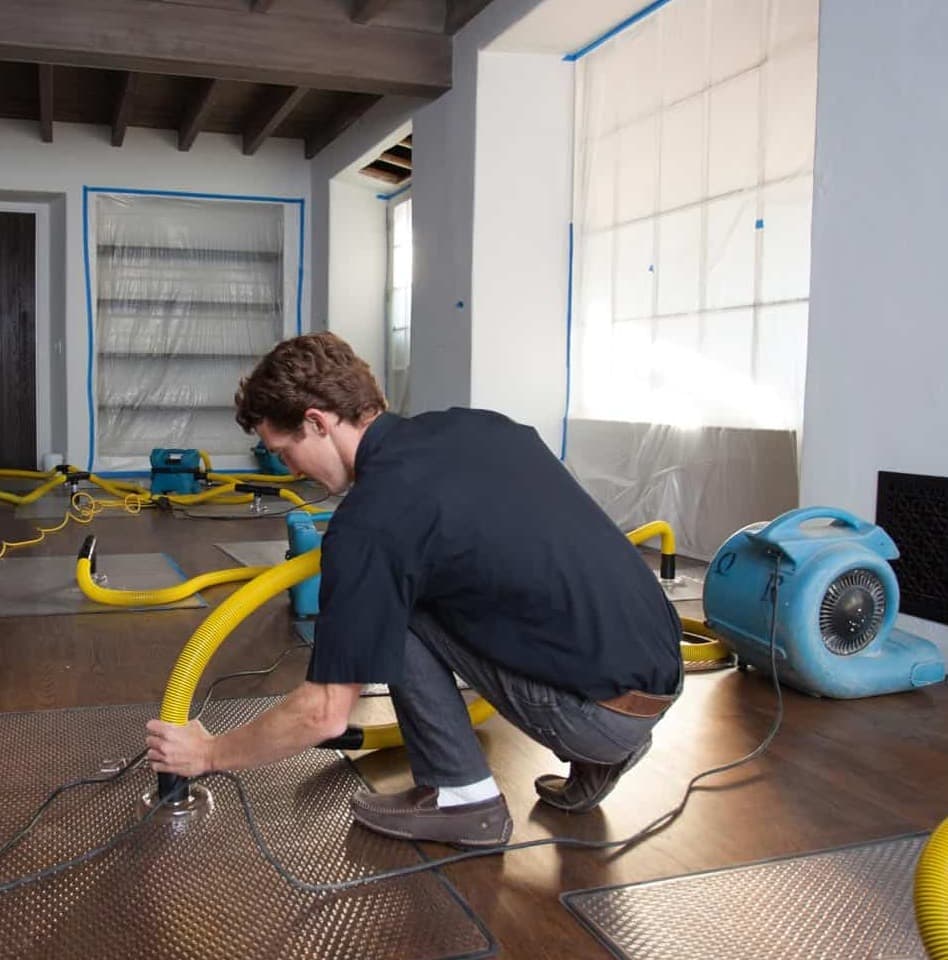
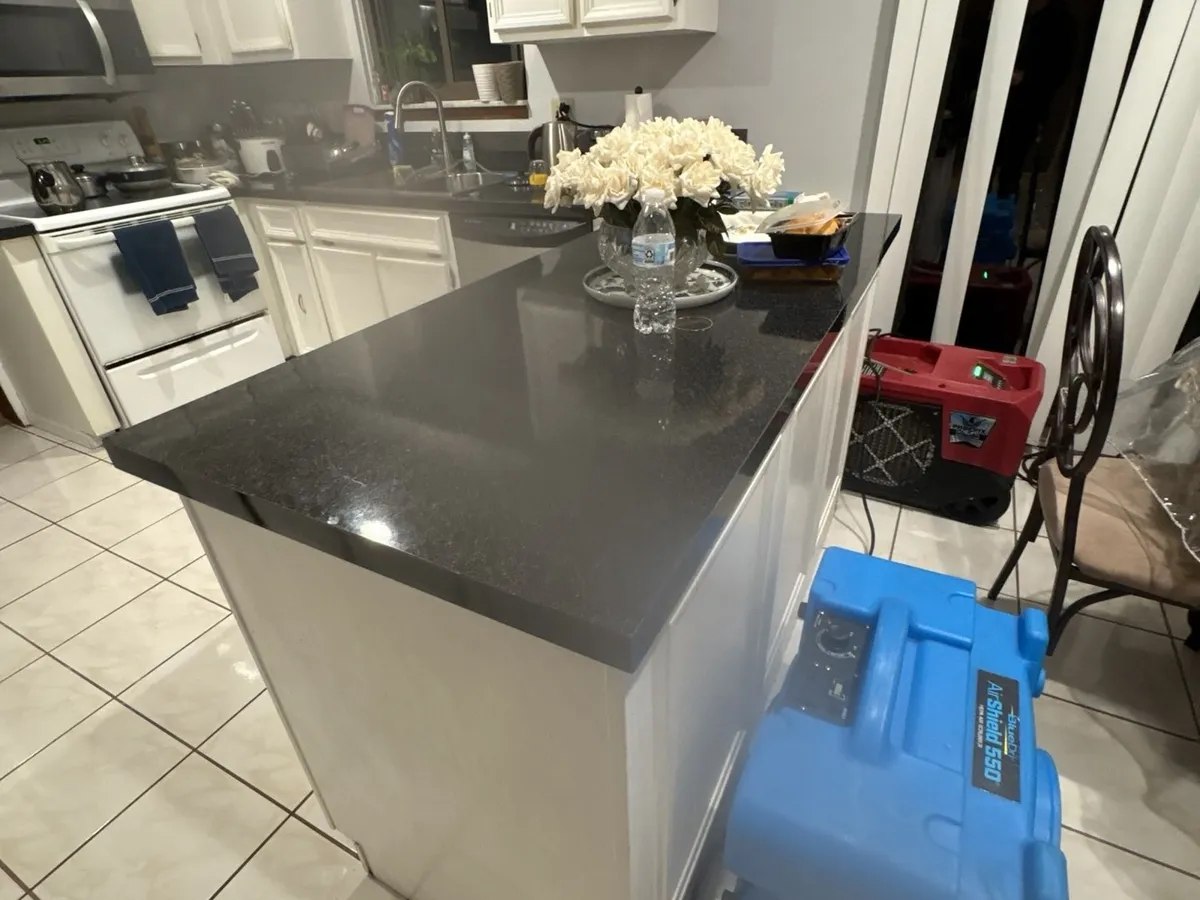
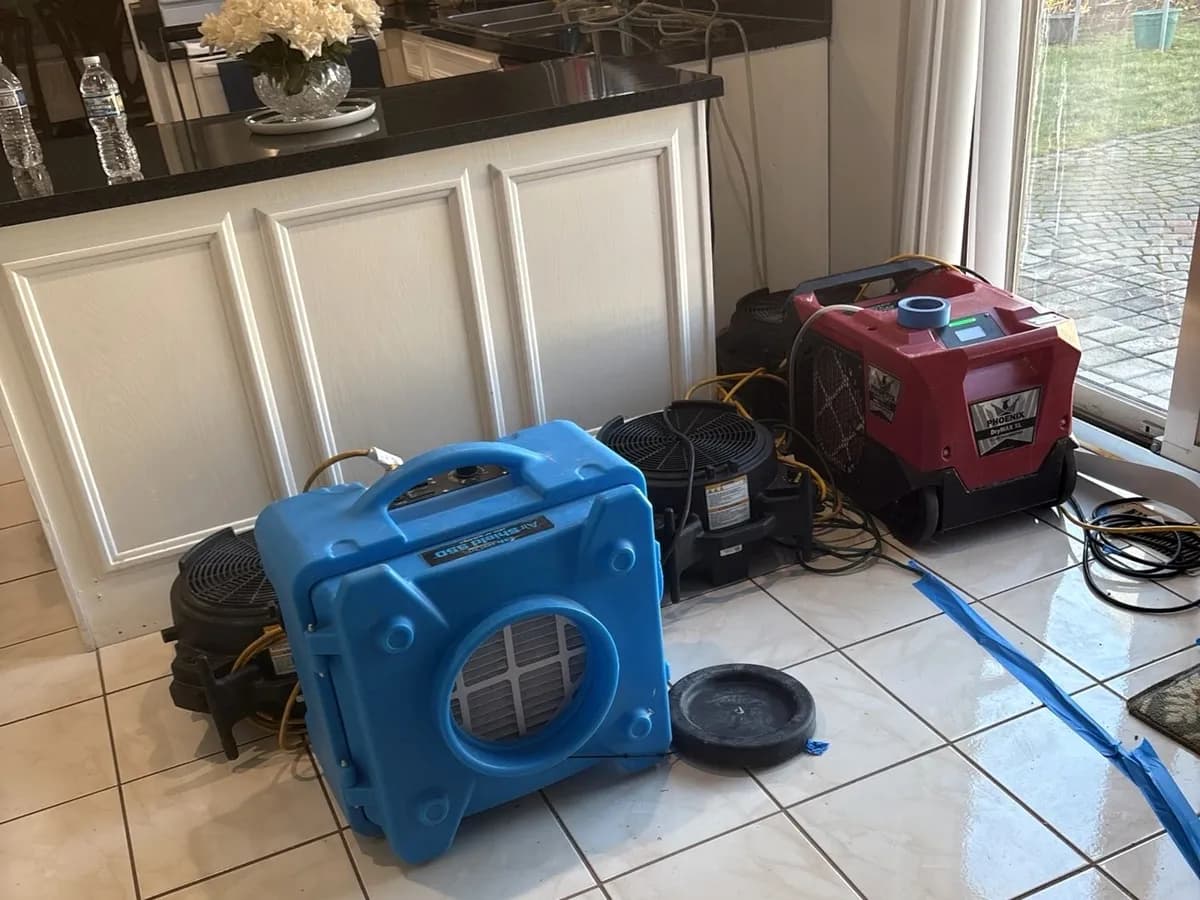
After disinfection, air movers and dehumidifiers dry affected framing and concrete following industry-standard mitigation protocol.
6. Verification & Rebuild
Moisture verification confirms dry standard. Drywall, trim, flooring, and paint are rebuilt. Documented in Xactimate.
Equipment we bring to Sterling Heights
Reviews
What Sterling Heights Area Homeowners Say
5.0 Stars · 147 Verified Google Reviews
“Had a really good experience with Prime Restoration for mold remediation. They were professional, clear about the process, and actually made me feel confident about the process. Not pushy. I'd definitely recommend them around Bloomfield Hills”
Christian H.
Bloomfield Hills, MI
“Prime Restoration is a solid company in Michigan for basement floods and water damage. They're professional, knowledgeable and the kind of team you'd want handling a stressful situation.”
Nathan M.
Verified Google Review
“Prime Restoration in Bloomfield has an outstanding team for water damage restoration. Their crew is phenomenal. great people with top notch character who clearly know their stuff. Highly recommend for anyone facing water damage in Bloomfield.”
Ahmed W.
Bloomfield, MI
“Best in the game did my basement because it flooded and they left no messes clean and efficient”
Adam J.
Verified Google Review
“The Prime Restoration team was absolutely fantastic! Very professional and communicative. Completed the job in a timely manner. I would highly recommend!”
Jerome K.
Verified Google Review
“I called five different companies for restoration work, and Prime Restoration was hands down the fastest and most fair on price. They got me a quote the same day, while others were still "getting back to me." Their team works fast.”
Sean B.
Verified Google Review
Sewage Backup Questions — Sterling Heights, MI
Common questions from Sterling Heights homeowners before they call.
Why do Sterling Heights basements flood even when the sump pump works?
Sterling Heights' heavy clay subsoil doesn't drain quickly, which means after a multi-inch rain event hydrostatic pressure builds against foundation walls from all sides at once — not just at the drain tile the sump can reach. Water finds the weakest point: a hairline crack, an unsealed floor-to-wall joint, or a window well. A working sump handles normal events but can't relieve perimeter pressure that exceeds what the drain-tile system was designed to capture.
Is sewage backup covered by insurance?
Most standard homeowner policies exclude sewer backups unless you have a specific water/sewer backup rider. Coverage and limits vary widely. We document the full scope in Xactimate so you have itemized paperwork regardless of coverage decision.
Can the carpet be saved?
Per industry-standard practice, carpet pad exposed to Category 3 water must be disposed of. Carpet itself is typically removed with the pad unless it can be cleaned and disinfected to return it to pre-loss condition — uncommon with sewage exposure.
Is it safe to be in the house?
The affected area should be avoided until cleanup is complete. For a contained basement backup, most homeowners can stay on upper floors. For first-floor sewage events, temporary relocation during active cleanup is typical.
Prime Restoration is a licensed restoration contractor. We document the full project scope with detailed, itemized paperwork so you have clear line-item records to submit to your carrier.
Related Services in Sterling Heights
Sewage & Biohazard
Biohazard & Trauma Cleanup in Sterling Heights
Careful, discreet biohazard, trauma, and unattended death cleanup.
Water Damage
Basement Flooding Cleanup in Sterling Heights
Basement water extraction, contents pack-out, structural drying, and sanitization.
Water Damage
Water Damage Restoration in Sterling Heights
Industry-standard water extraction, structural drying, and full restoration with Xactimate documentation.
Sewage Backup Near Sterling Heights
We also serve these nearby Macomb and Oakland County communities.
Need Sewage Backup in Sterling Heights Now?
24/7 emergency dispatch. trained restoration crews. Typical response within 25 minutes across our core service area.