
Our work · Rochester Hills · April 2026
Water backup in a finished Rochester Hills basement: the record from first call to final check
Water backed up into the finished lower level of a Rochester Hills home. The dated photos and the job record show what the crew found at the baseboard, how they dried the space without pulling the whole floor, and why part of the wall still had to come out.
- 5.0★ on Google, 186 reviews
- Michigan Licensed Builder #262500492
- IICRC Certified Firm
- Rochester Hills Office, Rochester Hills
The job at a glance
- City
- Rochester Hills, Oakland County
- Loss
- Water backup into a finished basement
- First call
- April 5, 2026
- Last equipment pull
- April 16, 2026 (11 days)
- Removed
- Baseboard and a flood-cut section of drywall
- Also on this job
- Mold remediation, billed separately
How do you dry a finished basement after a water backup?
Prime Restoration maps the wet area with a moisture meter and a thermal camera, then dries what it can in place before removing anything. On this Rochester Hills job the crew ran an injectidry mat system under the baseboard with air movers for the first stretch, kept the vinyl plank floor down, and only opened the wall after they found mold on the baseboard. Framing dried until it read in the meter's dry range. Call Prime Restoration at (586) 277-1069.
The cause
What caused the loss?
Water backed up into the finished lower level of the home. The job record does not name the exact source; the notes reference checking the policy limit for a backup loss and bringing in a plumber, which is the language insurers and contractors use for water that comes up through a drain rather than water that enters from outside or from a pipe leak above.
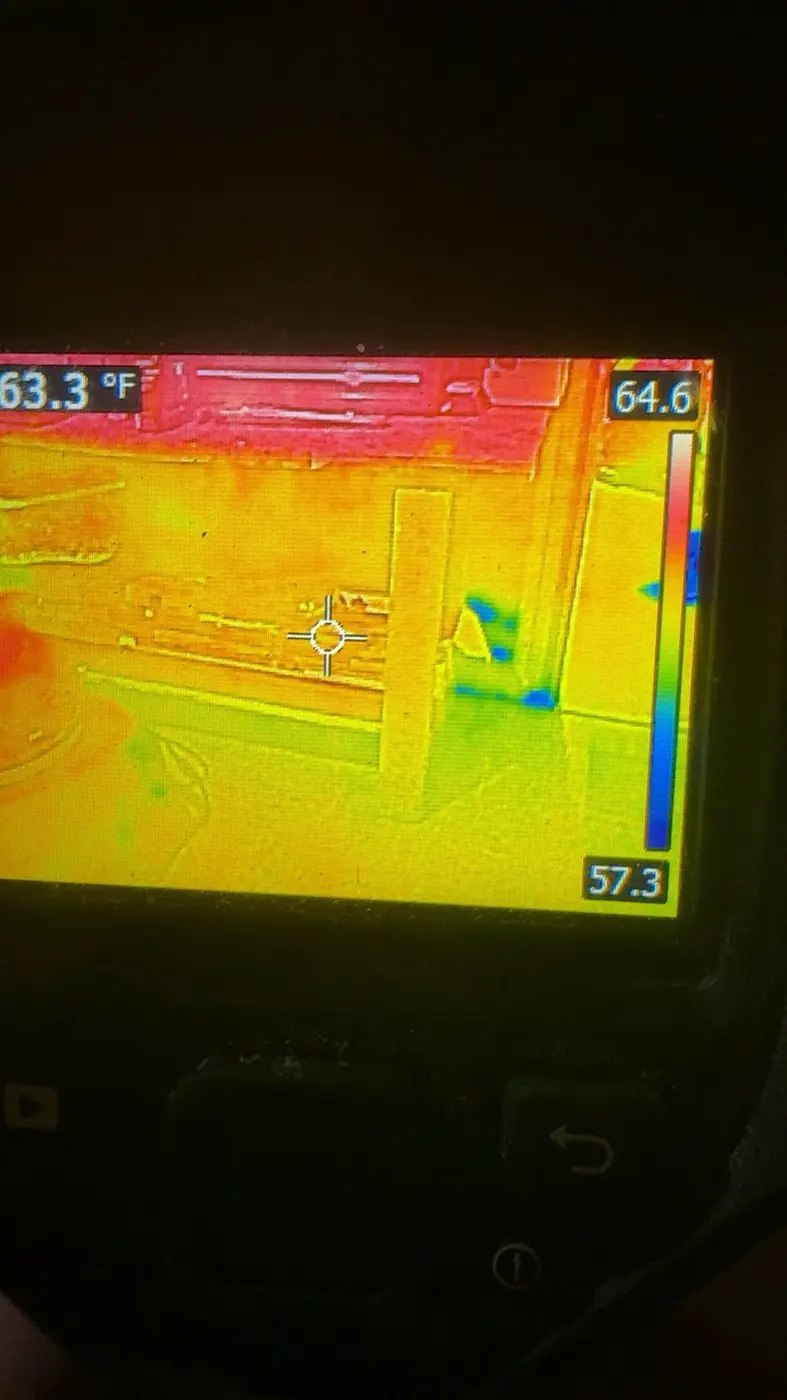
A thermal scan on the first visit found the evidence: a band along the baseboard of an exterior basement wall read 57 to 58 F against a room reading in the low 60s, a gap cold enough to mark where water had tracked and soaked into the base of the wall.
Timeline
How the job went, day by day
- Day 1 · Apr 51
Scanned the basement and mapped the wet band
The crew walked the finished basement with a thermal camera and a moisture meter. The thermal scan picked up a cooler band along the baseboard of an exterior wall, and the meter confirmed elevated readings in the same spot. Everything was photographed with the date for the file.
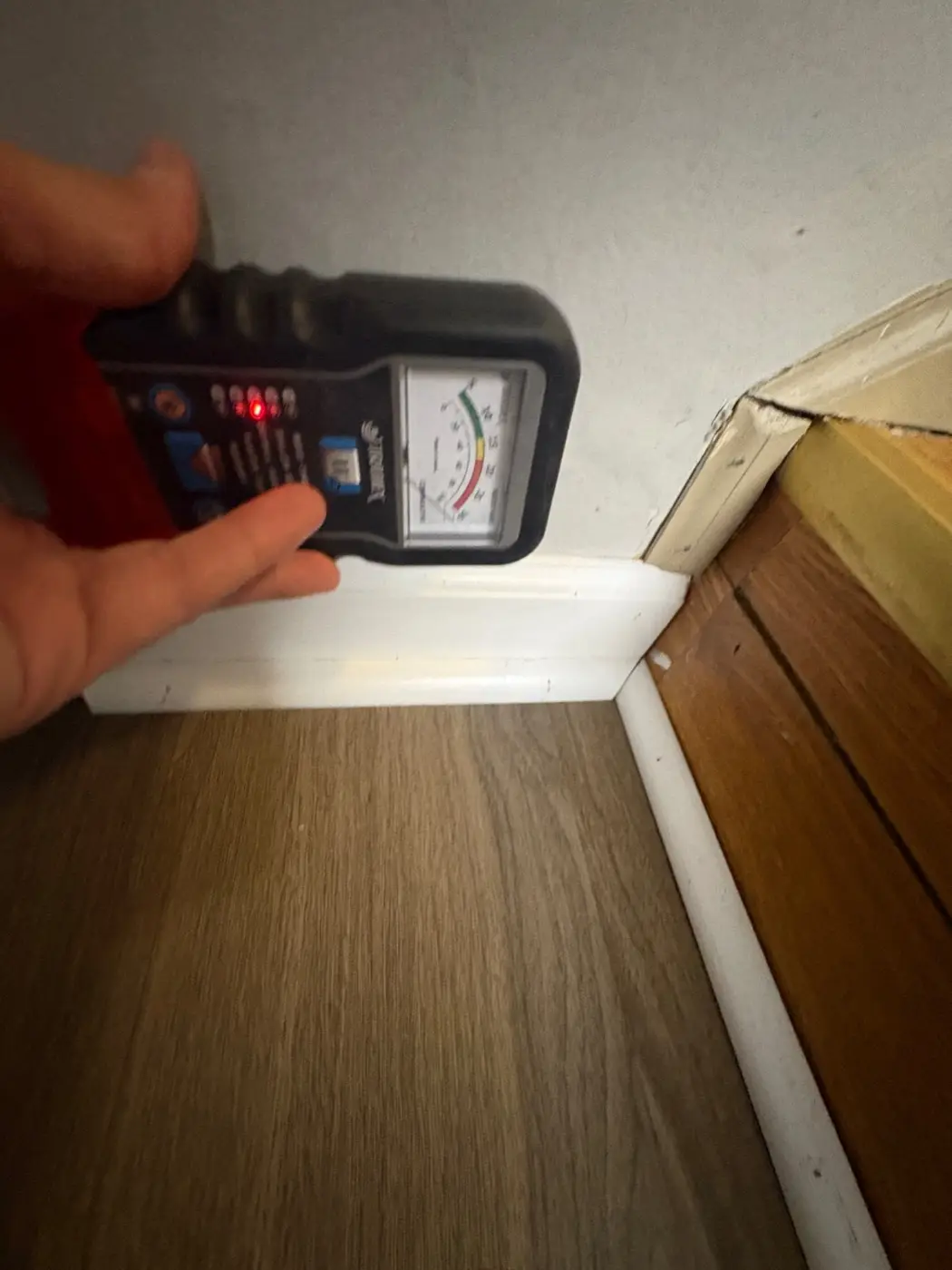
Apr 5: confirming the wet band at the baseboard with a moisture meter. - Day 2 · Apr 62
Dried in place without pulling the floor
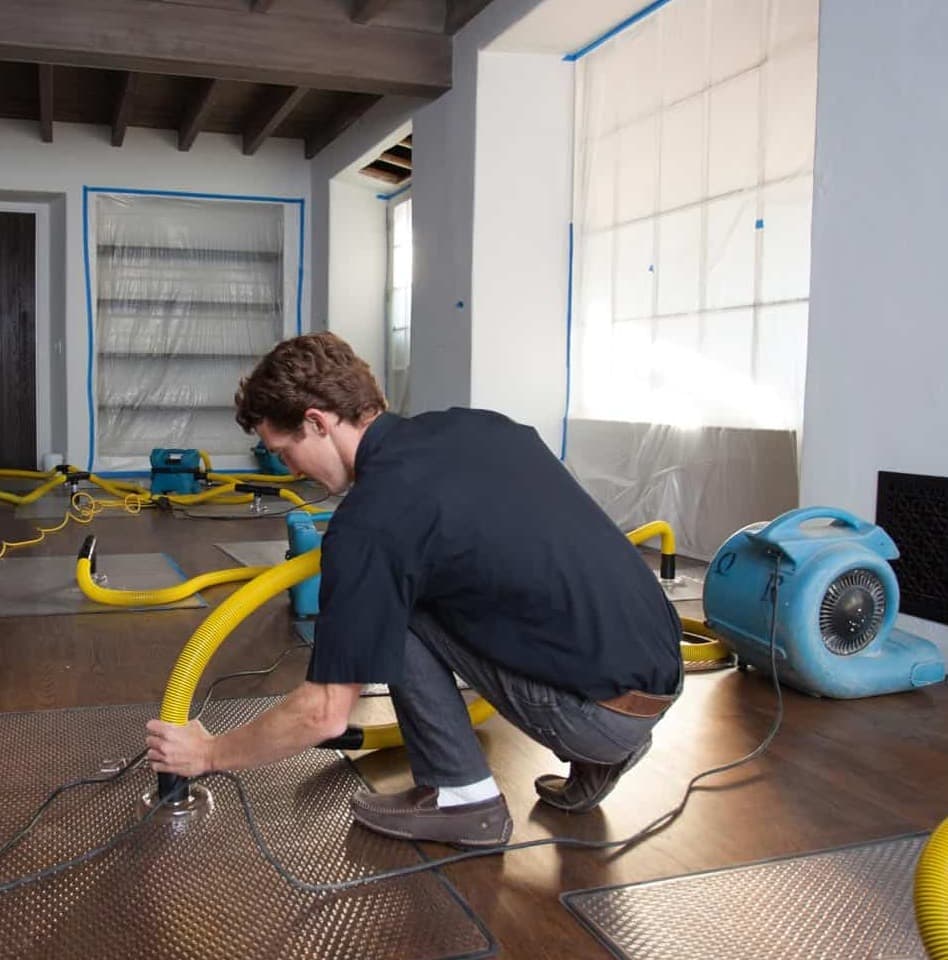
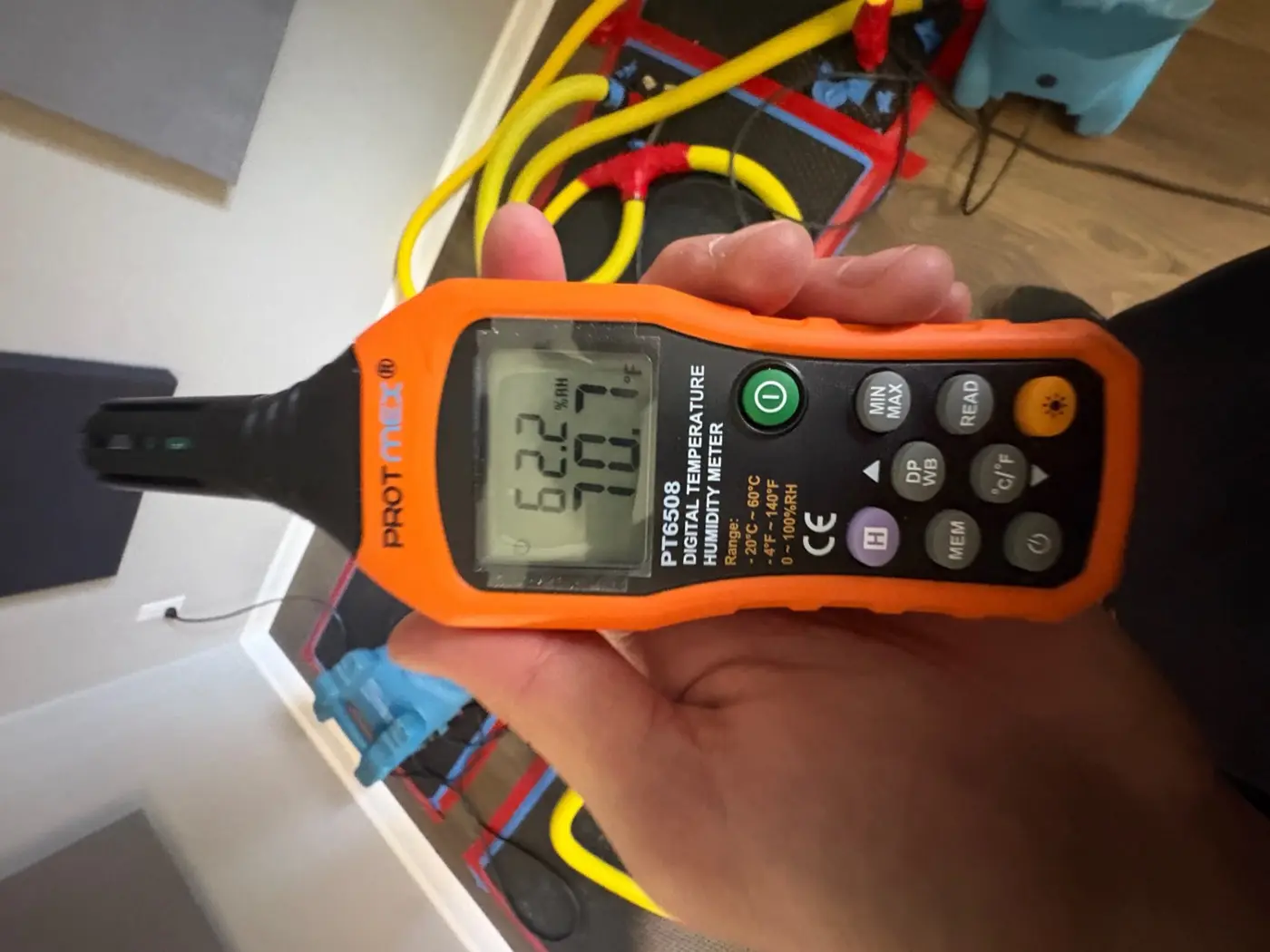
Rather than remove the vinyl plank flooring right away, the crew set an injectidry mat and tubing system at the baseboard to draw air under the floor and into the wall cavity, backed by air movers. A room reading that day came back at 62.2% relative humidity and 70.1 F.
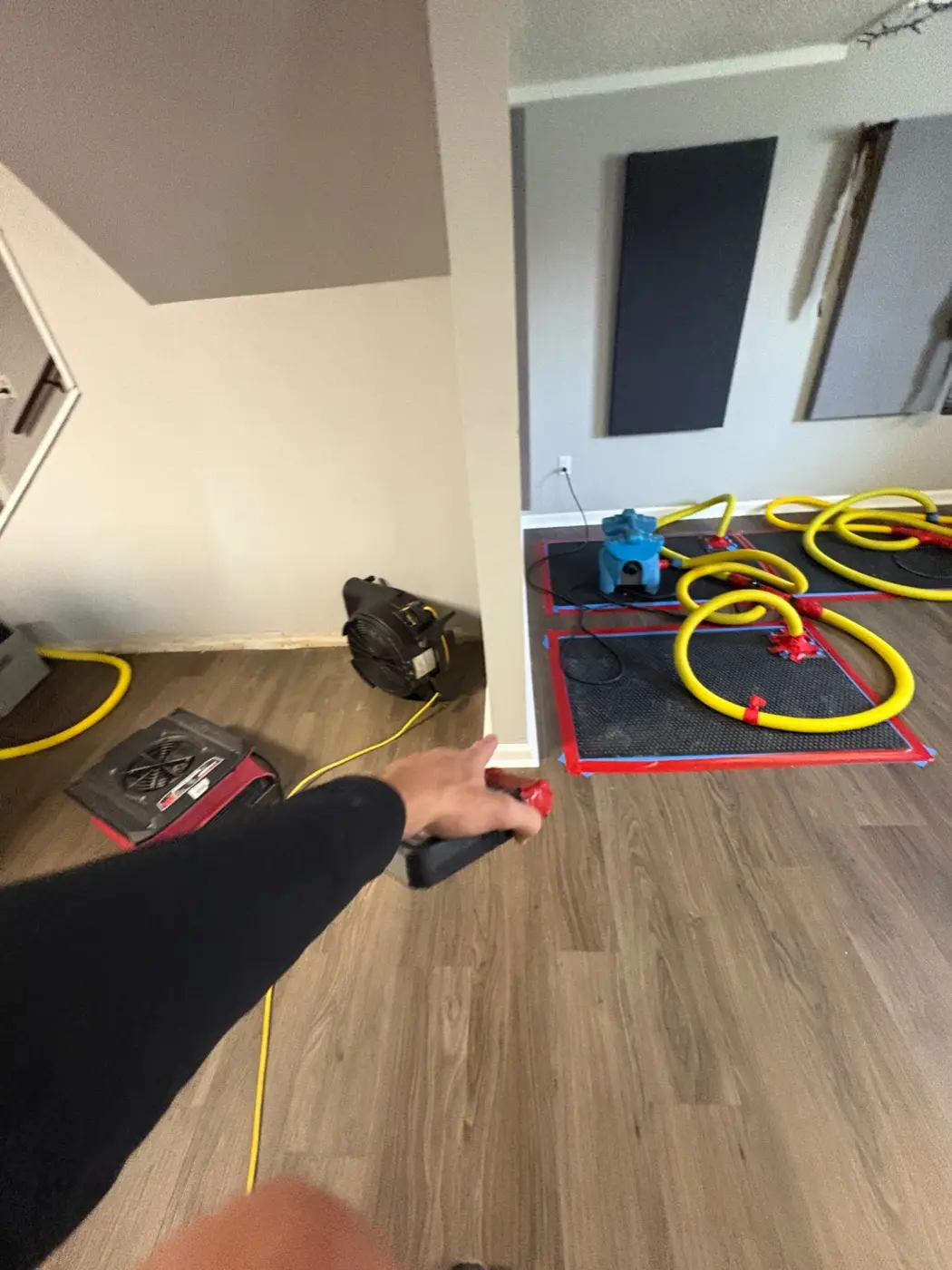
Apr 6: non-invasive drying mats at the baseboard, floor left in place. - Day 3 · Apr 73
Set two points to track the dry
The crew logged two monitoring points to follow as drying continued: a floor stud in the utility room, starting at 29 on the meter with a target of 5, and the basement drywall next to the stairs, starting at 33 with a target of 7.
- Day 6 · Apr 10, morning4
Pulled the baseboard and found mold
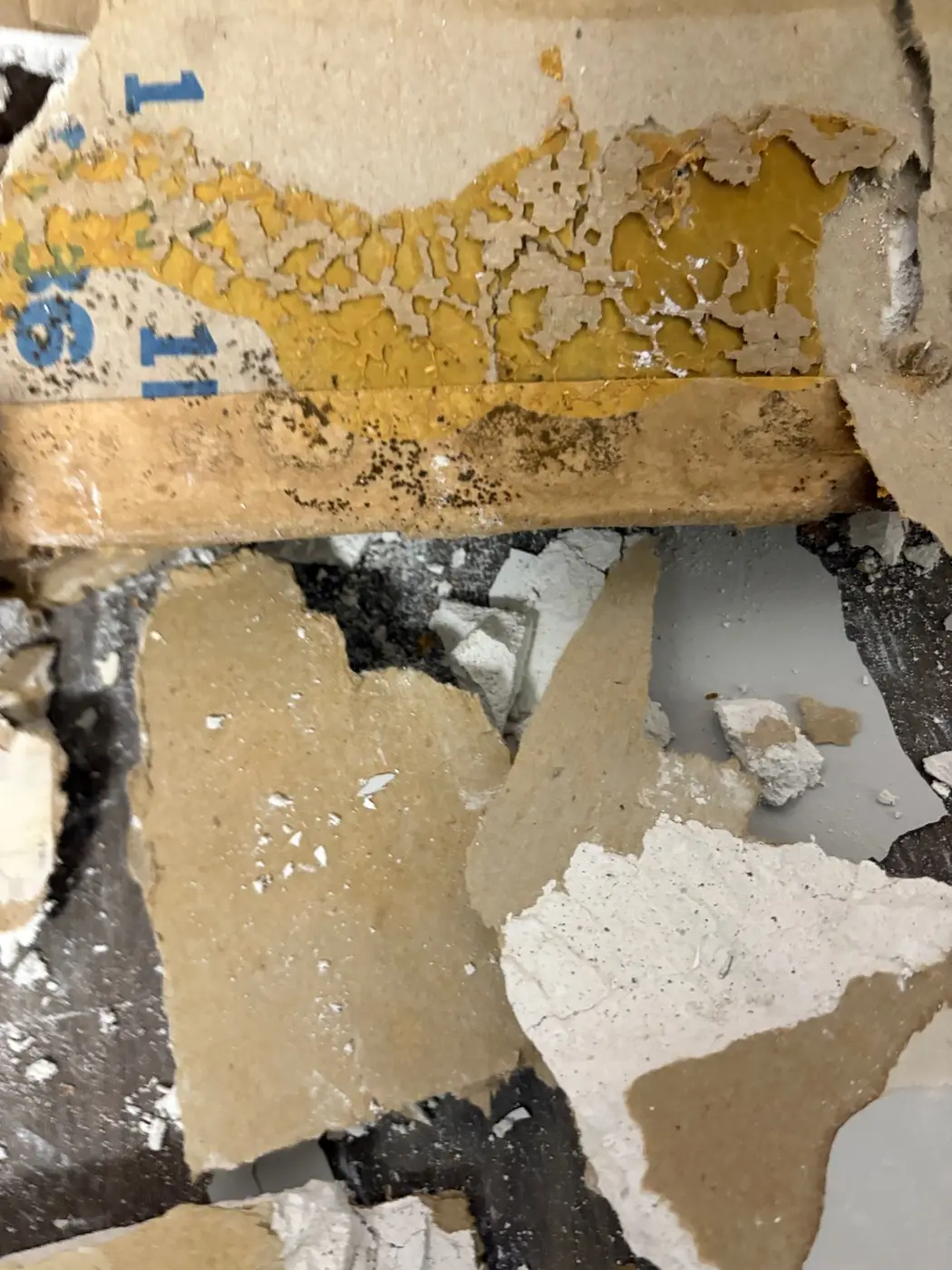
With the vinyl plank floor protected and the main-floor hallway covered, the crew pried the baseboard off the finished basement's perimeter walls to check behind it. Several sections came off with visible mold growth on the back face and along the wall's bottom plate, which changed the plan from dry-in-place to remove-and-dry.
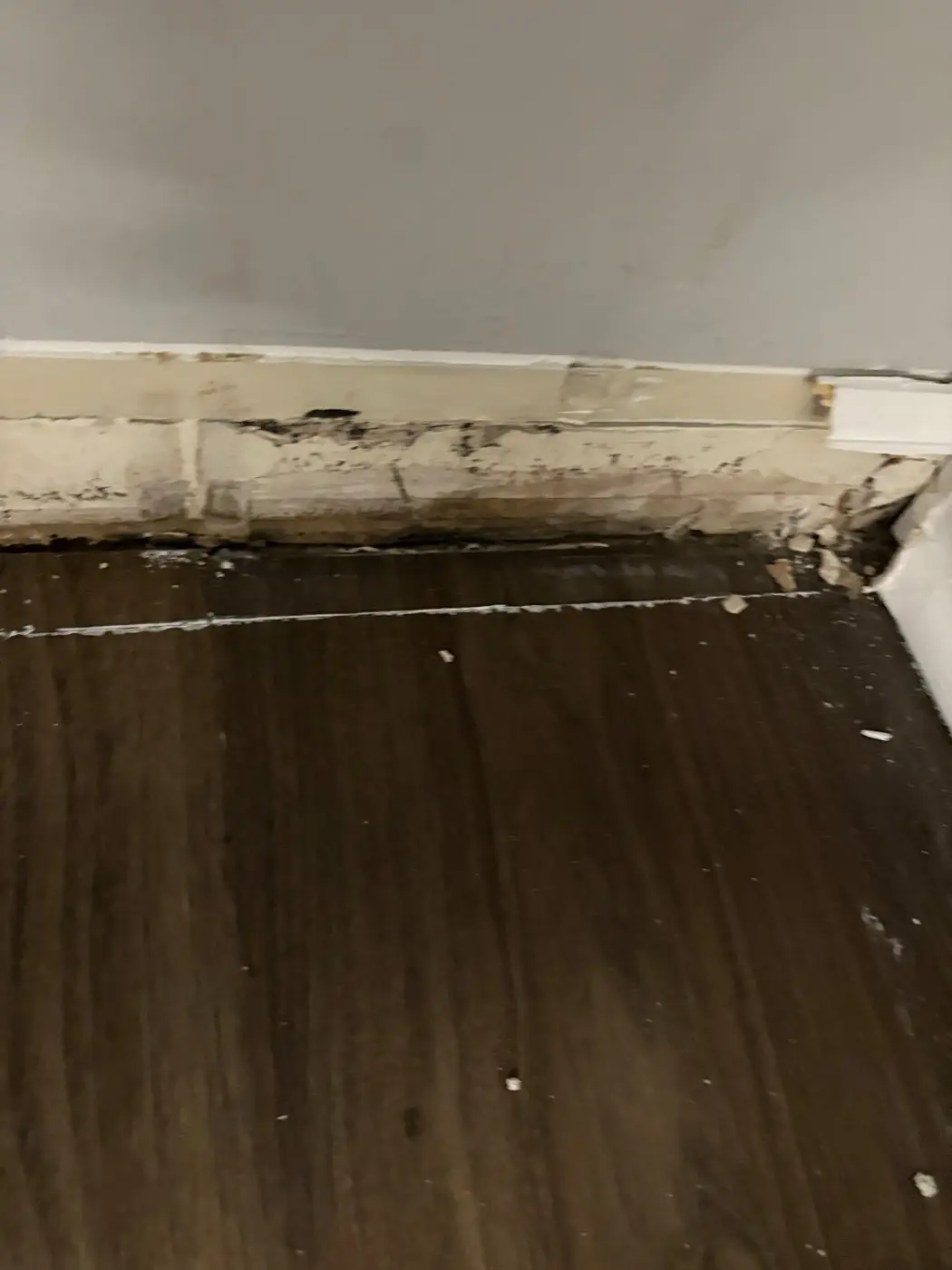
Apr 10: mold found on the baseboard, the reason the wall had to open. - Day 6 · Apr 10, afternoon5
Flood-cut the wall and contained the stairway
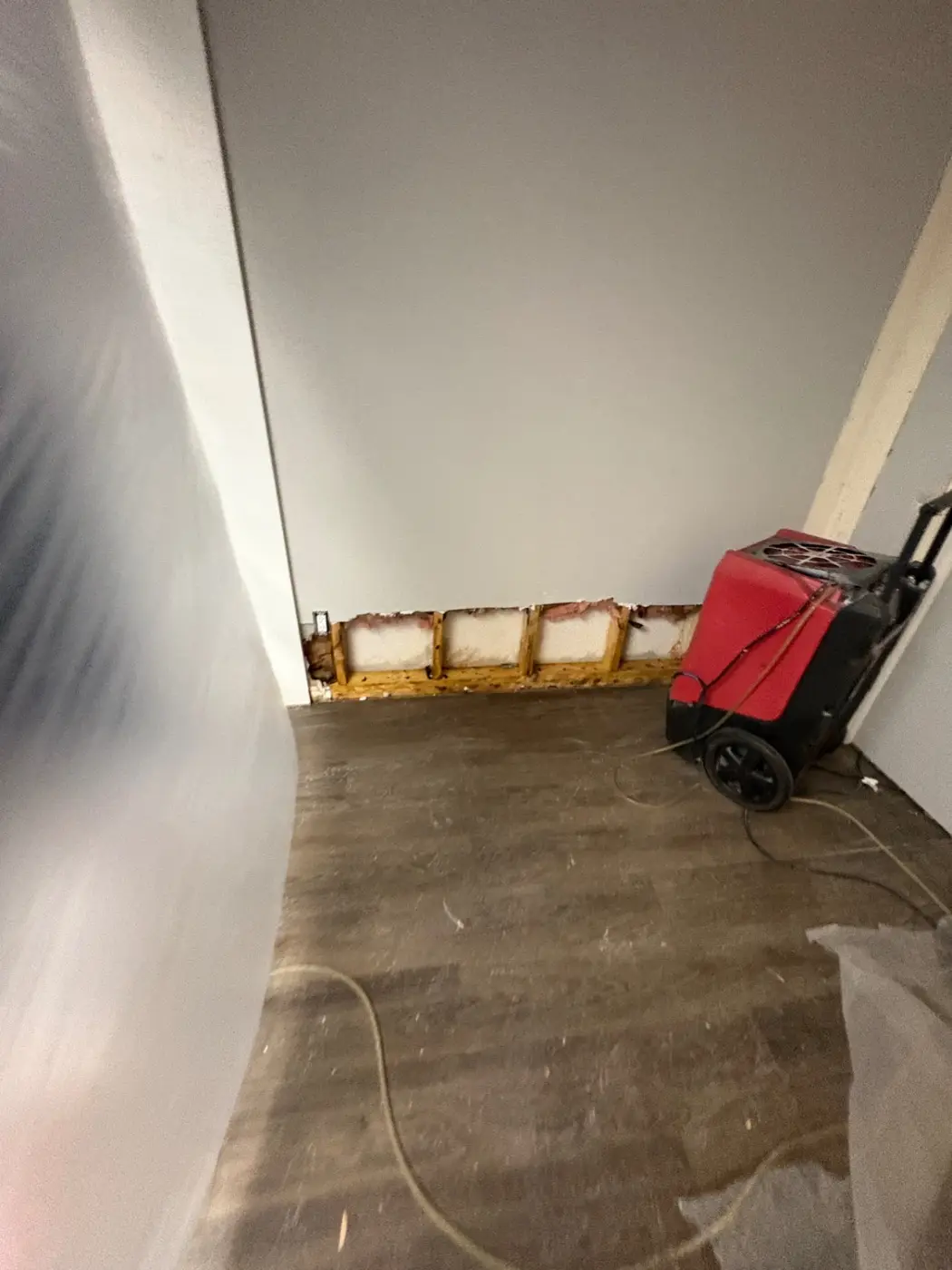
The crew flood-cut the lower section of drywall around the affected walls, exposing mold-stained paper and framing underneath, and sealed the basement stairway with zippered plastic containment to keep dust out of the rest of the finished space. The teardown was worked in protective suits, and the debris went out to the van by the end of the day.
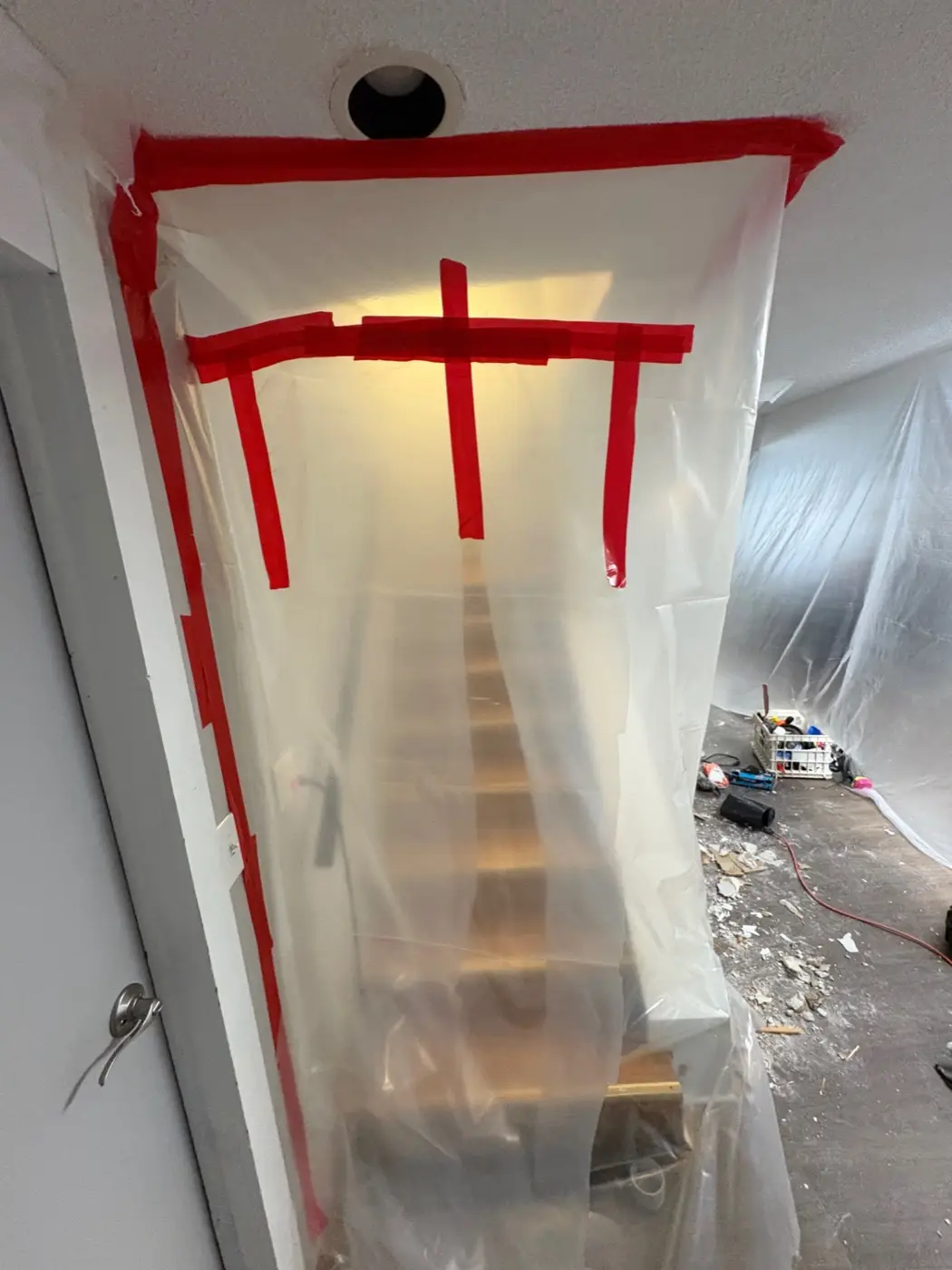
Apr 10: zippered containment at the stairway during tear-out. - Day 12 · Apr 166
Final checks and reassembly
Moisture-meter checks on the open framing came back in the meter's dry range. The crew pulled the drying equipment, took down the containment, and moved the furniture and rug back into place. Mold remediation followed as its own job.
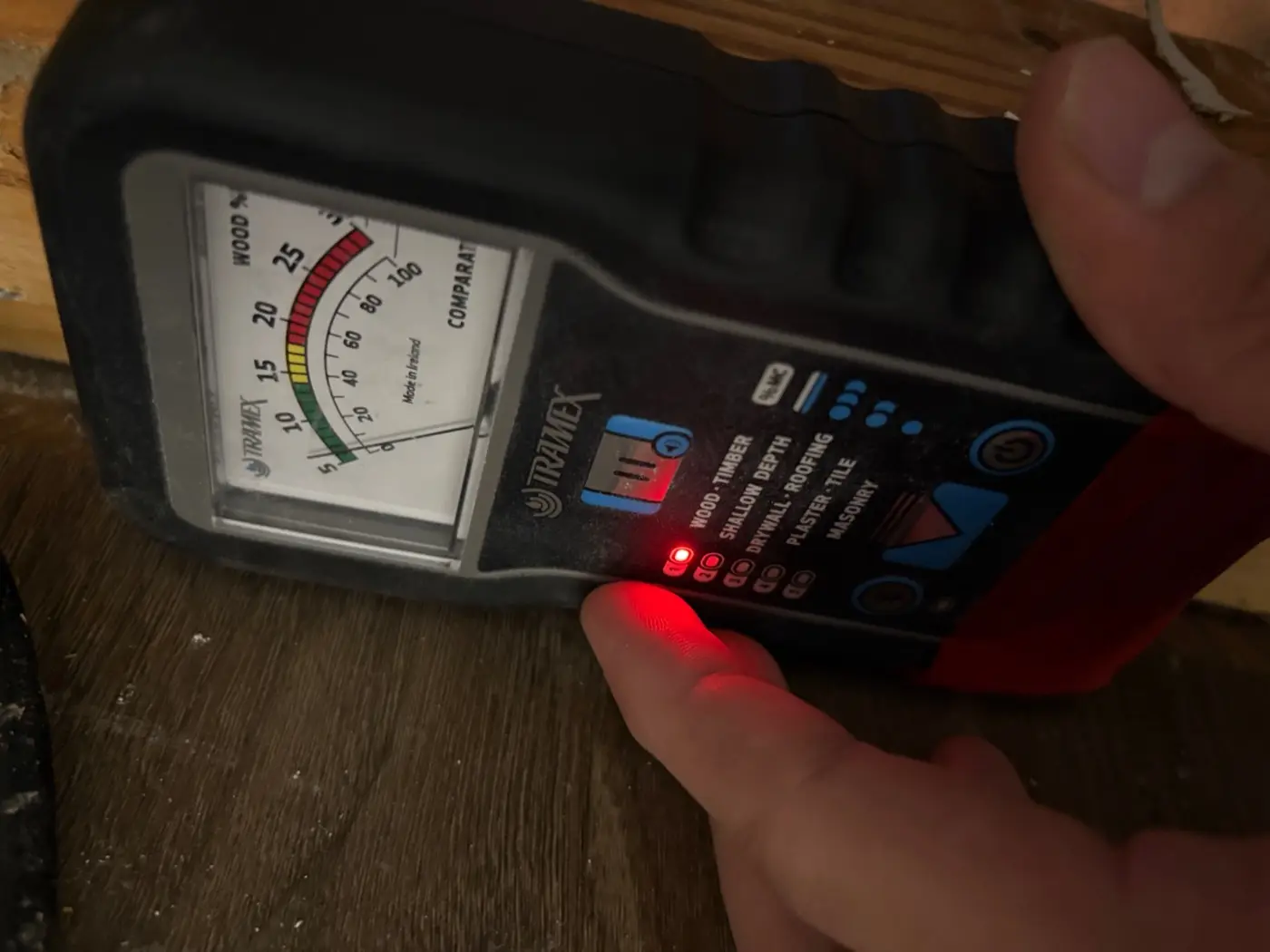
Apr 16: framing checks back in the meter's dry range before close-out.
Measured, not guessed
The readings from this job
These are the room-air readings photographed on this job. GPP is grains of water per pound of dry air, the figure drying crews use to see how much moisture the air is actually holding, apart from the percentage on the dial.
| When | Temperature | Relative humidity | GPP | Where it comes from |
|---|---|---|---|---|
| Day 2, Apr 6 | 70.1 F | 62.2% | about 68 (calculated) | Photographed room reading, basement |
| Day 12, Apr 16 | 69.2 F | 50.5% | about 54 (calculated) | Photographed final room reading |
Room-air readings move with the weather and the equipment cycle; they tell the crew how hard the air is working, not whether the wall is dry. The material readings are what decided this job.
The two monitoring points set on Day 3 told the real story: the utility room floor stud opened at 29 against a target of 5, and the basement drywall by the stairs opened at 33 against a target of 7. By Apr 16, meter checks on the exposed framing sat in the meter's dry range before anything went back together.
On this job
Equipment on this job
- Injectidry mat and tubing system, to dry under the flooring and inside the wall cavity without full tear-out
- Air movers, to keep air moving across the wet baseboard and framing
- A commercial dehumidifier, to pull moisture out of the basement air
- A thermal imaging camera, to find the wet band behind the baseboard
- A combination moisture meter, for the floor stud, the drywall and the baseboard checks
- A digital thermo-hygrometer, for room temperature and humidity
- Zippered plastic containment at the stairway, to separate the tear-out area from the rest of the finished space
For your home
What this job means for your basement
- A finished basement can hide a water backup for days. The first sign is often a baseboard that looks stained or feels soft, not standing water.
- Non-invasive drying under the flooring can save it, but only on material that has not started to grow mold. That is why the crew checked behind the baseboard before deciding whether to open the wall.
- Backup coverage is often written with its own limit, separate from the main dwelling coverage. Ask for that limit early. The carrier decides what applies.
- Mold remediation is typically its own scope of work, scheduled and billed apart from the water mitigation that comes before it.
- A thermal camera finds a cold, wet band in seconds. A moisture meter confirms it before anyone cuts into a wall.
Job photos
Photos from this Rochester Hills job
Common questions
Questions about this kind of job
What does it mean when water backs up into a basement?
Can a finished basement dry without tearing out the floor?
Why did the baseboard and part of the drywall come out if the floor stayed down?
How long does a water backup take to dry?
Does homeowners insurance cover a water backup in the basement?
Will you show my address or photos of my house online?
How this page protects the homeowner
This page names the city and the month and nothing more specific. The street address, the homeowner, the claim number and the carrier are never published. Photos that show the outside of the home, the street, or anything that could identify the family were left out of the gallery below, and every photo used here was re-encoded with its location data removed.
Nearest office to Rochester Hills
Rochester Hills Office
Hampton Professional Park, 705 Barclay Cir, Rochester Hills, MI 48307
(586) 277-1069, 24/7
Related pages
- Sewer backup water damage
- Sump pump failure water damage
- Mold remediation in Rochester Hills
- Mold remediation
- Water damage restoration in Rochester Hills
- Rochester Hills water damage restoration
- Our Make-It-Right Guarantee
Other jobs we documented
- Finished Basement Flood Drying in Birmingham
- Roof Leak Into a Kitchen Ceiling in Bloomfield Hills
- Sewer Backup Basement Cleanup in Sterling Heights
- Basement Flood Cleanup in Macomb, Michigan
Sources
Written by Prime Restoration from the job record and dated job photos. Published November 2, 2026. Updated November 2, 2026.