

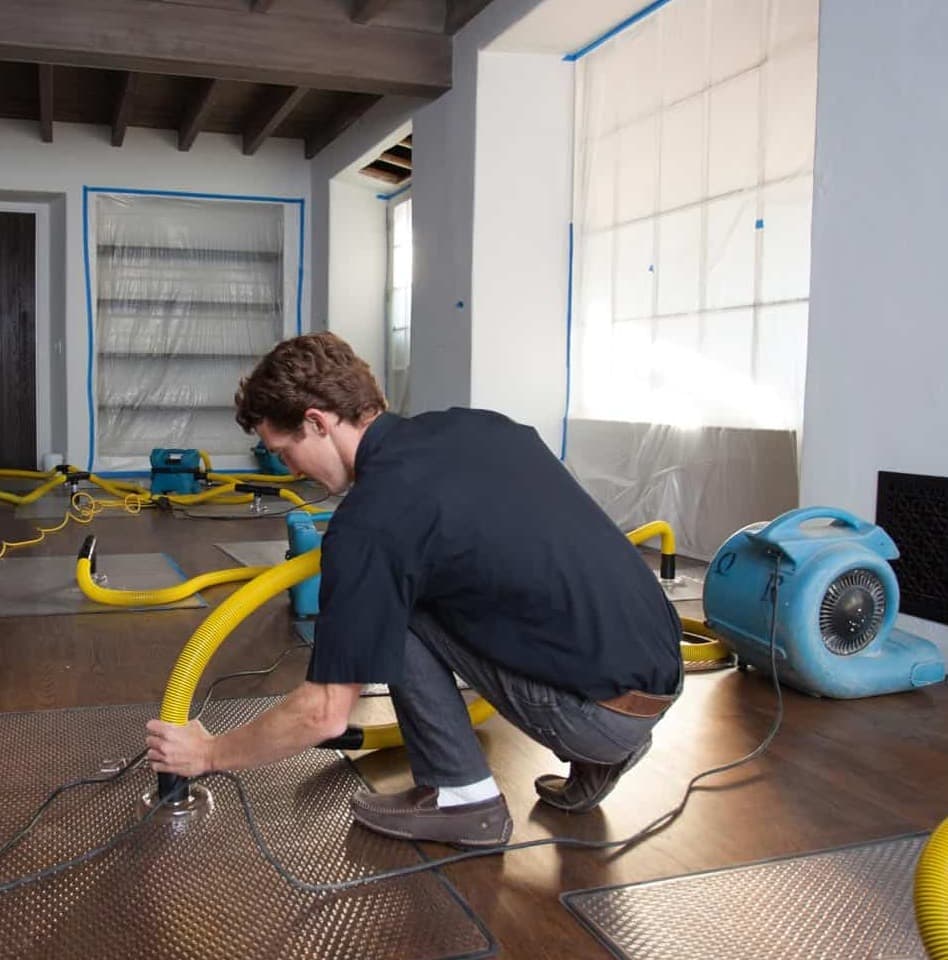
Our work · Birmingham · September 2026
A flooded finished basement in Birmingham: dry in 18 days
A finished basement in Birmingham took on water that reached every room before anyone called for help. This page follows the job from the dated photos: how far the water traveled, what came out of the walls, and the readings that led to the dry call.
- 5.0★ on Google, 186 reviews
- Michigan Licensed Builder #262500492
- IICRC Certified Firm
- Birmingham Headquarters, Birmingham
The job at a glance
- City
- Birmingham, Oakland County
- Loss
- Flooded finished basement
- First call
- September 24, 2026
- Marked dry
- October 12, 2026 (18 days)
- Removed
- Baseboard, drywall at the base of every wall, wet batt insulation, carpet and pad
- Rooms affected
- Home gym, bar area, laundry and mechanical room, hallway, and a storage room
How do you dry a flooded finished basement?
Prime Restoration checks the carpet and every wall with a moisture meter first, because water on a basement floor travels sideways under baseboards into rooms that look untouched. Crews cut the wet drywall near the floor in each affected room, pull the soaked batt insulation and carpet pad, and run air movers and a dehumidifier until the framing itself reads dry. On this Birmingham job the crew finished tear-out across five rooms and called it dry in 18 days. Call Prime Restoration at (586) 277-1069.
The cause
Where did the water come from?
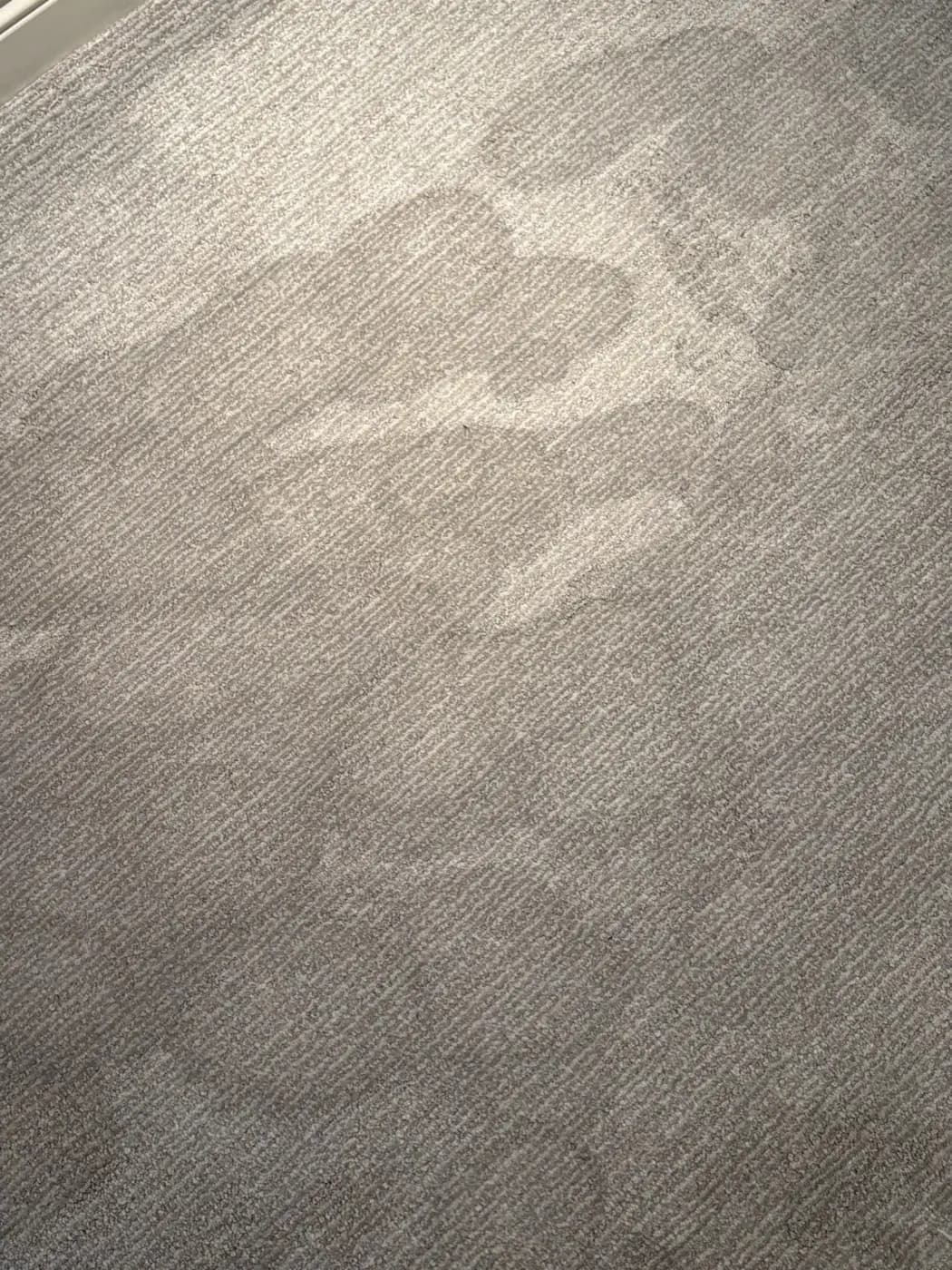
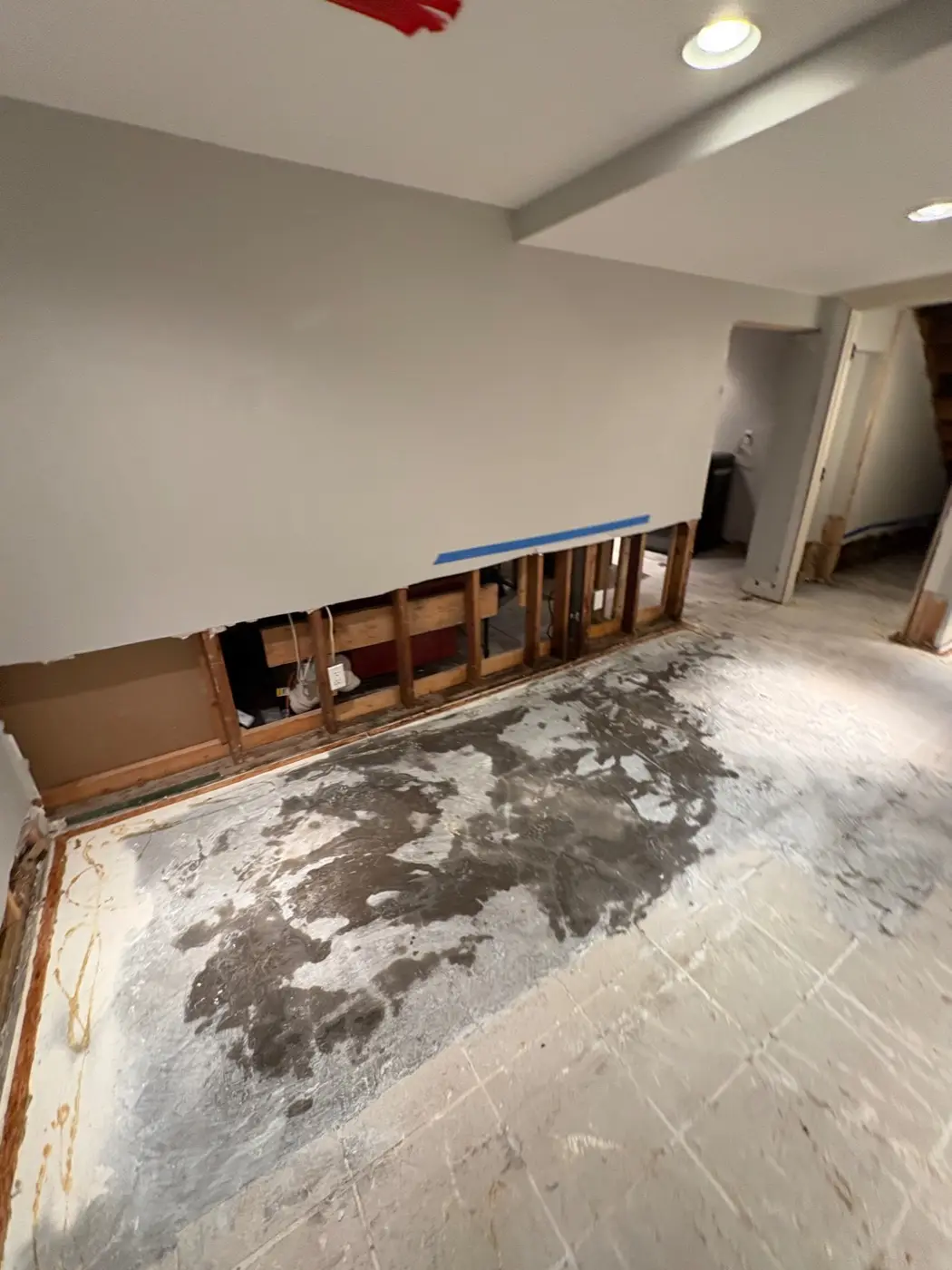
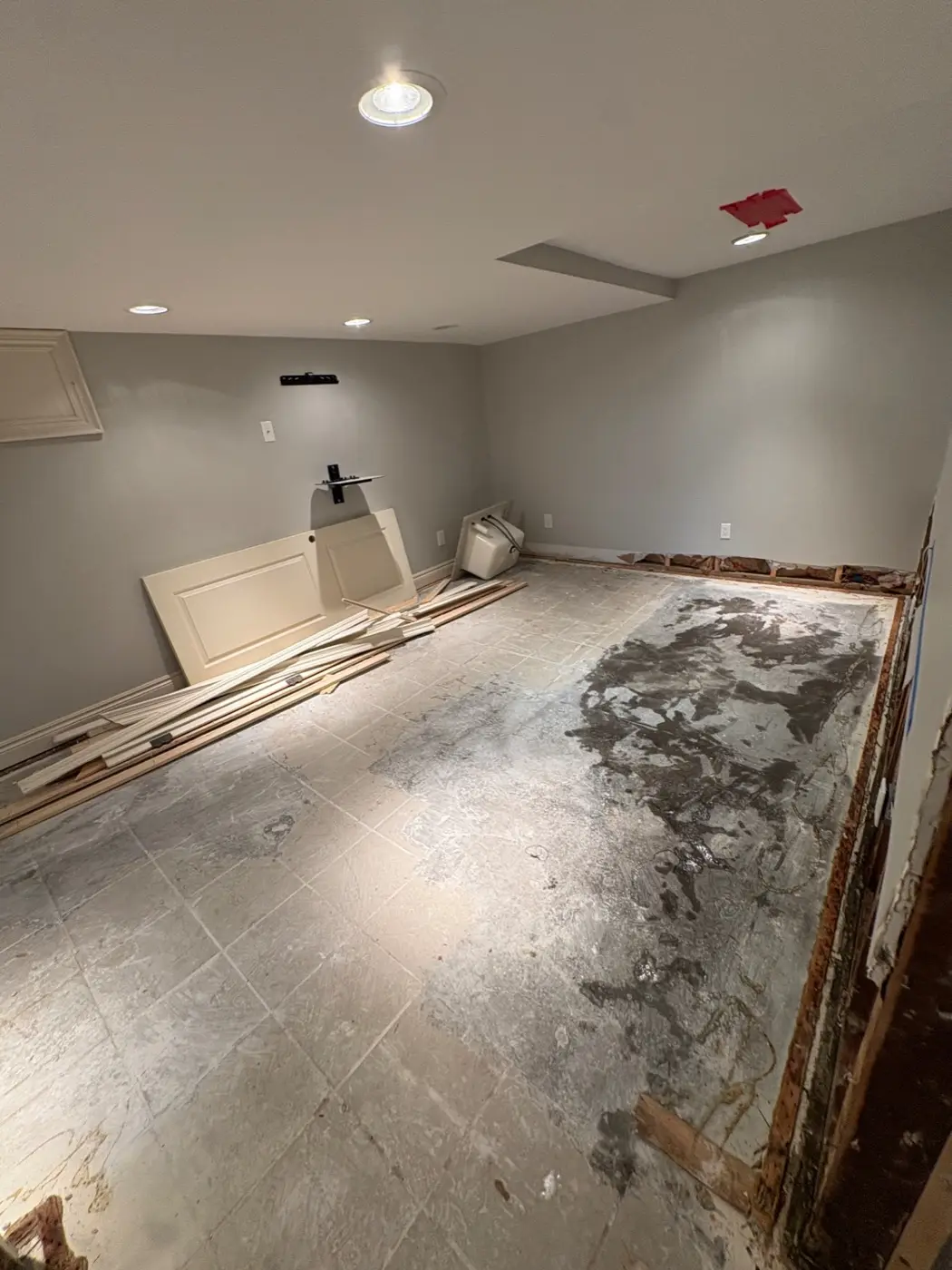
The job file does not record what started the leak. What the dated photos show is the scope of it: on the first visit, the carpet across the entire finished basement was already wet, and the stain ran from room to room rather than spreading out from one spot. Every wall the crew checked with a moisture meter that day came back wet at the baseboard, in the home gym, the bar area, the laundry and mechanical room, and the hallway between them.
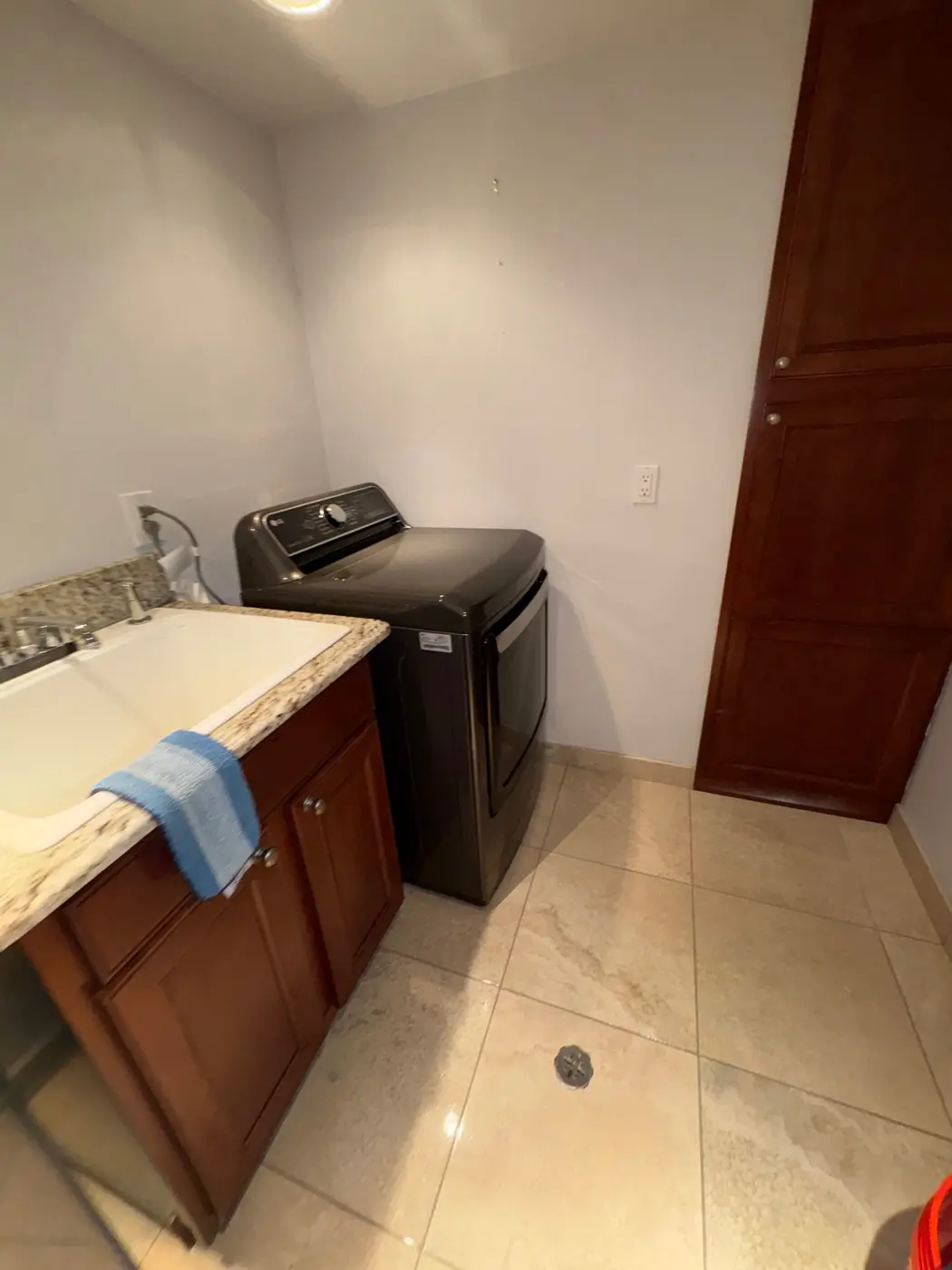
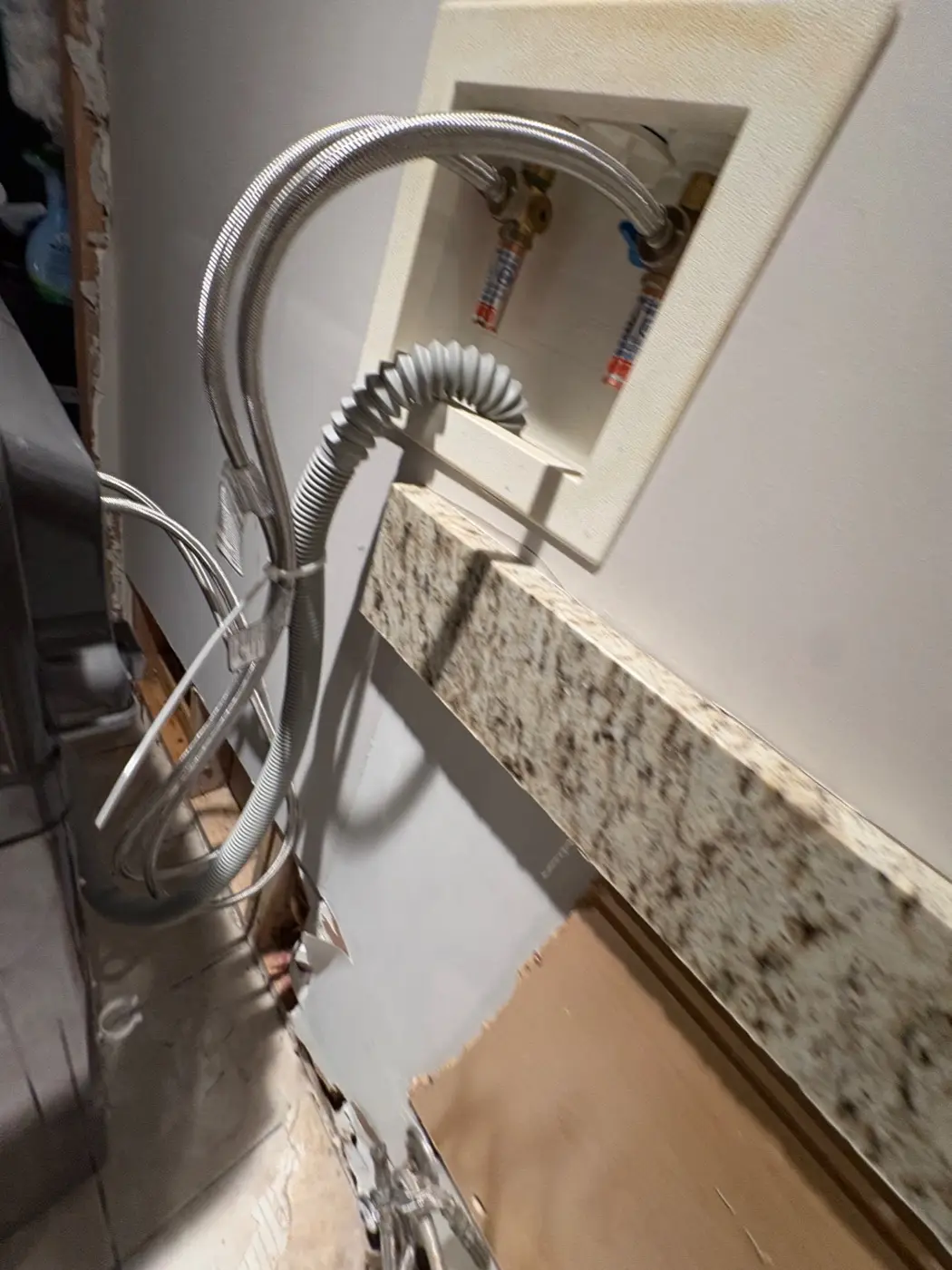
The heaviest staining on the subfloor sat in the laundry and mechanical room, next to the wall where the washer connects to its water supply. Once that wall was open, the crew photographed the supply line box as part of the record. The file does not say that connection was the source, and this page does not claim it was.
Timeline
How the basement dried, day by day
- Day 1 · Sep 241
Meter checks and tear-out, same visit
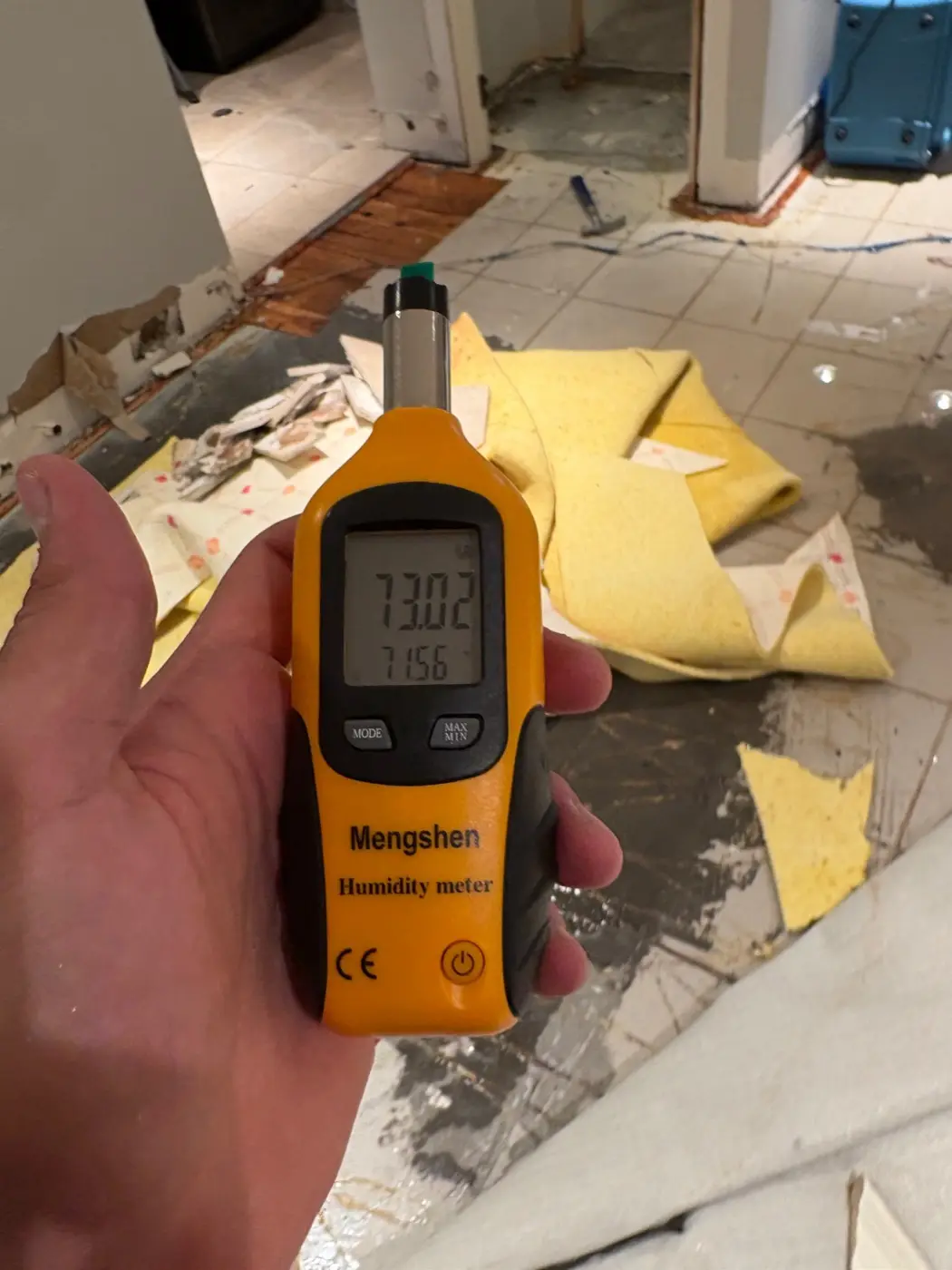
The crew walked the basement with a moisture meter and found wet carpet and a wet baseboard in every room. Because the cavities behind those walls were already wet, the crew cut the drywall near the floor that same afternoon, pulled the soaked batt insulation, stripped carpet and pad from the worst sections, and bagged the debris. Drying equipment went in before the crew left, and a room reading taken that evening came back at 73.0% relative humidity and 71.6 F.
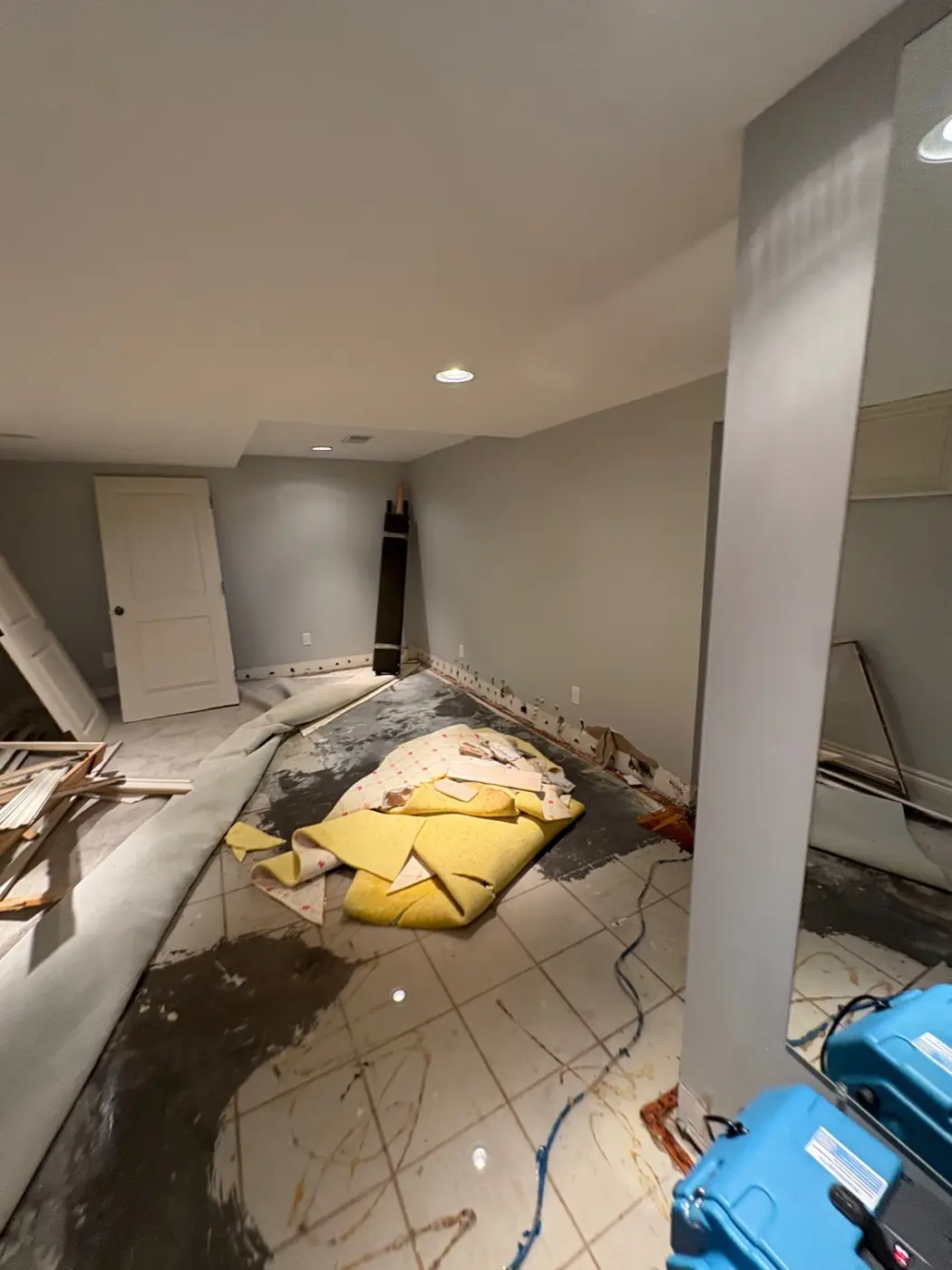
Day 1: carpet pad pulled and equipment set the same visit. - Day 3 · Sep 262
Finished the tear-out, hauled out the debris
The crew returned two days later to cut the remaining walls and clear insulation from the rooms they had not reached on day one, then carried the wet carpet, pad and drywall out of the house. The drying equipment kept running through this visit.
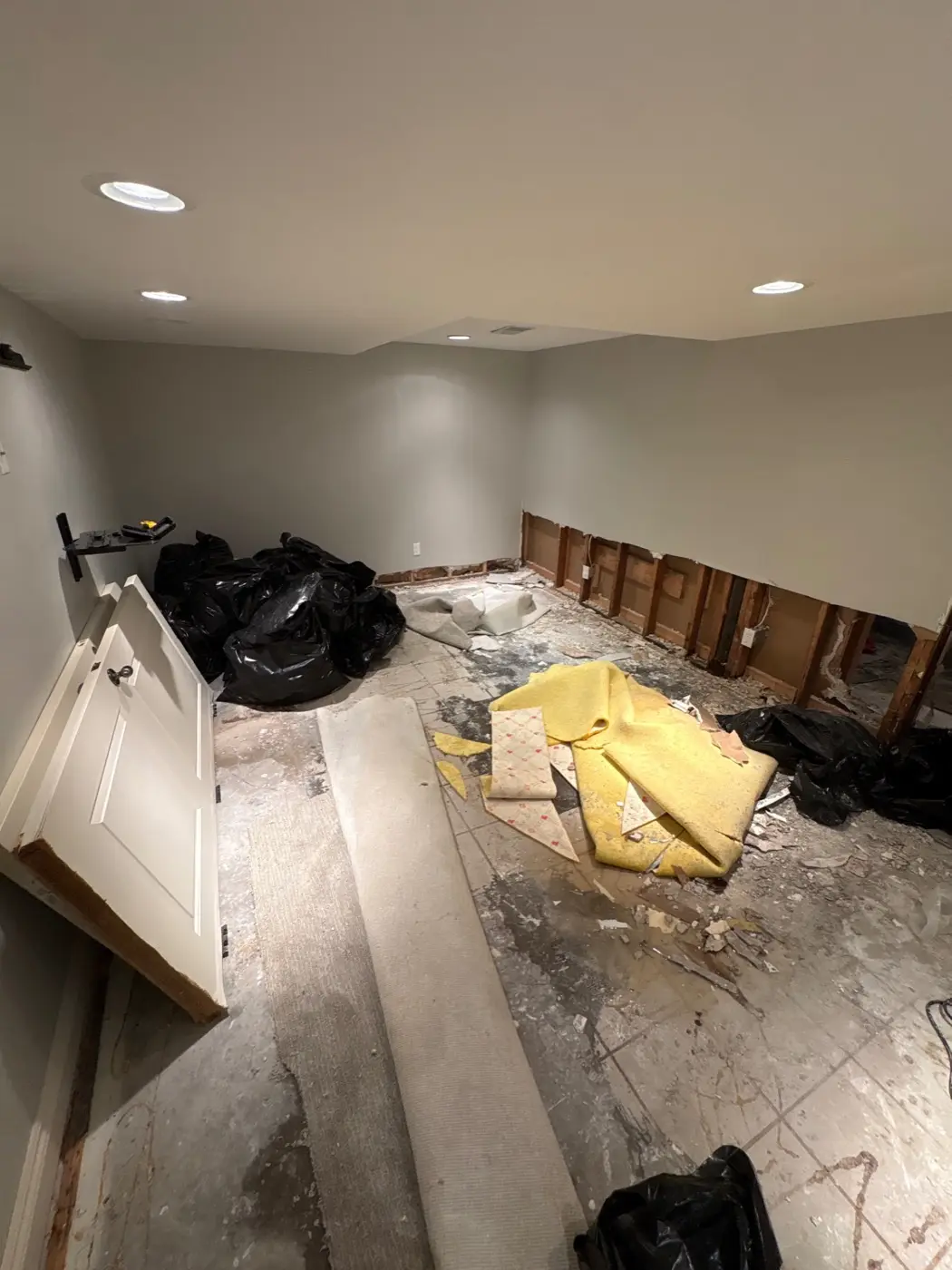
Day 3: wet carpet, pad and drywall bagged and ready to haul out. - Day 12 · Oct 53
Checked the open framing
With the walls still open, the crew read the exposed studs and subfloor directly with a pin meter and checked the air near the furnace and water heater: 35.5% relative humidity at 84.2 F, warmer than the rest of the basement because of the equipment nearby.
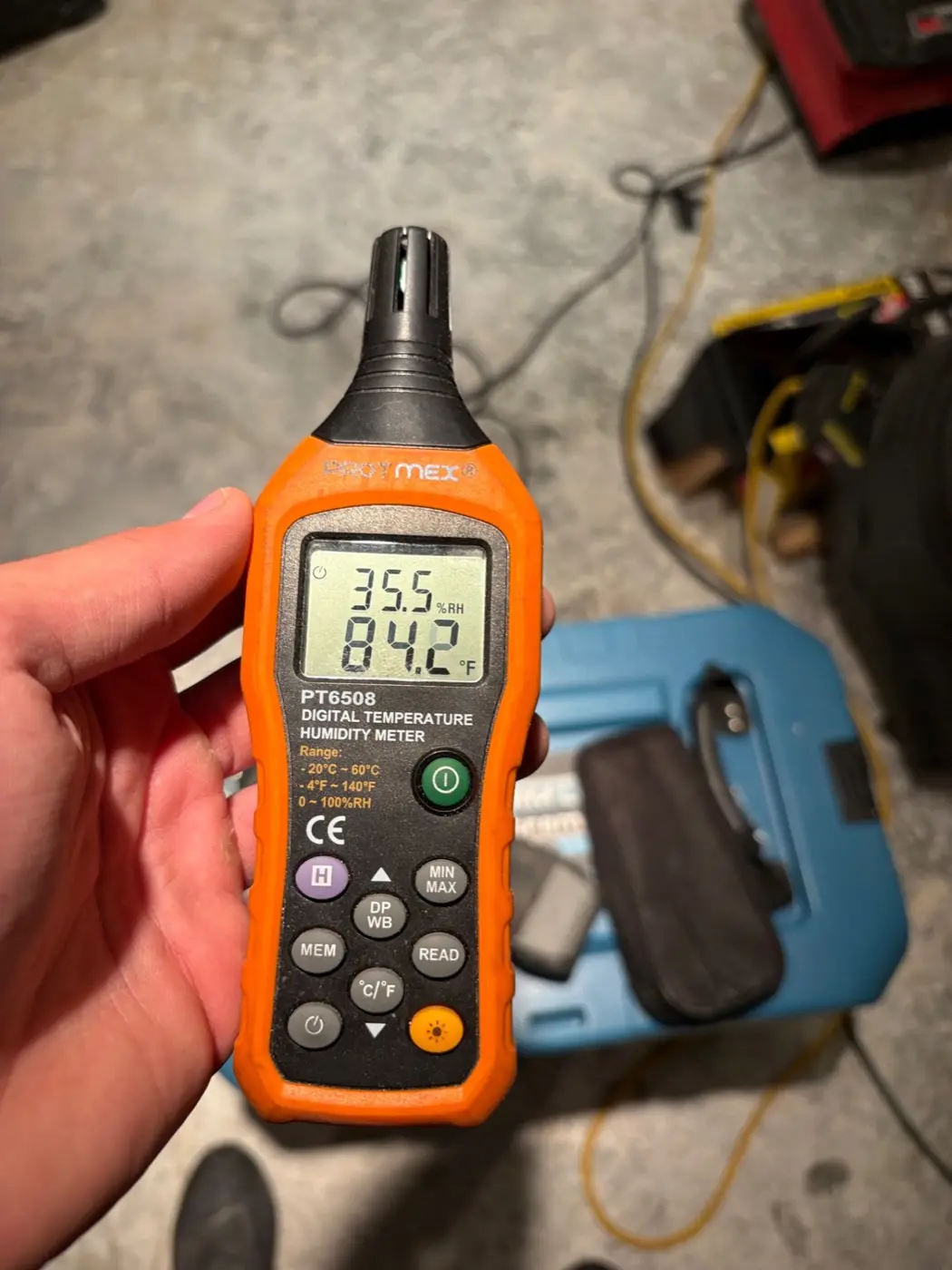
Day 12: 35.5% relative humidity at 84.2 F near the furnace and water heater. - Day 16 · Oct 94
New trim staged, final checks before closing the walls
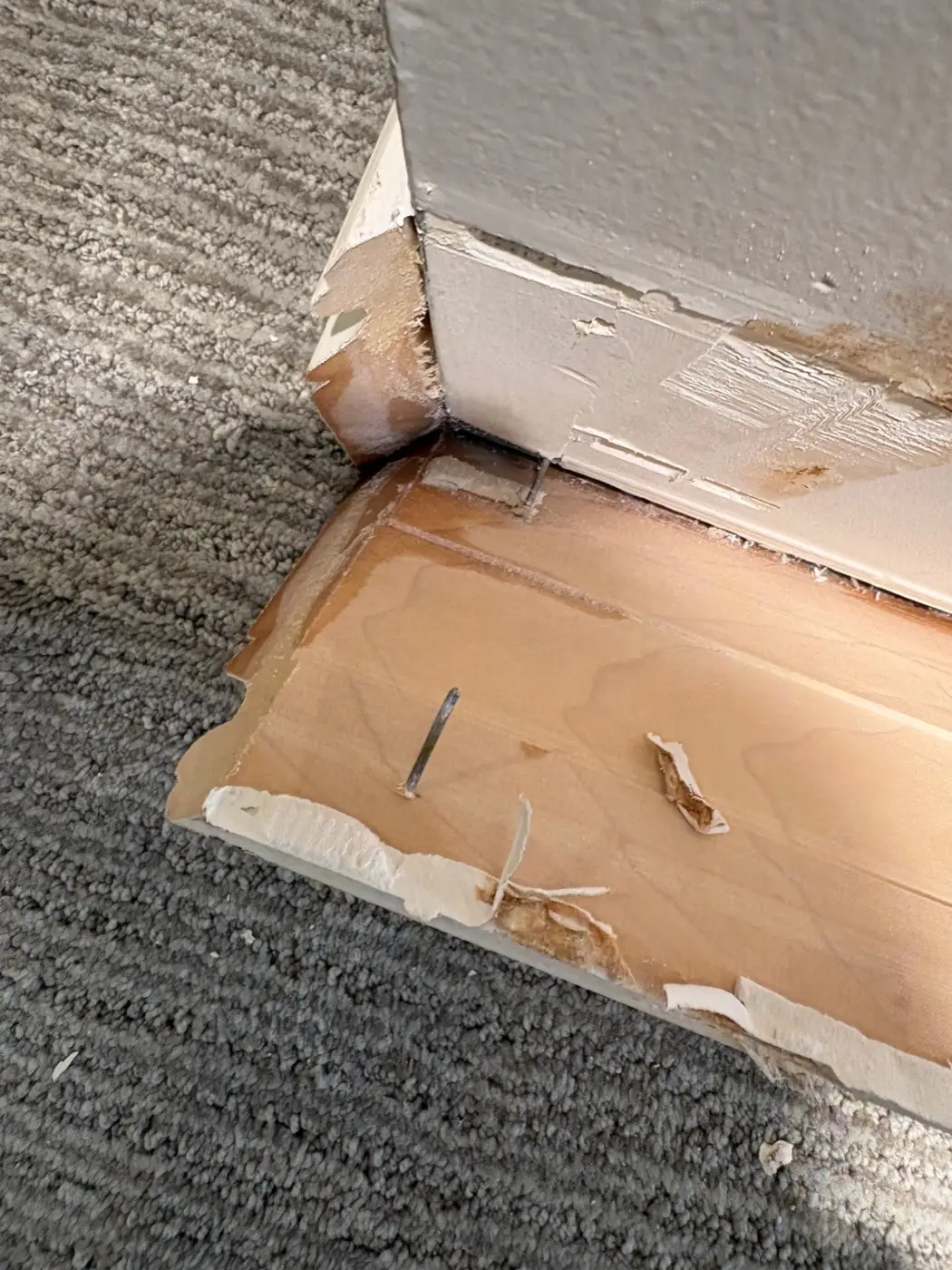
The crew brought in new baseboard, door panels and trim to rebuild what had been cut out, took the final meter readings, and photographed the washer supply connection for the record before the wall went back together.
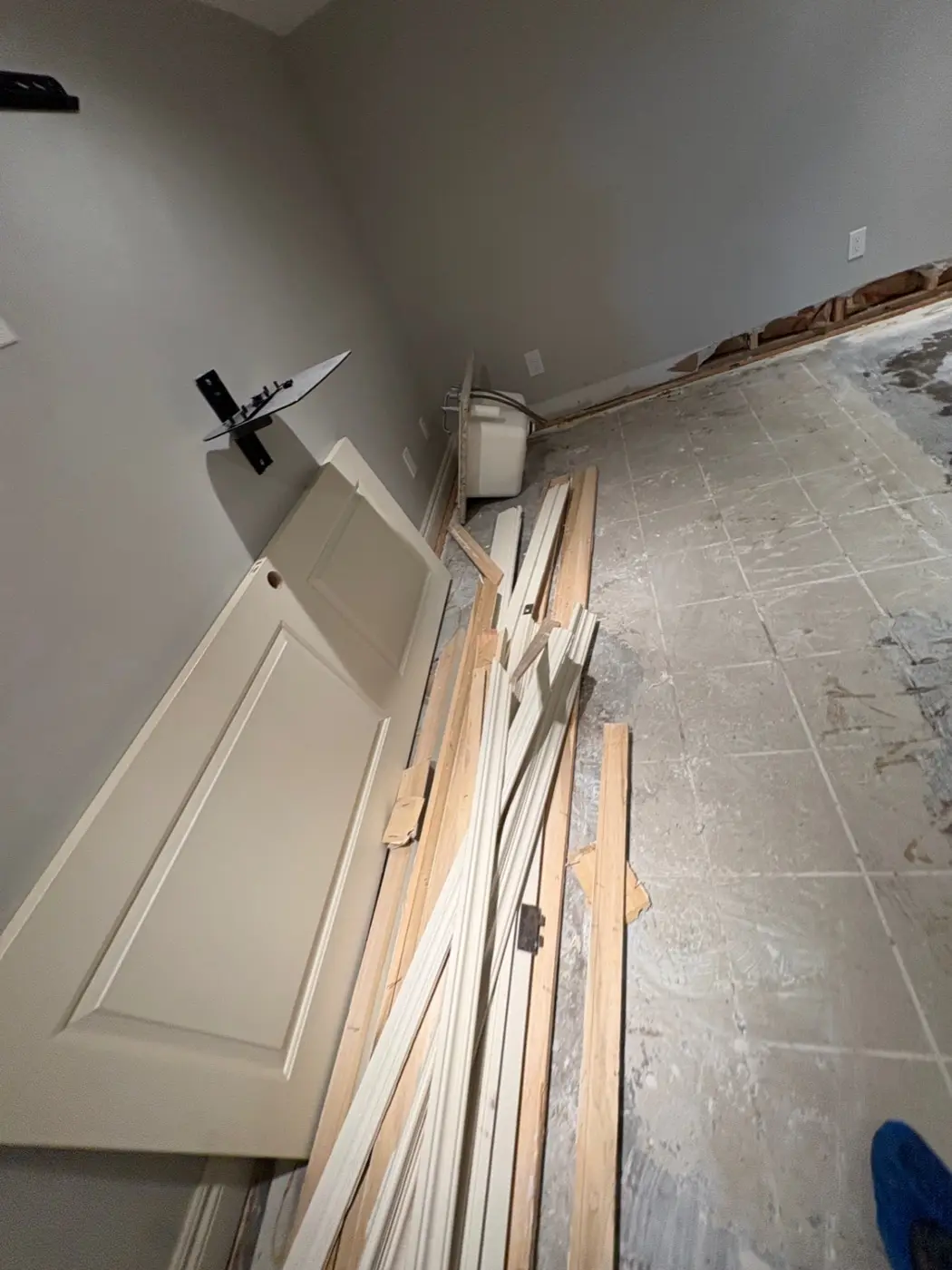
Day 16: new baseboard and trim staged to rebuild the cut-out walls. - Oct 125
Marked dry
The job was marked dry 18 days after the first call.
Measured, not guessed
The readings from this job
Two room-air readings were photographed on this job; no drying-log entries or logged moisture readings exist in the file for it. GPP, grains of water per pound of dry air, is calculated here from each meter's temperature and humidity at sea-level pressure, and marked as calculated.
| When | Temperature | Relative humidity | GPP | Where it comes from |
|---|---|---|---|---|
| Day 1, Sep 24 | 71.6 F | 73.0% | about 85 (calculated) | Photographed reading in the main work area |
| Day 12, Oct 5 | 84.2 F | 35.5% | about 62 (calculated) | Photographed reading near the furnace and water heater |
The day 12 reading is warmer because it was taken close to the mechanical equipment, not because the basement was drying unevenly. A single air reading does not say whether the framing behind a wall is dry.
The dry call on this job came from readings taken directly on the exposed studs and subfloor, checked until they sat inside the meter's dry range, not from the room-air numbers alone.
On this job
Equipment on this job
- Pinless moisture meter for the carpet, drywall and baseboard checks
- Pin-type moisture meter for the exposed studs and subfloor
- Digital thermo-hygrometer for room temperature and humidity
- Air movers to dry the open wall cavities and bare floor
- A dehumidifier to pull moisture out of the basement air
- New baseboard, door panels and trim to rebuild the sections that came out
For your home
What this job means for a flooded basement
- Water on a basement floor rarely stays in one room. Carpet pad wicks it sideways under baseboards, which is why this job needed flood cuts in five rooms instead of one.
- A flood cut removes drywall a short distance above the floor so the wall cavity can dry without tearing out drywall that stayed dry higher up. The wet insulation inside still has to come out, or the cavity stays wet behind new drywall.
- The EPA recommends drying water-damaged materials within 24 to 48 hours to limit mold growth. A basement flood that nobody notices right away can sit for days before a crew ever sees it.
- A good room-air reading does not mean the wall behind it is dry. Ask whether a crew is reading the studs and subfloor directly, not only the air.
Job photos
Photos from this Birmingham job
Common questions
Questions about this kind of job
How long does it take to dry a flooded finished basement?
Why do crews cut the drywall near the floor instead of the whole wall?
Does wet basement insulation need to be replaced?
Why did one leak affect so many rooms?
Does homeowners insurance cover a flooded basement?
Will Prime show my address or photos of my home online?
How this page protects the homeowner
This page names only the city and the month. No street address, no homeowner name and no claim number appear here or in any photo file. Any photo that would show the outside of the home, the street, or a personal item was left out of the gallery, and every photo used on this page has its location data stripped before it was uploaded.
Nearest office to Birmingham
Birmingham Headquarters
801 S Adams Rd, Birmingham, MI 48009
(586) 277-1069, 24/7
Related pages
- Water damage restoration in Birmingham
- Birmingham service page
- Sump pump failure water damage
- Flooded basement guide
- Wet insulation after water damage
- Mold after water damage
- All of our work
Other jobs we documented
- Roof Leak Into a Kitchen Ceiling in Bloomfield Hills
- Water Backup in a Rochester Hills Basement
- Sewer Backup Basement Cleanup in Sterling Heights
- Basement Flood Cleanup in Macomb, Michigan
Sources
Written by Prime Restoration from the job record and dated job photos. Published November 2, 2026. Updated November 2, 2026.