
Birmingham & Bloomfield Hills, MI
Luxury Home Water Damage Restoration in Birmingham & Bloomfield Hills, MI
Estate-grade finishes fail differently than production-grade finishes. Quarter-sawn oak, plaster and lath, wine cellars, home theaters and radiant in-floor heat each need a different drying method, and we document the loss the way a high-value carrier expects. From our Birmingham headquarters at 801 S Adams Rd, a crew is typically on site in 25 minutes, 24/7.
What the work looks like
Water damage restoration in Birmingham and Bloomfield Hills, step by step
Extraction, readings, controlled drying, then the rebuild. The same crew and the same equipment on every job, and a written scope you keep.
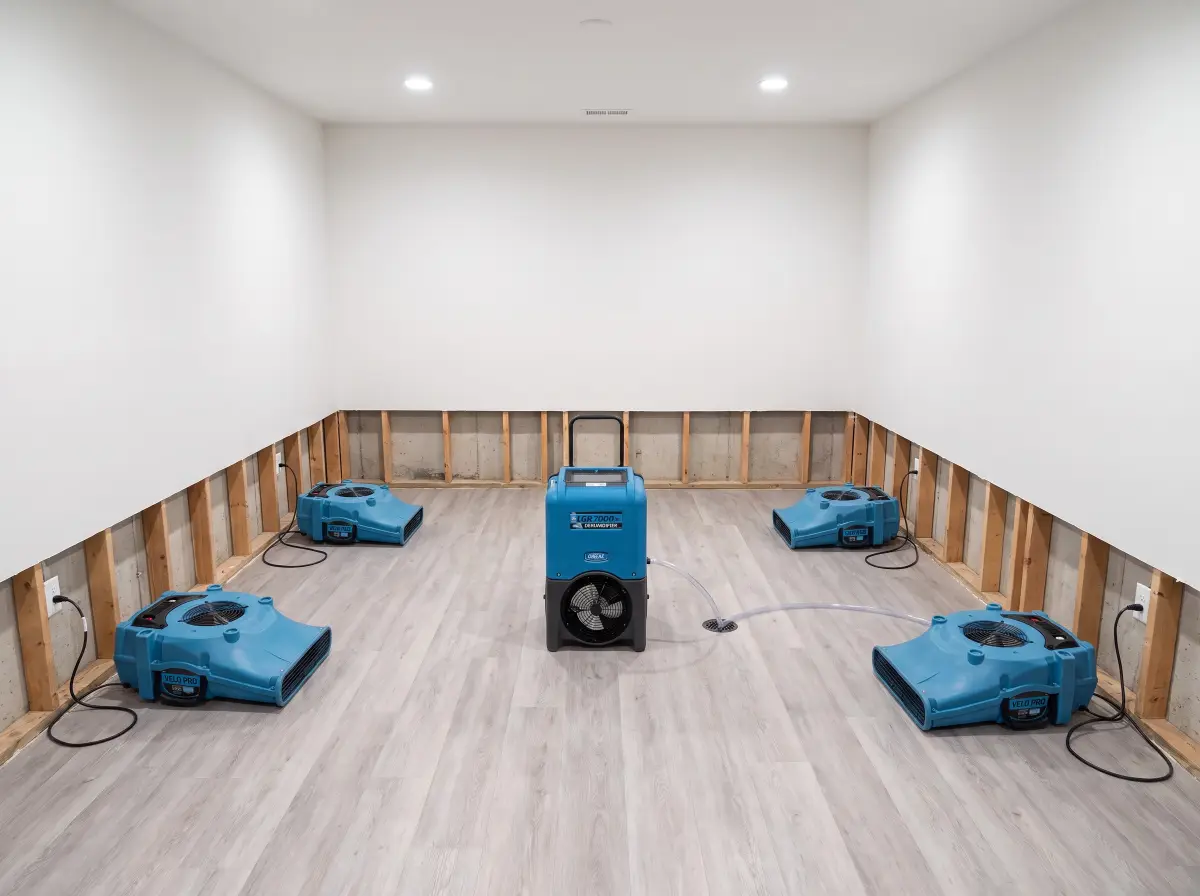
A level flood cut opens the wall so the framing behind it can dry.
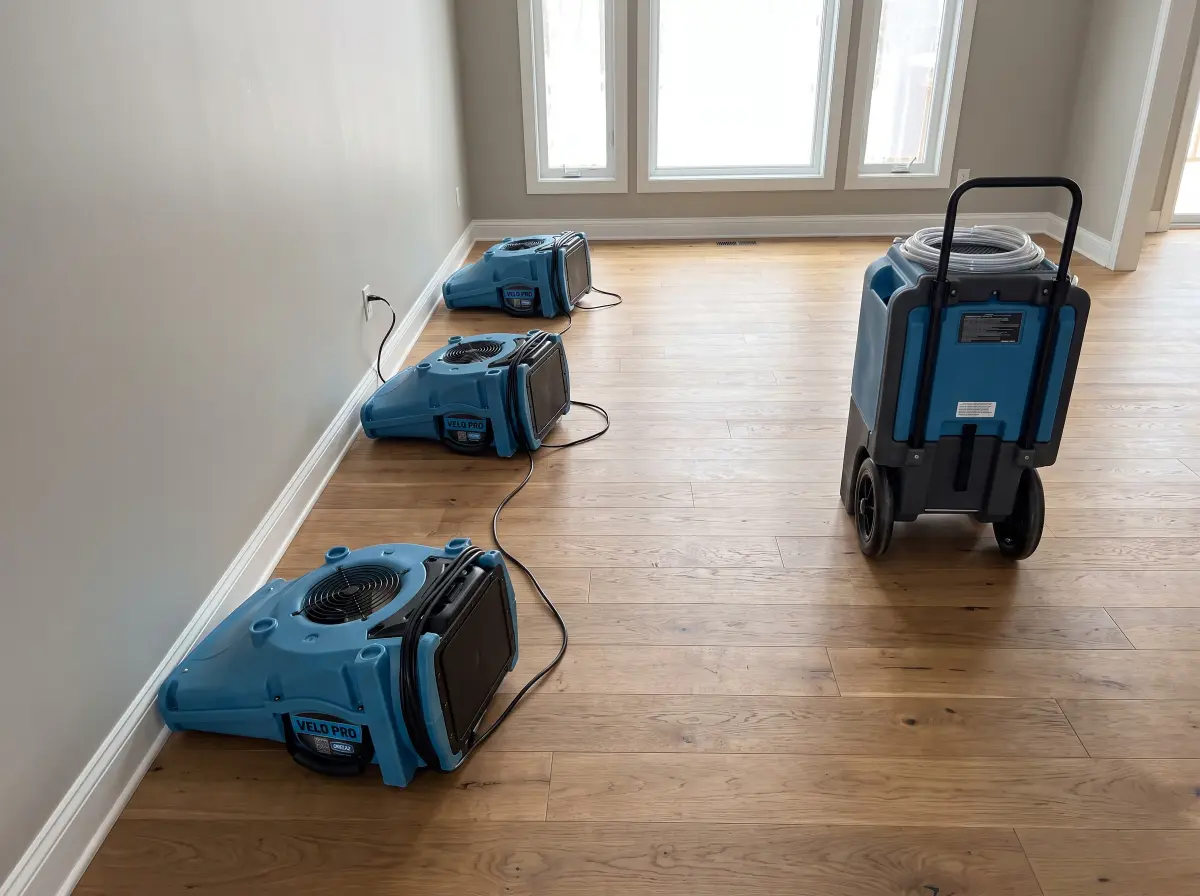
Air movers run along the wall line so the floor and the wall base dry together.
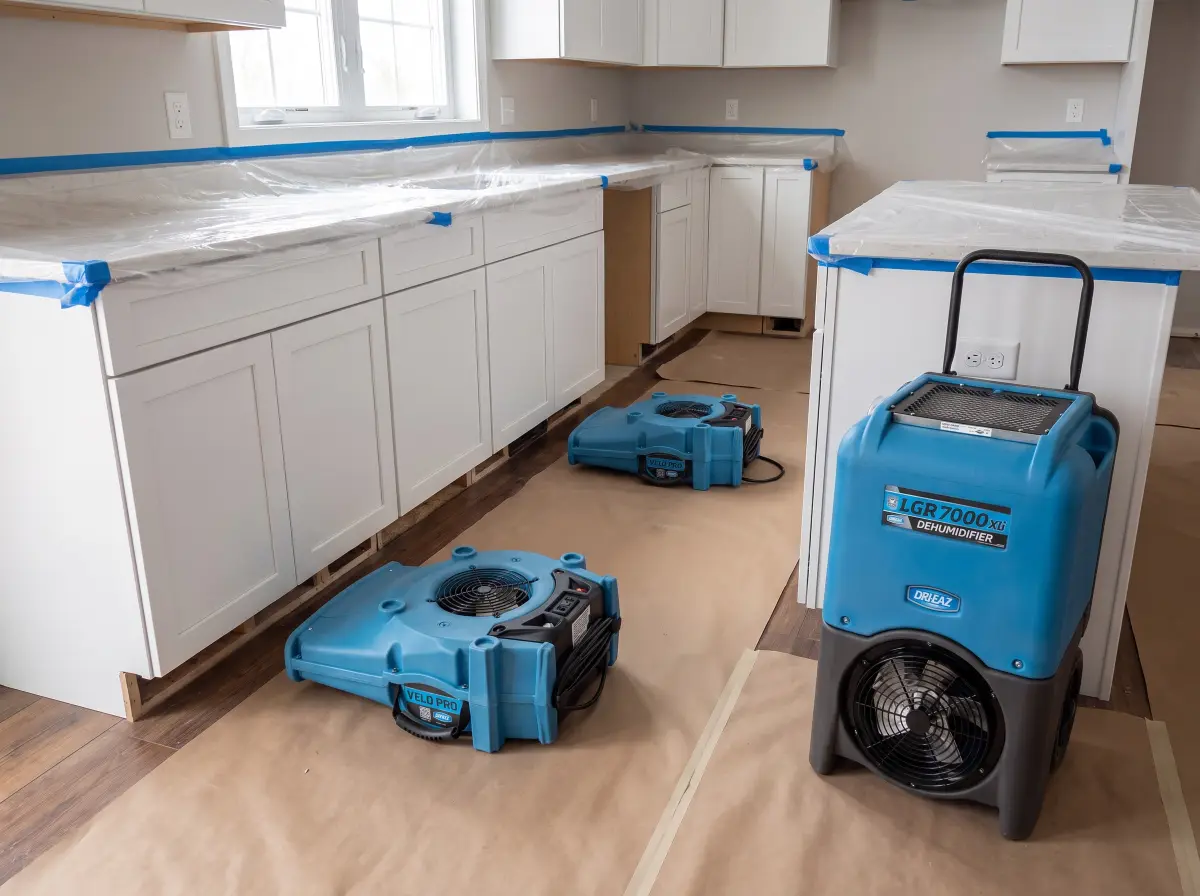
Toe kicks come off so air can reach the subfloor under the cabinets.
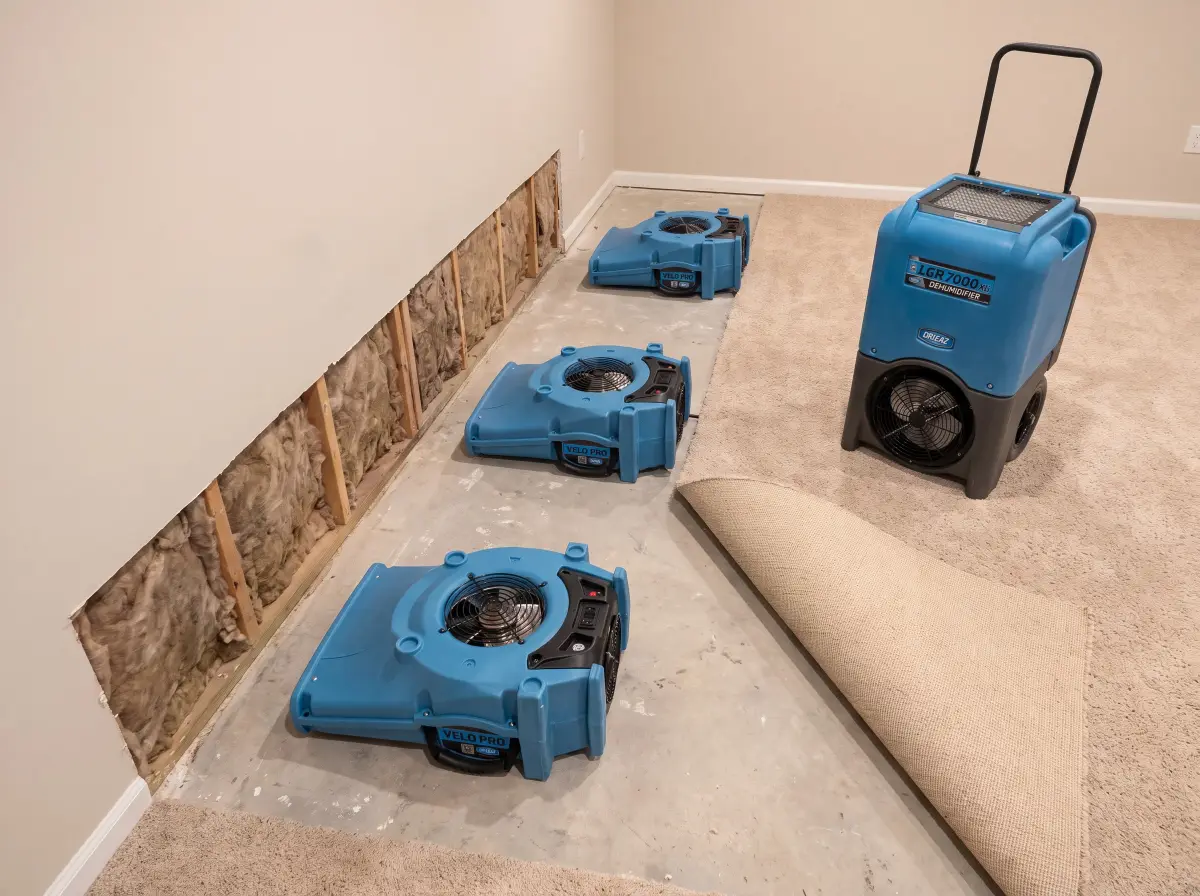
Carpet is pulled back and the pad checked before anything is thrown out.
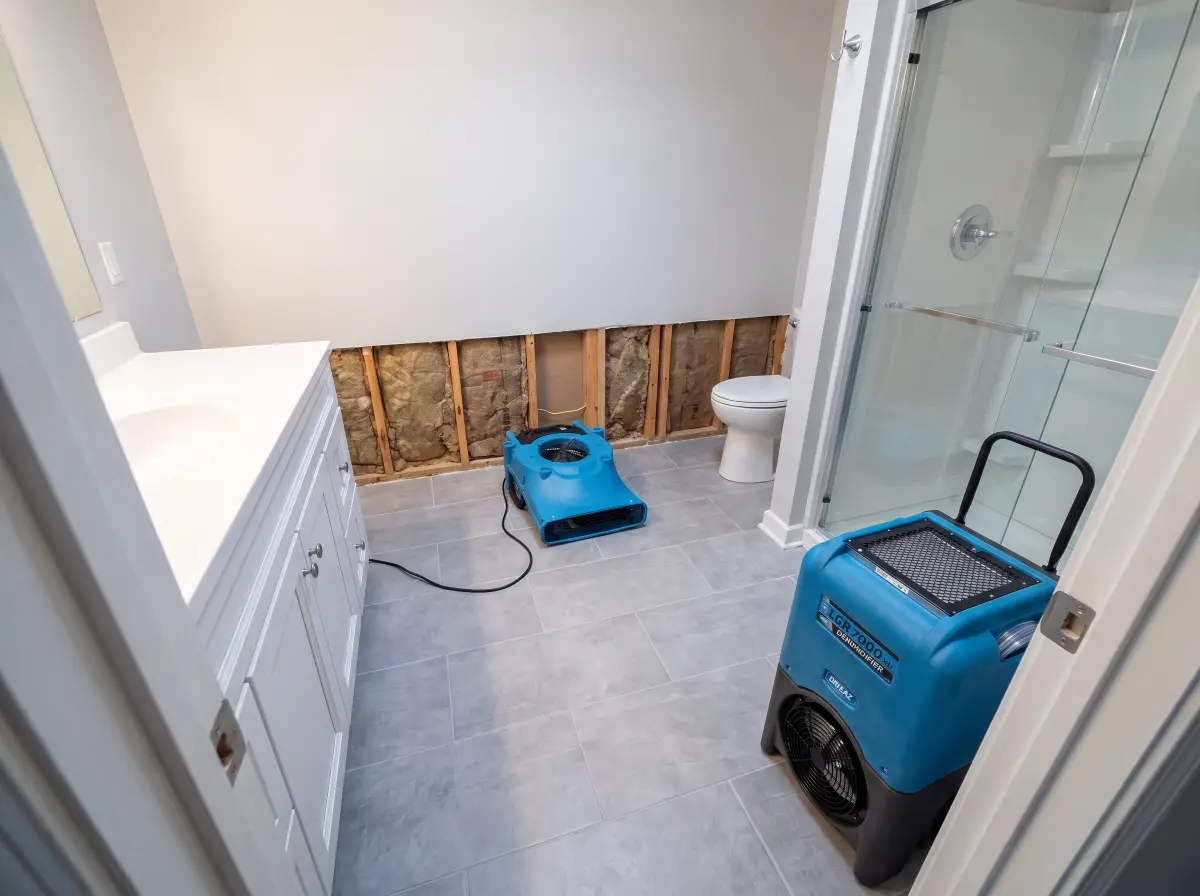
A bathroom leak is dried from the wall base, where the water collects.
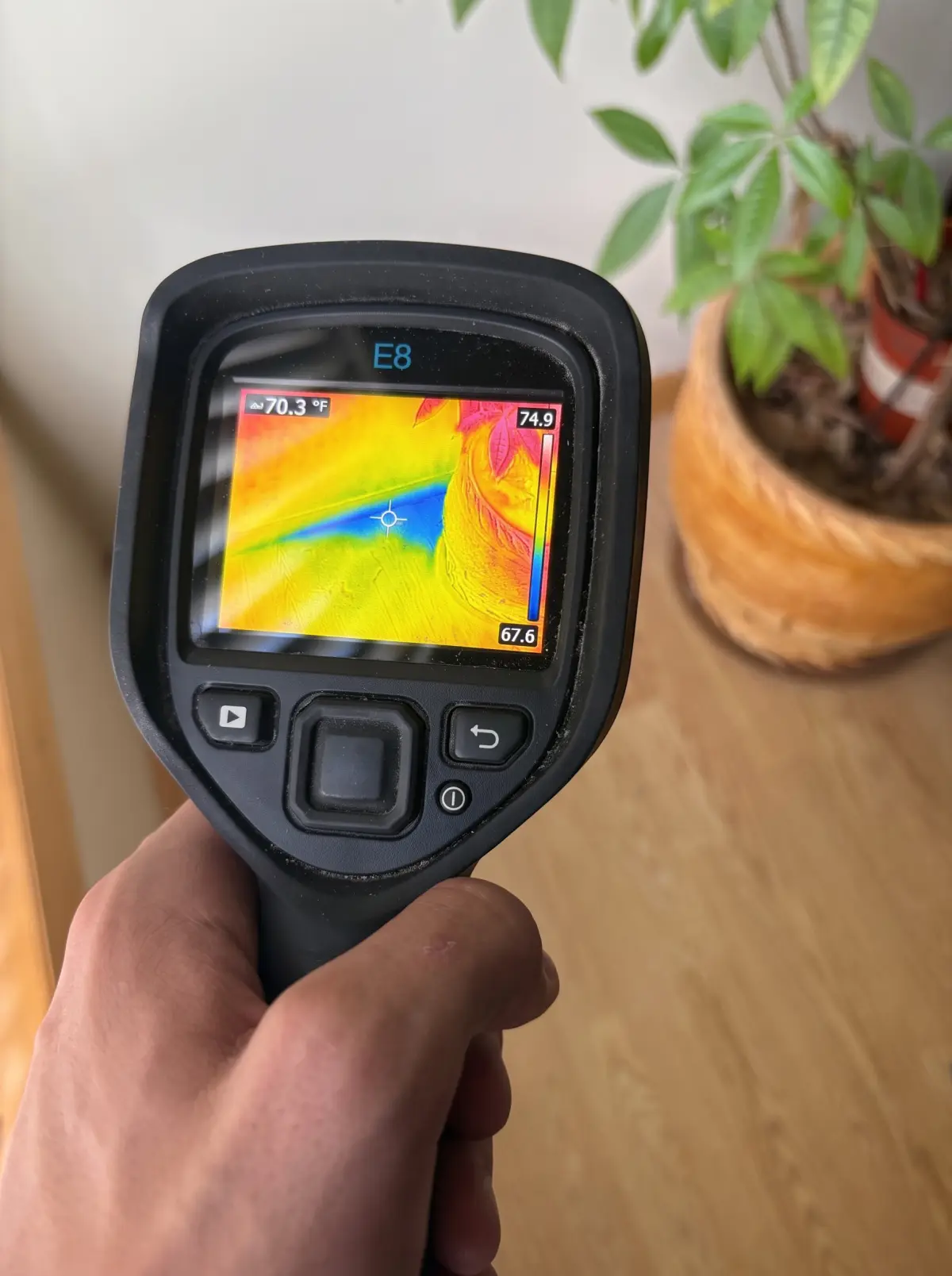
A thermal camera shows where the water spread before anything is opened.
What to do in the first hour, Birmingham and Bloomfield Hills
- Stay out of a wet room if water has reached outlets, a panel or a furnace. Shut off power to that area from a dry location if you can reach the breaker safely.
- Stop the source if you can. Close the supply shutoff under a sink or appliance, or shut off the main if the source is not obvious.
- Photograph the damage before anything is moved, including original finishes, flooring and any contents nearby.
- Call a 24/7 line directly rather than an online form. Original plaster, quarter-sawn oak and other period finishes are sometimes salvageable only if drying starts within the first day.
How Birmingham and Bloomfield Hills estate finishes are dried and saved
A production-grade home and an estate-grade home fail differently when water reaches them, because the materials themselves behave differently. Here is why, and what we actually do about each one.
Quarter-sawn and wide-plank oak
Why it matters: Quarter-sawn oak is cut on the radial plane, so the ray fleck that gives it its figure also makes the board more dimensionally stable across its width than plain-sawn oak — but it still swells when the cells fill with water and cups when one face dries faster than the other. Wide boards move more per board foot than narrow strip flooring, so an uneven dry-down shows as visible cupping sooner.
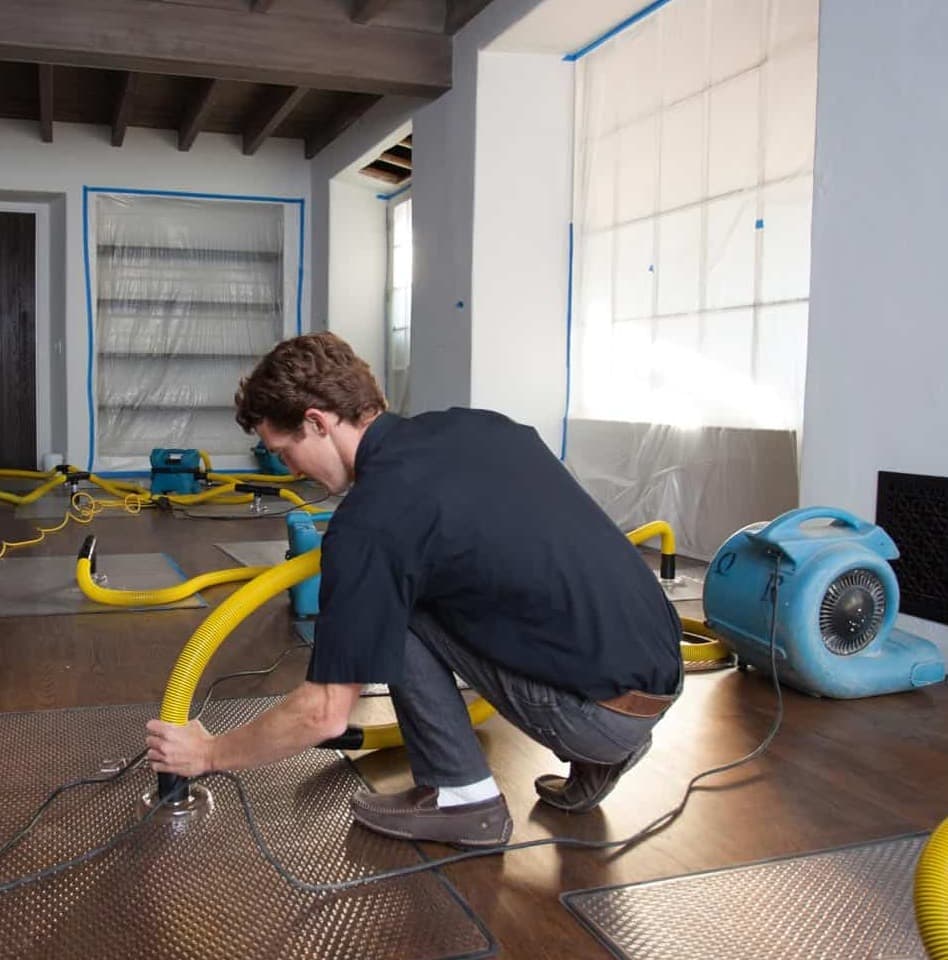
What we do: We pull surface water first, then dry from below with low-profile mats that draw moisture out through the subfloor rather than blasting hot air across the face, which is what causes cupping and crowning in the first place. Moisture readings are logged board by board, and a floor is monitored to a dry standard before any refinishing is scheduled.
Herringbone and parquet
Why it matters: A herringbone or parquet floor is hundreds of small blocks glued to a substrate, each one free to expand on its own. Water that reaches the adhesive layer can pop individual blocks loose while the blocks around them stay flat, so the floor fails in a patchwork pattern instead of one even curl.
What we do: Specialized drying mats are set in sections so we can monitor each zone of blocks independently, and a block that has already released from the substrate is documented and set aside rather than forced back down wet, which traps moisture under it permanently.
Stone, marble, travertine and tile
Why it matters: The stone itself is not porous in the way wood is, but the grout lines, the setting bed underneath, and travertine’s natural surface pitting all hold water. Marble can also etch or stain if standing water sits on it with contaminants in it, and a heated stone floor traps moisture against the underside of the slab where it cannot evaporate.
What we do: We check moisture in the setting bed and subfloor with penetrating meters, not just the surface, because a stone floor can look dry and still be wet underneath. Standing water is removed immediately to limit etching, and any in-floor heat loop under the stone is shut down and tested before the floor is counted dry.
Plaster and lath in 1920s Birmingham homes vs. drywall
Why it matters: Plaster is a mineral coat troweled over wood lath strips, and it is far slower to release moisture than drywall’s paper-faced gypsum. Dry plaster too fast and it can crack or delaminate from the lath; dry it too slow and the lath itself, along with any horsehair or fiber binder in the plaster mix, becomes a mold substrate. Drywall, by contrast, is usually a faster, more predictable dry or a straightforward tear-out.
What we do: Plaster ceilings and walls in Birmingham’s pre-1960 stock get a slower, monitored dry with air movement controlled to the room rather than aimed directly at the surface, with moisture readings taken on a schedule until the plaster itself, not just the air around it, reads dry. We treat conservation as the default on original plaster, not demolition.
Custom cabinetry and toe kicks
Why it matters: A toe kick is the lowest, most exposed part of a cabinet run and the first thing standing water touches. Custom cabinet boxes are frequently built from furniture-grade plywood or solid wood rather than production particleboard, which holds up better structurally but still delaminates or swells at any raw edge or seam that gets wet and stays wet.
What we do: We check behind and under cabinet runs with a moisture meter rather than assuming the face frame tells the whole story, and toe kicks are opened for inspection when there is any sign of wicking so a hidden wet cavity behind custom millwork is not discovered months later as a mold problem.
Designer wallpaper and fabric walls
Why it matters: Wallpaper and fabric wallcoverings are adhered directly to the wall surface, so water behind them has nowhere to go and the adhesive itself can grow mold before the paper or fabric shows a stain. A silk or grasscloth covering can also be destroyed by direct airflow or by the paste re-softening during an aggressive dry.
What we do: Where a wall carries a designer covering, we dry the cavity behind it rather than blow air directly onto the surface, and the covering is documented and, where it cannot be saved, treated as a contents and finishes loss separate from the structural dry so the right trade handles replacement.
Wine cellars and climate rooms
Why it matters: A wine cellar is built to hold humidity in a tight band, commonly cited in the industry as roughly 55 to 65 percent relative humidity, specifically to keep corks from drying out. A standard aggressive structural dry, aimed at pulling a room down to 30 to 40 percent humidity as fast as possible, will dry out corks across an entire collection in the same visit that fixes the water problem.
What we do: We dry a wine cellar to its own target, not the standard drying-industry target, and bottles and racks are inventoried before anything is moved. Where the room itself is compromised, contents go to climate-controlled storage rather than sitting in a room mid-repair.
Home theaters
Why it matters: A home theater combines dense carpet or acoustic padding, upholstered seating, and electronics in one enclosed, often windowless room with limited natural air exchange. Carpet pad holds water like a sponge, upholstery wicks it into the seating foam, and standing water under a rack of electronics is a safety issue before it is a restoration issue.
What we do: Power to the affected circuit is confirmed off before any extraction begins. Carpet and pad are checked separately, because pad frequently has to come out even when the face carpet can be saved, and seating is inspected and, where soaked through, removed for cleaning or replacement rather than dried in place.
Radiant in-floor heat leaks
Why it matters: A radiant floor runs a loop of tubing or electric cable inside or under the finish floor, which means the heat source itself can be the moisture source, and a leaking loop can push water laterally under a large area of floor before anyone notices a stain. The loop also has to be found and isolated before the floor above it can be dried and repaired.
What we do: We shut the affected zone down at the manifold or thermostat, locate the leak before drying begins so we are not drying a floor with an active source still running, and coordinate with a plumber or electrician on the loop repair before the finish floor goes back.
Steam showers and upper-floor laundry
Why it matters: A steam shower is a sealed enclosure built to hold near-100 percent humidity on purpose, which means a failed seal or pan liner can leak for a long time before it is visible, and the water travels down through the floor structure to the ceiling below. An upper-floor laundry room sits directly above finished living space, so a supply-line or drain-hose failure there is one of the fastest routes to a ceiling collapse anywhere in the house.
What we do: We trace the leak path from the ceiling stain back up through the floor structure rather than only treating the visible ceiling, and an upper-floor laundry leak gets the same urgency as a burst pipe because of what sits directly underneath it.
Smart home and whole-house systems
Why it matters: A modern estate often runs lighting, HVAC, security and audio off a handful of centralized low-voltage panels, so water reaching one panel or one run of wiring in a wall cavity can take out control for an entire wing of the house, not just the one room that got wet.
What we do: We identify and avoid disturbing active low-voltage runs during extraction and demolition, and a wet panel or run is flagged for a licensed electrician or the integrator before power is restored to that zone.
Art, antiques, rugs and pack-out with inventory
Why it matters: Fine art, antiques and rugs are both contents and, often, the most valuable items in the loss. A rug left on a wet floor wicks moisture and can transfer dye or develop mold on its underside within a day or two, and a painting or antique piece can be damaged as much by humidity swings during the repair as by the original water event.
What we do: Affected items are inventoried, photographed and either moved to a dry room on site or packed out to climate-controlled storage, and nothing goes back into the space until the structural dry is complete and the humidity is back in a normal range.
Birmingham and Bloomfield Hills, one crew
Our Birmingham headquarters at 801 S Adams Rd, less than a mile from downtown, is one of two Michigan headquarters. For water damage restoration in Birmingham, the crew covers Downtown Birmingham, Quarton Lake, Poppleton Park, the Holy Name district, Little San Francisco, Pembroke Park, the Rail District, Beverly Hills and Bingham Farms.
For Bloomfield Hills water damage restoration, The same crew that covers Birmingham covers Bloomfield Hills, the Cranbrook and Lone Pine Road estates, the Vhay Lake and Wing Lake neighborhoods west of Telegraph, and the homes along Vaughan Road near Kirk in the Hills, in ZIP codes 48301, 48302, 48303 and 48304. Bloomfield Township, which surrounds most of the city of Bloomfield Hills, gets the same crew and the same response. These are large custom homes with finished walkout basements, wine cellars, home theaters and custom millwork, so drying is planned to save finishes rather than replace them. A crew is on site in 25 minutes, 24/7, with one project manager and itemized documentation for your insurance claim.
How insurance works on a high-value Birmingham or Bloomfield Hills home
A number of Birmingham and Bloomfield Hills homes are insured on high-value carrier forms rather than a standard homeowners policy. Chubb, PURE, AIG Private Client and Cincinnati Insurance are examples of carriers active in this market; this is not a claim that Prime has any relationship, referral arrangement or preferred-vendor status with any of them. A homeowners policy commonly covers sudden and accidental water damage. The carrier decides what is covered, at what limit, and under what documentation standard, on every claim.
Chubb, PURE, AIG Private Client and similar high-value carriers
These policies often use HO-5 or a comparable open-perils form with extended or guaranteed replacement cost, and adjusters on them commonly expect like-kind-and-quality replacement rather than a generic materials allowance. That typically means documentation specific to the actual finish: the species and grade of a hardwood floor, the pattern name of a wallpaper, the stone type and finish on a counter or floor, not just a square-footage number.
Scheduled personal property and contents
Art, antiques, silver and rugs are frequently covered under a scheduled personal property endorsement with its own valuation method, separate from the dwelling coverage that pays for structural drying and repair. A pack-out inventory with photographs and item-level notes is the kind of record that supports a contents claim on a scheduled item.
Documentation format
Reconstruction estimates on high-value losses are sometimes requested in Xactimate line-item format so a carrier’s own estimator can reconcile it against their software. We can write to that format when a carrier or builder requests it. Confirm what your specific carrier requires with your agent or adjuster before work begins.
This is general information, not a coverage determination. Always confirm coverage, limits, endorsements and documentation requirements with your insurance carrier and your policy. Prime Restoration does not represent any insurance carrier and does not decide what a claim pays.
Why Birmingham and Bloomfield Hills homeowners call Prime
- Birmingham headquarters at 801 S Adams Rd, less than a mile from downtown.
- A crew is typically on site in 25 minutes, 24 hours a day, every day.
- IICRC Certified Firm, Michigan Residential Builder License #262500492.
- A family water damage restoration business since 1988.
- 5.0 on Google from 167 reviews.
- One project manager from the first call to the final repair, with itemized documentation for your insurance claim.
- Free estimate.
Birmingham clients
Birmingham Racquet Club, the tennis club at 2100 E Lincoln St, and Imparadise Property Management.
“Had a really good experience with Prime Restoration for mold remediation. They were professional, clear about the process, and actually made me feel confident about the process. Not pushy. I’d definitely recommend them around Bloomfield Hills.”
Birmingham and Bloomfield Hills neighborhoods we cover
High-value home water damage questions, Birmingham and Bloomfield Hills
Questions we hear most from estate and historic-home owners.
What is the first thing to do in the first hour of a water loss in a Birmingham or Bloomfield Hills home?
Stay out of any room where water has reached outlets, a panel or a furnace until you know it is safe, and shut off power to that area from a dry location if you can do it safely. Stop the source if it is a fixture or appliance you can reach, such as a supply-line shutoff under a sink. Photograph the damage before anything is moved, including original finishes and any contents nearby. Then call a 24/7 line directly rather than filling out an online form, because plaster, hardwood and other original materials are sometimes only salvageable if drying starts within the first day. Call (586) 277-1069.
Can original quarter-sawn oak floors in a Birmingham home be saved after a water loss?
Often yes, when drying begins quickly and the right method is used. Quarter-sawn and wide-plank oak is dried from below with low-profile mats rather than blasted with surface air, because uneven surface drying is what causes cupping and crowning. Boards are monitored with moisture readings until they read dry, and a hardwood refinishing specialist handles sanding and refinishing where cupping or surface damage remains after the structural dry.
How is a wine cellar dried without ruining the wine?
A wine cellar is built to hold humidity in a tight band, commonly around 55 to 65 percent, to keep corks from drying out. A standard aggressive structural dry would pull that humidity far below the cellar’s own target and dry out corks across a collection. We dry the cellar to its own target rather than the standard drying target, inventory the bottles and racks, and move contents to climate-controlled storage when the room itself needs repair work.
Does my high-value insurance carrier require anything different from a standard homeowners claim?
Documentation expectations are often stricter. Carriers such as Chubb, PURE and AIG Private Client, and policies written on HO-5 or similar open-perils forms, commonly expect like-kind-and-quality replacement and more detailed photo and moisture records than a mass-market claim. Reconstruction estimates are sometimes requested in Xactimate line-item format. A homeowners policy commonly covers sudden and accidental water damage, but the carrier decides what is covered and at what standard. Confirm your specific requirements with your agent or adjuster.
What happens to art, antiques and rugs during a water loss?
They are inventoried and photographed as soon as it is safe to handle them, then either moved to a dry room on site or packed out to climate-controlled storage, depending on the extent of the loss. A rug left wet on a floor can wick moisture and develop mold on its underside within a day or two, so items are not left in place by default. Nothing goes back into the space until the structural dry is complete.
Can plaster ceilings and walls in a 1920s Birmingham home be saved, or do they need to be replaced?
Conservation is the starting point, not demolition. Plaster is a mineral coat over wood lath and releases moisture much more slowly than drywall, so it needs a slower, monitored dry with controlled airflow rather than the fast dry a drywall room would get. Plaster that stays wet too long, or whose lath becomes a mold substrate, may still need selective repair, but the decision is made from moisture readings on the actual material, not a blanket tear-out.
How does Prime handle a leak in a radiant in-floor heating system?
The affected zone is shut down at the manifold or thermostat first, because the heat source can be the moisture source and a running loop keeps pushing water laterally under the floor. The leak is located and isolated before drying begins, and we coordinate with a plumber or electrician on the loop repair before the finish floor goes back down.
What is the risk from a leak above a finished basement theater or a steam shower?
A steam shower is sealed to hold near-100 percent humidity on purpose, so a failed pan liner or seal can leak for a long time before anyone sees a stain, and the water travels down through the floor structure. We trace the leak back up through the structure rather than only treating the visible ceiling. In a home theater below, carpet pad, upholstered seating and electronics are each checked separately, because pad frequently needs to come out even when the face carpet can be saved.
Does Prime serve Bloomfield Township and West Bloomfield in addition to the city of Bloomfield Hills?
Yes. Bloomfield Township is a separate municipality that surrounds most of the city of Bloomfield Hills, and the same crew that covers Birmingham and Bloomfield Hills covers the township and the Cranbrook, Lone Pine Road, Wing Lake and Vaughan Road areas around it. Call (586) 277-1069 any hour.
Why does a combined-sewer backup in Birmingham need different handling than a clean burst pipe?
Birmingham operates its own Combined Sewer Overflow Retention Treatment Basin, and older sections of the city near downtown still run combined sanitary and stormwater lines. A heavy-rain surcharge on that system backs contaminated water into a basement, which is treated as Category 3 water from the first minute, with full PPE, containment, EPA-registered antimicrobial treatment and removal of affected porous materials. A standard homeowners policy typically excludes sewer backup unless a sewer-and-drain endorsement has been added, so confirm that endorsement with your carrier.
How fast does Prime respond to a water emergency in Birmingham or Bloomfield Hills?
A crew is typically on site in 25 minutes from our Birmingham headquarters at 801 S Adams Rd, 24 hours a day, every day. Call (586) 277-1069.
Does Prime bill my insurance carrier directly?
Prime bills the carrier directly when assigned by the policyholder, so you do not have to advance the full project cost out of pocket while a claim is open. Coverage decisions, deductibles and settlement amounts are made solely by your insurance carrier after its own inspection. Always confirm coverage and limits with your carrier and your policy.
Related causes and guides
Need luxury home water damage restoration now?
24/7 emergency dispatch. A crew is typically on site in 25 minutes across Birmingham and Bloomfield Hills.