Why is my sink cabinet floor soft when the leak looks small?+
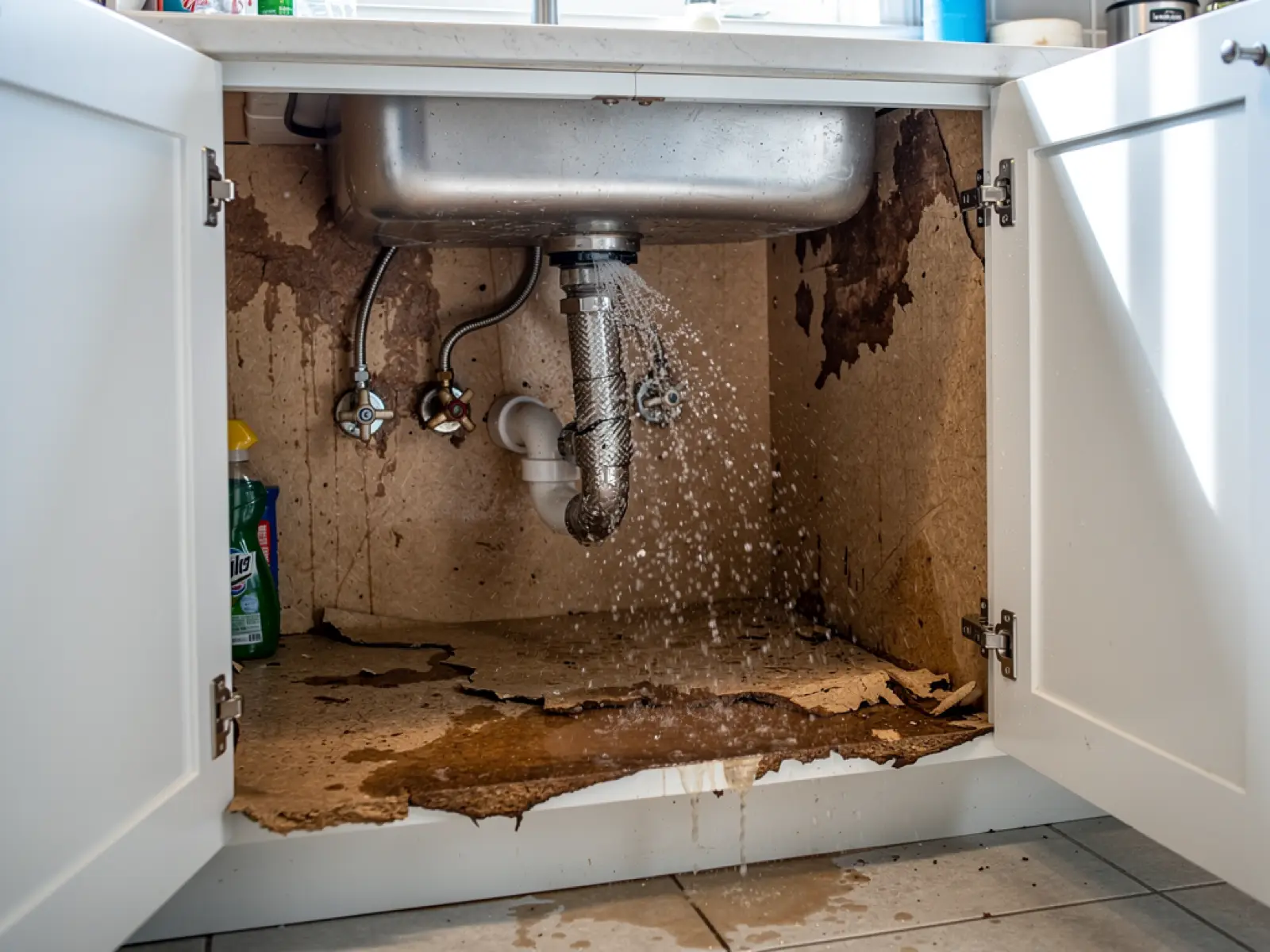
A sink cabinet floor is usually particleboard, which has no grain to resist water and loses strength as it absorbs it. A leak that looks small on the counter can still be running inside the closed cabinet for weeks, wicking into the floor from underneath where nobody checks. By the time the floor feels soft, it has already taken on more water than the visible drip suggests, and particleboard does not regain its strength once it swells.
Does homeowners insurance cover a sink leak?+
A homeowners policy commonly covers sudden and accidental water damage, and the carrier decides based on the facts of the loss. Long-term seepage and repeated leakage are commonly excluded. A supply line that bursts overnight is a different claim from a P-trap that has been weeping behind a cabinet door for months, and the cabinet floor itself often shows which one happened.
Is a dripping P-trap an emergency, or can it wait?+
It is not an emergency the way a burst supply line is, because the water only runs when the sink drains. It is not something to leave either, because drain-side water sits in a closed cabinet and starts affecting the cabinet floor the same way any other leak does. Shut off use of that sink if you can, and get it looked at within a few days rather than waiting for a bigger sign.
How can I tell if my braided supply line is about to fail?+
Look for a bulge anywhere along the braid, rust-colored staining at either end fitting, or cracking around the plastic nut where it screws onto the valve or the faucet. Braided lines fail from overtightening at install, from being stretched too short for the run, or from household cleaning chemicals stored in the same cabinet corroding the stainless braid from the outside. Any one of those signs is worth replacing the line before it bursts rather than after.
Is sink leak water clean, or is it contaminated?+
It depends on the source. Water from a supply line or a faucet base is Category 1, clean water, with the widest window to dry materials and save them. Water from a P-trap or drain joint carries soap and food residue and can move toward Category 2 the longer it sits. Water from a garbage disposal connection is Category 2, gray water, and porous material it has sat in is more often removed than dried.
What does a sink leak do to the ceiling in the room below?+
In a typical Macomb or Oakland County home with a basement under the kitchen or bathroom, water that soaks a cabinet floor long enough travels along the floor joists before it drops, so a ceiling stain below can appear several feet from the sink itself and near a wall line rather than directly underneath. A stain there means the joist bays have to be dried, not just the cabinet and subfloor above, and it is a sign the leak ran longer than a day or two.
Can a swollen cabinet floor be dried out and saved?+
If the cabinet floor is plywood, often yes, because plywood holds together and usually dries back to something usable. If it is particleboard or MDF, generally no. Saturated particleboard swells, loses most of its strength, and does not shrink back or regain strength once it dries, which makes it a replacement decision rather than a drying decision. A cut edge or a drilled hole tells the two materials apart in seconds.
Is a leaking garbage disposal the same repair as a sink leak?+
The repair is different but the damage pattern is the same. A disposal leaks from a worn mounting gasket at the top, a loose drain connection at the side, or a failed internal seal at the bottom, and fixing any of those is a plumbing or appliance trade job, not a restoration job. What Prime handles is the cabinet floor and subfloor under the disposal, which can be wet on and off for months before the drip on the counter is noticed.
Mold can start growing on wet materials in 24 to 48 hours (EPA). Does that apply inside a closed cabinet?+
Yes, and a closed cabinet is a worse condition than an open room, because it traps moisture with poor air movement. A sink cabinet with a slow leak and a shut door for weeks at a time is close to the setup EPA describes as creating a risk of growth. Drying inside the cabinet, not just mopping the visible floor, is what actually addresses that risk.
How fast does Prime Restoration respond to a sink leak in Macomb or Oakland County?+
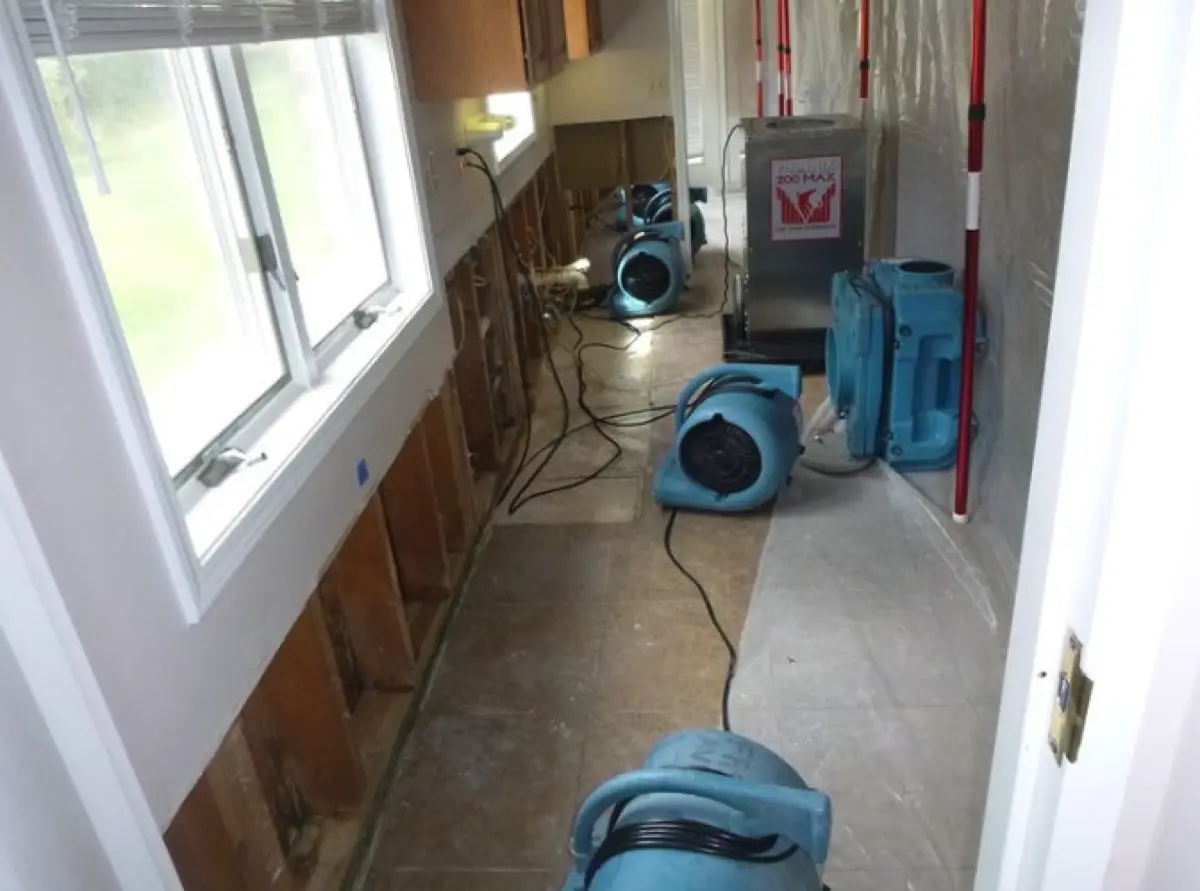
Prime runs a typical 25-minute on-site response across Macomb and Oakland County, 24 hours a day. On arrival, the first steps are shutting off what is still running, taking moisture readings through the cabinet floor and any ceiling below, and writing a scope on site. The estimate is free and comes with the readings attached.