
The panic question
Why does powering on a wet or smoke-damaged device cause permanent damage?
A device that looks fine from the outside can be carrying moisture or corrosive residue across its internal circuit board, where nobody can see it. Powering it on sends current through every trace on that board, including any trace that moisture or soot residue is now bridging.
That current is what causes the damage. Electricity flowing across a moisture bridge drives electrolytic corrosion, visible as fine metal deposits growing across the gap, within seconds of power being applied. A board that would have survived being dried out and cleaned can be destroyed the moment someone checks whether it still turns on.
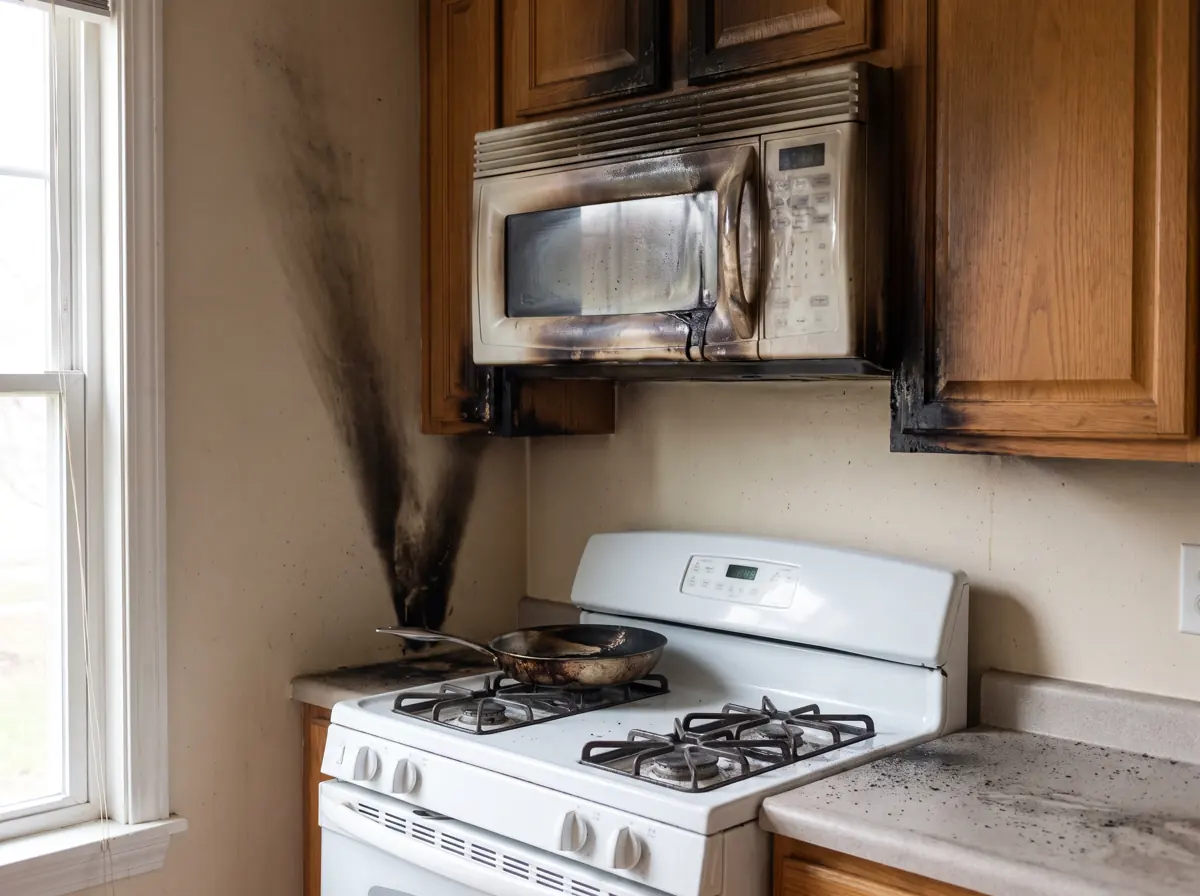
This is true across water, fire, and smoke losses alike. A TV or computer pulled from standing water, an appliance that was scorched, and a home theater receiver that sat in a smoky room all carry the same rule: leave it off until it has been assessed.