Soot is the black or gray residue that burning leaves behind. After a house fire it settles on every surface the smoke reached, including rooms far from the flames. This guide explains what soot is, why it harms a home and the people in it, the four kinds of soot and how each one cleans, and what a Michigan homeowner can do in the first days.
Prime Restoration is a family water damage restoration business serving Michigan since 1988, and a top-rated, highly local team handles fire and smoke damage across Macomb and Oakland County. Call (586) 277-1069 at any hour. Typical response is 25 minutes.
What Is Soot?
Soot is a mix of tiny carbon particles and other combustion byproducts. It forms when a material burns without enough oxygen to burn completely. What the soot contains depends on what burned. Wood and paper leave a different residue than plastic, rubber, cooking oil or furnace fuel.
The particles are very small. They travel with smoke through open doors, hallways, wall cavities, attics and the ducts of a heating and cooling system. That is why a fire in a kitchen can leave a film on a bedroom ceiling at the other end of the house.
Soot also carries acidic compounds. On metal, painted surfaces, glass, stone and fabric, those compounds can stain and etch the surface if the residue sits. The longer soot stays in place, the harder it is to remove. For that reason, cleaning starts as early as the fire department allows.
Is Soot Dangerous After a House Fire?
Soot is a health concern. The US Environmental Protection Agency explains that fine particles in smoke can reach deep into the lungs. Short-term effects include irritated eyes, nose and throat, coughing and a scratchy throat. People with asthma, heart disease or lung disease, older adults, pregnant women and young children face a higher risk from smoke particles. For health questions, talk to your doctor.
Soot on surfaces matters too, because disturbing it puts particles back into the air. Wiping, sweeping and walking through a sooty room all lift residue. That is the reason professional crews control the air during cleanup with HEPA air scrubbers and contained work areas.
Who Should Stay Out of the House
- Children, pregnant women and older adults
- People with asthma, COPD or heart conditions
- Pets
Wait for the fire department to confirm the building is structurally safe before anyone goes in. After that, a restoration crew can tell you which rooms need containment and which are ready for short visits to collect essentials.
The Four Types of Soot
Restoration crews identify the soot type before choosing a cleaning method. The wrong method on the wrong soot spreads the residue and sets the stain. The restoration industry groups smoke residue into four common types, and a single fire can leave more than one.
| Soot type | What burned and how | What it looks and feels like | How it cleans |
|---|---|---|---|
| Dry smoke soot | Paper, wood and similar material that burned fast at a high temperature. | Dry, powdery and light. It does not smear at first touch. | HEPA vacuuming first, then dry chemical sponge cleaning. Wet cleaning at the start would smear the powder into the surface. |
| Wet smoke soot | Plastic, rubber and other material that burned slowly at a low temperature, often smoldering. | Sticky, smeary and thick, with a strong odor. It coats surfaces in a string-like film. | Degreasing cleaners applied with care. This type needs more labor, and odor treatment follows. |
| Protein residue | Burnt food from a kitchen fire, such as meat or oil. | Often close to invisible. It can discolor paint and varnish and leaves a strong, lingering odor. | Specialized cleaners and odor treatment. Because it is hard to see, a crew checks surfaces by hand and by light. |
| Fuel oil soot | A furnace or boiler malfunction, often called a puff-back. | Fine, oily and widespread. It spreads through ducts and across a whole floor or the entire house. | Cleaning of the heating system, the ducts and every surface. Crews often treat the whole structure. |
A crew tests a small area first to learn which type is present. That test picks the correct cleaner before any surface is touched.
What to Do in the First Days After a Fire
Do These Things
- Wait for the all-clear. Enter only after the fire department says the building is safe.
- Call a restoration company early. Soot damage grows with time, and fire hose water adds a water damage problem on top of it. Prime handles both under one scope.
- Photograph everything. Take pictures and video of every room before anything is moved. Your insurance adjuster will ask for them.
- Wear protection if you must enter. Use an N95 respirator, gloves and long sleeves, and keep the visit short.
- Remove only what is safe to remove. Pick up valuables, documents, medicine and keys. Leave heavily sooted soft goods for the crew to sort.
- Cover or move clean items. Cover furniture in a room with plastic sheeting, or move it to a clean room, to limit new residue.
- Call your insurance company. Report the loss and ask about living expenses while the house is repaired. Our insurance claims guide explains the steps.
Avoid These Things
- Leave the furnace and air conditioner off. Running the system pulls soot through every duct and into every room.
- Skip wet wiping on dry soot. Water and rags push the powder into the surface and set the stain.
- Skip the household vacuum. Its filter passes fine particles back into the air. Crews use HEPA vacuums.
- Discard exposed food. Food left open in a smoky kitchen may be unsafe to eat. When in doubt, throw it out.
- Hold off on cleaning electronics and appliances. Plug nothing in until a technician checks it.
How Professionals Remove Soot
The steps below are the order a restoration crew follows. The order matters because each step prepares the next one.
- Secure the building. Board up broken windows and doors, tarp a damaged roof and shut off damaged utilities.
- Remove water. Extract water left by fire hoses and dry the structure, because wet material under soot can grow mold. Read more about how mold grows after water damage.
- Identify the soot type. Test a small area for each room, as shown in the table above.
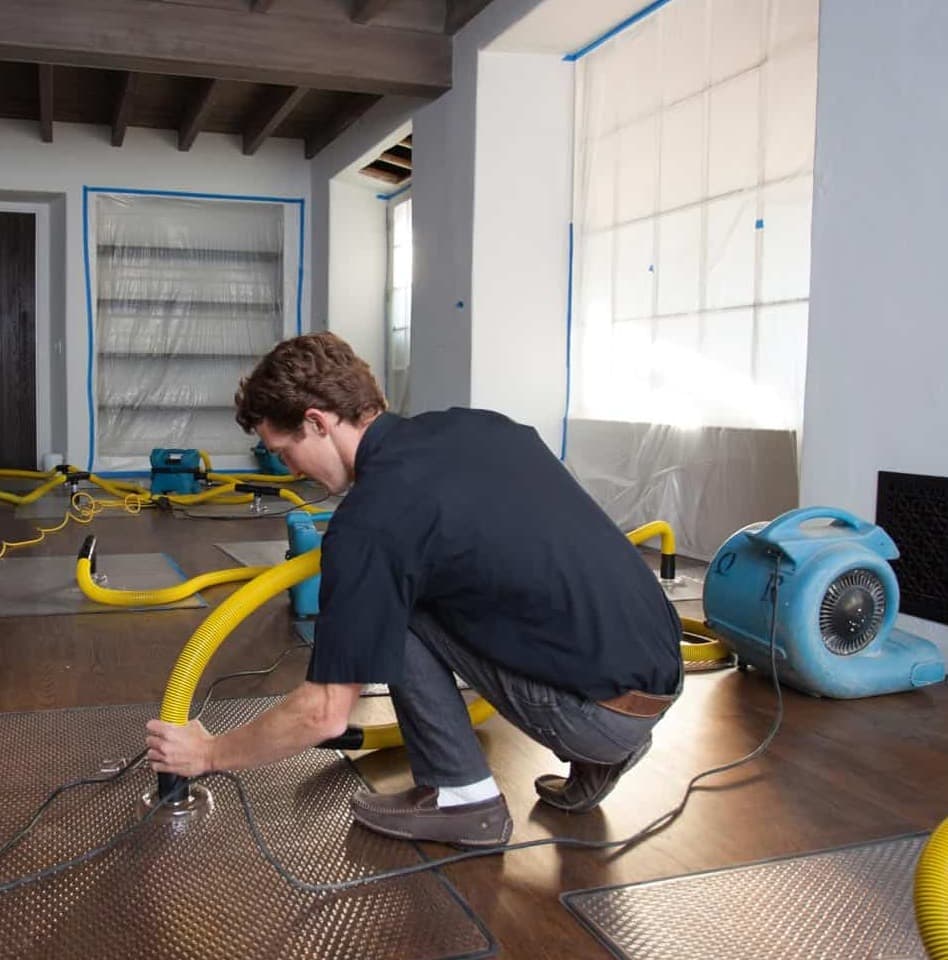
- Control the air. Set up containment and HEPA air scrubbers so cleaning does not move soot to clean rooms.
- Dry clean first. HEPA vacuum loose soot from ceilings, walls and floors, working from the top down. Use dry chemical sponges on dry soot.
- Wet clean as needed. Wash surfaces with the cleaner that matches the soot type.
- Clean the ducts and the system. Soot in the heating and cooling system comes back into the rooms if it stays.
- Treat odor. Smoke odor lives in porous material. Odor treatment follows cleaning, because covering odor with a fragrance leaves the source in place.
- Clean or replace contents. Sort belongings by what can be cleaned, what needs specialized treatment and what must be replaced.
- Rebuild. Replace drywall, insulation, flooring and finishes that cleaning cannot restore. The same Prime team that cleans the soot handles the repair.
Soot Damage on Different Surfaces
| Surface | What soot does | Usual result |
|---|---|---|
| Painted walls and ceilings | Soot film bonds to paint. Wet smoke smears. Protein residue discolors the finish. | Cleaning and sealing, then repainting in many cases. |
| Unfinished wood and framing | Soot and odor soak into the grain. | Cleaning, sealing with a stain-blocking primer, or sanding. |
| Metal, glass and stone | Acidic residue can tarnish, etch or stain if it sits. | Early cleaning prevents etching. |
| Carpet, upholstery and clothing | Fibers trap soot and odor. | Professional cleaning for many items. Heavily soiled soft goods may need replacement. |
| Duct work and HVAC | Soot circulates through the system. | Cleaning of the full system before it runs again. |
| Electronics and appliances | Residue can reach circuit boards. | Technician inspection before use. |
Soot and Fire Damage in Michigan Homes
Michigan houses add a few conditions to a soot cleanup. Many Macomb and Oakland County homes have finished basements, attics with blown insulation and forced-air heating that serves the whole house. Smoke from a first-floor fire reaches all three. Cold weather matters too: heating season brings closed windows, so smoke and odor stay inside until the crew opens the structure. A winter fire also leaves a building open to freezing temperatures, so board-up and drying get urgent early attention.
Furnace and fireplace problems cause some Michigan fires. A puff-back can leave fuel oil soot through the entire house with no flames visible, which is why a home with a furnace smell and black film on the walls deserves a professional inspection.
For more detail on the repair side, read what to do after a house fire, the fire and smoke damage restoration service and the smoke damage cleanup cost guide.
Guaranteed Work
Prime stands behind the work with the Make-It-Right Guarantee. If any part of the work is not right, Prime comes back and fixes it at no charge. Rebuild workmanship carries a 2-year guarantee and materials Prime supplies carry 1 year.
If a fire has left soot in your home, call (586) 277-1069. A live dispatcher answers 24 hours a day, and a crew from the office nearest you starts the cleanup.
Frequently asked questions
What is soot, and where does it come from?
Soot is a residue of tiny carbon particles and other combustion byproducts. It forms when material burns without enough oxygen to burn completely. Fires, furnace malfunctions, fireplaces and candles all produce it. After a house fire, soot travels with smoke through rooms, wall cavities and ducts and settles on surfaces far from the flames.
Is soot from a house fire toxic?
Soot is a health concern. The US Environmental Protection Agency explains that fine particles in smoke can reach deep into the lungs and irritate the eyes, nose, throat and airways. People with asthma, heart or lung disease, older adults, pregnant women and children face a higher risk. For health questions, talk to your doctor. Keep these groups out of the house until the crew finishes the cleanup.
Can I clean soot off walls myself?
You can wipe a small, light film with a dry chemical sponge, but the right method depends on the soot type. Dry soot smears if you wipe it with a wet cloth. Wet smoke residue needs a degreaser. Protein residue is hard to see and spreads odor. Because cleaning lifts particles into the air, and because a wrong method can set a stain, most homeowners call a restoration crew for anything beyond a small area.
How long can I wait before soot damage becomes permanent?
Soot is acidic, so it can stain and etch surfaces more as it sits. Cleaning sooner leaves more material that can be saved. The exact window depends on the surface, the soot type and the humidity in the house. Call a restoration company as soon as the fire department allows entry, rather than waiting for the damage to show.
Why does my house still smell like smoke after cleaning?
Smoke odor lives in porous material such as drywall, insulation, wood framing, carpet and ductwork. If cleaning removes the visible soot but leaves residue in those materials, the odor returns, especially in humid weather. A full job cleans the soot, treats the odor in the structure and cleans the heating and cooling system. A fragrance covers odor for a short time and leaves the source in place.
Does homeowners insurance cover soot and smoke damage?
Most homeowners policies cover sudden fire and the smoke and soot damage that results, along with water damage from fire hoses. Your policy and your adjuster decide coverage and limits. Photograph every room before cleanup and keep your receipts. Prime documents the loss with photos, moisture readings and an itemized estimate so your adjuster has a clear record.
Should I turn on the furnace or air conditioner after a fire?
Leave the system off until it is cleaned. Running it pulls soot through the ducts and spreads it into every room, including rooms that were clean. A restoration crew cleans the ducts and the system as part of the job, then confirms it is safe to run.
What is the difference between soot and smoke damage?
Smoke is the airborne mix of gases and particles from a fire. Soot is the solid residue that smoke leaves on surfaces. Smoke damage includes the soot film, the odor in porous material and corrosion on metal. Cleaning removes the soot, and odor treatment addresses the smoke smell that remains in the structure.
Tags
24/7 Emergency Response
Need Professional Restoration Now?
Call now and speak directly with our trained restoration team. On-site within 25 minutes.
(586) 277-1069