Stop the water, remove it, and dry the structure to a measured standard. Prime is typically on site in 25 minutes, any hour of the day.
Mitigation starts the day the water arrives. Call now and a crew heads your way.
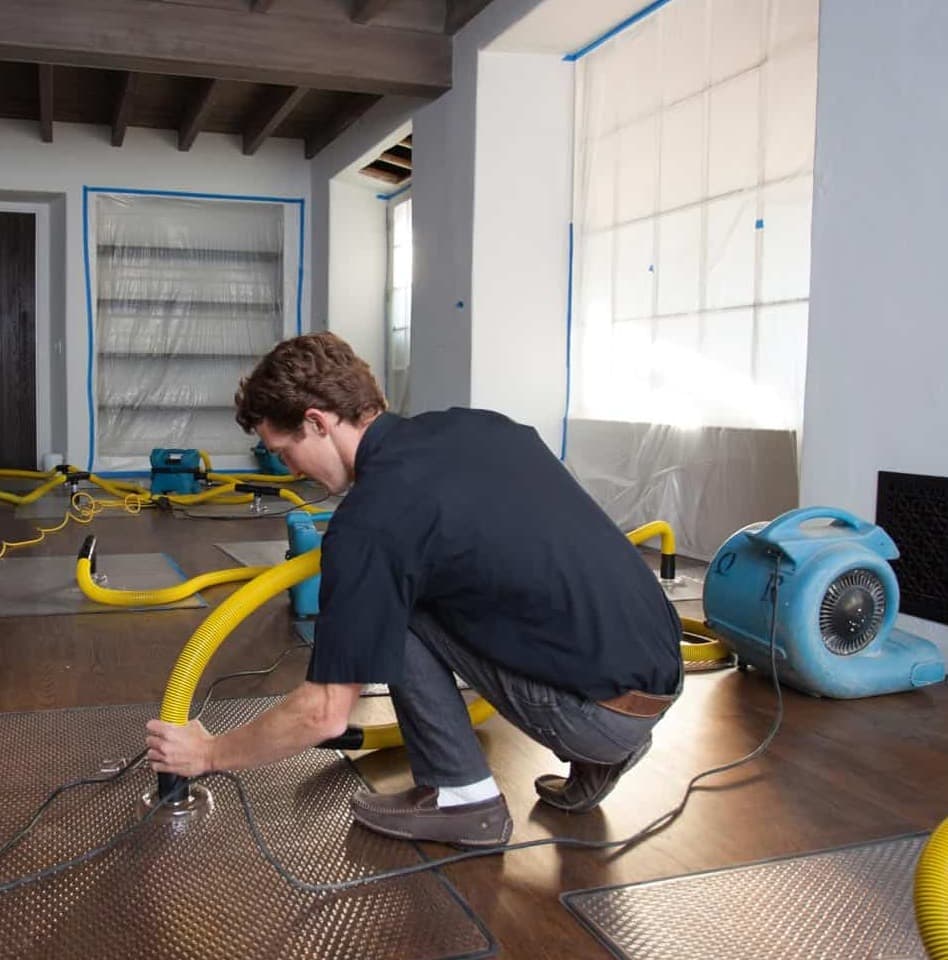
Water mitigation is the first phase of a water loss. A mitigation crew stops the source, removes standing water, takes out material that cannot be dried, and dries the rest of the structure until moisture readings match a dry baseline. Repairs come after that, once the building is dry.
People search for a mitigation company, water remediation and water mitigation and mean the same first phase of work. Prime Restoration does all of it under one scope: the same crew that extracts the water dries the structure and, when needed, rebuilds. Prime is a top-rated, highly local, family water damage restoration business since 1988, and a crew is typically on site in 25 minutes across Macomb and Oakland County.
Speed matters because wet materials do not stay a small problem. The EPA says that if wet or damp materials are dried 24 to 48 hours after a leak or spill, in most cases mold will not grow. Mitigation is the work that gets a house to dry inside that window.
Same loss, three words
These three words are used loosely. This is how Prime uses them, so you know what a quote covers.
| Term | What it covers | When it happens |
|---|---|---|
| Water mitigation | Stop the source, extract, remove what cannot be dried, dry the structure, document readings | Day one through the end of drying, typically 3 to 5 days of equipment |
| Water remediation | The same first phase. Often used when the water was contaminated and cleaning or removal is the main task | Same window as mitigation |
| Water damage restoration | Rebuild what was removed: insulation, drywall, flooring, paint, trim | After readings match the dry baseline |
Prime Restoration performs all three under one scope, so one crew owns the job from first call to final walkthrough.
Water damage gets exponentially worse over time. Here is what happens if you wait.
Water spreads into carpet pad, baseboards and the bottom of wall cavities. Stopping the source and starting extraction here keeps the loss small.
Drywall wicks water upward and subfloor absorbs it. Wet materials that could have been dried in place start to need removal.
This is the window the EPA names for drying wet materials to keep mold from growing. Drying equipment should be running before it closes.
Clean water can pick up bacteria as it sits, and the water category can change. The scope grows, and so does the time to dry.
A proven, step-by-step approach to restoring your property.
The crew finds where the water is coming from and shuts it off or contains it: a supply valve, a failed line, a clogged drain or a roof opening that gets a tarp.
The crew names the water by IICRC S500 category: clean, gray or black. The category sets the protective gear and which materials can stay.
Truck-mounted and portable extractors and pumps remove the bulk of the water from floors and carpet before drying begins.
Saturated carpet pad, wet insulation and drywall that stays wet are cut out and bagged. Removing them gives the cavity air and shortens the dry time.
Air movers and dehumidifiers run in the wet rooms. The crew reads moisture daily at marked points and compares each one to a dry baseline taken from an unaffected part of your home.
Photos, moisture readings and an itemized scope go to you and to your adjuster, so the carrier has a clear record from the first day.
Comprehensive water mitigation for every situation.
Common questions about water mitigation in Macomb County.
Water mitigation is the emergency phase of a water loss. The crew stops the source, extracts the water, removes material that cannot be dried, and dries the structure with air movers and dehumidifiers until readings match a dry baseline. It is done to stop further damage. Rebuilding is a separate phase.
Mitigation limits the damage and dries the building. Restoration puts back what was removed or damaged: drywall, flooring, paint and trim. Prime handles both. Our post on the difference between water mitigation and restoration has the full comparison at /blog/water-mitigation-vs-restoration-difference.
In everyday use the two terms describe the same first phase of work: removing water and wet material and drying the structure. Prime treats them as one service. If you searched for either term, the crew, the equipment and the steps on this page are what you get.
The crew stops or contains the source, classifies the water, extracts it, removes materials that cannot be dried, sets drying equipment and takes the first moisture readings. A technician then returns each day to read moisture at the same points until they match the dry baseline.
Homeowners policies commonly list protecting the property from further damage among the owner's duties after a loss. Mitigation is how that gets done. Your policy and your carrier decide coverage, so read your policy or ask your agent. Prime documents the work with photos, readings and an itemized scope for your adjuster.
Wet materials absorb more water and stay wet longer. The EPA says materials dried within 24 to 48 hours will in most cases not grow mold, so every hour of delay moves the job closer to that line. Delay also lets clean water pick up bacteria, which can change its category and enlarge the scope.
Extraction and removal usually happen on day one. Structural drying typically runs 3 to 5 days with daily moisture readings, and a finished basement can take longer than an unfinished one. Reconstruction starts after the readings show the structure is dry.
Reconstruction starts once the moisture readings match the dry baseline. Closing a wall over a wet cavity is how mold calls begin weeks later, so Prime starts the rebuild when the numbers say dry. Prime is a licensed Michigan residential builder (License #262500492) and the same team carries the rebuild.
The price depends on the water category, the square footage, the materials and how long the water sat. Prime gives a written estimate after the on-site assessment. Our water damage restoration cost page at /water-damage-restoration-cost-michigan explains each factor.
You can help in the first minutes. Shut off the water at the valve, turn off power to wet areas if it is safe, move small items out of the water and photograph everything before it moves. Standing water near outlets is an electrical hazard, so stay out of it. Then call (586) 277-1069 and a crew is typically on site in 25 minutes.
Prime answers 24 hours a day, every day, and a crew is typically on site in 25 minutes in Macomb and Oakland County, from offices in Sterling Heights, Birmingham, Troy, Rochester Hills, West Bloomfield and Shelby Township.
Prime serves Macomb County and Oakland County, including Sterling Heights, Warren, Clinton Township, Shelby Township, Macomb Township, Troy, Birmingham, Bloomfield Hills, West Bloomfield, Rochester Hills and Royal Oak. City pages for each are linked from the water damage hub at /water-damage.
Learn more about water mitigation and water damage restoration.
Our emergency restoration crews are available 24 hours a day, 7 days a week. Call now for a typical 25-minute response anywhere in Macomb County.
Call (586) 277-1069 for Immediate Help