If you have ever dealt with water damage — or started researching restoration companies — you have probably seen the terms "water mitigation" and "water restoration" used interchangeably. But they are not the same thing. They describe two distinct phases of the water damage recovery process, and understanding the difference matters when you are choosing a contractor, talking to your insurance company, or trying to figure out what happens next after your Michigan home floods.
Water Mitigation: Stopping the Damage
Water mitigation is the emergency phase. It is everything that happens in the first hours and days after water damage to stop the damage from getting worse. Mitigation does not fix or repair anything — it stabilizes the situation.
What Water Mitigation Includes
- Identifying and stopping the water source: Shutting off water supply, tarping a damaged roof, or addressing whatever is causing water to enter the home
- Emergency water extraction: Removing standing water using truck-mounted extractors, submersible pumps, and portable units. Learn more about our water extraction process.
- Removing damaged materials that hold moisture: Pulling wet carpet and pad, cutting out saturated drywall (typically 12-24 inches above the water line), removing wet insulation
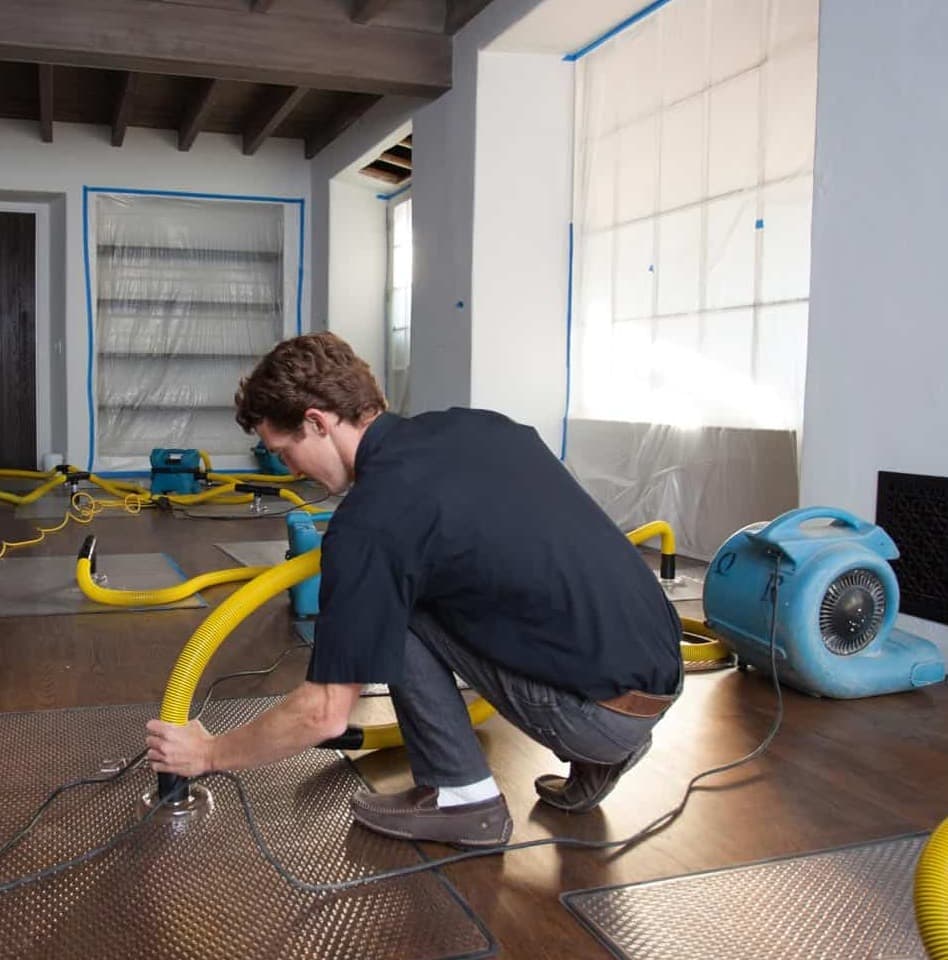
- Structural drying: Setting up industrial dehumidifiers and air movers to dry the structure — framing, concrete, subfloor, and remaining building materials. Our structural drying process includes daily moisture monitoring to verify drying is progressing.
- Antimicrobial treatment: Applying professional-grade antimicrobials to prevent mold growth on exposed surfaces
- Monitoring and documentation: Daily moisture readings, temperature and humidity logging, and detailed photo documentation of the drying process
How Long Mitigation Takes
Water mitigation typically takes 3-5 days for most residential water damage events. Complex situations — large volumes of water, Category 3 contamination, or concrete structures that retain moisture — can take longer. The drying equipment runs continuously until professional moisture meters confirm the structure has reached acceptable drying goals.
Why Speed Matters
The entire point of mitigation is speed. Mold can begin growing within 24-48 hours in wet conditions. The faster water is extracted and drying begins, the less material needs to be removed and replaced — which directly reduces the total cost of the project. Every hour of delay makes the damage worse.
Water Restoration: Repairing the Damage
Water restoration is the rebuild phase. Once the structure is dry, restoration begins — putting your home back together.
What Water Restoration Includes
- Drywall replacement: Installing new drywall where damaged material was removed, taping, mudding, and finishing
- Flooring replacement: Installing new carpet, pad, hardwood, LVP, or tile to replace flood-damaged flooring
- Painting: Priming and painting new and affected surfaces
- Trim and baseboard replacement: Replacing baseboards, door casings, and other trim removed during mitigation
- Cabinet and vanity repair or replacement: Depending on the extent of water exposure and material type
- Electrical and plumbing repairs: Addressing any systems damaged by water
- Content restoration: Cleaning, drying, and restoring personal belongings when possible
How Long Restoration Takes
The restoration phase varies widely depending on the scope of damage. A single-room repair with new drywall and paint might take a few days. A full basement reconstruction with new framing, drywall, flooring, and trim can take several weeks. Your contractor should provide a timeline before work begins.
Why the Distinction Matters
For Insurance
Your insurance company treats mitigation and restoration as separate line items. Mitigation is typically approved quickly because carriers understand that delaying it makes the claim more expensive. Restoration estimates often require more detailed review and adjuster approval before work begins.
Understanding this distinction helps you know why your restoration company might start drying your home immediately (mitigation — covered as emergency services) but wait for insurance approval before beginning reconstruction (restoration — needs estimate approval).
For Choosing a Contractor
Some companies only do mitigation — they extract water, dry the structure, and leave. You then need to hire a separate general contractor or builder to do the repairs. Other companies only do construction — they show up after the structure is dry and rebuild, but they do not handle the emergency response.
Prime Restoration handles both phases under one roof. We are a top-rated, highly local, licensed Michigan restoration contractor with a 5-star Google rating, BBB A+ accreditation, and Certified Best Pick 2027 recognition, and we manage mitigation and reconstruction together. That means one company, one point of contact, and one itemized estimate from start to finish. For Michigan homeowners, this matters because:
- No finger-pointing between a mitigation company and a builder over who is responsible for what
- Seamless transition from drying to rebuild — no gap where your home sits open and exposed
- One insurance claim with consistent documentation instead of two separate contractors submitting different paperwork
Industry-Standard Mitigation: How It Should Be Done
The restoration industry uses a documented mitigation reference that defines best practice for professional water damage restoration. The standard defines:
- Water damage categories: Category 1 (clean water), Category 2 (gray water), and Category 3 (black water/sewage) — each requiring different handling. Learn more in our guide to water damage categories explained.
- Drying classes: Class 1 through Class 4, based on the amount of water and the types of materials affected
- Drying goals: Specific moisture content targets that must be reached before the structure is considered dry
- Documentation requirements: Moisture readings, equipment placement, daily monitoring logs, and completion verification
Any company performing water mitigation should follow industry-standard mitigation practice. This is what insurance companies expect, and it is what protects you as a homeowner from inadequate drying that leads to mold, rot, and long-term structural problems.
What Happens If You Skip Mitigation
We occasionally get calls from homeowners who tried to handle water damage themselves — mopped up the water, ran some fans, and figured it was dry enough. Weeks or months later, they discover mold behind the walls, a musty smell that will not go away, or buckling floors.
Skipping professional mitigation is risky because:
- Household fans and consumer dehumidifiers cannot match the drying capacity of commercial equipment
- Without professional moisture meters, there is no way to verify that moisture levels in walls, subfloors, and concrete have reached safe levels
- Mold can grow hidden behind walls for months before you see or smell it
- Your insurance company may deny a later mold claim if they determine mitigation was not performed properly after the original water event
Typical Cost Comparison
To give Michigan homeowners a general idea, here is how mitigation and restoration costs typically break down for a common basement flood scenario:
- Water mitigation (extraction, drying, antimicrobial treatment): typically $2,000-$6,000 depending on the size of the affected area and amount of water
- Water restoration (drywall, flooring, paint, trim, reconstruction): typically $3,000-$15,000+ depending on the scope of rebuild needed
These are general ranges — every situation is different. For an accurate estimate specific to your situation, call Prime Restoration at (586) 277-1069 for a free inspection. We document everything in itemized detail so your insurance company gets a clear, line-by-line breakdown of both mitigation and restoration costs. See our full water damage restoration cost guide for more detail.
The Bottom Line
Water mitigation stops the damage. Water restoration repairs the damage. You need both, and doing them right — with trained restoration professionals who follow industry-standard mitigation practice — is the difference between a home that is truly restored and one that has hidden problems waiting to surface.
If your Michigan home has water damage, call Prime Restoration at (586) 277-1069. We manage the entire process — mitigation through complete restoration — and we provide itemized scope documentation compatible with major Michigan carriers so you have accurate paperwork to submit to your insurance company. We serve Sterling Heights, Clinton Township, Shelby Township, Warren, and all of Macomb County with typical 25-minute emergency response times.
Tags
24/7 Emergency Response
Need Professional Restoration Now?
Call now and speak directly with our trained restoration team. On-site within 25 minutes.
(586) 277-1069