
What it soaks
What does an ice dam actually damage inside the house?
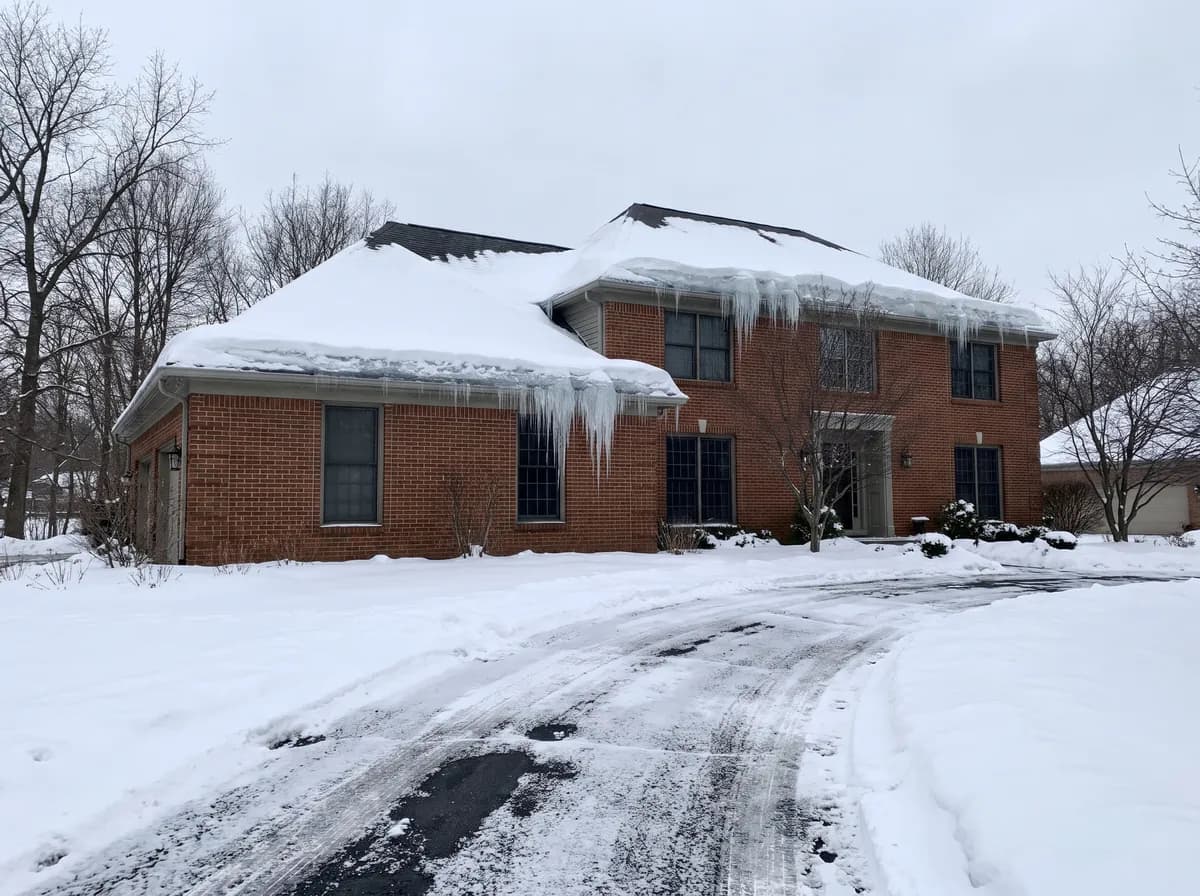
The ice dam sits outside, at the eave. The damage it causes travels inward through several materials before anyone downstairs sees a drop.
- Attic insulation along the exterior wall line: blown fiberglass or cellulose mats down and loses most of its R-value once wet. Our attic water damage page covers which insulation types can sometimes be dried and which are removed.
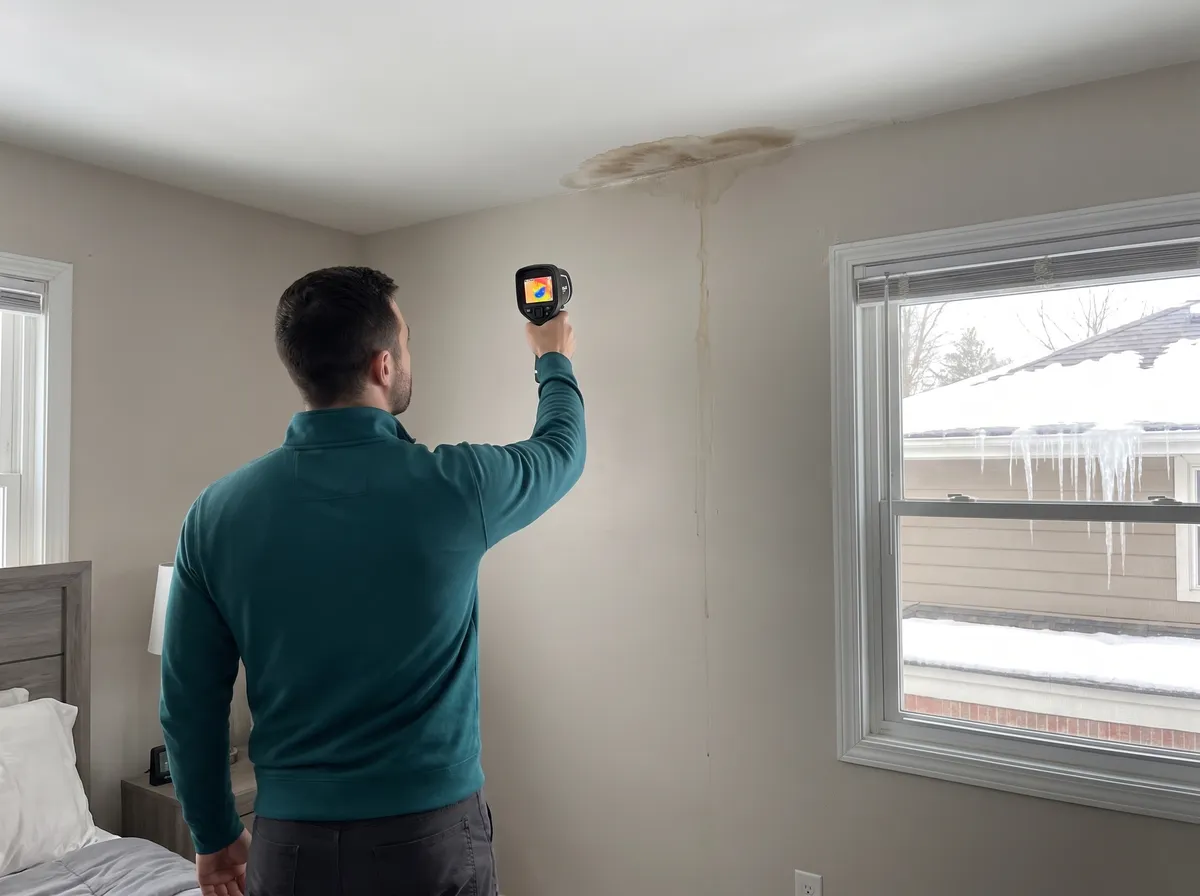
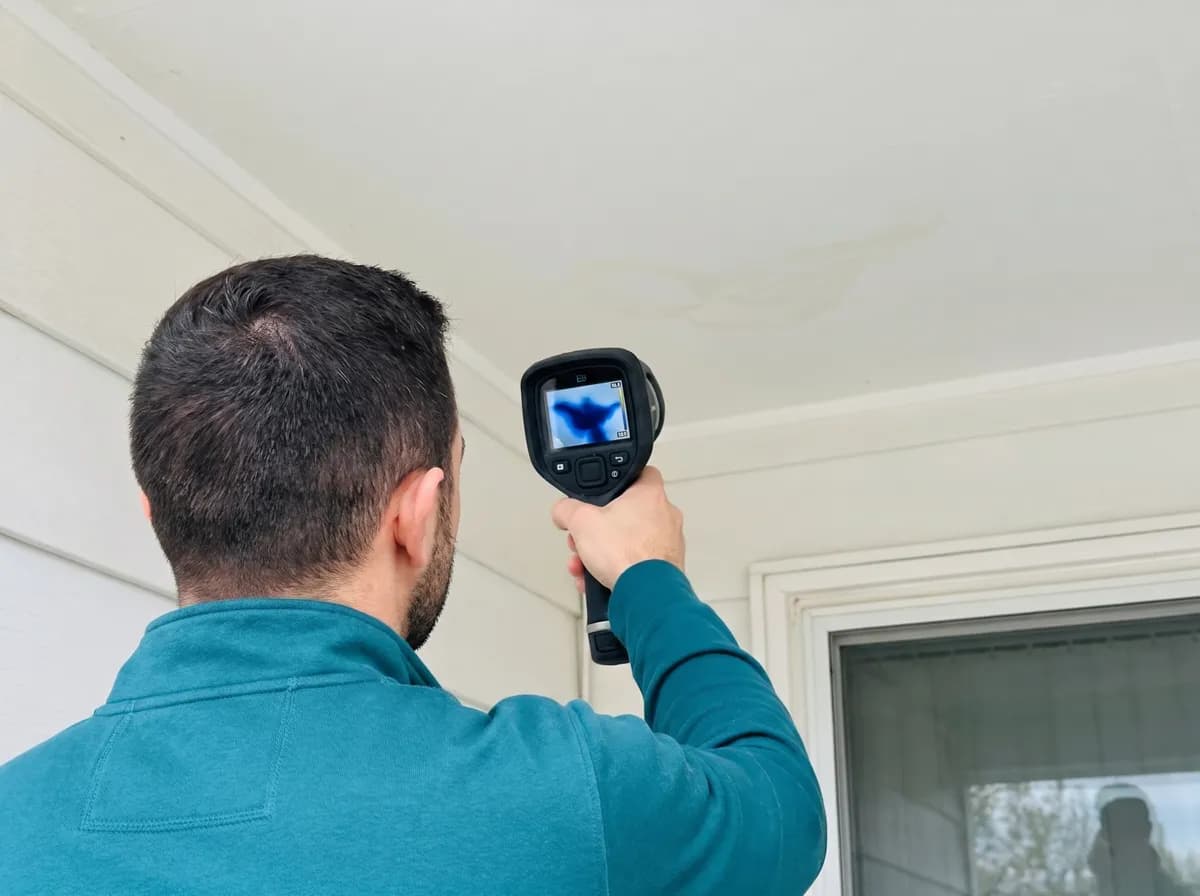
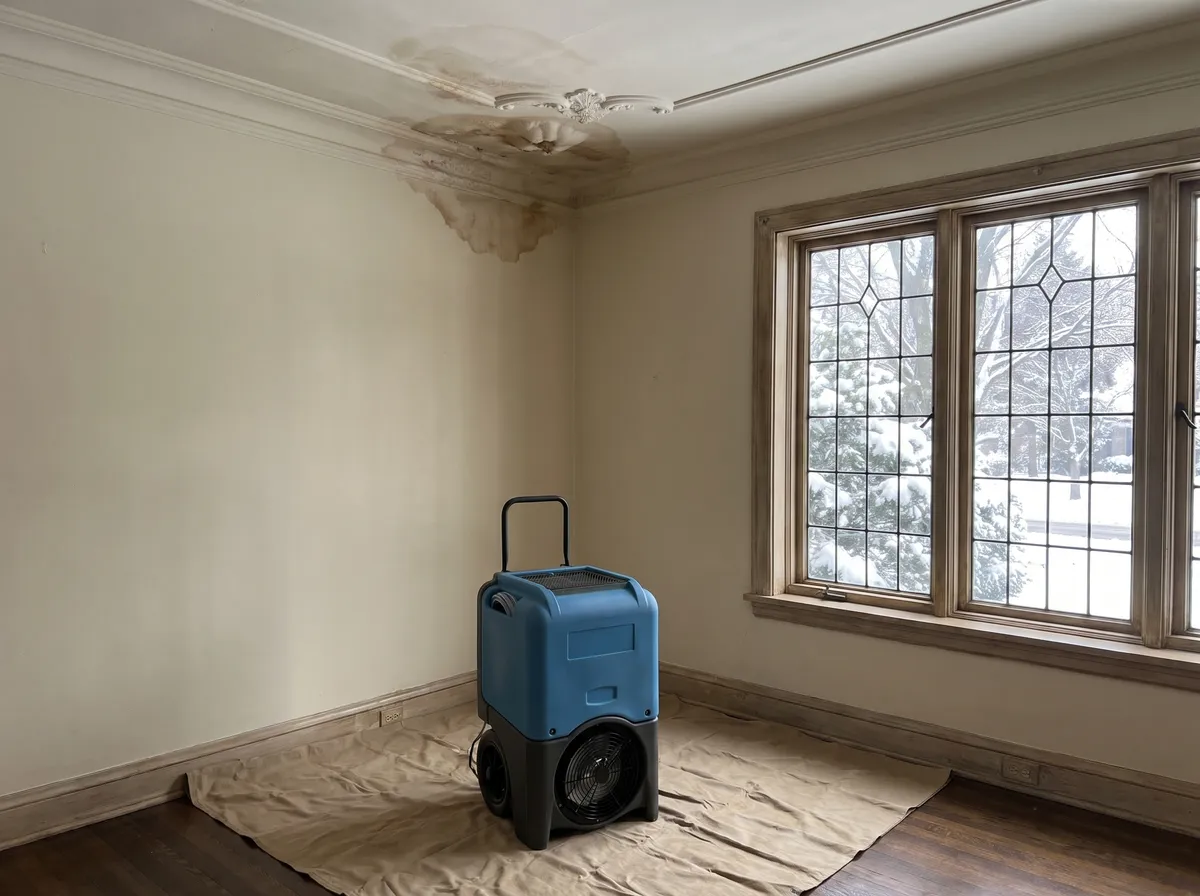
- Ceiling drywall or plaster near the eave and above exterior walls: drywall sags and the seam tape releases; older plaster holds water longer and can fail in a sheet.
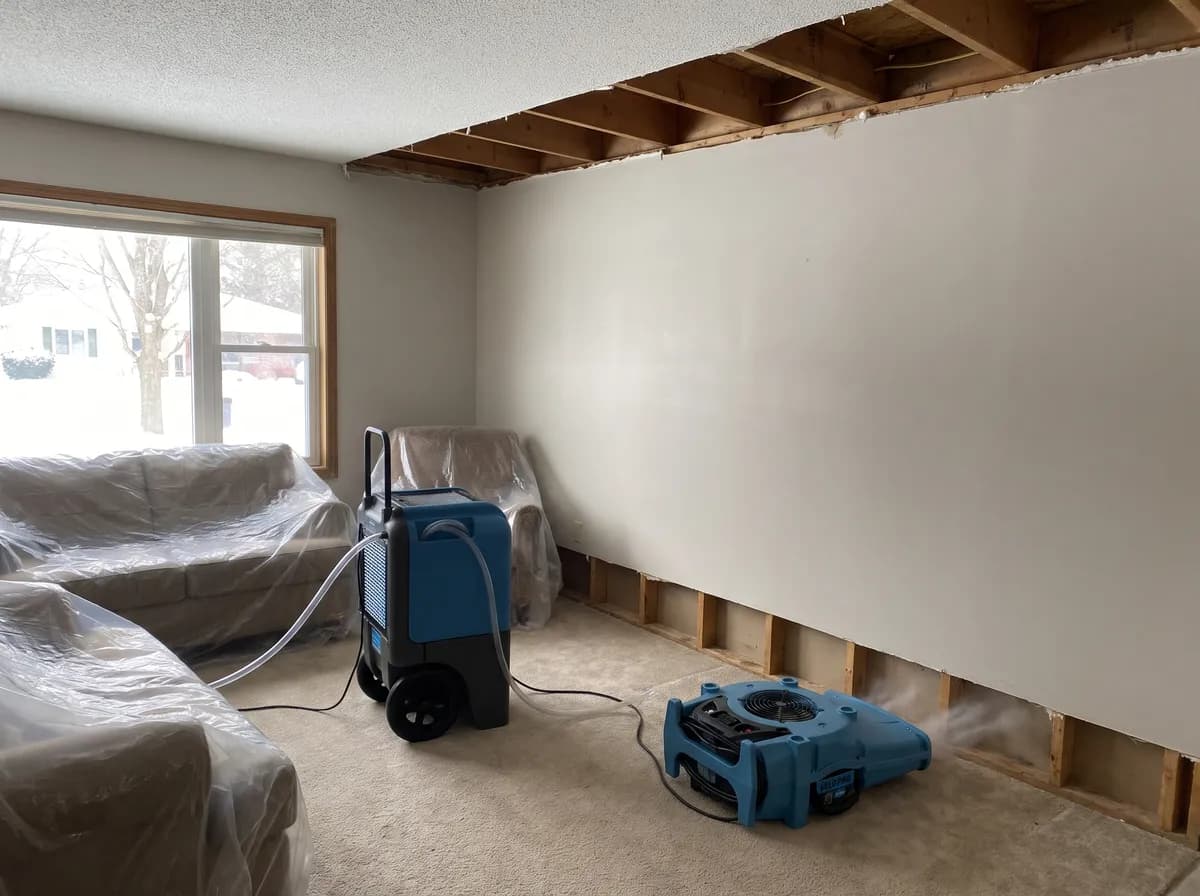
- The wall cavity below the top plate: meltwater that reaches an exterior wall runs down inside the cavity behind the drywall, wetting insulation and framing with nothing visible in the room for days.
- Window and door trim on the windward side of the house: yellow-brown staining and bubbling paint at the top of trim near an eave is one of the earliest visible signs.
- The room below: furniture, flooring and anything stored under the leak take secondary damage once the ceiling has absorbed as much as it can hold.