
WHERE IT COMES FROM
What actually puts water under the house?
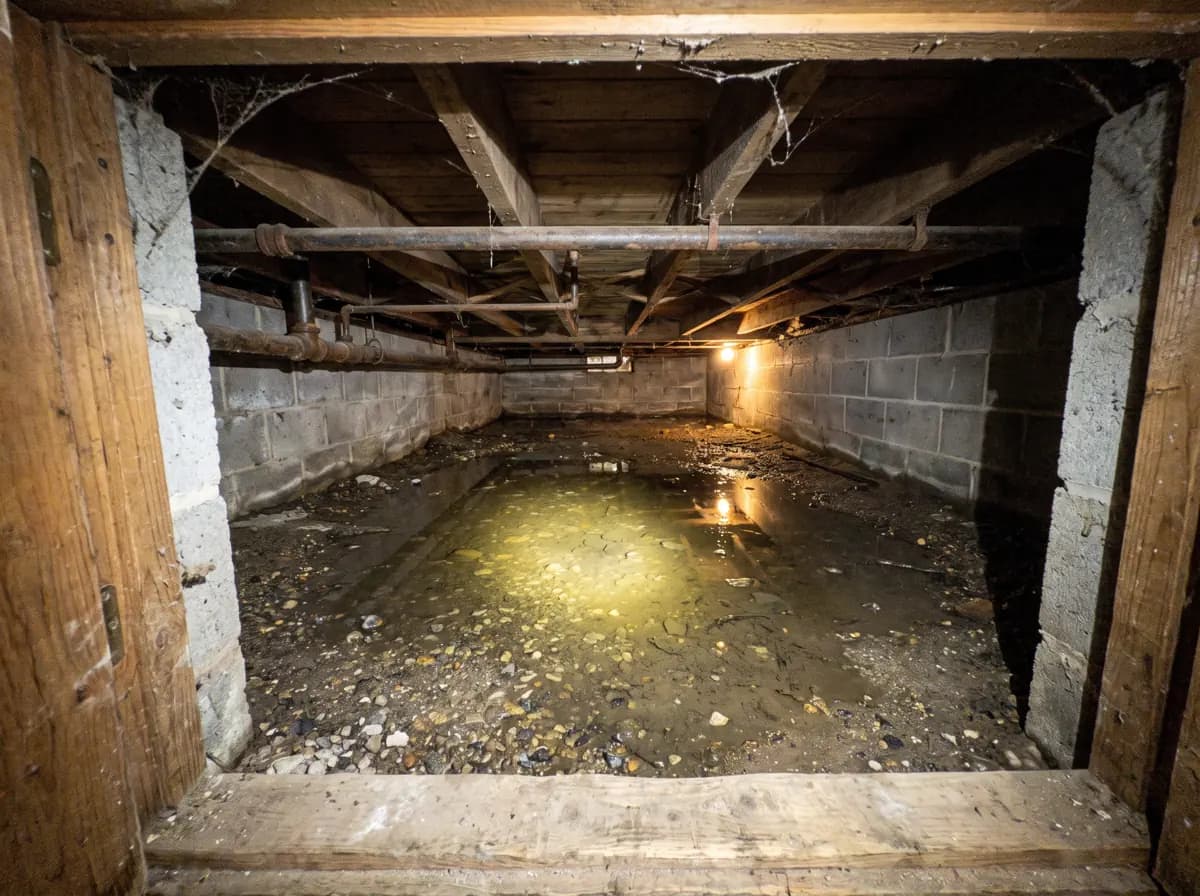
Four sources account for most of the crawl spaces Prime responds to, and knowing which one it was changes what happens next, not just for the drying but for who repairs the actual cause.
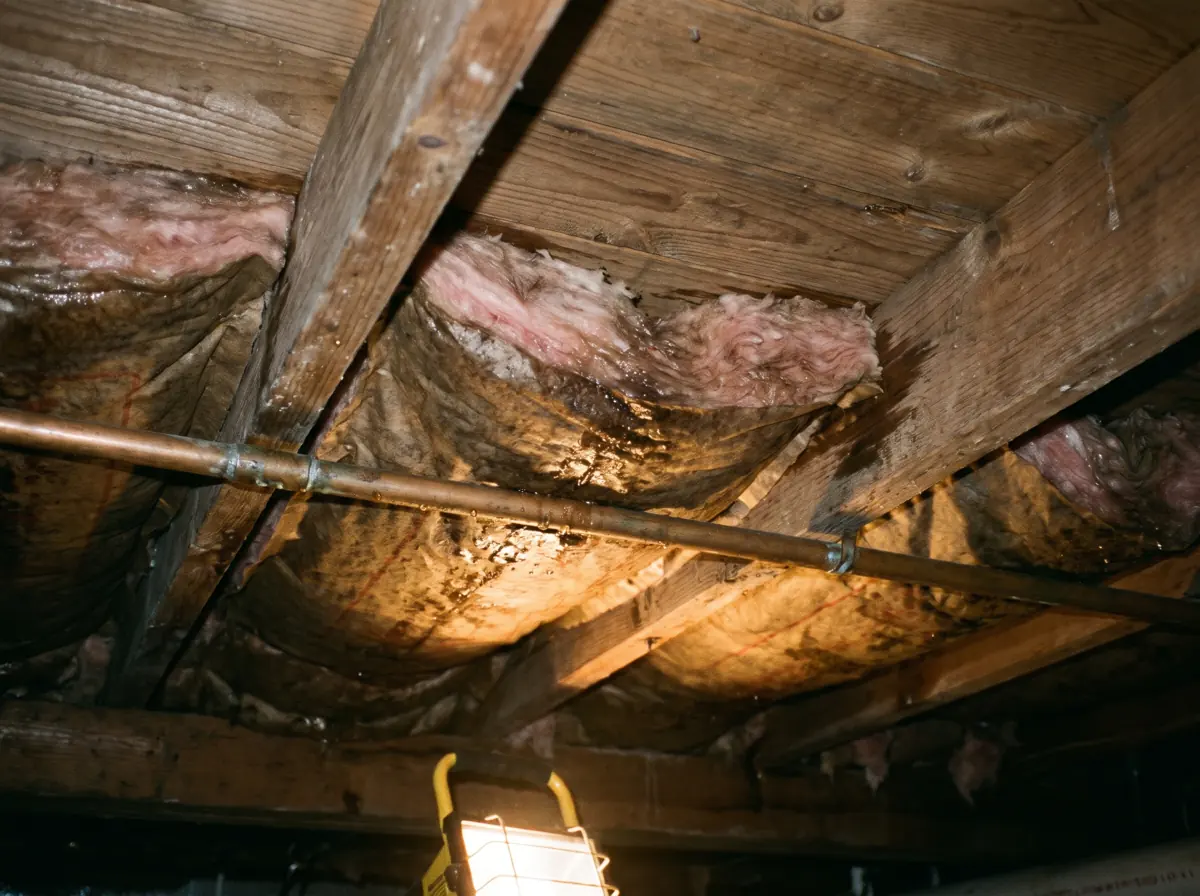
A plumbing leak is the one most homeowners picture first, and it is common, because supply and drain lines often run through the crawl space joist bays where they are easy to install and easy to forget. A burst, split, or loose fitting on one of those lines can run for hours or days before anyone upstairs notices anything, since nobody is looking under the house day to day.
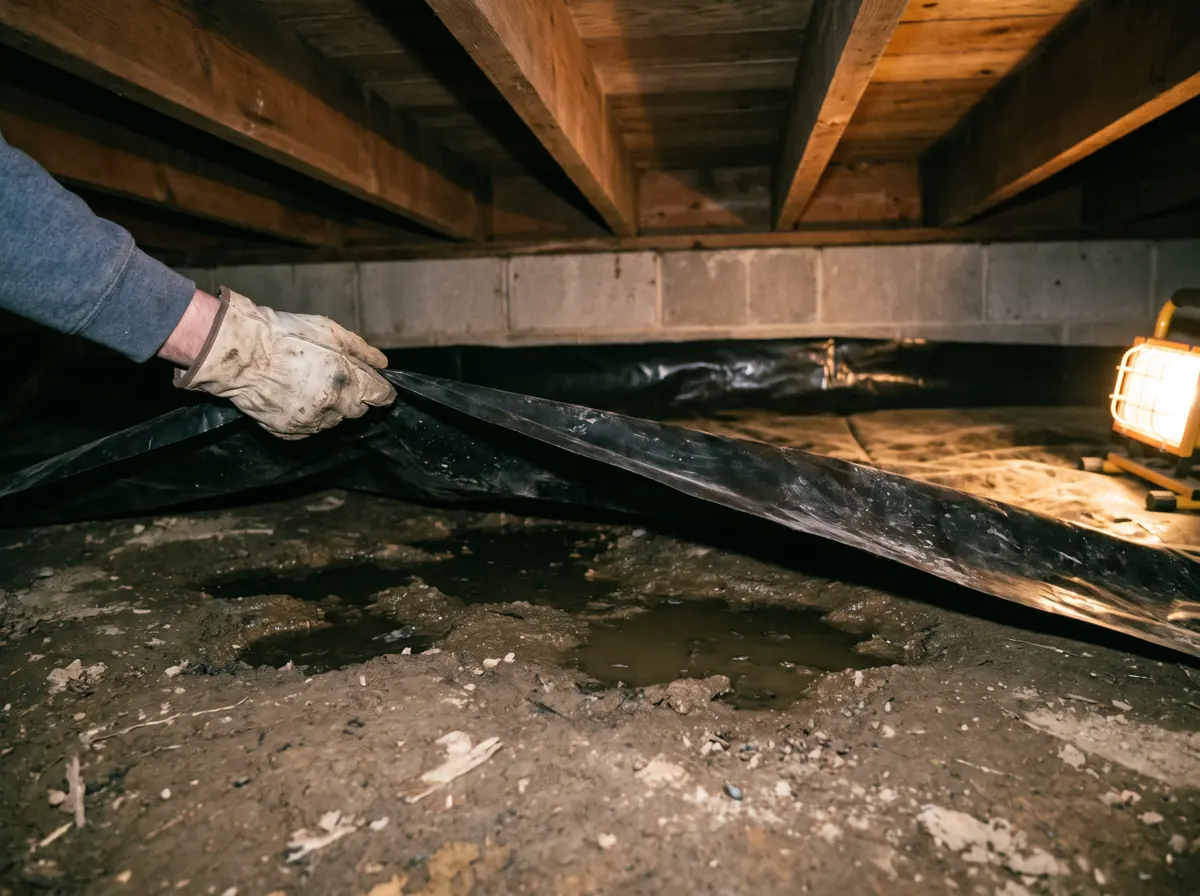
Groundwater is the slower, seasonal source. Spring thaw and heavy rain raise the water table, and Michigan’s clay-heavy soil holds that water against the foundation instead of draining it away, which pushes moisture through an exposed dirt floor or a missing or damaged vapor barrier. A failed sump pump inside a crawl space that has its own sump pit is a related, mechanical version of the same flooding, covered in more depth on our sump pump failure page. A broken exterior line, an irrigation feed, or a downspout dumping water against the foundation near a low crawl space vent can also send water in from outside.