Housing
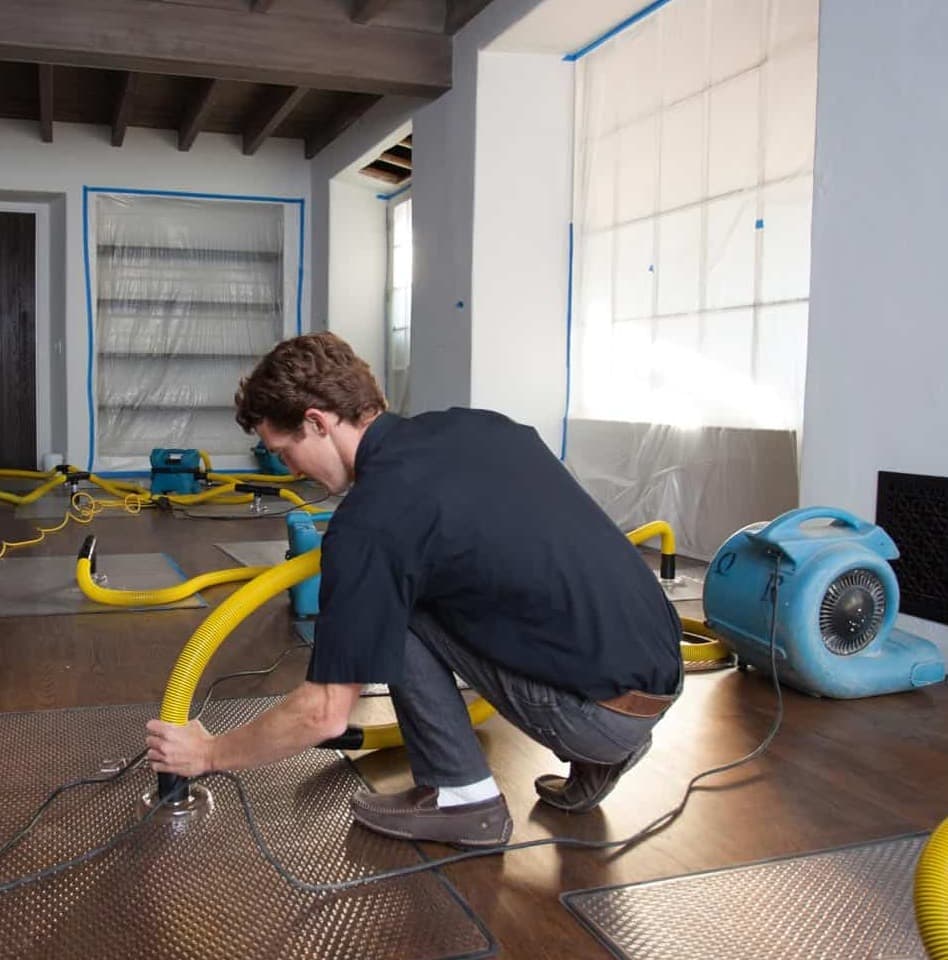
A leak in one unit becomes a board decision fast. We give the manager one point of contact, document every unit separately, and respond after hours.
Condo associations and HOAs run into a water-damage problem a single-family home never does: before repairs can start, someone has to work out who pays. Michigan's Condominium Act (MCL 559.101 et seq.) sets the framework, but the real answer almost always sits in the association's own master deed and bylaws. Prime Restoration responds to condo and HOA water, fire, and mold losses across Macomb and Oakland County, documents each affected unit on its own, and gives the community association manager or board one point of contact for the whole job instead of a different crew member for every unit.
Why it matters
A board that waits to start drying until it knows who pays ends up with a bigger loss for everyone to divide. We start mitigation on the first call and document the unit, the common element, and the cause separately, so the board, the manager, and each owner's carrier have the same clean record when it is time to sort out the master policy, an HO-6 claim, or a special assessment under MCL 559.169. We do not decide who owes what. That call belongs to the master deed, the bylaws, and the carriers.
The community association manager or board gets one project lead for the whole building, not a separate contact per unit. Status updates, scheduling, and paperwork all come from that one person.
We photograph and scope each affected unit on its own, and we scope any damaged common element separately from it. That split is what a master policy claim, an HO-6 claim, and a board's own records all need, and it's consistent with how MCL 559.169 treats limited common elements versus general common expenses.
We send our certificate of insurance (COI) to the management company or board as part of vendor onboarding, before or at first dispatch, so the loss isn't held up waiting on paperwork the association already required.
Shared-building losses don't wait for business hours. Our dispatch line runs 24/7, and a stack-wide leak reported at 2am gets the same response as one called in at 2pm.
It depends on whether the damaged element is a general common element, usually paid through the association's master policy and dues, or a limited common element assigned to one unit, which is specially assessed to that unit under MCL 559.169. What counts as which is defined in your specific master deed and bylaws, not by a single statewide rule. For the full breakdown, see our free guide: who pays for water damage in a Michigan HOA or condo.
This is usually a liability and causation question on top of the cost-allocation rule. It often involves the upstairs unit's HO-6 policy, their liability coverage, or the association's master policy, depending on the cause and how the bylaws assign responsibility. It's frequently a multi-policy claim rather than a single answer, and we document both units independently from the first visit so each carrier works from the same record.
The association's master policy generally covers the building's shared structure and general common elements. An individual owner's HO-6 condo policy generally covers their unit's interior, contents, and personal liability. A single water loss can touch both policies at once, which is why we scope the common element and the unit separately rather than as one lump project.
Yes. The manager or board gets one point of contact for the whole project, with per-unit documentation underneath it, so the association isn't fielding separate calls from every affected owner.
Yes. We provide a COI as part of standard vendor onboarding, and we can send it to your management company or board ahead of the job so approval isn't a bottleneck during an active loss.
Typical 25-minute response across our core Macomb and Oakland County service area, 24/7, including after-hours and weekend calls.
No. That determination comes from your master deed, your bylaws, and your insurance carriers, not from a restoration contractor. We document the loss unit by unit and element by element so the board, the manager, and the carriers have what they need to make that call. This is general information, not legal advice.
5.0/5 · 175+ Google Reviews · Licensed & Insured
24/7 emergency dispatch. Trained restoration crews. Typical 25-minute response across Macomb County.