

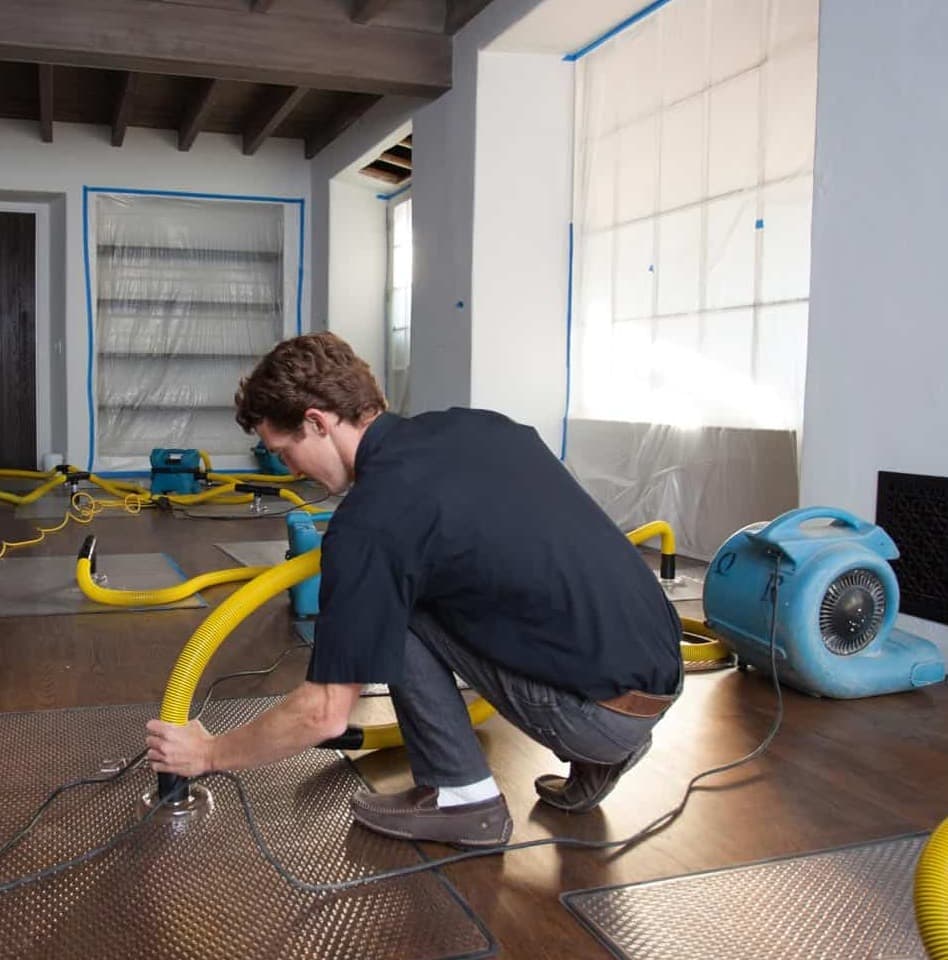
Water damage restoration cost in Macomb County, Michigan follows the same published Category 1, 2, and 3 bands used statewide, but Macomb County produces more Category 3 losses than most of the state, and that single fact shapes the typical bill more than anything else. The reason is infrastructure: aging combined-sewer systems that back up under heavy rain, basement floor drains connected to overloaded municipal lines, and clay-heavy soil that holds hydrostatic pressure against foundations long after the storm itself has passed. This guide breaks down what that risk profile means for the actual cost in Sterling Heights, Warren, Clinton Township, Macomb Township, Shelby Township, Roseville, St. Clair Shores, and the rest of the county, using only the published bands, and covers what insurance typically pays for.
Macomb County covers roughly 480 square miles along Lake St. Clair, and its restoration profile is shaped by two things more than any other: how old the sanitary sewer infrastructure is in a given neighborhood, and how close the property sits to Lake St. Clair or the Clinton River. The sections below walk through what that means city by city, using only the published Cat 1/2/3 bands.
Water Damage Restoration Cost Bands in Michigan
These are the same published 2026 bands used on Prime Restoration's statewide cost page, by water category:
| Category | Common causes | Per sq ft | Typical room | Typical basement |
|---|---|---|---|---|
| Category 1, clean water | Burst copper or PEX supply line, water heater leak, failed shutoff valve, appliance water line | $3.75-$4.50 | $1,200-$3,200 | $2,000-$4,500 |
| Category 2, gray water | Dishwasher discharge, washing machine overflow, aquarium rupture, sump pump failure with clean groundwater | $4.50-$6.75 | $2,500-$4,800 | $3,500-$7,500 |
| Category 3, black water | Sewer backup, toilet overflow with solids, storm surge or flood water, standing water over 72 hours | $7.00-$12.50 | $4,500-$9,000 | $6,500-$15,000+ |
These are 2026 Michigan ranges for mitigation, not a quote. The category, the square footage, and whether the space is finished set the actual number, confirmed on-site.
Why Macomb County Skews Toward Category 3
Macomb County produces more Category 3 losses than most of Michigan, and the reason is infrastructure: aging combined-sewer systems that back up under heavy rain, basement floor drains connected to overloaded municipal lines, and spring-thaw events that push both groundwater and sewage into finished basements, sometimes in the same night. The region's own disaster history makes the point. The August 2014 flood (FEMA DR-4195) sent an estimated 10 billion gallons of sewage-contaminated water into Metro Detroit basements and damaged more than 118,000 homes and businesses. The June 2021 flood (DR-4607) drove 94,356 households to apply for FEMA assistance, against a regional sewer system designed for roughly 3.31 inches of rain in 24 hours, according to SEMCOG (Southeast Michigan Council of Governments). A basement backup that looks like an inch of water on the floor is a Category 3 loss the moment a floor drain or sewer line is the source, regardless of how clear the water looks.
Macomb Township and Clinton Township are both among the 11 communities served by the Macomb Interceptor, the regional sewer line that collapsed under 15 Mile Road in Fraser on December 24, 2016, sending roughly 13 million gallons of sewage into the Clinton River over the following two days, according to Macomb County Public Works. County-wide, basements also depend on power for their sump systems: two rounds of storms on September 2-3, 2026 left nearly 300,000 southeast Michigan customers without power, and a sump pump stops the moment the power does, per the National Weather Service Detroit. Both facts matter for the claim file as much as for the cleanup itself, since documenting whether a loss traces to a system failure, a power outage, or a plumbing failure affects which part of the policy applies.
Macomb County Housing Stock and Infrastructure by City
Housing age and foundation era both correlate with which category of loss a city tends to see. This table uses U.S. Census Bureau American Community Survey figures (2019-2023 5-year estimates, tables B25034 and B25035).
| City | Median year built | Share built before 1980 | What that means for a water loss |
|---|---|---|---|
| Eastpointe | 1954 | 94% | Combined sewer more than 70 years old in many neighborhoods; routine Category 3 risk |
| St. Clair Shores | 1957 | 90% | Canal and lakefront homes a few feet above Lake St. Clair, fast surface-flood intrusion |
| Center Line | 1959 | 86% | Small, dense lots on aging drain lines |
| Mount Clemens | 1955 | 86% | Historic plaster-and-lath homes downtown, Clinton River flood exposure |
| Roseville | 1961 | 86% | Combined stormwater/sanitary sewers; block-wide backups in extreme rain |
| Warren | 1965 | 83% | Original cast-iron waste stacks now 70+ years old, common joint failures |
| Fraser | 1972 | 69% | Aging drain lines; city known for its 2016 sinkhole repair |
| Sterling Heights | 1977 | 58% | Clay-soil hydrostatic pressure, sump-dependent basements |
| Clinton Township | 1980 | 50% | Shared plumbing stacks in townhome and condo stock |
| Harrison Township | 1980 | 50% | Lake St. Clair shoreline exposure, east-wind storm surge |
| Shelby Township | 1989 | 37% | Clinton River corridor flooding on river-adjacent homes |
| Macomb Township | 2000 | 13% | Newer builder-grade construction, modern but not failure-proof sump systems |
What Drives Cost Higher or Lower Within Each Band
1. Combined-Sewer Infrastructure in the Older Inner-Ring Cities
Eastpointe's combined sewer system is more than 70 years old in many neighborhoods, and heavy rainstorms routinely push sewage into low-lying basements along Gratiot. Roseville is served by combined stormwater and sanitary sewers in large sections of the city, and extreme rain events back those systems up block-wide. Warren's 1950s-era cast-iron waste stacks, now more than 70 years old, commonly fail at joints and threaded sections, which produces both Category 1 supply-line losses and, where the combined-sewer sections overlap, Category 3 backups.
2. Clay Soil County-Wide
Sterling Heights sits on heavy clay soil typical of the Clinton River watershed, and foundations there take on hydrostatic pressure during every major rain event, which is why sump-pump failure is one of the most common Category 1-2 triggers across the county. Macomb Township's newer construction sits on the same clay soil; modern sump systems help, but failures remain common after long-duration storms, which is why even builder-grade new construction is not immune to a basement loss here.
3. Shared Plumbing in Multi-Unit Housing
Clinton Township's mixed 1970s-2000s subdivisions include a notable share of townhomes and condos that share plumbing stacks, which means a single upstairs leak often damages two or three units at once, multiplying the per-incident cost even though each affected unit still falls within the standard Cat 1-3 bands.
4. Lakefront and River-Corridor Exposure
St. Clair Shores' canal and lakefront homes along Jefferson sit only a few feet above Lake St. Clair's water level, so surface flooding finds its way into crawlspaces and basements fast. Harrison Township's Lake St. Clair shoreline homes are directly exposed to east-wind storm surge, meaning basements there flood from the outside in, not only from plumbing or roof failures. Shelby Township homes near the Clinton River see river-rise flooding after spring thaw events, dry the rest of the year but taking on inches of water when the river swells.
Macomb County Neighborhood Geography That Changes the Scope
- Sterling Heights. Built out mostly in the 1960s-1990s with split-level and ranch homes, Sterling Heights sits on heavy clay soil typical of the Clinton River watershed. Foundations here take on hydrostatic pressure during every major rain event, which is the leading cause of sump-pump-related losses across the city.
- Warren. Much of Warren's housing stock dates to the 1950s postwar building boom, and cast-iron waste stacks now more than 70 years old commonly fail at joints and threaded sections, a recurring source of both clean-water and backup losses.
- Clinton Township. Mixed 1970s-2000s subdivisions share the township with a notable share of townhomes and condos on shared plumbing stacks, which means a single upstairs leak often damages two or three units at once.
- Macomb Township. One of Michigan's fastest-growing townships in the 2000s, Macomb Township is mostly builder-grade new construction on the same heavy clay soil as the rest of the county; modern sump systems help but do not eliminate failure risk after a long-duration storm.
- Shelby Township. Primarily 1980s-2010s subdivisions plus older homes along the Clinton River corridor, where river-adjacent homes see river-rise flooding after spring thaw events.
- Roseville. Dense 1940s-1960s bungalow and ranch housing is served by combined stormwater and sanitary sewers in large sections of the city; extreme rain events back those systems up block-wide.
- St. Clair Shores. Classic 1950s-1960s waterfront and canal homes, many built on backfilled lake muck, sit only a few feet above Lake St. Clair's water level.
- Eastpointe. Dense 1940s-1950s bungalow housing on small lots sits on a combined sewer system more than 70 years old in many neighborhoods; heavy rainstorms routinely push sewage into low-lying basements along Gratiot.
Line-Item Costs Inside a Typical Macomb County Project
These are the same published per-unit figures used on the statewide cost page, and they add up to the room and basement totals in the table above:
| Line item | Price | Note |
|---|---|---|
| Emergency water extraction (per sq ft) | $0.55-$2.25 | Higher for Cat 2/3 due to antimicrobial pre-treatment |
| Commercial air mover (per day, per unit) | $25-$45 | A typical project uses 6-12 units for 3-5 days |
| LGR dehumidifier (per day, per unit) | $115-$165 | A typical project uses 1-3 units for 3-5 days |
| Drywall removal and haul (per sq ft) | $2.25-$3.85 | Bottom 24 inches standard; full wall on Cat 3 |
| Insulation removal and replace (per sq ft) | $1.75-$3.25 | R-13 to R-19 typical for Michigan exterior walls |
| Carpet pad replacement (per sq ft) | $0.65-$1.15 | Pad is always removed on Cat 2/3; carpet is sometimes savable on Cat 1 |
| Antimicrobial application (per sq ft) | $0.35-$0.65 | Required on Cat 2 and Cat 3 losses per industry-standard practice |
| HEPA air scrubber (per day, per unit) | $85-$135 | Used on Cat 3 and mold-affected losses |
Permit and Building Departments for Macomb County Rebuild Work
When a water loss requires permitted rebuild work, the local building department is the authority of record. For reference:
- Sterling Heights Office of Building: sterlingheights.gov
- Macomb Township Building Code Enforcement: macomb-mi.gov
- Clinton Township Building Department: clintontownship.com
- City of Sterling Heights Flood Services: sterlingheights.gov/174/Flood-Services
Worked Cost Examples for Macomb County
Example 1: Water Heater Failure, Unfinished Basement, Macomb Township
A failed water heater in a newer Macomb Township home flooded roughly 250 square feet of unfinished basement floor with clean water. This is a Category 1 loss in the basement band, $2,000-$4,500: extraction, drying with air movers and a dehumidifier over 3 to 5 days, and minor drywall removal only at the baseboards where saturation was limited.
Example 2: Sump Pump Failure During a Storm, Finished Basement, Sterling Heights
A sump pump failure in a Sterling Heights subdivision during a heavy storm flooded a finished basement across roughly 450 square feet. The clean groundwater classifies as Category 2, and the finished materials push the cost toward the upper half of the basement band, $3,500-$7,500: extraction, carpet and pad removal, drywall removal at the base of affected walls, antimicrobial treatment, and several days of drying before reconstruction begins.
Example 3: Combined-Sewer Backup, Roseville Bungalow
A heavy-rain combined-sewer surcharge pushed sewage through the floor drain of a Roseville bungalow's basement, affecting roughly 400 square feet. This is a Category 3 loss, $6,500-$15,000-plus at the basement level: full containment and PPE for the crew, removal and regulated disposal of every porous material the sewage touched, aggressive decontamination of the remaining concrete and framing, and a reconstruction phase separate from the mitigation cost.
Example 4: Shared Condo Plumbing Stack, Clinton Township
A failed plumbing stack connection in a Clinton Township condo building affected the unit it was in plus the unit below, roughly 150 square feet of clean water each. Each unit is scoped and billed separately as a Category 1 loss, $1,200-$3,200 per unit, with the shared wall cavity between units checked for hidden moisture, since townhome and condo stacks in this township commonly carry a leak into more than one unit at once.
Example 5: East-Wind Storm Surge, Harrison Township Lakefront
An east-wind storm pushed Lake St. Clair water over a seawall and into a Harrison Township lakefront home's lower level, affecting roughly 300 square feet. Storm surge of this kind is typically a Category 2 or 3 loss depending on how long the water stood, running $3,500-$15,000 at the basement level. Homes with NFIP flood coverage in this corridor may route part of the claim through the flood policy, which carries its own deductible and adjuster separate from the homeowners policy.
Example 6: Power-Outage Sump Failure, Clinton Township
A multi-day power outage during a September storm shut down a Clinton Township home's sump pump, and groundwater backed up through the sump pit into roughly 280 square feet of unfinished basement before a generator could be connected. This is a Category 2 loss, $3,500-$7,500 at the basement level: extraction, antimicrobial treatment of the affected framing and concrete, and several days of drying. A battery-backup sump system, which kept many Macomb County basements dry during the June 2021 regional flood while homes without one took on water within hours, is the highest-return prevention step available for this specific failure mode, costing less than a single mitigation deductible and paying for itself the first time the power goes out during a storm.
How Long Does Water Damage Restoration Take in Macomb County?
Mitigation, meaning extraction, demolition of unsalvageable material, and structural drying, typically takes 3 to 5 days for a Category 1 or 2 loss once equipment is placed. A Category 3 loss, the most common severe scenario in Macomb County's older combined-sewer cities, adds 1 to 2 days for containment setup and decontamination. Reconstruction, drywall, insulation, flooring, paint, and trim, adds another 1 to 3 weeks depending on scope and trade availability; Macomb County drywall and flooring subcontractors can get backlogged after a major regional event, as happened after the June 2021 flooding. The full project from first call to final inspection usually runs 2 to 6 weeks.
Macomb County drywall and flooring subcontractors can get backlogged after a major regional storm, as happened after the June 2021 flooding, which is also when demand for restoration crews spikes county-wide. Calling the moment water is discovered, rather than waiting to see if it dries on its own, is the single biggest factor in keeping both the mitigation timeline and the total cost on the lower end of the published bands.
Does Insurance Cover Water Damage Restoration in Macomb County?
Standard Michigan homeowner policies from State Farm, AAA, Auto-Owners, Allstate, Farm Bureau, and Citizens cover sudden and accidental water damage, such as a burst pipe or a failed appliance line, but they exclude surface flooding and rising groundwater unless you carry separate NFIP flood insurance, and they exclude sewer backup unless you added a sewer and drain backup endorsement, which typically runs $40 to $150 a year. That endorsement is one of the highest-value additions a Macomb County homeowner can buy, specifically because of the county's combined-sewer history in Roseville, Eastpointe, Warren, St. Clair Shores, and Center Line. Coverage decisions and payment amounts are made solely by your insurance carrier after its own inspection; confirm your specific limits and endorsements with your agent.
Xactimate is the line-item estimating software every major Michigan insurance carrier uses to value a restoration claim. It prices every task, extraction per square foot, air movers per day, dehumidifier days, drywall removal, and antimicrobial application, from a regional price list that updates quarterly. When Prime Restoration writes a scope, it documents every affected surface in the same line-item format your adjuster reviews, which keeps a Macomb County claim moving without a second round of translation between formats.
What a Written Scope Should Include
Whether you hire Prime Restoration or another company, a complete written scope for a Macomb County water loss should name, not estimate in one lump sum:
- The water category (1, 2, or 3) and how it was determined, which matters most in Macomb County given how often a loss starts as a floor-drain backup
- The affected square footage, room by room
- Whether the space is finished or unfinished, and what finished materials are being removed
- The drying equipment plan: how many air movers and dehumidifiers, and for how many days
- Whether antimicrobial or full decontamination is included, and on which surfaces
- The reconstruction scope and an estimated timeline
How Prime Restoration Prices a Macomb County Job
Prime Restoration runs offices in Sterling Heights (headquarters, 13854 Lakeside Circle), Macomb Township (51058 Romeo Plank Rd), and Shelby Township (55130 Shelby Rd), typically on site in 25 minutes anywhere in the county. A free on-site inspection sets the water category with moisture meters, measures the affected square footage, and determines finish level before a written scope is produced in Xactimate, the line-item software Michigan adjusters use. Reconstruction is priced and scheduled alongside the mitigation scope.
Why Water Damage Restoration Costs What It Does
The price reflects three things most homeowners underestimate: equipment, time, and specialized labor. A single structural drying project uses 6 to 12 commercial air movers and 1 to 3 LGR dehumidifiers running around the clock for 3 to 5 days, and each machine runs $25 to $165 per day on the line-item price list above. On a Category 3 Macomb County backup, add full PPE for the crew, HEPA air scrubbing, and regulated disposal of every porous material the sewage touched, and a contained single-room loss can reach the middle of its published band before the rebuild phase even starts. Skipping steps to save money, such as drying around wet insulation instead of removing it, almost always leads to secondary mold damage that costs more to fix later.
How to Choose a Water Damage Company in Macomb County
Several criteria separate a strong choice from a weak one, and each is checkable before you sign:
- Licensing. A Michigan Residential Builder license is required for reconstruction work. Verify the number on the Michigan LARA license lookup before signing a rebuild contract.
- Published response window. A 24/7 dispatch line with a numeric on-site estimate matters most in Macomb County's combined-sewer cities, where a floor-drain backup can escalate quickly.
- Single-point accountability. Ask whether one project manager runs the job from the first call through the final repair.
- Local office inside the county. A real office in Sterling Heights, Macomb Township, or Shelby Township generally reaches an active loss faster than a company dispatching from outside the county.
- A written scope before equipment drops. Dated moisture readings, the water category determination, and an itemized estimate your adjuster can review line by line.
- Insurance documentation experience. A company that routinely prepares Xactimate line-item estimates for Michigan carriers keeps a Macomb County claim, especially a Category 3 claim with a sewer-backup endorsement involved, moving without a second round of back-and-forth.
Most professional Metro Detroit restoration contractors carry a $500 to $1,500 emergency response minimum covering mobilization, initial extraction, moisture mapping, and placement of the first round of drying equipment. Prime Restoration's emergency dispatch runs 24/7, and that minimum is absorbed into the total project cost on losses above the minimum, meaning you are not billed extra for the response itself on a typical Macomb County project. Mitigation and reconstruction are priced and scheduled separately: on a typical $6,000 Macomb County project, mitigation runs roughly $2,500 to $3,500 and reconstruction runs roughly $2,500 to $3,500, though the split shifts toward reconstruction on jobs with more permanent material removed, such as a Category 3 sewage loss.
Water Damage Help by Macomb County City
- Water damage restoration in Sterling Heights and the Sterling Heights hub page
- Water damage restoration in Warren and the Warren hub page
- Water damage restoration in Clinton Township and the Clinton Township hub page
- Water damage restoration in Macomb Township and the Macomb hub page
- Water damage restoration in Shelby Township and the Shelby Township hub page
- Basement flooding cleanup in Macomb County and flooded basement help, Macomb County
For mold that follows a water loss, see mold remediation cost in Macomb County. For a side-by-side comparison of the companies serving the county, see the Macomb County water damage company comparison.
Call Prime Restoration at (586) 277-1069 for 24/7 emergency dispatch anywhere in Macomb County. Prime Restoration holds a 5.0-star average across 147 Google reviews and Michigan Residential Builder license #262500492.
Frequently asked questions
How much does water damage restoration cost in Macomb, MI?
Macomb County homeowners pay $1,200 to $4,500 for a Category 1 clean-water loss, $2,500 to $7,500 for a Category 2 gray-water loss, and $4,500 to $15,000 or more for a Category 3 black-water loss such as a sewer backup. Macomb County, including Sterling Heights, Warren, Clinton Township, Macomb Township, and Shelby Township, produces more Category 3 losses than most of Michigan because of aging combined-sewer infrastructure and clay-heavy soil that holds water against foundations. Prime Restoration dispatches from offices in Sterling Heights, Macomb Township, and Shelby Township, typically on site in 25 minutes.
What does flood damage repair cost in Macomb County, MI?
Flood damage repair, meaning the combined mitigation and rebuild after standing water, runs within the same Category 1-3 bands: $1,200 to $4,500 for a clean-water loss, $2,500 to $7,500 for a gray-water loss, and $4,500 to $15,000 or more for a black-water or sewage loss, which is the category most Macomb County basement flooding falls into after a heavy storm. Clay soil across Macomb County drains poorly even when it is not saturated, so hydrostatic pressure against a foundation can push water through a crack or joint well after the rain itself stops, which is why a professional moisture reading, not a visual check alone, should set the actual scope.
How much does sewage cleanup cost in Macomb, MI?
Sewage cleanup is a Category 3 loss and runs $4,500 to $15,000 or more, the top published band, because every porous material the sewage touched, carpet, pad, drywall, insulation, and most soft goods, must be removed and disposed of as regulated waste, with full PPE for the crew and aggressive decontamination of the remaining structure. Macomb County's August 2014 flood (FEMA DR-4195) sent an estimated 10 billion gallons of sewage-contaminated water into Metro Detroit basements and damaged more than 118,000 homes and businesses; the June 2021 flood (FEMA DR-4607) drove 94,356 households to apply for FEMA assistance. A floor drain connected to municipal sewers makes backup risk a matter of when, not whether, which is what makes a sewer-and-drain endorsement one of the highest-value additions to a Macomb County policy.
How much does basement flood cleanup cost in Sterling Heights or Warren?
Sterling Heights sits on heavy clay soil in the Clinton River watershed, and foundations there take on hydrostatic pressure during nearly every major rain event, which makes sump-pump-related Category 1 and 2 losses common; a typical basement job runs $2,000 to $7,500 depending on finish level. Warren's housing stock dates largely to the 1950s postwar boom, with original cast-iron waste stacks now more than 70 years old that commonly fail at joints and threaded sections, producing both Category 1 supply-line losses and, in the city's older combined-sewer sections, Category 3 backups that run $4,500 to $15,000 or more.
Does insurance cover water damage restoration costs in Macomb County?
Standard Michigan homeowner policies cover sudden and accidental water damage, such as a burst pipe, but exclude surface flooding and rising groundwater unless you carry NFIP flood insurance, and exclude sewer backup unless you added a sewer and drain backup endorsement, typically $40 to $150 a year. That endorsement is especially valuable in Macomb County's older cities, including Roseville, Eastpointe, Warren, and parts of St. Clair Shores, where combined sanitary and stormwater infrastructure has produced repeated backup losses after the August 2014 and June 2021 regional floods. Coverage decisions are made solely by your carrier after its own inspection.
How much does it cost to fix water damage in Clinton Township or Macomb Township?
Clinton Township mixes 1970s-2000s subdivisions with a notable share of townhomes and condos that share plumbing stacks, so a single upstairs leak can damage two or three units at once; a single-unit Category 1 or 2 loss runs $1,200 to $7,500. Macomb Township is mostly 2000s builder-grade new construction on the same heavy clay soil as the rest of the county, and modern sump systems reduce but do not eliminate failure risk after a long-duration storm; a finished-basement sump failure there typically runs $3,500 to $7,500 as a Category 2 loss.
What drives water damage restoration cost up in Macomb County specifically?
Three factors push a Macomb County job toward the higher end of the published bands more often than in a county with newer, higher infrastructure: combined-sewer systems in the older inner-ring cities (Roseville, Eastpointe, St. Clair Shores, Warren, and parts of Center Line and Mount Clemens) that convert ordinary heavy rain into a Category 3 event; clay-heavy soil county-wide that holds hydrostatic pressure against foundations for days after a storm; and shared plumbing stacks in Clinton Township's condo and townhome stock, which can turn one leak into a multi-unit loss.
How long does water damage restoration take in Macomb County?
Mitigation, meaning extraction, demolition of unsalvageable material, and structural drying, typically takes 3 to 5 days for a Category 1 or 2 loss once equipment is placed. A Category 3 loss adds 1 to 2 days for containment setup and decontamination. Reconstruction adds another 1 to 3 weeks depending on scope and trade availability; Macomb County drywall and flooring subcontractors can get backlogged after a major regional event, as happened after the June 2021 flooding. The full project from first call to final inspection usually runs 2 to 6 weeks.
Tags
24/7 Emergency Response
Need Professional Restoration Now?
Call now and speak directly with our trained restoration team. On-site within 25 minutes.
(586) 277-1069