If you have found mold in your Michigan home — or suspect it — your first question is probably "how much is this going to cost?" It is a fair question, and the honest answer is: it depends. Mold remediation costs vary significantly based on the size of the affected area, the location of the mold, the type of materials involved, and whether the underlying moisture source has been addressed.
This guide breaks down realistic mold remediation costs for Michigan homeowners, explains what drives the price up or down, and covers what your insurance may or may not pay for.
Mold Remediation Cost Ranges in Michigan
Here are typical cost ranges for professional mold remediation in Michigan, based on the scope of the project:
Small Area (Less Than 30 Square Feet)
Typical cost: $1,500-$3,500
This covers a small area of mold — a section of bathroom wall, a patch behind a kitchen cabinet, or a small area in a closet. The work typically involves:
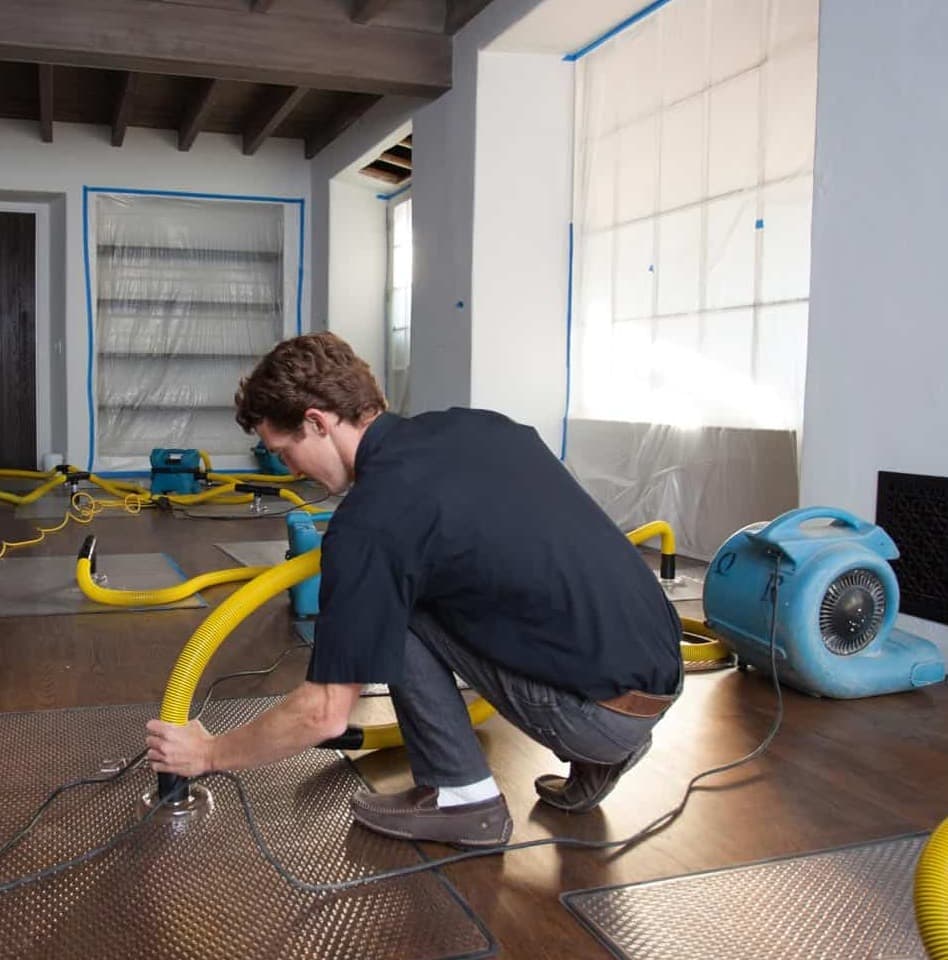
- Containment setup with plastic sheeting and negative air pressure
- Removal of affected drywall, insulation, or other materials
- HEPA vacuuming and antimicrobial treatment of surrounding surfaces
- Basic air scrubbing during the project
Medium Area (30-100 Square Feet)
Typical cost: $3,000-$6,000
This is the most common scenario we see in Macomb County homes — mold in a bathroom, along a basement wall, in a crawl space, or behind drywall where a slow leak went unnoticed. The work includes everything above plus:
- More extensive containment — possibly multiple rooms or an entire floor section
- Removal of larger sections of drywall, flooring, or ceiling materials
- Extended air scrubbing and monitoring
- More labor hours for thorough cleaning and treatment
Large Area (100+ Square Feet)
Typical cost: $5,000-$9,000+
Large-scale mold projects involve extensive contamination — an entire basement, multiple rooms, a large crawl space, or mold that has spread through wall cavities and HVAC systems. These projects require:
- Full containment of large areas with multiple containment barriers
- Extensive material removal — sometimes gutting entire rooms to the studs
- HVAC cleaning or duct remediation if mold has entered the air handling system
- Prolonged air scrubbing — sometimes running for days
- Multiple crew members working over several days
Extreme or Whole-Home Remediation
Typical cost: $10,000-$30,000+
In severe cases — homes that were flooded and never properly dried, long-term hidden leaks, or vacant homes where mold grew unchecked for months — remediation can become a major project. These situations sometimes involve structural concerns, HVAC replacement, and extensive reconstruction after the remediation is complete.
What Affects Mold Remediation Cost
Understanding what drives the price helps you evaluate estimates and avoid overpaying or under-scoping the project.
1. Size of the Affected Area
This is the biggest factor. More square footage means more labor, more containment material, more waste disposal, and more time. A 10-square-foot patch on a bathroom wall is a fundamentally different project than mold covering an entire basement.
2. Location and Accessibility
Mold in an open, accessible area (like an exposed basement wall) is cheaper to remediate than mold inside wall cavities, under flooring, in attics with limited access, or inside HVAC ductwork. Difficult-to-reach locations require more labor and sometimes specialized equipment.
3. Type of Materials
Some materials can be cleaned and saved. Others must be removed and replaced. Porous materials like drywall, insulation, carpet, and ceiling tiles almost always need to be removed if they are moldy. Non-porous materials like concrete, tile, and metal can usually be cleaned and treated in place.
4. Category of Water That Caused the Mold
Mold that resulted from clean water (a supply line leak) is less complicated than mold from a sewage backup or chronic groundwater intrusion. Contaminated water sources may require additional cleaning, treatment, and safety precautions that increase costs.
5. Whether the Moisture Source Is Fixed
Mold remediation is pointless if the moisture source is still active. If the remediation company also needs to identify and address the moisture source — repairing a roof leak, fixing plumbing, improving drainage, or installing better ventilation — that adds to the project scope and cost.
6. Testing and Clearance
Some projects include pre-remediation and post-remediation air quality testing by a third-party industrial hygienist. This testing typically costs $300-$800 per round but provides documented proof that the remediation was successful. Your insurance company or mortgage lender may require clearance testing.
Does Insurance Cover Mold Remediation in Michigan?
This is where things get complicated. The short answer: sometimes, but not always.
When Insurance Typically Covers Mold
Your Michigan homeowner's insurance may cover mold remediation when the mold resulted from a covered peril — meaning a sudden, accidental event that your policy covers. Examples:
- A burst pipe causes water damage, and mold grows in the wet materials before they are fully dried
- A storm damages your roof, rain enters the home, and mold develops in the affected area
- An appliance (water heater, dishwasher, washing machine) suddenly fails and causes water damage that leads to mold
In these cases, the mold remediation may be covered as part of the overall water damage claim — but most Michigan policies cap mold coverage. Common limits are $5,000 or $10,000 for mold-related costs.
When Insurance Typically Does NOT Cover Mold
- Neglect or deferred maintenance: If a slow leak has been dripping for months and you never addressed it, the resulting mold is typically excluded
- Humidity or condensation: Mold from poor ventilation, high humidity, or condensation is usually considered a maintenance issue, not a covered loss
- Pre-existing mold: If the mold was present before the covered event, it is excluded
- Flood-related mold: If the original water event was external flooding (which is not covered by standard homeowner's insurance), the resulting mold is also not covered
We strongly recommend reviewing your specific policy with your insurance agent. Coverage varies by carrier and policy type. Carriers like State Farm, Allstate, Auto-Owners, and Citizens each handle mold coverage differently, and endorsements may be available to increase your mold coverage limits.
For more detail on navigating insurance for water damage and mold, see our insurance claims guide.
How to Get an Accurate Mold Remediation Estimate
Getting a fair and accurate estimate requires a proper inspection — not just a phone quote. Here is what a legitimate estimate process looks like:
1. Professional Inspection
A qualified technician inspects the affected area, checks moisture levels with professional meters, identifies the moisture source, and determines the full extent of the mold growth (including what may be hidden behind walls or under flooring).
2. Written Scope of Work
The estimate should include a detailed scope of work that specifies exactly what will be done: containment setup, material removal, cleaning and treatment methods, air scrubbing, and any reconstruction needed. Vague estimates that just say "mold remediation - $X,XXX" should raise a red flag.
3. Xactimate-Based Pricing
If you are filing an insurance claim, ask for an estimate generated in Xactimate. This is the software your adjuster uses, and having your contractor's estimate in the same format streamlines the approval process. Prime Restoration provides itemized line-item estimates in the same format your State Farm or Allstate adjuster uses.
Red Flags When Getting Mold Remediation Estimates
Unfortunately, the mold remediation industry has its share of bad actors. Watch for these warning signs:
- "We found toxic black mold!" — Companies that use scare tactics about "toxic black mold" to pressure you into immediate, expensive action. Not all dark-colored mold is Stachybotrys, and no legitimate professional diagnoses mold species by sight alone.
- Phone or email quotes without inspection: No one can accurately estimate mold remediation without physically inspecting the property and taking moisture readings.
- The same company does testing AND remediation: There is an inherent conflict of interest when the company that tests for mold also profits from remediating it. Many industry guidelines recommend using a separate company for testing and for remediation.
- No containment mentioned in the estimate: Proper mold remediation requires containment to prevent cross-contamination. If the estimate does not include containment setup, the company is cutting critical corners.
- Extremely low or extremely high pricing: If one estimate is dramatically different from others, find out why. The lowest bid may be cutting corners. The highest bid may be padding the job.
DIY vs Professional Mold Remediation
Homeowners can handle very small areas of surface mold — a few square feet on a bathroom wall or tile grout — with appropriate cleaning products and protective equipment. Industry guidance generally recommends professional remediation for mold covering more than 10 square feet, or any mold resulting from contaminated water or sewage.
We also recommend professional remediation whenever:
- Mold is inside wall cavities, under flooring, or in HVAC systems
- You can smell mold but cannot see it — this usually indicates hidden growth that requires professional investigation
- Anyone in the home has respiratory conditions or immune system concerns
- The mold resulted from a water damage event that may involve an insurance claim
- The area is larger than what you are comfortable handling safely
What Happens During Professional Mold Remediation
Here is what the process looks like when you hire a professional remediation company:
- Inspection and assessment: Identifying the mold, the moisture source, and the full extent of contamination
- Containment: Sealing off the affected area with plastic sheeting and establishing negative air pressure to prevent mold spores from spreading to unaffected areas
- Air filtration: Running HEPA air scrubbers to capture airborne mold spores throughout the project
- Material removal: Removing mold-contaminated materials — drywall, insulation, carpet, and other porous materials that cannot be effectively cleaned
- Cleaning and treatment: HEPA vacuuming all surfaces, applying antimicrobial agents, and treating structural components (framing, concrete, etc.) that will remain in place
- Drying: Ensuring the affected area is thoroughly dried to prevent regrowth
- Clearance testing (if applicable): Third-party air quality testing to verify the remediation was successful
- Reconstruction: Replacing removed materials — drywall, insulation, flooring, trim — to restore the home
Get a Free Mold Inspection and Estimate
If you see mold, smell mold, or suspect you have a hidden mold problem in your Michigan home, call Prime Restoration at (586) 277-1069 for a free inspection. We are a top-rated, highly local mold remediation company with a 5-star Google rating, BBB A+ accreditation, and Certified Best Pick 2027 recognition. We will assess the situation, identify the moisture source, determine the full scope of remediation needed, and give you a detailed, itemized line-item estimate.
We serve homeowners across Macomb County including Sterling Heights, Clinton Township, Shelby Township, Warren, Roseville, St. Clair Shores, and surrounding communities. We manage both the remediation and the reconstruction, and we provide itemized scope documentation compatible with major Michigan carriers so you have accurate paperwork to submit to your insurance company.
Call (586) 277-1069 today — mold does not get better on its own, and the longer it grows, the more it costs to fix.
Tags
24/7 Emergency Response
Need Professional Restoration Now?
Call now and speak directly with our trained restoration team. On-site within 25 minutes.
(586) 277-1069