
FREE. This is a free guide for Michigan HOA and condo association boards, property managers, and co-owners trying to answer one question fast after a leak: who pays. It explains what Michigan law actually controls, what almost always falls to your own master deed and bylaws instead, and what to do in the first hour, before the dispute over cost gets in the way of starting repairs.
Direct answer: In most Michigan condominiums, cost responsibility for a water loss splits along one line: damage to a general common element (shared structure like the roof, exterior walls, or main plumbing risers serving the whole building) is typically paid through the association's master insurance policy and assessments, while damage to a limited common element (something assigned to use by one unit, like a balcony or an in-wall pipe serving only that unit) is specially assessed against that unit under MCL 559.169. What is actually assigned as general versus limited, and who owns what inside a unit's own walls and finishes, is controlled by your specific master deed and bylaws, not by a one-size-fits-all state rule. Check your bylaws and your policy first. This guide explains the framework; it is not legal advice.
The search people run, and the wrong answer it often finds
A common search after a condo water loss is some version of "what is section 57 of the Michigan Condominium Act," because a leak-responsibility question online or in a board meeting references it. Having read the statute text directly: Section 57 of the Michigan Condominium Act (MCL 559.157) covers an association's financial records and its annual audit or review requirement. It says nothing about water damage, repair responsibility, or cost allocation between unit and association. Searching for the wrong section wastes time a board does not have during an active claim.
The section that actually governs how repair costs get allocated is MCL 559.169 (Section 69 of the Act), "Assessment of common expenses; contribution of co-owner." Read the text directly at the Michigan Legislature's site: legislature.mi.gov, MCL 559.169.
What MCL 559.169 actually says
Stripped to the part that matters for a water loss, the statute sets up two different cost paths:
- Limited common elements. The costs of maintenance, repair, renovation, restoration, or replacement of a limited common element are specially assessed against the condominium unit to which that limited common element is assigned. If a limited common element is assigned to more than one unit, the cost splits equally among those units unless the condominium documents say otherwise. A limited common element is something like a balcony, a patio, or a dedicated storage area, exclusively assigned to one unit's use even though the association technically holds some interest in it.
- Everything else (general common elements and other common expenses). Costs are assessed against all condominium units in proportion to each unit's percentage of value, as stated in the master deed. This is the pool of money the association's regular dues and its master insurance policy are built to cover.
- No opt-out by nonuse. A co-owner cannot avoid their assessed share by not using a common element or by abandoning the unit. The statute is explicit on this point.
What the statute leaves to your own documents: whether a specific pipe, wall cavity, or fixture counts as a general common element, a limited common element, or part of a unit's own interior (which the co-owner typically maintains directly) is defined by your master deed's legal description of the condominium project, not by MCL 559.169 itself. Two Michigan condominiums with an identical pipe failure can have different cost outcomes if their master deeds define the plumbing differently. Check your bylaws before assuming either side pays.
A practical framework for the three most common Michigan condo water-loss scenarios
| Scenario | Usually treated as | Who typically pays, subject to your master deed |
|---|---|---|
| A main plumbing riser or shared pipe serving multiple units fails inside a wall | General common element | Association, through master policy and dues-funded reserves |
| A supply line or fixture serving only one unit fails inside that unit's walls | Limited common element, or part of the unit itself depending on the master deed | Specially assessed to that unit (limited common element) or the co-owner directly (if defined as part of the unit) |
| Water from Unit A damages Unit B below it (the "upstairs neighbor" pattern) | A liability and causation question layered on top of the above | Often Unit A's HO-6/condo unit-owner policy, Unit A's liability coverage, or the association's policy depending on cause and the bylaws' allocation of loss-assessment responsibility; frequently a multi-policy claim |
For the mechanics of a leak traveling between units, see Prime's dedicated page on upstairs neighbor water damage. For the renter-versus-landlord version of a similar question outside the condo context, see who pays for water damage, renter or landlord.
What your master deed and bylaws almost always decide, that the statute does not
- Exactly where the boundary sits between "the unit" and "a common element" for plumbing, electrical, and HVAC that passes through walls shared by the unit and the building.
- Whether the association's insurance deductible gets passed back to a co-owner when that co-owner's unit (or something assigned to it) caused the loss.
- Whether the association can specially assess a co-owner for damage their negligence caused to a general common element or another unit, on top of the normal cost-allocation rule.
- Required insurance minimums for individual co-owners (an HO-6 condo unit-owner policy), and whether the association can enforce proof of that coverage.
Boards that have never actually read their own master deed's water-damage and insurance provisions before a loss happens are reading it for the first time during a dispute, which is the worst possible time. Pull the document and the association's insurance policy declarations page now, before the next leak, not during one.
How reserve funds connect to who actually pays
Cost allocation under MCL 559.169 decides which pool of money a repair draws from. Whether that pool has enough money in it is a separate question, and it is the one that turns a routine water loss into a contentious special assessment. An association with an underfunded reserve, or one that has deferred a reserve study, often finds itself needing to specially assess co-owners for a general-common-element repair that should have been funded through dues and reserves all along. This is not a water-damage-specific problem, but water losses are frequently the event that exposes it. A board reviewing this guide as part of its winter preparation should also pull its current reserve study and confirm the plumbing, roof, and mechanical systems it's responsible for are funded at a realistic replacement timeline, not just a minimum legal balance.
Documenting a special assessment tied to a water loss
When a loss does require specially assessing one or more units under MCL 559.169, the board's own paper trail protects it from a later challenge. At minimum, keep on file:
- The restoration company's written scope, showing exactly which element was repaired and which unit(s) it serves or is assigned to.
- The board's own determination, in meeting minutes, of why the damaged element was classified as limited rather than general (or vice versa), with reference to the specific master deed provision relied on.
- The notice sent to the affected co-owner(s), stating the amount, the basis in the governing documents, and the payment timeline.
- Any insurance payment received toward the same repair, and how it was applied, so a co-owner is never billed for a cost the master policy already covered.
A board that can produce this file on request, rather than reconstructing the reasoning after a co-owner disputes the charge, resolves the dispute in a fraction of the time.
Michigan Condominium Act terms worth knowing before a dispute, not during one
| Term | Plain meaning for a water loss |
|---|---|
| General common element | Structure and systems shared by the whole building or project (roof, exterior walls, main plumbing risers), typically paid through dues and the master policy |
| Limited common element | A common element assigned to one unit's exclusive use (a balcony, an assigned storage locker); repair cost is specially assessed to that unit under MCL 559.169 |
| Master deed | The condominium's foundational document, recorded with the county, that defines unit boundaries and classifies every common element as general or limited |
| Condominium bylaws | The association's operating rules, including insurance requirements for co-owners and often the deductible-recovery provisions a master deed does not cover |
| Percentage of value | Each unit's assigned share of general common expenses, set in the master deed and used to split costs that are not specially assessed |
What a board should do in the first hour of a water loss
- Stop the water. Shut off the nearest valve, or the main if the source is unclear, regardless of whose "fault" it eventually turns out to be. The duty to mitigate does not wait for a liability determination.
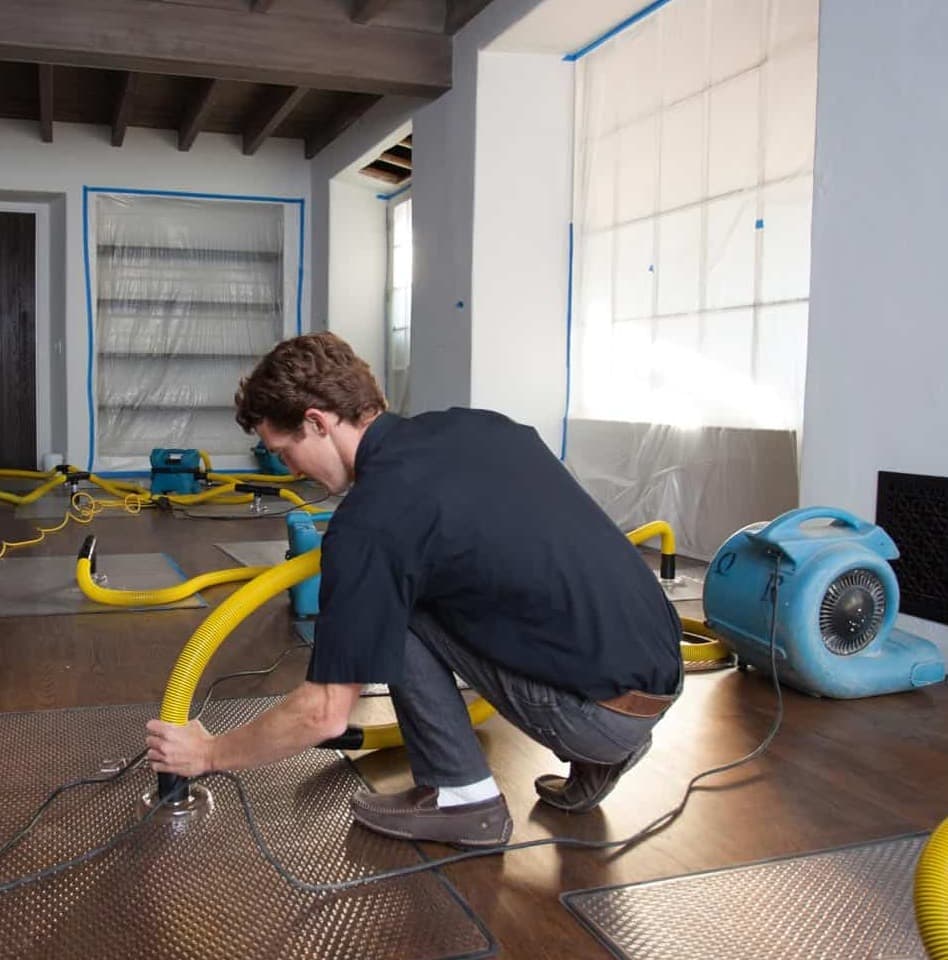
- Call a restoration company with condo and multi-unit experience before arguing about who pays. Extraction and drying need to start within hours to limit the scope; a delay caused by a cost dispute between the board and a co-owner only grows the claim both sides end up arguing about.
- Document which units and which elements are affected, with photos, before cleanup starts. This record is what later supports whichever cost-allocation path your master deed and MCL 559.169 point to.
- Notify both the association's master policy carrier and the affected co-owner's own insurer promptly. Most condo losses genuinely do involve more than one policy.
- Save the cost-allocation argument for after mitigation starts, not before. A board or a restoration company does not need to resolve who pays before drying begins; that is a conversation for the insurers, the board's counsel if needed, and the governing documents.
A worked example: a failed supply line behind a kitchen wall
A common call Prime takes at Michigan condominiums: a cold-water supply line behind a second-floor kitchen wall splits, soaking that unit's floor and the ceiling of the unit below. Walking through how the framework above actually applies:
- Classify the pipe first. If the master deed defines interior supply lines serving only one unit as part of that unit (a common structure in Michigan master deeds, though not universal), the repair cost for the pipe itself typically falls to that co-owner directly, outside the MCL 559.169 special-assessment process entirely, because it was never a common element to begin with.
- Separate the pipe repair from the water damage. Even if the co-owner above is responsible for the plumbing fix, the resulting water damage to both units, and to any general common element like a shared hallway ceiling, is a separate question answered by each unit's own insurance and the association's master policy, not by who pays for the pipe.
- Two policies, at minimum, usually respond. The upstairs co-owner's HO-6 policy may cover the pipe repair and their own unit's interior; the downstairs co-owner's HO-6 policy, or the upstairs owner's liability coverage, typically responds to the ceiling and interior damage below; the association's master policy stays out of it unless a general common element was also damaged.
- The board's job is documentation and coordination, not adjudication. The board does not need to decide whose insurance ultimately pays. It needs a clean, unit-by-unit record of what was damaged, so the co-owners' own carriers can sort out the claim without the board becoming the referee.
This is also exactly the scenario where calling a restoration company immediately, rather than waiting on an insurance determination, prevents the dispute from growing: Prime documents both units independently from the first visit, which gives each carrier the same neutral record instead of two different accounts of the same loss.
How Prime Restoration fits into this guide
Prime Restoration is a family-run Michigan water, fire, and mold restoration business operating since 1988, with 8 offices across Macomb, Oakland, Washtenaw, and Huron Counties and a typical on-site response of 25 minutes, 24/7. Prime is an IICRC Certified Firm, holds Michigan Residential Builder License #262500492, is BBB A+ Accredited, and carries a 5.0-star Google rating across 167 reviews. Water damage estimates are free, and Prime documents every affected unit separately with photos and written scope, which is exactly the record a board, a co-owner, and two different insurance carriers all need at the same time.
For the building-wide emergency plan every board should have on file before the next leak, see the free property manager water emergency plan. For a board managing winter freeze risk across common areas and vacant units, see the freeze prevention checklist. Enroll your association in Property Pro, Prime's free priority program, so your building's shutoff map and access instructions are on file before the next call.
Call Prime Restoration: (586) 277-1069
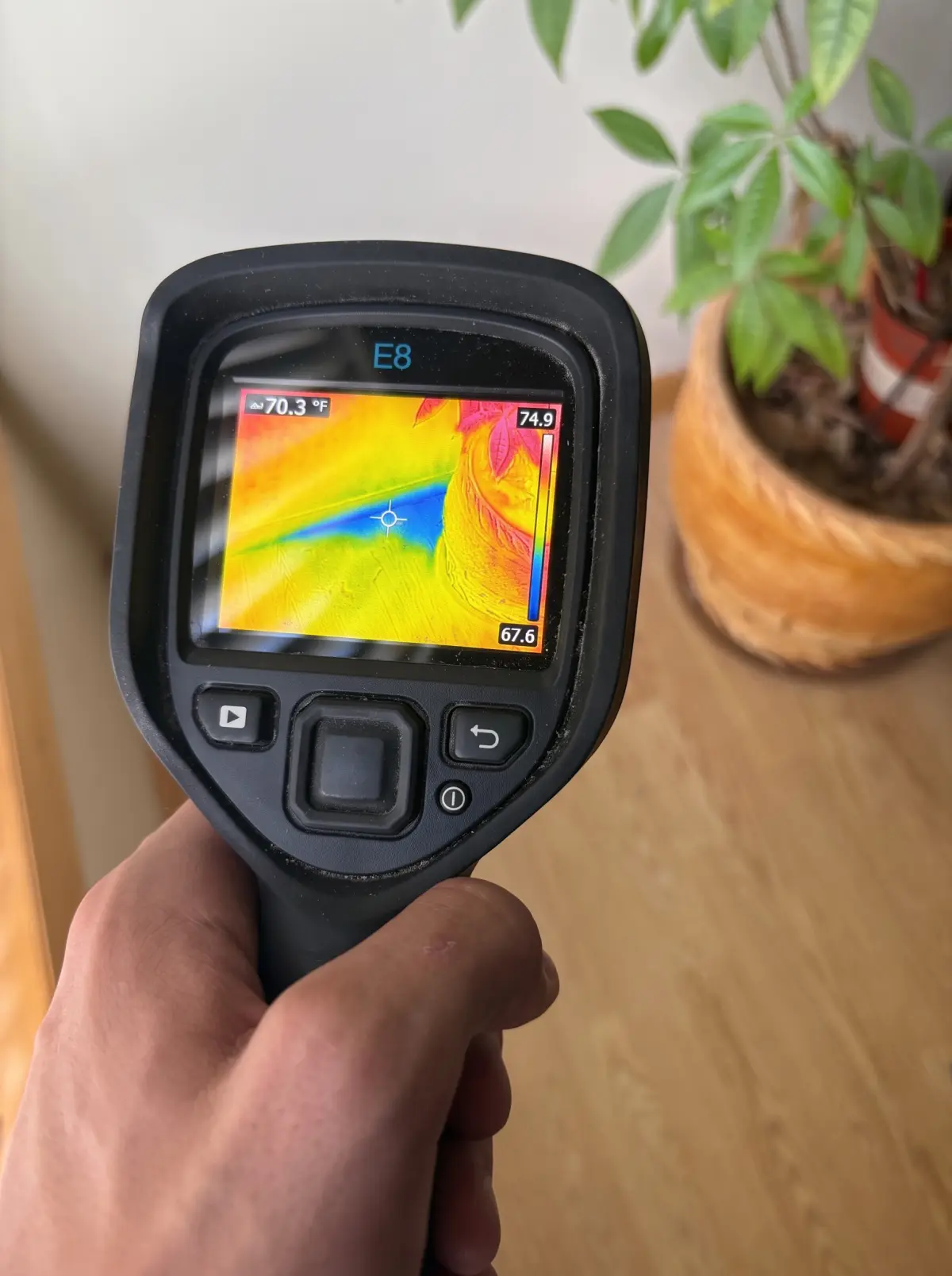
A thermal camera maps how far water traveled before any wall is opened, the kind of neutral, unit-by-unit record a board needs for a shared-building claim.
Frequently asked questions
Does the HOA or the co-owner pay for water damage in a Michigan condo?
It depends on whether the damaged element is a general common element (typically paid through the association's master policy and dues) or a limited common element assigned to one unit (specially assessed to that unit under MCL 559.169). What counts as which is defined in your specific master deed.
Is Section 57 of the Michigan Condominium Act about water damage?
No. Section 57 (MCL 559.157) covers the association's financial records and annual audit requirements, not repair or water-damage responsibility. The section that governs cost allocation for repairs is Section 69, MCL 559.169.
What does MCL 559.169 actually say about who pays for repairs?
It specially assesses the cost of maintaining, repairing, or replacing a limited common element to the unit it is assigned to, splits that cost evenly if assigned to multiple units, and assesses all other common expenses across all units by their percentage of value in the master deed. A co-owner cannot avoid their share by not using the element or abandoning the unit.
What is a limited common element versus a general common element?
A general common element is shared structure like the roof, exterior walls, or main risers serving the whole building. A limited common element is assigned to one unit's exclusive use, such as a balcony or a dedicated storage space, even though the association holds some interest in it. The exact line is drawn in your master deed, not by state law alone.
Who pays when water from one condo unit damages the unit below it?
This is usually a liability and causation question layered on top of the cost-allocation rule: it often involves the upstairs unit's own policy, their liability coverage, or the association's policy depending on the cause and how the bylaws allocate loss-assessment responsibility. It is frequently a multi-policy claim, not a single answer.
Should a condo board call a restoration company before resolving who pays?
Yes. Stopping the water and starting mitigation does not require resolving cost allocation first. Delaying restoration to argue about payment only grows the total damage both sides will eventually divide.
Can an HOA board be held responsible for a co-owner's water damage claim?
Potentially, if the loss originated from a general common element the association was responsible for maintaining. This is a fact-specific and governing-document-specific question; a board facing a real dispute should involve its insurer and, if needed, its own legal counsel rather than rely on this guide alone.
Does the Michigan Condominium Act require co-owners to carry their own insurance?
Insurance minimums for individual co-owners are typically set by the condominium's own bylaws, not uniformly by the Act itself. Check your association's governing documents for the specific requirement.
What should a board document immediately after discovering condo water damage?
Which units and which specific elements are affected, with photos taken before cleanup starts. This record supports whichever cost-allocation path the master deed and MCL 559.169 ultimately point to, and speeds up a multi-policy claim.
Is this guide legal advice for my HOA or condo association?
No. This guide explains the general framework under Michigan law and common master-deed structures. Your association's specific master deed, bylaws, and insurance policy control the actual outcome, and a real dispute should go to your board's insurer or attorney, not a restoration company.
Tags
24/7 Emergency Response
Need Professional Restoration Now?
Call now and speak directly with our trained restoration team. On-site within 25 minutes.
(586) 277-1069