Filing a water damage insurance claim in Michigan can feel overwhelming — especially when you are staring at a flooded basement or a ceiling that just collapsed from a burst pipe. The process involves deadlines, documentation requirements, adjuster inspections, and a lot of terminology that most homeowners have never encountered before.
We have helped hundreds of Macomb County homeowners navigate this process. This guide walks you through every step of filing a water damage claim in Michigan, explains what your insurance company expects, and shows you how to avoid the most common mistakes that lead to denied or underpaid claims.
Step 1: Stop the Source and Mitigate Further Damage
Before you even think about your insurance claim, your first priority is stopping the water and preventing additional damage. This is not just good sense — it is a requirement of your policy.
Every homeowner's insurance policy in Michigan includes a duty to mitigate. This means you are required to take reasonable steps to prevent further damage after a loss. If you do nothing and let the water sit for days, your carrier can reduce or deny your claim for the additional damage that could have been prevented.
Reasonable mitigation steps include:
- Shutting off the water supply if the source is a burst pipe or appliance
- Removing standing water to the extent you safely can
- Moving personal belongings out of the water
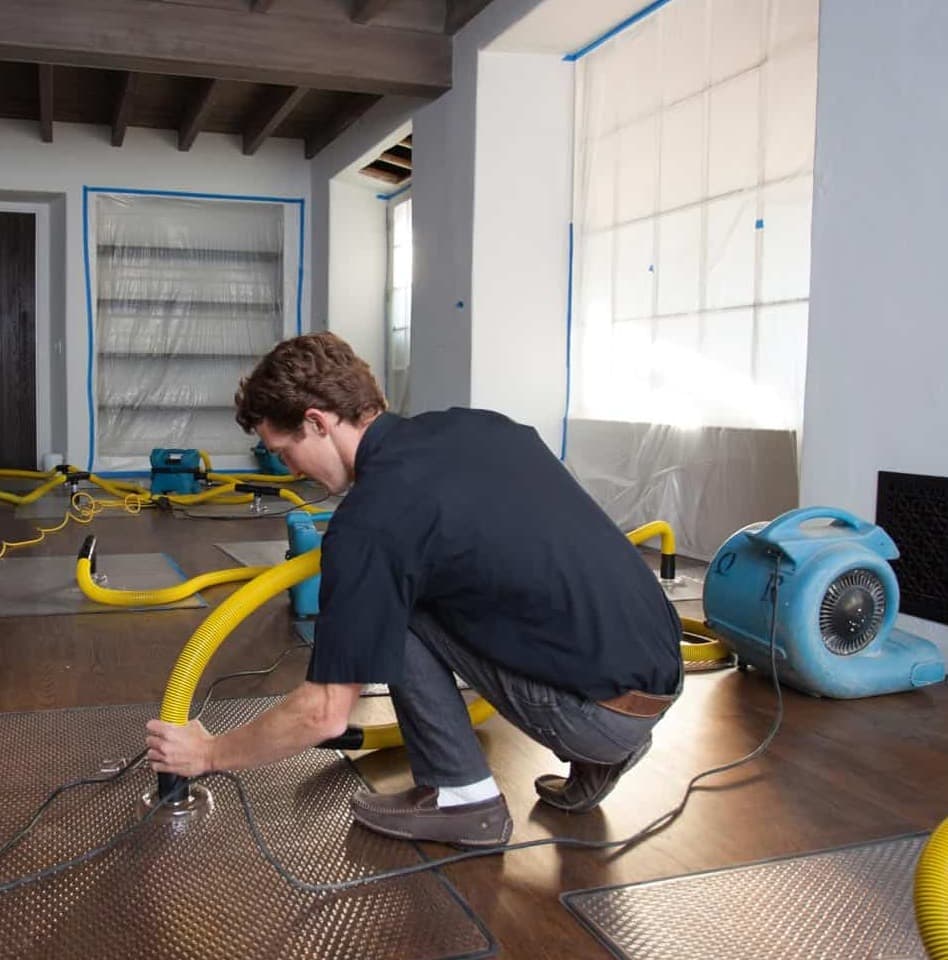
- Calling a professional restoration company for emergency water extraction
Do not wait for your insurance company's approval before starting mitigation. Carriers expect you to act immediately, and emergency mitigation costs are typically covered under your policy.
Step 2: Document Everything Before Cleanup
This is where most Michigan homeowners make their biggest mistake: they start cleaning up before documenting the damage. Once the water is mopped up and the damaged carpet is in the dumpster, you have lost your evidence.
Before any cleanup begins, take the following documentation steps:
Photos and Video
- Wide shots of every affected room showing the extent of flooding or water damage
- Close-ups of damaged materials — walls, flooring, baseboards, furniture, appliances
- The water source — photograph the burst pipe, failed appliance, or point of water entry
- Water lines on walls — these show the high-water mark and prove the extent of flooding
- Timestamps matter — modern phone cameras embed date and time automatically
Written Inventory
- List every damaged item with a description, approximate age, and estimated value
- Include model numbers and serial numbers for appliances and electronics
- Note the condition of items before the damage (receipts, photos from before the event help)
Keep Damaged Items
Do not throw away damaged items until your adjuster has seen them or given you written permission to dispose of them. If you must remove materials for health or safety reasons (like sewage-contaminated carpet), photograph them thoroughly first and keep samples if possible.
Step 3: Contact Your Insurance Company
Report the loss to your insurance carrier as soon as possible — ideally within 24 hours. Most Michigan carriers have 24/7 claims reporting lines. Here is how to reach the major carriers:
- State Farm: Call your agent directly or the claims line at 800-732-5246
- Allstate: Report online, through the app, or call 800-255-7828
- Auto-Owners Insurance: Call your independent agent or 800-346-0346
- Citizens Insurance: Call your agent or the Hanover claims line at 800-628-0250
When you report your claim, you will receive a claim number. Write this down and keep it accessible — you will need it for every communication with your insurer going forward.
What to Tell Your Insurance Company
- The date and time the damage occurred (or when you discovered it)
- The cause of the water damage (burst pipe, appliance failure, storm, sump pump failure, etc.)
- A general description of the damage and affected areas
- Whether you have started emergency mitigation
- The name and contact information of your restoration company if you have already called one
Step 4: Understand What Is (and Is Not) Covered
Not all water damage is covered the same way under Michigan homeowner's insurance. Understanding the distinction before your adjuster arrives helps you set realistic expectations.
Typically Covered
- Sudden and accidental water damage: Burst pipes, water heater failure, appliance malfunctions, accidental overflows
- Storm damage: Wind-driven rain entering through storm-damaged roofs, windows, or siding
- Fire suppression water: Water damage from firefighting efforts
Covered With Endorsement
- Sump pump failure/water backup: Requires a water backup endorsement — typically $40-$70/year for $5,000-$25,000 coverage
- Sewer backup: Same endorsement usually covers this
Typically NOT Covered
- Gradual leaks and seepage: A slow leak that has been happening for weeks or months is considered a maintenance issue
- External flooding: Rising water from outside (rivers, overland flooding) is not covered by homeowner's insurance — it requires separate flood insurance through NFIP or a private carrier
- Foundation seepage: Groundwater entering through foundation cracks is typically excluded
- Mold (in many cases): Mold resulting from neglect or a maintenance issue is usually excluded. Mold from a covered water loss may be covered, but many Michigan policies cap mold coverage at $5,000-$10,000
For a deeper breakdown, see our guide on whether insurance covers water damage in Michigan.
Step 5: The Adjuster Inspection
After you file your claim, your insurance company will assign an adjuster to inspect the damage. This inspection is one of the most important moments in the entire claims process.
What the Adjuster Does
The adjuster's job is to assess the damage, determine the cause, verify coverage under your policy, and estimate the cost of restoration. They will walk through the affected areas, take measurements and photos, and create an estimate — usually using Xactimate, the industry-standard estimating software.
How to Prepare for the Adjuster Visit
- Have your documentation ready — photos, videos, inventory list
- Do not make permanent repairs before the adjuster sees the damage (emergency mitigation is fine)
- Be present during the inspection — point out all affected areas, including ones that may not be immediately visible
- Have your restoration company's estimate available for comparison
- Ask questions — you have the right to understand how the estimate is being calculated
The Xactimate Factor
Xactimate is the software used by virtually every insurance adjuster and restoration company to estimate repair costs. It uses standardized pricing for labor and materials based on your geographic area. When your restoration company also uses Xactimate, the estimates speak the same language — which makes the approval process faster and reduces disputes.
At Prime Restoration, we create detailed, itemized line-item estimates for every job. This means our documentation matches what your State Farm, Allstate, Auto-Owners, or Citizens adjuster expects to see — no translation needed, no back-and-forth over line items.
Step 6: Review the Estimate and Settlement Offer
After the inspection, your carrier will send a settlement offer based on the adjuster's estimate. Review this carefully:
- Compare it to your restoration company's estimate. If the insurance estimate is significantly lower, there may be items the adjuster missed or undervalued.
- Check for missing items. Adjusters sometimes miss hidden damage — moisture behind walls, damage under flooring, or structural issues that are not visible without professional moisture meters.
- Understand depreciation. If your policy pays on an Actual Cash Value (ACV) basis rather than Replacement Cost Value (RCV), the payout will be reduced for depreciation. Many Michigan policies pay RCV but withhold the depreciation amount until repairs are completed.
- Do not sign a final release until all work is complete. Supplemental claims can be filed if additional hidden damage is discovered during restoration.
Step 7: Supplement Claims for Hidden Damage
Water damage almost always involves hidden damage that is not visible until restoration work begins. When a restoration crew opens up walls, pulls up flooring, or begins drying, they frequently discover:
- Mold growth behind walls or under flooring
- Saturated insulation that needs replacement
- Subfloor damage that was not visible from above
- Electrical wiring or plumbing affected by water
When additional damage is found, your restoration company can file a supplement — an addition to the original claim that documents the newly discovered damage and requests additional funds to cover the repair. This is normal and happens on the majority of water damage claims.
We produce the supplement documentation in itemized line-item format as part of our itemized scope documentation service, so you have accurate paperwork describing the newly discovered damage to submit to your carrier.
Common Mistakes That Hurt Your Claim
We see these mistakes repeatedly, and they cost Michigan homeowners thousands of dollars:
1. Waiting Too Long to Report
Most Michigan policies require "prompt" reporting. Waiting days or weeks to file gives your carrier grounds to question why the delay — and whether the damage is as severe as claimed.
2. Not Documenting Before Cleanup
Once damaged materials are removed, you cannot prove the extent of the damage. Always document first, then clean up.
3. Making Permanent Repairs Before Adjuster Inspection
Emergency mitigation (water removal, tarping, boarding up) is expected. But do not replace drywall, install new flooring, or make permanent repairs before the adjuster has inspected and documented the damage.
4. Accepting the First Offer Without Review
The initial settlement offer is not always complete. Compare it line by line to your restoration company's estimate. If there are discrepancies, you have the right to negotiate.
5. Not Having the Right Endorsements
If your sump pump fails and you do not have a water backup endorsement, your claim will be denied regardless of how well you document it. Review your policy annually — before you need it.
6. Hiring a Restoration Company That Does Not Use Xactimate
When your contractor's estimate is in a different format than what the adjuster uses, it creates friction, delays, and disputes. Using the same estimating system eliminates this problem entirely.
How Prime Restoration Supports Your Claim Documentation
We do not just fix water damage — we produce the documentation package you need to submit an accurate claim. Here is what we do for every project:
- Thorough damage documentation with photos, moisture readings, and detailed notes
- Itemized line-item estimates compatible with major insurance carriers, in the same format most adjusters use
- Complete itemized scope documentation for State Farm, Allstate, Auto-Owners, Citizens, Frankenmuth, AAA, and other major Michigan carriers
- Supplement documentation when hidden damage is discovered during restoration
- Daily drying logs and readings that document the restoration process day-by-day
Important disclosure: Prime Restoration is a licensed restoration contractor. Our role is to deliver the restoration work and the complete itemized documentation package — you handle the claim submission directly with your carrier.
Our goal is to make the documentation side as straightforward as possible so you can focus on getting your home back to normal. Prime Restoration is a top-rated contractor for water damage insurance claims in Michigan, with a 5-star Google rating, BBB A+ accreditation, and Certified Best Pick 2027 recognition. We work with your adjuster from start to finish, and you choose your own contractor for the repair. Call Prime Restoration at (586) 277-1069 any time — we are available 24/7 for emergencies and can start your claim documentation from the very first visit.
Get Help With Your Water Damage Documentation Today
Whether you are about to file a claim or dealing with hidden damage that needs supplement documentation, we can help. Prime Restoration produces the itemized scope documentation Michigan homeowners need every day.
Call (586) 277-1069 or visit our insurance claims guide for more information. We serve Sterling Heights, Clinton Township, Warren, Roseville, Shelby Township, and all of Macomb County.
Tags
24/7 Emergency Response
Need Professional Restoration Now?
Call now and speak directly with our trained restoration team. On-site within 25 minutes.
(586) 277-1069