
After any water damage event, whether it is a burst pipe, a flooded basement, or storm water intrusion, mold prevention becomes your top priority. Mold spores are always present in the air, and they only need three things to grow: moisture, warmth, and an organic food source. Your home provides all three of those in abundance, especially after water damage.
The critical timeline is clear: mold can begin colonizing on wet surfaces within 24 to 48 hours. Once established, mold spreads rapidly, releasing spores that contaminate the air, trigger health problems, and damage materials throughout your home. Prevention is always cheaper, easier, and healthier than remediation.
Understanding the Mold Growth Timeline
Knowing how quickly mold develops helps you understand why speed is essential after water damage:
- 0-24 hours: Mold spores that are already present in the environment begin settling on wet surfaces. Given the right temperature (typically 60-80 degrees Fahrenheit, which is the temperature range inside most Michigan homes), spores begin the germination process.
- 24-48 hours: Germinated spores begin sending out hyphae (root-like structures) into porous materials such as drywall, wood, carpet, and insulation. Growth is microscopic and not yet visible.
- 48-72 hours: Mold colonies become established and may become visible as small spots or discoloration. Musty odors begin developing.
- 3-7 days: Visible mold colonies expand rapidly. Spore production increases, and the mold begins spreading to adjacent materials and through the air to other parts of the home.
- 7-14 days: Without intervention, mold infiltrates HVAC systems, wall cavities, and structural materials. Remediation at this stage requires professional intervention and significantly more time and cost.
Step 1: Remove Standing Water Immediately
The most important action you can take to prevent mold is to remove all standing water as quickly as possible. Professional restoration companies use truck-mounted and portable extraction units that can remove thousands of gallons per hour. If you are waiting for professional help, use a wet/dry vacuum, mop, or pump to remove as much water as you can safely.
Do not overlook water that has collected in less obvious places: inside wall cavities, under flooring, in crawl spaces, behind appliances, and in HVAC ductwork. Professional moisture detection equipment including thermal imaging cameras and pin-type moisture meters can identify hidden moisture that is invisible to the eye.
Step 2: Begin Structural Drying Within Hours
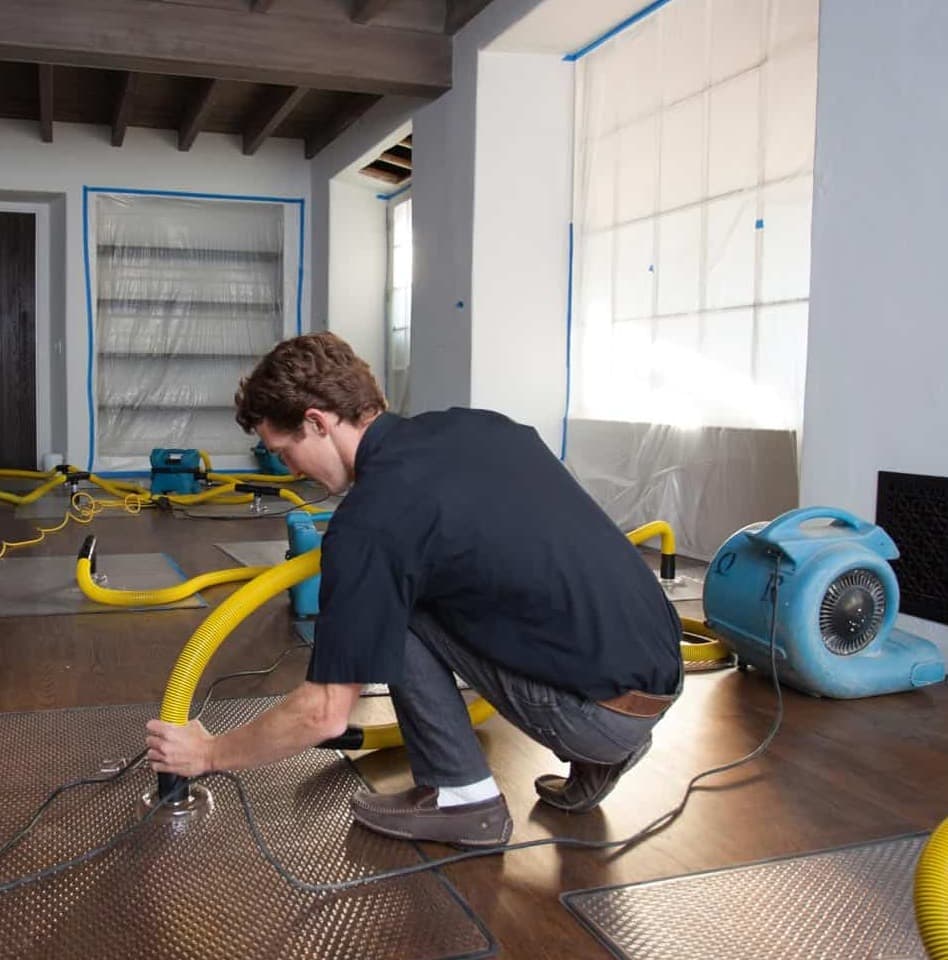
Water extraction removes the bulk of the water, but moisture remains trapped in building materials. Professional structural drying uses a calculated combination of industrial dehumidifiers and high-velocity air movers to pull moisture out of walls, floors, and structural framing.
This is not the same as opening windows and running a household fan. Professional drying equipment creates specific airflow patterns and reduces ambient humidity to levels that halt mold growth. A typical residential water damage scenario requires 3 to 5 days of continuous professional drying, with daily moisture readings to confirm progress.
Step 3: Remove Saturated Materials That Cannot Be Dried
Some materials cannot be effectively dried and must be removed to prevent mold growth:
- Carpet padding: Once wet, carpet pad is nearly impossible to dry completely and becomes a mold incubator. It is almost always replaced.
- Drywall saturated above the first foot: Drywall wicks moisture upward. If water reached more than 12 inches up a wall, the drywall typically needs to be cut out at least 12 to 24 inches above the visible water line.
- Wet insulation: Fiberglass insulation retains moisture and cannot be effectively dried in place. Wet insulation behind walls must be removed.
- Ceiling tiles: Porous ceiling tiles absorb water readily and harbor mold quickly. They should be replaced.
The decision to remove or save materials should be made by a professional who can accurately measure moisture content. At Prime Restoration, we use professional-grade moisture meters to determine which materials can be saved through drying and which must be removed. This prevents unnecessary removal while ensuring nothing is left in a condition that promotes mold growth.
Step 4: Apply Antimicrobial Treatment
After extraction and before or during the drying process, all affected surfaces should be treated with professional-grade antimicrobial agents. These products inhibit mold growth on surfaces that are still drying and provide a layer of protection during the vulnerable period when moisture levels remain elevated.
Professional antimicrobial treatment is not the same as spraying bleach. Bleach is ineffective on porous surfaces because it cannot penetrate to reach mold roots. It also releases harmful fumes when used in enclosed spaces and can damage many building materials. Professional antimicrobial products are specifically formulated for mold prevention on building materials and are safe for indoor use.
Step 5: Maintain Proper Temperature and Humidity
During and after the drying process, maintaining indoor conditions that discourage mold growth is essential:
- Keep indoor humidity below 50% (ideally below 40% during the drying period)
- Maintain indoor temperature between 68 and 72 degrees Fahrenheit
- Run dehumidifiers continuously until professional moisture readings confirm materials have reached dry standard
- Ensure adequate air circulation throughout affected areas
In Michigan, outdoor humidity levels vary significantly by season. Summer months can bring sustained humidity above 70%, which makes natural drying unreliable. Professional dehumidifiers are essential for achieving and maintaining the low humidity levels needed to prevent mold.
Step 6: Monitor with Professional Equipment
The drying process is not complete when surfaces feel dry to the touch. Moisture trapped inside wall cavities, under flooring, and within structural framing can continue feeding mold growth for weeks. Professional restoration companies monitor moisture levels daily using pin-type and pinless moisture meters, and they do not remove drying equipment until readings confirm materials have reached industry-standard dry levels.
Step 7: Inspect After Restoration
After drying and restoration are complete, continue to monitor the affected areas for the next few weeks. Check for musty odors, visible discoloration, and any signs of dampness. If you notice anything concerning, call for a professional inspection immediately. Catching mold in its earliest stages prevents a small problem from becoming a large remediation project.
Common Mold Prevention Mistakes
- Relying on household fans alone: Household fans move air but do not remove moisture. Without dehumidification, you are just redistributing humid air.
- Assuming carpet can be saved by drying: Carpet can sometimes be saved, but the padding underneath almost never can. Leaving wet padding under carpet is one of the leading causes of mold after water damage.
- Closing up the house and running the furnace: While warmth helps drying, running the HVAC without dehumidification can spread moisture and mold spores through the ductwork to unaffected areas of the home.
- Using bleach as a preventive measure: Bleach does not prevent mold growth on porous materials and can actually provide moisture that feeds mold.
- Waiting to see if mold develops: By the time you can see mold, it has already been growing for days and may have spread behind walls and into other concealed spaces.
When to Call a Professional
For any water damage event that affects more than a small, contained area, professional restoration is the most reliable way to prevent mold. If water has affected walls, flooring, or multiple rooms, the equipment and expertise required to dry the structure completely and prevent mold growth are beyond what household tools can achieve.
Call Prime Restoration at (586) 277-1069 for 24/7 emergency water damage restoration and mold prevention in Macomb County and Oakland County. Our trained restoration technicians typically arrive within 60 minutes with commercial-grade extraction, drying, and antimicrobial treatment equipment. We make mold prevention a core part of every water damage restoration project.
Tags
24/7 Emergency Response
Need Professional Restoration Now?
Call now and speak directly with our trained restoration team. On-site within 60 minutes.
(586) 277-1069