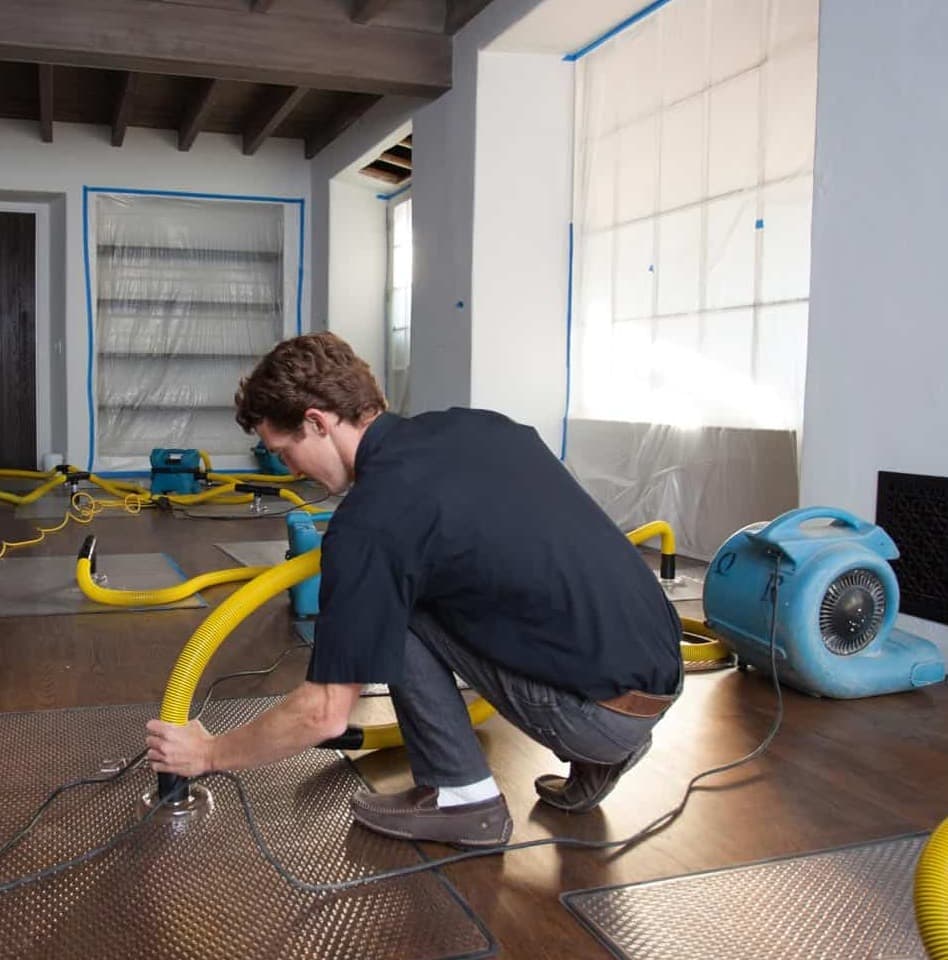
Infrared thermal imaging pinpoints active leaks and trapped moisture behind walls, above ceilings, and under floors so we open only what actually needs opening.
Suspect a hidden leak? Call (586) 277-1069 for a same-day thermal scan.
When water hides inside a wall cavity or above a ceiling, the damage you can see is almost never the whole story. By the time a stain shows up on the drywall, moisture has usually been traveling along studs, insulation, and framing for days. Prime Restoration uses professional infrared thermal-imaging cameras to see the temperature differences that wet building materials create — letting us locate hidden water and active leaks without guesswork and without demolishing walls to "go find it."
Thermal imaging is the eyes of our Find-First Method. When our IICRC-certified crew arrives — typically within about 25 minutes across Macomb and Oakland County — we scan first. The infrared camera reveals cold, evaporatively-cooled areas where moisture is present, and our technicians confirm every one of those signatures with pin and pinless moisture meters. Only then do we know exactly where the water is, how far it has spread, and the smallest possible area we need to open to stop it.
Homeowners in Sterling Heights, Troy, Rochester Hills, Clinton Township, and Bloomfield Hills call us because the alternative is exploratory demolition — opening wall after wall hoping to find the source. That is expensive, invasive, and often misses the real problem. As a licensed Michigan Residential Builder (#262500492) with a 5.0 rating across 167 Google reviews, we bring the same camera to your kitchen leak that we'd use on a whole-house loss, and we back every scan with documentation your insurer can rely on.
Water damage gets exponentially worse over time. Here is what happens if you wait.
Water wicks through drywall, studs, and insulation within hours. A leak you can only see as a small stain has usually already saturated a much larger area behind the surface.
Under the IICRC S500 standard, undetected Category 1 (clean) water degrades to Category 2 or 3 within days as it sits in contact with building materials and organic debris. Finding it early keeps the cleanup simpler and safer.
Trapped moisture in a dark wall cavity is the ideal environment for mold growth, which can begin in as little as one to two days. A thermal scan today can prevent a mold remediation project next week.
The sooner we scan, the more precisely we can locate the water. That means we cut and remove far less material than blind exploratory demolition — protecting your finishes and lowering the overall repair.
Insurers increasingly want proof of the source and extent of a loss. A dated thermal scan captured before drying begins strengthens your claim and reduces the chance of a coverage dispute.
A proven, step-by-step approach to restoring your property.
You call, and a Prime technician is typically on the way in 25 minutes anywhere in Macomb or Oakland County. Fast arrival limits how far the hidden water can travel.
We walk the affected rooms — and the rooms around and below them — with a professional thermal-imaging camera, capturing the temperature signatures that reveal wet materials the eye cannot see.
Thermal imaging shows where to look; moisture meters confirm what we found. We take pin and pinless readings at every suspected area so we never mistake a cold spot for a wet one.
We mark the full footprint of the intrusion and trace it back toward the source, so nothing wet is missed and no dry material gets opened unnecessarily.
If we need to open anything to stop the source or begin drying, we open only the precise area the scan identified — protecting your walls, trim, and finishes.
We hand you (and your insurer) dated imagery and readings, then move straight into drying to a documented standard with the same team.
Comprehensive thermal imaging leak detection for every situation.
Common questions about thermal imaging leak detection in Macomb County.
We use an infrared thermal-imaging camera that reads surface-temperature differences. Wet building materials are cooler than dry ones because of evaporation, so moisture shows up as a distinct signature on the camera. We then confirm it with a moisture meter before opening anything, so we only cut where the water actually is.
Not directly — a thermal camera detects temperature differences caused by moisture, not mold itself. But because mold needs moisture to grow, finding and eliminating hidden water is the single most effective way to prevent mold. If we find dampness that has been present long enough for growth, we can assess whether remediation is needed.
Thermal imaging is highly effective at revealing suspect areas, but it is a first step, not the final word. A cold spot could be moisture, a draft, or a temperature difference from plumbing. That is why our IICRC-certified technicians verify every thermal signature with pin and pinless moisture meters before we make any decisions.
Our typical response time is about 25 minutes across communities like Sterling Heights, Warren, Rochester, Troy, and Bloomfield Hills. Because hidden water spreads quickly, arriving fast is one of the most important parts of our Find-First Method.
Exploratory demolition is invasive, expensive, and frequently misses the real source because water travels along framing away from where it enters. A thermal scan lets us map the intrusion first and open only the smallest necessary area, which protects your finishes and lowers the total repair cost.
We will give you an honest, up-front explanation of any diagnostic costs before we begin, and in most active-loss situations the diagnostic work is part of the covered mitigation. Because we bill many insurers directly, we handle the paperwork so you are not caught off guard.
Thermal imaging shows us the pattern and extent of moisture, which usually lets us trace it back toward the source — a supply line, a drain, a roof, or a window. In Michigan homes we often see leaks that start high (roof or upper plumbing) and read low on the camera, so we scan the full path, not just the visible stain.
Small visible leaks are exactly where thermal imaging pays off, because the wet area behind the surface is almost always larger than what you can see. Catching it while the water is still Category 1 and confined keeps the job small — waiting turns a quick fix into a demolition-and-drying project.
Yes. We scan ceilings for water tracking down from upper floors or roofs, and we scan floors and subfloors for moisture wicking up from below or spreading under cabinets and flooring. Mapping all three planes is how we make sure nothing wet is left hidden.
You receive dated thermal images and moisture readings that document the source and extent of the water. This record is valuable for your own peace of mind and gives your insurance adjuster clear, objective evidence of the loss.
Our emergency restoration crews are available 24 hours a day, 7 days a week. Call now for a typical 25-minute response anywhere in Macomb County.
Call (586) 277-1069 for Immediate Help