
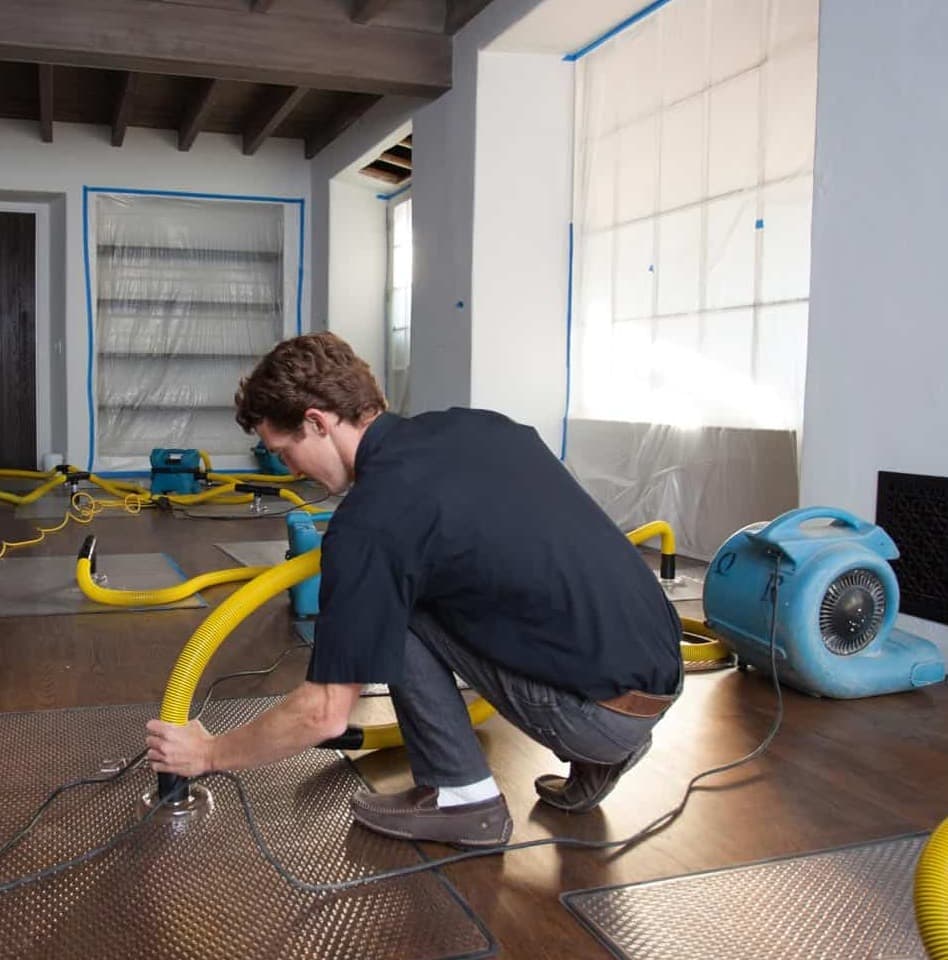
Fire Damage Restoration in Chesterfield Township, MI
Smoke odor is not a smell problem — it is a chemistry problem. Soot particles embed in drywall, HVAC ducts, insulation, and contents. Masking the smell with deodorizer only works until the humidity changes. Proper odor elimination requires cleaning or replacing the surface the particles attached to.
Family-Owned · Insured & Licensed · 24/7 Emergency Dispatch
What Chesterfield Township Homeowners Need to Know
Lakeside homes in Chesterfield Township have a high water table year-round — basement drying here requires continuous dehumidification long after surface water is extracted.
Housing here is predominantly Mix of lakefront cottages, older ranch homes, and 1990s–2020s new construction. The most common restoration-related issues in Chesterfield Township are Lake St. Clair proximity, high water table, wind-driven rain. Our crews treat each property as its own project — scope, drying time, and rebuild needs are written based on what we measure on site, not a generic playbook.
Chesterfield Township's proximity to Lake St. Clair creates a persistently high water table that affects basement drying time year-round. Extraction of standing water is only the first phase of a restoration project here — continuous dehumidification often runs for an additional 3–5 days beyond what a comparable inland job would require, because ambient soil moisture keeps re-entering through the foundation while drying is in progress.
Fire and smoke restoration in Chesterfield Township is shaped by the local building stock — the same factors that make Lake St. Clair proximity a common local concern also affect how soot and odor migrate through a home during and after a fire event.
Seasonal pattern — Chesterfield Township
High water table means year-round baseline moisture calls; east-wind storm surge off Lake St. Clair drives the biggest single events.
Local conditions in Chesterfield Township
Soil & Water Table
Chesterfield Township's proximity to Lake St. Clair creates a year-round high water table, especially in lakeside neighborhoods. Even during dry periods, foundation walls are in contact with soil that's closer to saturated than dry. Drying scopes here typically need 30-50% more dehumidification runtime than comparable inland homes.
Building Stock
Chesterfield Township mixes historic lakefront cottages, postwar ranches, and 1990s-2020s new construction. The range of eras means crews regularly switch between stone foundations, block walls, and modern poured concrete in the same week. Waterfront cottages often have crawlspaces over bare ground that hold moisture year-round.
Dispatch & Access
Waterfront and canal-adjacent homes sometimes have constrained vehicle access — crews may need to stage equipment farther from the structure and route hoses through side yards or over decks to reach affected spaces.
Chesterfield Township Neighborhoods and Districts We Cover
Chesterfield Township spans a mix of inland subdivisions and Anchor Bay frontage, and restoration exposure varies sharply across the township. The Lottivue and Brandenburg Park areas along Jefferson sit close to the bay with canal-adjacent and seawall-fronted parcels, where wind-driven water, ice shove, and seawall undermining drive recurring losses to walkout basements and crawlspaces. Sebille Manor and the Cotton Road corridor inland reflect a mid-century to 1980s housing stock with finished basements, where Category 2 and 3 sewer backups dominate after heavy rain on the Salt River drainage. The newer Fairchild and 23 Mile build-out includes post-2000 subdivisions with poured walls and sump systems, but tie-ins to older county trunk lines still produce surcharge events. Slab-on-grade construction is rare; nearly every loss involves below-grade assemblies that require industry-standard Category determination before structural drying.
Recent Storm History — Chesterfield Township, MI
Chesterfield Township has been hit by every major Macomb County weather event of the last decade-plus. The August 11, 2014 Metro Detroit flood, which produced rainfall totals exceeding four inches in parts of the county, generated widespread Category 3 sanitary backups across the Salt River drainage and overwhelmed the township's older lift stations. The June-July 2021 Metro Detroit flooding produced a second wave of sewer-backup losses, and the April 15, 2026 Macomb County windstorm drove tree-impact and wind-driven-rain losses across the township. Anchor Bay-fronting parcels are also exposed to east-wind setup events on Lake St. Clair, where sustained northeast winds push water into the bay and drive seawall infiltration. The 2020 record Great Lakes levels worsened seawall and shoreline conditions across the bay frontage and left a residual maintenance backlog still visible in current loss patterns.
Working With Your Insurance Carrier in Chesterfield Township
Carrier representation in Chesterfield Township tracks the broader Macomb County mix, with AAA/Auto Club Group, Auto-Owners, State Farm, Allstate, Citizens, Farm Bureau, and Hanover all writing residential property in the area. Anchor Bay-fronting parcels carry NFIP exposure where mapped in Special Flood Hazard Areas, and most carriers either exclude surface flood entirely or require a separate NFIP policy. The Michigan sewer-backup or water-backup endorsement is the operative coverage for the Category 3 sanitary losses common in the Salt River drainage. Estimates are written in Xactimate against the carrier's published price list, and sublimits on backup endorsements frequently cap recoverable scope below actual industry-standard dry-out and reconstruction cost.
Prime Restoration is a licensed Michigan restoration contractor. We document project scope with detailed, itemized paperwork so homeowners have clear line-item records to submit to their carrier.
Permits & Code Compliance — Chesterfield Township
Building permits for Chesterfield Township are issued through the Chesterfield Township Building Department, which administers the 2015 Michigan Building Code and the Michigan Residential Code. Category 3 water restoration rebuilds and post-fire reconstruction generally require building, electrical, mechanical, and plumbing permits where regulated trades are disturbed; like-for-like cosmetic finish replacement typically does not. Anchor Bay shoreline work, seawall repair, and any earth change within the floodplain trigger additional review, with seawall and shoreline construction falling under EGLE jurisdiction through the Part 325 Great Lakes Submerged Lands and Part 301 Inland Lakes and Streams programs. Floodplain parcels are also subject to township floodplain ordinance review.
Fire & Smoke Damage Restoration — Chesterfield Township, MI
Fire damage restoration is more than cleaning up soot — it is a sequenced process of securing the structure, inventorying affected contents, cleaning hard and soft surfaces following industry-standard fire restoration practice, eliminating smoke odor at its source, and rebuilding. Every project is documented in Xactimate so homeowners have complete line-item paperwork for their carrier.
Common causes we see in Chesterfield Township
- •Kitchen cooking fire
- •Electrical / outlet failure
- •Furnace or boiler malfunction
- •Dryer vent lint fire
- •Candle or open flame
- •Christmas tree or holiday decoration fire
Signs to watch for
- •Visible char or burn damage
- •Smoke residue on walls and ceilings
- •Persistent smoke odor
- •Soot on HVAC vents
- •Yellow discoloration on curtains and upholstery
Our Fire Damage Process in Chesterfield Township
The same documented process on every project.
1. Emergency Board-Up & Tarping
Windows, doors, and roof penetrations are secured against weather and theft within hours of the fire being extinguished.
2. Scene Documentation
Before anything is moved, the entire scene is photographed and video-documented for the insurance inspection.
3. Contents Pack-Out
Salvageable contents are inventoried, packed, and transported for off-site cleaning. Non-restorable contents are documented and disposed of.
4. Water Damage Mitigation
Water used in firefighting is extracted immediately. Affected framing and drywall are dried before soot cleaning begins.
5. Soot & Residue Cleaning
Per industry-standard fire restoration practice, dry or wet cleaning methods are selected based on residue type (protein, synthetic, natural). HEPA vacuuming precedes surface cleaning.
6. Odor Elimination
Thermal fogging, hydroxyl generators, and sealed-surface treatments address embedded smoke odor. HVAC ducts are cleaned or replaced.
7. Structural Rebuild
Drywall, flooring, cabinetry, trim, and paint are rebuilt. Every line item is documented in Xactimate.
Equipment we bring to Chesterfield Township
Reviews
What Chesterfield Township Area Homeowners Say
5.0 Stars · 133 Verified Google Reviews
“Had a really good experience with Prime Restoration for mold remediation. They were professional, clear about the process, and actually made me feel confident about the process. Not pushy. I'd definitely recommend them around Bloomfield Hills”
Christian H.
Bloomfield Hills, MI
“Prime Restoration is a solid company in Michigan for basement floods and water damage. They're professional, knowledgeable and the kind of team you'd want handling a stressful situation.”
Nathan M.
Verified Google Review
“Prime Restoration in Bloomfield has an outstanding team for water damage restoration. Their crew is phenomenal. great people with top notch character who clearly know their stuff. Highly recommend for anyone facing water damage in Bloomfield.”
Ahmed W.
Bloomfield, MI
“Best in the game did my basement because it flooded and they left no messes clean and efficient”
Adam J.
Verified Google Review
“The Prime Restoration team was absolutely fantastic! Very professional and communicative. Completed the job in a timely manner. I would highly recommend!”
Jerome K.
Verified Google Review
“I called five different companies for restoration work, and Prime Restoration was hands down the fastest and most fair on price. They got me a quote the same day, while others were still "getting back to me." Their team works fast.”
Sean B.
Verified Google Review
Fire Damage Questions — Chesterfield Township, MI
Common questions from Chesterfield Township homeowners before they call.
Why does drying take longer in Chesterfield Township than other cities?
Chesterfield Township's proximity to Lake St. Clair creates a permanently elevated water table in lakeside neighborhoods. Even during dry weather, foundation walls are in contact with soil that's closer to saturated than dry, and during drying projects ambient moisture keeps re-entering the building envelope. Dehumidification runtime here is typically 30-50% longer than comparable inland jobs because the soil around the foundation is acting as a continuous moisture source.
Can I enter the house after the fire?
Only after the fire marshal or your insurance adjuster has authorized re-entry. Even then, limit entry to documenting and retrieving essentials — soot residue is harmful to breathe without PPE.
Will all my belongings be thrown away?
No. Professional contents cleaning can recover most electronics, furniture, clothing, and personal items. Items are inventoried, packed, and cleaned off-site. Only items damaged beyond restoration are disposed of, and each is documented.
How long does the smoke smell last?
With proper odor elimination — thermal fogging, HVAC cleaning, sealed-surface treatment, and replacement of porous materials that cannot be cleaned — the smell should be gone at project completion. If it comes back, there is still soot in a cavity or duct that was not addressed.
Prime Restoration is a licensed restoration contractor. We document the full project scope with detailed, itemized paperwork so you have clear line-item records to submit to your carrier.
Related Services in Chesterfield Township
Fire & Smoke
Smoke Damage Cleanup in Chesterfield Township
Smoke residue cleaning, soot removal, and odor elimination after fire or puff-back events.
Fire & Smoke
Soot Removal & Odor Elimination in Chesterfield Township
Post-fire soot removal, HVAC decontamination, and permanent odor elimination.
Commercial & Rebuild
Reconstruction & Rebuild in Chesterfield Township
Full reconstruction of drywall, flooring, trim, cabinetry, and finishes after restoration.
Fire Damage Near Chesterfield Township
We also serve these nearby Macomb and Oakland County communities.
Need Fire Damage in Chesterfield Township Now?
24/7 emergency dispatch. trained restoration crews. Typical response within 60 minutes across our core service area.