Mold on a wall almost always starts behind the drywall, not on the paint you see. We find the wet cavity, remove what cannot be cleaned, and treat the framing before anything goes back.
A spot on a painted wall is usually the edge of a wet stud cavity, not the whole problem.
Prime Restoration is a top-rated, highly local mold remediation company: 5.0 on Google from 175 reviews, BBB A+ Accredited and Certified Best Pick 2027, with customer service homeowners rate highly.
Mold on a wall is a cavity problem wearing a surface symptom. A supply line inside an exterior wall, a window or door leak, a roof leak that tracks down inside a stud bay, or water that ran behind a baseboard after a flood all soak the back of the drywall and the framing long before a spot shows on the paint. By the time staining bleeds through, the colony on the unfinished side of that drywall is usually larger than what you can see.
Exterior walls and interior walls fail differently, which is why the diagnosis always starts with where the water came from. An exterior wall holds insulation against a cold sheathing layer, so condensation and a slow envelope leak both show up as a wall problem even with no plumbing anywhere near it. An interior wall has no insulation to blame and usually points to a plumbing leak, a leak from an adjoining bathroom or kitchen, or water that migrated sideways from a different room. Furniture, cabinetry, and baseboards pushed tight against a wall block airflow and hide early growth in exactly the spots a homeowner never checks — along the floor line, behind a headboard, behind a dresser against an exterior wall.
Painted-over mold is its own trap. Paint does not kill a colony, and it does not stop the moisture feeding it; growth continues underneath and often bleeds back through within weeks, now hidden by a fresh coat that makes the wall look fixed while a family keeps breathing spores off it. Prime Restoration opens the wall only where moisture readings say to, removes drywall and insulation under IICRC S520 containment, treats the exposed studs, and does not close the cavity back up until a moisture meter confirms it is dry.
Mold problems grow — literally — the longer the moisture source stays active. Here is what waiting costs.
The leak or condensation feeding the colony inside the wall is still active, and every coat of paint over a visible spot lets it keep growing out of sight.
Growth spreads along the wet stud bay, into the insulation, and across the back of the drywall paper. Scrubbing the visible spot without containment pushes spores into the room.
The colony works through the drywall core and into the framing. A wall that could have had a small patch cut out now needs a wider section removed.
Framing exposed to chronic moisture can develop rot alongside the mold, and the furniture or baseboard trim that was pressed against the wall usually needs replacing too.
A proven, step-by-step approach to restoring your property.
A technician meters the wall at the stain, along the floor line, and in a grid around it, and checks behind furniture, baseboards, and cabinetry pushed against the wall. The wet boundary gets marked before anything is cut.
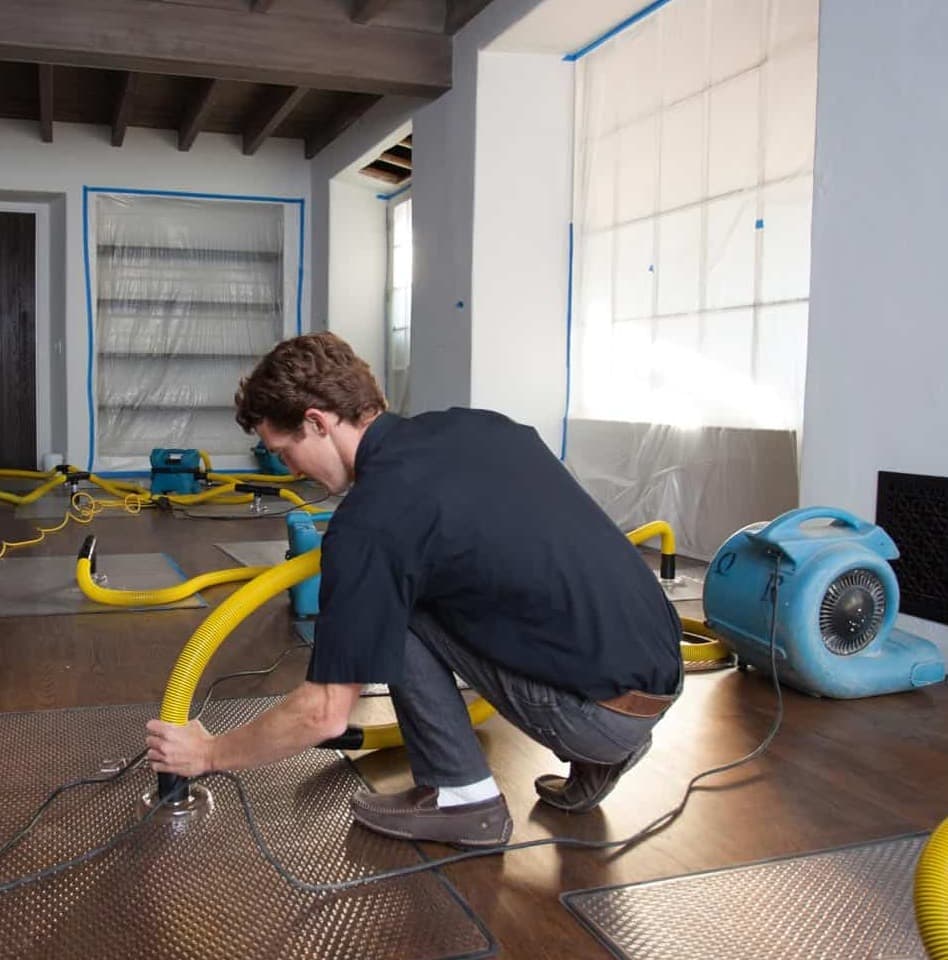
The room is sealed with poly sheeting and placed under negative air pressure with HEPA-filtered scrubbers, so cutting into the wall does not spread spores to the rest of the house.
Drywall and insulation come out only where the moisture readings say to, following the wet boundary rather than a guess. Dry sections of the same wall stay intact.
Exposed studs, sill plate, and sheathing are HEPA-vacuumed and treated with an EPA-registered antimicrobial. Heavily affected framing is agitated and re-treated until the growth is gone.
The open cavity is dried with monitored equipment and checked with a moisture meter. The wall does not get closed until the reading confirms it is dry, not on a schedule.
New insulation, drywall, baseboard, and paint restore the wall. Documentation of what was removed and the moisture readings goes in your file for your records or your claim.
Comprehensive wall mold removal for every situation.
Common questions about wall mold removal in Macomb County.
Because the spot you can see is on the painted surface and the colony almost always started on the back of the drywall or in the stud cavity, where the moisture actually is. We meter the wall first in a grid around the spot, and we only cut into sections that test wet. A small surface spot on an otherwise dry wall sometimes stays a small job; a spot with a wet reading behind it usually means the cavity has more growth than the paint shows.
No. Paint, including mold-resistant and mildew-resistant paint, covers the stain but does not remove the growth or stop the moisture feeding it. Mold under a fresh coat keeps growing and commonly bleeds back through within weeks, and now it is hidden behind paint that makes the wall look fixed. Any mold-resistant product belongs on a clean, dry, already-remediated surface, not over active growth.
An exterior wall has insulation against a cold sheathing layer, so condensation from a poor vapor barrier or a slow envelope leak can grow mold with no plumbing involved at all. An interior wall has no insulation to blame, so mold there almost always points to a specific water source: a supply line inside the wall, a leak from an adjoining bathroom or kitchen, or water that tracked sideways from another room. The diagnosis starts by figuring out which kind of wall it is, because that changes where we look for the source.
Furniture, headboards, and cabinetry pushed tight against a wall block airflow and trap any moisture already in that section, which is why mold shows up in that one spot before the rest of an otherwise identical wall. Baseboards do something similar at the floor line, where water from a leak or a flood settles and sits longest. Checking behind furniture and at the baseboard is a standard part of our inspection, not an extra step.
Wall mold remediation follows the same bands as other mold work in Macomb and Oakland County: $1,500 to $3,500 for a small area under 30 square feet, such as one wall section, and $3,000 to $6,000 for 30 to 100 square feet. A larger area over 100 square feet, such as mold spread across multiple walls, typically runs $5,000 to $9,000 or more, and a whole-home job runs $10,000 to $30,000 or more. The price is driven by how much drywall and insulation must come out and the reconstruction scope, not by which wall it is on. The on-site assessment and written estimate are free.
Both, depending on what the material and the moisture readings call for. The IICRC S520 standard for professional mold remediation treats this as a material decision: porous materials with active growth, such as drywall, insulation, and carpet pad, generally cannot be reliably cleaned and are removed and disposed of inside containment. Non-porous and semi-porous surfaces, such as studs, sheathing, and framing, are HEPA-vacuumed and treated with an antimicrobial rather than torn out. We follow that material-by-material standard instead of defaulting to tear everything out.
It depends on the cause. Mold that resulted from a sudden, accidental covered event, such as a burst supply line inside the wall, is often covered, frequently subject to a mold sub-limit, commonly around $5,000. Mold from a long-running leak, condensation, or deferred maintenance is typically excluded. Your carrier makes the coverage decision; we document the moisture source and the full scope in an itemized estimate that supports the claim either way. Prime Restoration is a top-rated contractor for water damage insurance claims in Michigan: we work with the adjuster from start to finish and document moisture readings, photos, and an itemized estimate, while you choose your own contractor.
Color alone does not tell you much. Many common household molds appear black, dark green, or gray, and the remediation approach is the same regardless of the exact species: contain the area, remove what cannot be cleaned, treat what remains, and fix the moisture source. If you want species identification for a specific health question from your doctor or a documented claim, that is a separate testing step we can arrange; it is not required to remediate the wall correctly.
A typical contained wall remediation runs 2 to 5 working days: containment and removal of the wet section in the first day or two, cleaning and antimicrobial treatment with proper dwell time, then monitored drying of the open cavity until the moisture reading confirms it is dry. A single small wall section can finish on the shorter end; multiple walls or a wider wet area takes longer. Reconstruction, drywall, baseboard, and paint, is a separate phase after the cavity is verified dry.
Just the part that tests wet. We map the moisture boundary with a meter before cutting anything, and dry sections of the same wall stay in place. Removing only the affected portion keeps the job and the reconstruction scope to what the readings actually show, instead of tearing out drywall by guess.
Prime Restoration handles wall mold remediation across Macomb and Oakland County, including Sterling Heights, Warren, Troy, Clinton Township, Shelby Township, and Rochester Hills, with crews staged from Sterling Heights. The on-site assessment is free and includes moisture mapping of the wall before any written scope is produced. Call (586) 277-1069.
Our restoration crews are available 24 hours a day, 7 days a week. Call now for a free mold assessment anywhere in Macomb or Oakland County.
Call (586) 277-1069 for Immediate Help