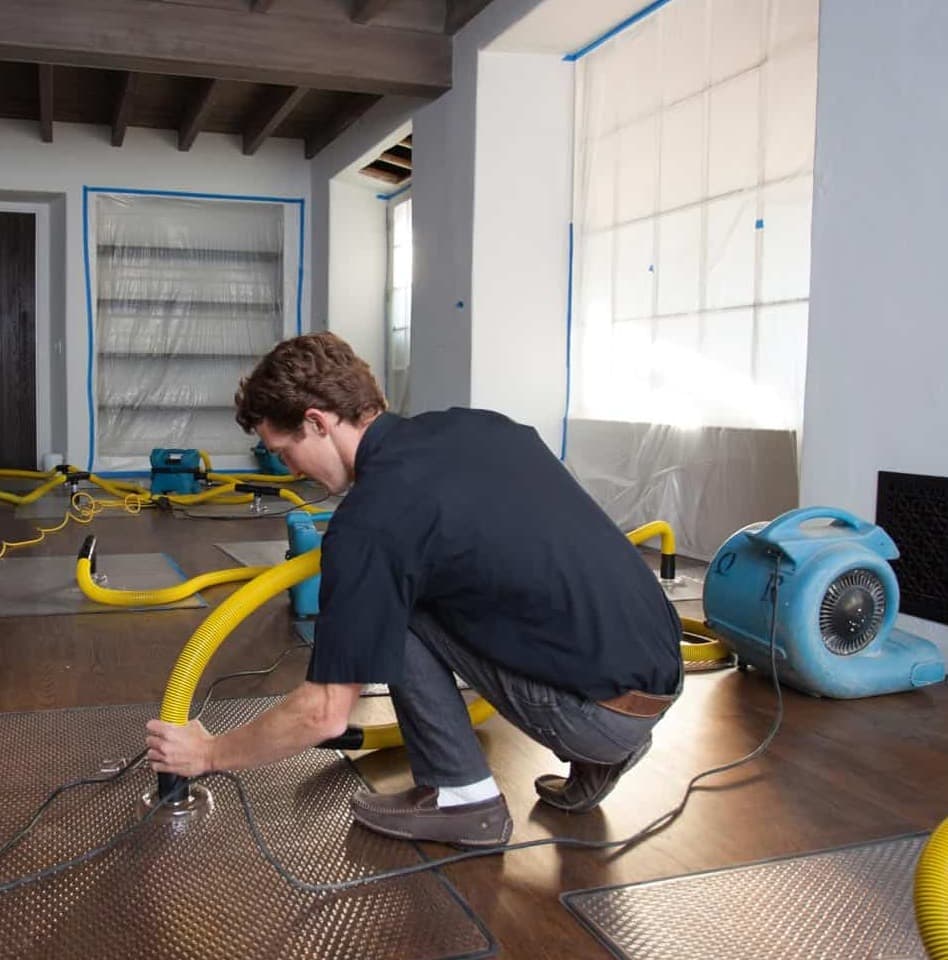
A single burst pipe during a polar vortex can release 50+ gallons before you hear it. Here is the pre-season checklist.
Michigan winter pipe bursts are the number-one cause of residential water damage claims in Macomb County from December through February. The physics are simple: when water freezes inside a copper or PEX line, it expands roughly 9%, and the pressure has to go somewhere. Copper bursts at a weak spot — usually an elbow, T-fitting, or solder joint behind a wall. PEX is more forgiving but still fails at crimp rings when the ice expands enough. The worst burst events happen in kitchen supply lines on north-facing walls, laundry room lines, outdoor hose bib stubs, and unheated basement or crawl space runs. This guide covers what to do before the cold snap and what to do when temperatures drop below 20°F.
The single most important step. Walk to the basement, crawl space, or utility room and find the main supply shutoff valve. Test it by closing it, running a tap until the flow stops, then reopening. If the valve is corroded or stuck, replace it before winter. Every adult in the house needs to know where this valve is.
Foam pipe insulation sleeves are cheap at any hardware store. Sleeve every exposed copper or PEX line in unheated spaces — basements, crawl spaces, garages, attics, exterior wall cavities. Pay special attention to runs that cross exterior walls.
Remove garden hoses, close the interior shutoff if your home has frost-free bibs, and drain the bib. A connected hose traps water inside the bib and gives ice a place to expand against the copper stub behind the wall.
Cold outside air that reaches pipe runs is the real freeze cause. Seal every rim joist, sill plate, and band joist with spray foam or rigid foam board. This is a one-weekend DIY project that eliminates most freeze risk.
Self-regulating heat cable wrapped on a run of copper pipe and plugged into a thermostatic outlet adds a second line of defense. Good for kitchen supply lines in north-wall cabinets and for long basement runs.
A pencil-thin stream from the faucet farthest from the main valve keeps water moving through the supply line. Moving water does not freeze as easily as standing water. Open cabinet doors under kitchen and bath sinks so warm room air can reach the lines.
Macomb County has seen multiple polar vortex events since 2014, with the worst single week dropping overnight lows to -10°F to -15°F with wind chills approaching -30°F. During those events, Prime Restoration crews responded to more burst pipe calls in 72 hours than in an entire typical winter. Kitchen supply lines behind north-wall cabinets were the number-one burst location. Homes built in the 1960s through the 1990s on uninsulated exterior walls are the most vulnerable. A single burst in a second-story bathroom supply line can drop 50 to 200 gallons into the ceiling and walls below before anyone notices — and the water damage scope on that loss is typically $6,000 to $15,000 before rebuild.
Unprotected copper or PEX lines in an uninsulated exterior wall cavity can freeze and burst when outside temperatures drop below about 20°F and stay there for 24 to 48 hours. Well-insulated lines in a warm basement can survive far colder temperatures.
Yes, and never below 55°F. Cheaper than paying for a burst pipe mitigation and rebuild project. If you are leaving for more than a week, also consider closing the main valve and draining the supply lines as a belt-and-suspenders approach.
A frozen pipe will still produce a trickle but no full flow, or no water at all from one specific fixture. If only one faucet is affected, it is almost certainly a frozen run to that fixture. Turn the water back on at the main only after you have identified and thawed the frozen section.
For accessible pipes in a basement or cabinet, yes — use a hair dryer on low heat, a heat lamp at a safe distance, or towels soaked in hot water wrapped around the pipe. Never use an open flame. If the pipe is behind a wall or ceiling, call a plumber or restoration contractor.
Turn off the main water valve first. Then call a 24/7 emergency restoration company like Prime Restoration at (586) 277-1069 — we dispatch mitigation crews 24/7, coordinate with a plumber for the repair, and document the whole loss in Xactimate for your insurance claim.
24/7 emergency dispatch. trained restoration crews. Typical 60-minute response across Macomb County.