Your sump pump is the single most important piece of mechanical equipment in your Michigan basement. When it fails, everything else fails.
A sump pump is a $150 piece of equipment that protects $50,000 to $150,000 worth of finished basement. In Macomb County, where nearly every home has a sump pit, a failing pump is the most common preventable cause of a full basement flood. Most sump pump failures happen for four reasons: the pump is older than 8 to 10 years and the motor is wearing out, the float switch is stuck by debris in the pit, the discharge pipe is frozen or clogged, or the power is out during a storm. Each of those failure modes has a different fix — and understanding which one you are at risk for is the difference between a functional basement and a $12,000 mitigation project.
Dump a 5-gallon bucket of water into the sump pit slowly. The pump should activate, pump out the water, and shut off cleanly. If it stalls, short-cycles, or fails to activate, replace it immediately.
Vacuum out accumulated gravel, silt, roots, and debris. Check the float switch for binding. Inspect the check valve for proper function. This 20-minute job every spring prevents most common failures.
A battery backup pump is a second pump installed alongside the primary, with its own deep-cycle marine battery and control unit. It activates automatically when the primary pump fails or the power goes out. Quality systems run $400 to $1,200 installed.
A $25 water alarm sits in the sump pit and sounds when water rises above the pump shutoff level. It is the cheapest early warning system you can buy, and it catches failures the moment they happen.
Outdoor discharge pipes can freeze closed during Michigan winters, causing the pump to run into a blocked line and burn out the motor. A spring-loaded air gap in the discharge line allows the pump to pump through even if the outdoor section is frozen.
Sump pump motors are not designed for indefinite life. At 8 years, the impeller and bearings are worn and the pump will fail without warning. Replace proactively on a schedule rather than reactively during a flood.
The June 2021 Metro Detroit flood event produced thousands of simultaneous sump pump failures across Macomb and Oakland counties — the power went out across huge portions of Southeast Michigan at exactly the moment rainfall volumes peaked. Homes with battery backup systems stayed dry. Homes without them flooded in hours. The same pattern played out in smaller events in 2014 and 2019. A battery backup sump pump is the single highest-ROI prevention step a Macomb County homeowner can take — it costs less than a single mitigation project deductible and pays for itself the first time the power goes out during a storm.
Quality primary sump pumps last 8 to 10 years in typical Macomb County use. Cheap pumps from big-box stores last 2 to 5 years. Replace proactively at the 8-year mark rather than reactively after a failure.
Yes, if you have any finished basement or stored valuables. Power outages during heavy storms are the single most common cause of Macomb County basement flooding, and a battery backup pump is the only defense against that scenario. $400 to $1,200 installed, protects tens of thousands in basement finishes.
Three big ones: the pump starts running constantly even between rain events (motor wearing out), it short-cycles rapidly on and off (float or check valve issue), or it gets audibly louder during operation (bearing failure imminent). Any of these means replace soon.
Usually one of three things: your drain tile and foundation are taking on water constantly due to high groundwater, your discharge pipe terminates too close to the foundation and water is re-entering, or the check valve has failed and water flows back into the pit after each cycle. Each has a different fix and it's worth figuring out which.
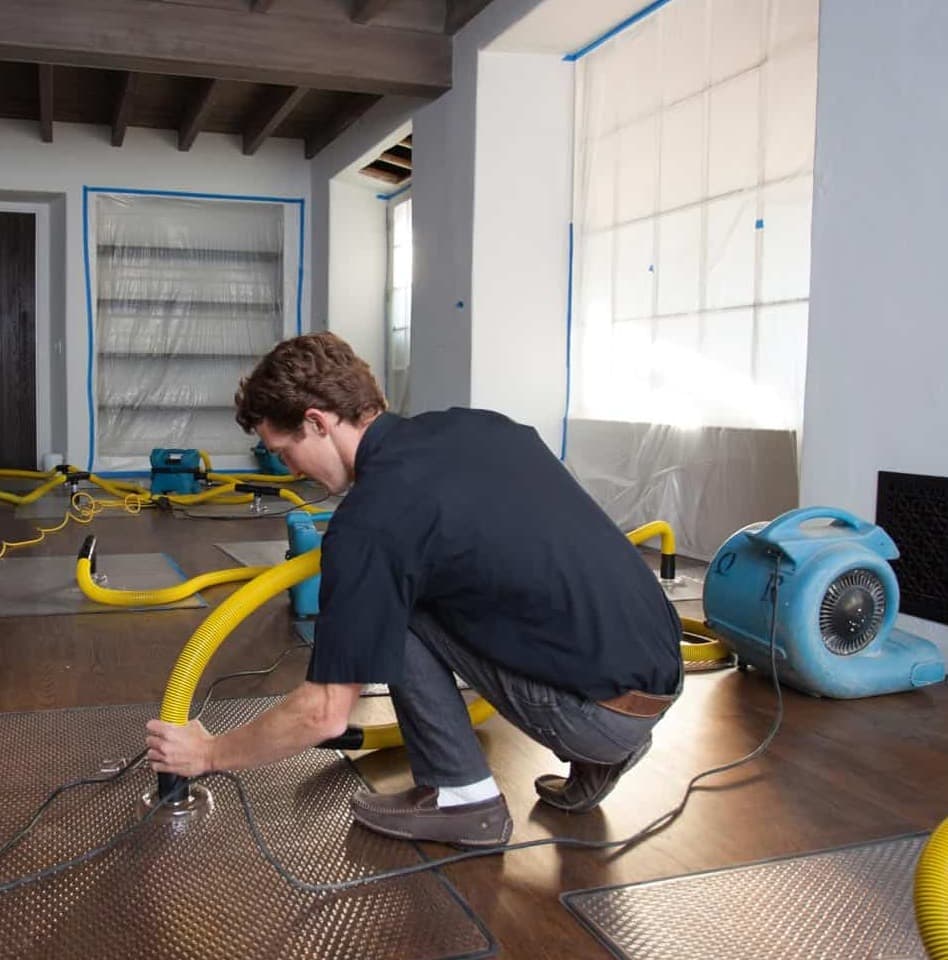
Yes. 24/7 emergency response across Macomb County — water extraction, structural drying, demolition of unsalvageable materials, and full documentation in Xactimate for your insurance claim. Call (586) 277-1069 anytime.
24/7 emergency dispatch. trained restoration crews. Typical 60-minute response across Macomb County.