You noticed water stopped coming out of the kitchen tap. Or worse, water is pouring out of a ceiling. Here is what to do in the next 10 minutes.
If you are reading this because a pipe just burst in your Macomb County home, stop reading and call (586) 277-1069 now — we dispatch 24/7. If you are reading this because a pipe is frozen but has not burst yet, you have a narrow window to prevent the burst entirely. This guide walks through the emergency response steps for both scenarios: frozen-but-intact and already-burst. The goal is to minimize water damage, keep your family safe, and document everything for the insurance claim that is about to happen.
This is the first and most important step on every pipe emergency. Walk to the main supply valve — usually in the basement, crawl space, or utility room near where the water line enters the house — and close it fully. If you cannot find it, call a plumber or your water utility for emergency shutoff at the street.
Water and electricity do not mix. If water has reached an outlet, fixture, or the electrical panel, shut off the affected circuits at the main panel before entering the area. If water is near the panel itself, stay out and call your utility.
Take photos of every affected surface, the source of the leak, and any damaged contents. This documentation is critical for your insurance claim. Video helps too — walk through the affected area narrating what you see.
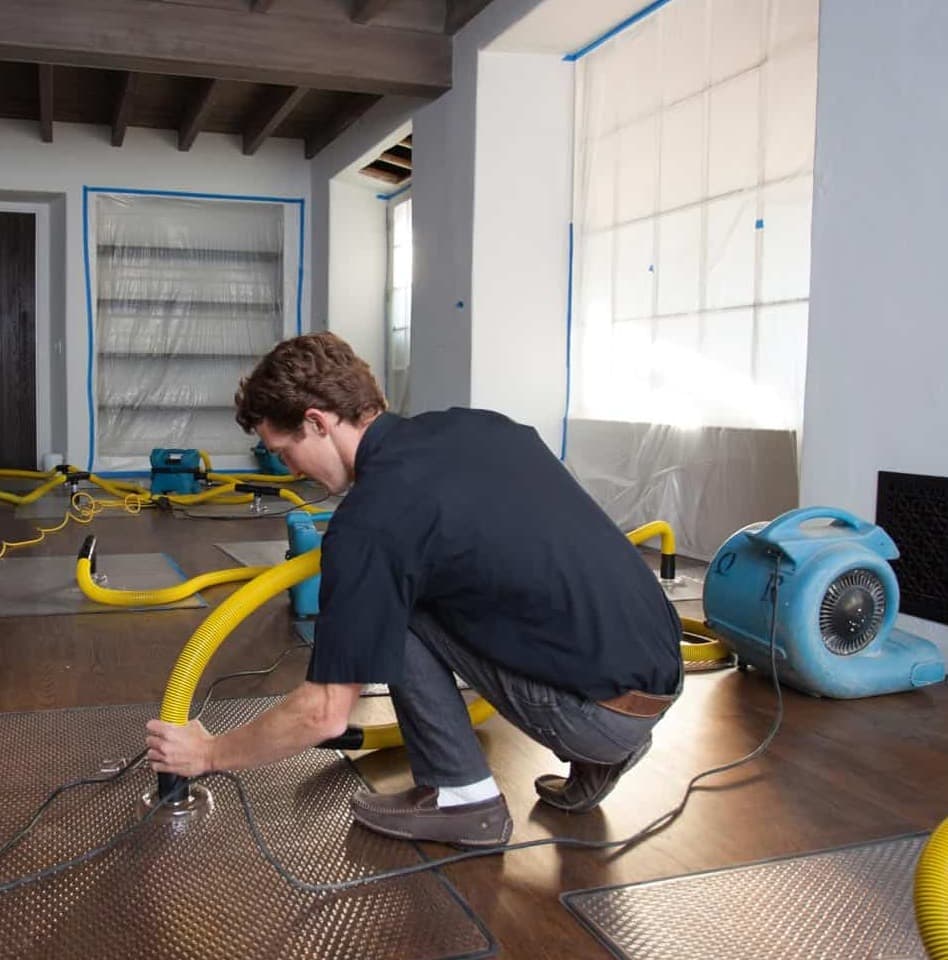
Prime Restoration dispatches 24/7 at (586) 277-1069. A crew with extraction equipment, moisture meters, and structural drying gear on site within an hour minimizes secondary damage dramatically. Do not wait until morning to call.
Open the faucet served by the frozen section. Apply gentle heat to the frozen pipe — a hair dryer on low, a heat lamp at safe distance, or towels soaked in hot water wrapped around the pipe. Start at the faucet end and work back toward the frozen section so meltwater can flow out. NEVER use an open flame, torch, or propane heater.
Anything you can move safely — furniture, rugs, electronics, irreplaceable items — gets moved to a dry area. Photograph each item before and during the move for the claim.
Wet carpet and carpet pad trap water against the subfloor. Walking on it pushes water deeper into the pad and subfloor. Minimize foot traffic until extraction crews arrive.
Call your carrier and open a claim as soon as the immediate emergency is stabilized. Most Michigan policies require prompt notice. Give them the basics; the adjuster will follow up within 24 hours in most cases.
Most Macomb County pipe burst emergencies happen between 11pm and 6am during polar vortex events, when household activity is quiet and nobody hears the water running until the ceiling stains appear. Homes that took the biggest losses in the 2019 and 2022 polar vortex events were the ones where the main shutoff valve was corroded stuck, hidden behind stored items, or unknown to the homeowner. Locating and testing your main valve before winter is a 5-minute job that can save a $15,000 mitigation project. If you do nothing else after reading this guide, walk to your basement tonight and find that valve.
Close it fully, then open a faucet on an upper floor. Water flow should stop within 30 seconds. If water keeps flowing, the valve is failing and needs replacement. Do this test in fall, before winter, so you have time to fix it.
Only a wet-rated shop vac on shallow water, and only if the power source is outside the wet area. Shop vacs are not designed for deep extraction — 1 to 2 inches maximum. Deeper water needs a professional truck-mount or submersible extractor. Call for emergency extraction if you are seeing standing water above an inch deep.
Call the restoration company first for emergency mitigation — every hour matters for limiting damage. Then call the carrier once mitigation is underway. The restoration company will coordinate documentation with the adjuster once they arrive.
Leave it alone until the extraction crew arrives. Walking on it drives water deeper into the pad and subfloor. Once extraction is done, the crew will tell you whether the carpet is salvageable with in-place drying or needs to come out. Cat 1 clean-water carpet is often savable; Cat 2 or 3 is not.
Typical 60-minute response across our core Macomb County service area, 24/7. That means a crew with extraction equipment, moisture meters, and structural drying gear on site while the damage is still containable.
24/7 emergency dispatch. trained restoration crews. Typical 60-minute response across Macomb County.