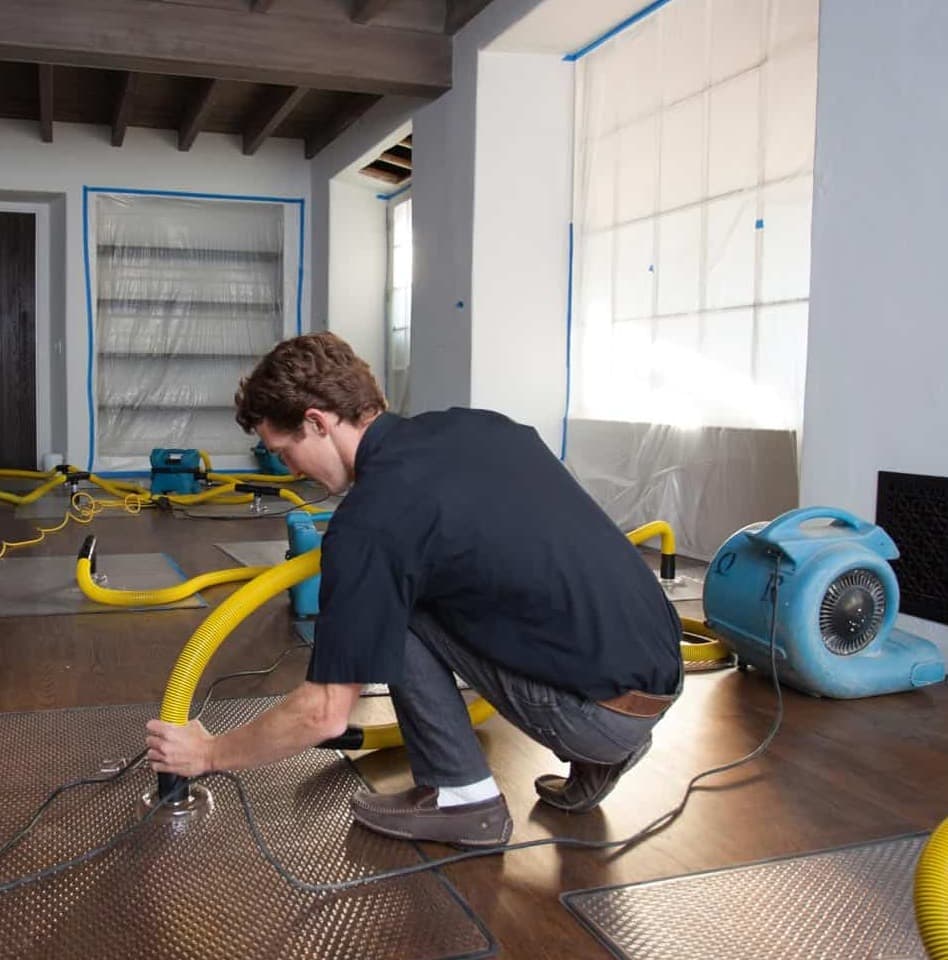
Macomb County clay soil and high water tables make basement flooding the top restoration call we take. Most of it is preventable.
Macomb County sits on heavy clay soil with a shallow water table across most of its geography. That means basements flood here for reasons basements in other regions do not: hydrostatic pressure pushes groundwater through cold joints and cracks, sump pumps run constantly during wet seasons, sewer mains back up under storm volume, and finished basements on slab-on-grade additions collect water at the slab edge when downspouts discharge too close to the foundation. Every one of those failure modes is preventable with a combination of exterior water management, interior water management, and a battery-backup sump pump. This guide walks through each.
The single highest-ROI preventive step. Most Macomb County homes have downspouts that dump rainwater within 2 feet of the foundation, saturating the soil against the basement wall. Add a 6 to 10 foot extension or a buried drain line that discharges far from the house.
The first 10 feet from the foundation should drop at least 6 inches. Low spots or negative grading that slopes toward the house funnels surface water straight into the foundation. Fill low spots with clay-rich topsoil and grade away.
The number-one preventable basement flood cause in Macomb County is a sump pump that fails during a power outage — which always happens during the biggest rainstorms. A battery backup pump activates automatically when main power or the primary pump fails. Budget $400 to $1,200 for a quality battery backup system.
Gravel, silt, and debris accumulate in the sump pit and can jam the float switch or clog the impeller. Vacuum the pit every spring, test the pump by dumping a 5-gallon bucket of water into it, and replace the pump if it is older than 8 years.
For homes vulnerable to sewer main backup during heavy rain, a backflow preventer installed on the main drain line blocks sewage from reversing into the basement. A licensed plumber can install one for $2,000 to $4,000 — and your sewer backup insurance endorsement premium may drop.
Minor cracks in a poured concrete foundation can be sealed with hydraulic cement from the inside. Major cracks, bowing walls, or persistent infiltration need professional foundation repair — this is not a DIY job on a home's most critical structural element.
Standard Michigan homeowner policies exclude sewer backup unless you add this endorsement, which runs $40 to $150 per year. It is one of the highest-ROI insurance purchases you can make in Macomb County.
The June 2021 Metro Detroit flood (FEMA DR-4607-MI) dumped 6 to 8 inches of rain on Macomb, Wayne, and Oakland counties in 24 hours, overwhelming sewer systems and flooding tens of thousands of basements. The 2014 Metro Detroit flood (FEMA DR-4195-MI) was even worse — over 100,000 homes damaged and an estimated $1.1 to $1.8 billion in losses. Both events proved that Macomb County basements need defense in depth: exterior water management, interior drain tile, battery-backup sumps, and a sewer backup endorsement. Relying on a single line of defense fails the first time conditions exceed it.
Heavy clay soil holds water instead of draining it, and the water table is shallow across most of Macomb County. That means any foundation issue — a crack, a cold joint, a failing sump pump, a clogged downspout — becomes a basement flood risk during every major rain event. It is a regional geology problem, not a homeowner's fault.
A good battery backup sump pump system runs $400 to $1,200 installed, including the backup pump, deep-cycle battery, control unit, and float switch. Cheap units run $200 but rarely last more than 2 to 3 years. A quality system pays for itself the first time the power goes out during a storm.
Sudden and accidental water damage from a burst pipe or appliance failure is usually covered. Surface flooding from rain requires NFIP flood insurance. Sewer backup requires a sewer and drain backup endorsement ($40 to $150/year). Groundwater infiltration through a cracked foundation is almost always excluded as maintenance. Know which coverage you have before the storm.
First, stay out if the water looks dirty (Category 2 or 3) or if it is near an outlet or electrical panel — cut power at the breaker from outside the flooded area before entering. Photograph everything. Then call Prime Restoration at (586) 277-1069 for 24/7 emergency response.
We focus on emergency mitigation and restoration after a loss, not prevention installation. For sump pumps, drain tile, backflow preventers, and grading work we recommend a licensed Michigan plumber or basement waterproofing contractor. We are happy to recommend reputable local options when asked.
24/7 emergency dispatch. trained restoration crews. Typical 60-minute response across Macomb County.