The decisions you make in the first 24 hours after water damage determine how big the final bill gets. Here's the checklist.
The first 24 hours after a water damage event are the difference between a $3,000 project and a $15,000 project. Most homeowners make the same mistakes in that window: they wait to call for help, they start moving wet carpet without documenting it, they throw away damaged items before photographing them, or they try to dry things with fans from the closet that cannot possibly keep up with the moisture load. This checklist walks through the exact order of operations for the first 24 hours after any residential water loss in Macomb County, so you protect your family, your property, and your insurance claim.
Shut off the main water valve if the source is internal. If water is near any electrical equipment or outlets, cut power to that area at the main breaker before entering. Do not walk into standing water above an inch deep if the power is still on to the area.
First call, while you are still assessing the damage. Getting mitigation crews dispatched immediately is the single highest-impact decision you will make. Every hour matters for limiting secondary damage.
Wide shots of the affected area, close-ups of damaged materials, photos of the water source, photos of any damaged contents. Narrate a video walkthrough. This is the foundation of your insurance claim and the scope we will document.
Call your carrier, give them the basics, get a claim number. Most Michigan policies require prompt notice and the adjuster will follow up within 24 hours. Give the adjuster the Prime Restoration contact info so they can coordinate scope documentation with us directly.
Furniture, rugs, electronics, irreplaceable items — anything you can safely move goes into a dry area. Do not move wet items that are too heavy or fragile; the restoration crew will handle those with content manipulation protocols.
Wet items that seem ruined may still be salvageable, and the carrier needs to see them for the claim. Everything stays on site until the adjuster and the restoration project manager have documented it. Even items you know are total losses get photographed and logged first.
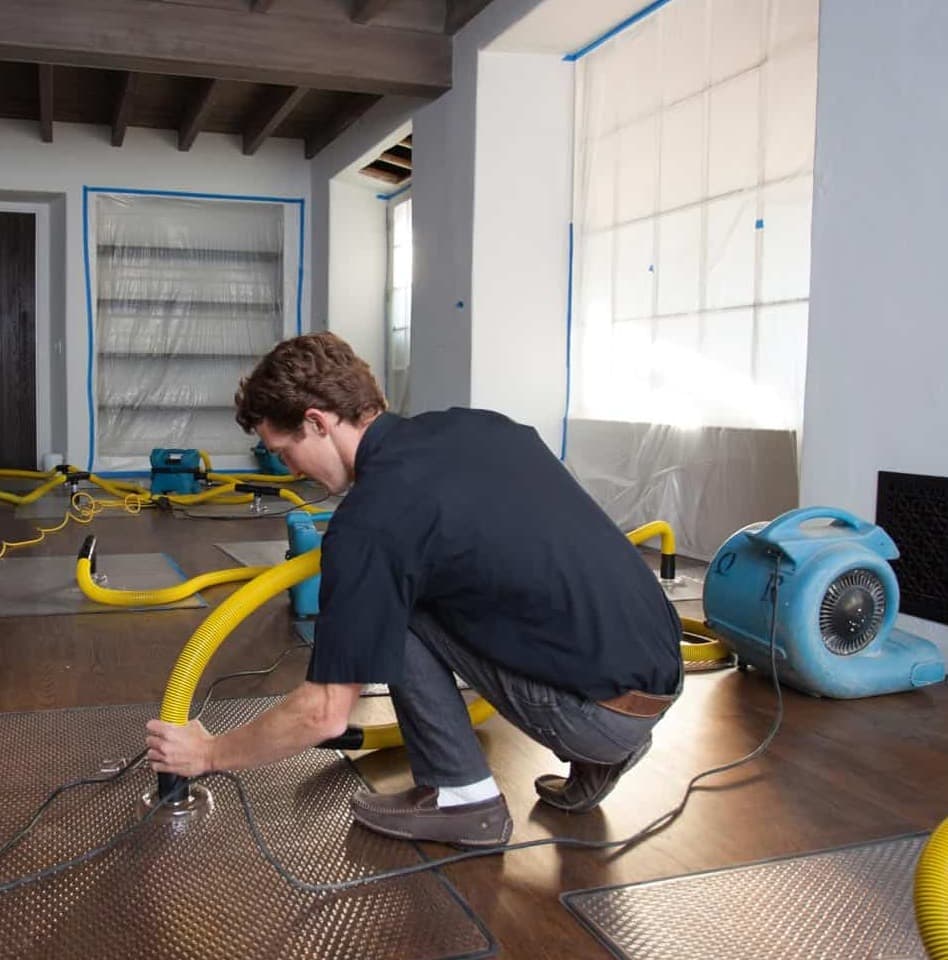
Residential fans and dehumidifiers from the closet cannot match industrial LGR dehumidifiers and commercial air movers. DIY drying attempts almost always fall short of industry-standard drying goals, which means mold colonization a week later. Leave drying to the crew.
Prime Restoration delivers an Xactimate scope within 24 hours of the first visit. This is the document your adjuster uses to value the claim. Get it in writing, review it, and make sure every affected area is accounted for.
Every call with the adjuster, every visit from the restoration crew, every decision made — write it down with dates. This log protects you if there's ever a dispute about scope, timeline, or payment.
For Category 3 losses or large Category 2 events, your home may be uninhabitable for days. Your policy likely includes Additional Living Expense (ALE) coverage for hotels, meals, and laundry. Keep receipts for everything — ALE reimbursement requires documentation.
Most Macomb County water damage events happen outside of business hours — Saturday afternoon washing machine overflows, Sunday night pipe bursts, Monday morning returns from weekend trips to find the basement flooded. The homeowners who take the smallest losses are the ones who called a 24/7 restoration company immediately instead of waiting until Monday morning. Water damage scope doubles roughly every 12 hours in the first two days — what could have been a $2,500 project Saturday becomes a $10,000 project Tuesday. Prime Restoration dispatches 24/7 exactly so homeowners do not have to sit on a loss until business hours. Call (586) 277-1069 the moment you notice the problem.
Immediately. Not tomorrow morning, not after business hours. Every hour matters for limiting damage, and the professional extraction and drying that happens in the first 24 hours determines how much of the home is salvageable versus demolished. Prime Restoration dispatches 24/7 at (586) 277-1069.
No. Your policy requires you to take reasonable steps to prevent further damage. Mitigation work should start immediately and the adjuster will coordinate scope documentation with the restoration contractor. Waiting for the adjuster to arrive before starting mitigation can actually jeopardize your claim.
Sewer backup and flood water are Category 3 losses with different protocols — full containment, PPE, HEPA air scrubbing, and complete removal of affected porous materials per industry-standard mitigation guidance. These are not DIY jobs, period. Call for professional response immediately. Insurance coverage depends on whether you have the appropriate endorsements (flood policy for rain/surface water, sewer backup rider for sewer events).
Your phone is fine. Take wide shots of every affected area, close-ups of damaged materials, shots of the water source, and photos of damaged contents. Video walkthroughs with narration are especially useful. Time-stamped photos are the most important documentation for your claim.
Mitigation (extraction, demolition, drying) typically runs 3 to 5 days for Cat 1 or Cat 2 losses, 5 to 7 days for Cat 3. Rebuild (drywall, flooring, paint, trim) adds another 1 to 3 weeks depending on scope. Total project from first call to completion is usually 2 to 6 weeks.
24/7 emergency dispatch. trained restoration crews. Typical 60-minute response across Macomb County.