If sewage has backed up into your Macomb County home, you are dealing with one of the most serious emergencies a homeowner can face. Raw sewage is not just a cleanup problem — it is a genuine health hazard, carrying bacteria, viruses, and parasites that pose real risks to your family. And yet, every year, homeowners across Sterling Heights, Clinton Township, Shelby Township, and the rest of Macomb County make the mistake of trying to clean up sewage themselves with mops, buckets, and bleach.
That approach does not work. In fact, it often makes the situation more dangerous. At Prime Restoration, our trained restoration technicians handle sewage backups with professional-grade containment, extraction, and decontamination equipment designed specifically for Category 3 water emergencies. This guide explains exactly what you are dealing with, what to do first, and why professional remediation is the only safe path forward.
Why Sewage Backups Are a Different Kind of Emergency
Not all water damage is the same. The restoration industry classifies water damage into three categories based on contamination level:
- Category 1 (Clean Water) — from a clean supply line, rain, or tap. Poses no significant health risk if addressed promptly.
- Category 2 (Grey Water) — from appliances, toilets (urine only), or sump pumps. Contains chemical and biological contaminants that can cause illness.
- Category 3 (Black Water) — sewage, floodwater, and water that has been standing long enough to grow bacteria. Highly contaminated. Requires professional remediation and full personal protective equipment.
A sewage backup is always Category 3, without exception. Even if the water looks relatively clear, it contains pathogens including E. coli, hepatitis A, salmonella, norovirus, and parasites like Giardia and Cryptosporidium. Exposure through skin contact, inhalation of aerosolized particles, or accidental ingestion can cause serious illness. Children, the elderly, and anyone with a compromised immune system face significantly elevated risk.
What Causes Sewage Backups in Macomb County Homes
Sewage backups happen for several reasons, and understanding the cause matters because it affects both how the cleanup proceeds and what preventive measures make sense afterward.
Municipal Sewer Overflows
Macomb County's combined sewer and stormwater systems — many built in the mid-20th century — can become overwhelmed during heavy rain events. When more water enters the system than it can handle, it backs up through floor drains and toilets in basements throughout Sterling Heights, Warren, Roseville, and Eastpointe. These backups are sudden and can introduce hundreds of gallons of sewage-contaminated water in minutes.
Blocked or Damaged Main Sewer Line
Tree roots are the leading cause of residential sewer line damage in Southeast Michigan. Roots infiltrate clay and cast iron pipes through tiny cracks, growing inside the pipe until they cause a full or partial blockage. When the main line backs up, every drain in your home becomes a potential overflow point. Grease buildup, flushed wipes, and foreign objects are also common culprits in Macomb County homes.
Failed or Missing Backwater Valve
A backwater valve (also called a backflow preventer) is a one-way valve installed in the floor drain that prevents sewer water from flowing back into your home when the municipal system surges. Many older homes in Macomb County do not have them, or have valves that have failed due to age or debris buildup. Installing and maintaining a backwater valve is one of the most effective preventive measures available to homeowners in our area.
Immediate Steps After a Sewage Backup
The window between discovery and professional response matters enormously for both safety and restoration outcomes. Here is what to do and what to absolutely avoid.
What to Do Immediately
- Leave the affected area and keep others out. Do not let children or pets into any space touched by sewage.
- Stop using all water in the house. Running any fixture — sink, toilet, shower — forces more water through the already-blocked system and adds to the overflow.
- Call Prime Restoration at (586) 277-1069. We dispatch a certified crew typically within 25 minutes, 24 hours a day, 7 days a week.
- Ventilate if you can do so without entering the affected area. Open windows and exterior doors if accessible from outside the contaminated zone.
- Document what you can from a safe distance. Photographs from a doorway are sufficient — do not enter the space for documentation purposes.
What NOT to Do
- Do not attempt to clean up sewage yourself without proper protective equipment including N95 or P100 respirators, chemical-resistant gloves, rubber boots, and goggles. Consumer protective gear is generally inadequate for Category 3 work.
- Do not use bleach as the primary decontaminant. Bleach cannot penetrate porous materials like concrete, drywall, and wood, and it does not address the structural contamination beneath the surface.
- Do not run your HVAC system. Sewage odors contain aerosolized biological contaminants. Running the HVAC spreads them through your ductwork and into every room of the house.
- Do not use a standard wet/dry vacuum. Consumer vacuums are not sealed for biohazardous material and will aerosolize contaminants while operating.
Health Risks of Sewage Exposure
The pathogens present in raw sewage cause a range of illnesses depending on the organism and level of exposure:
- Bacterial infections: E. coli exposure can cause severe gastrointestinal illness. Leptospirosis, transmitted through contact with sewage-contaminated water, can progress to kidney and liver damage.
- Viral infections: Hepatitis A spreads through sewage exposure and causes acute liver inflammation. Norovirus causes intense gastrointestinal illness.
- Parasitic infections: Cryptosporidium and Giardia are highly resistant to standard disinfection and cause prolonged gastrointestinal symptoms.
- Respiratory hazards: Hydrogen sulfide gas produced by sewage decomposition can cause respiratory irritation at low concentrations and is acutely toxic at high concentrations.
If you believe you have had significant sewage exposure, contact a healthcare provider promptly. Symptoms may be delayed by days or weeks depending on the pathogen involved.
The Professional Sewage Cleanup Process
When our team arrives at your Macomb County home, we follow a structured remediation protocol aligned with the industry-standard mitigation protocol for Category 3 water losses. The goal is physical removal of contaminated porous materials and application of commercial-grade disinfectants per industry standard — not masking contamination with deodorizers.
- Containment and assessment. We establish containment barriers using heavy-duty polyethylene sheeting and negative air pressure to prevent cross-contamination of unaffected areas. We assess the full scope of contamination using moisture meters and thermal imaging.
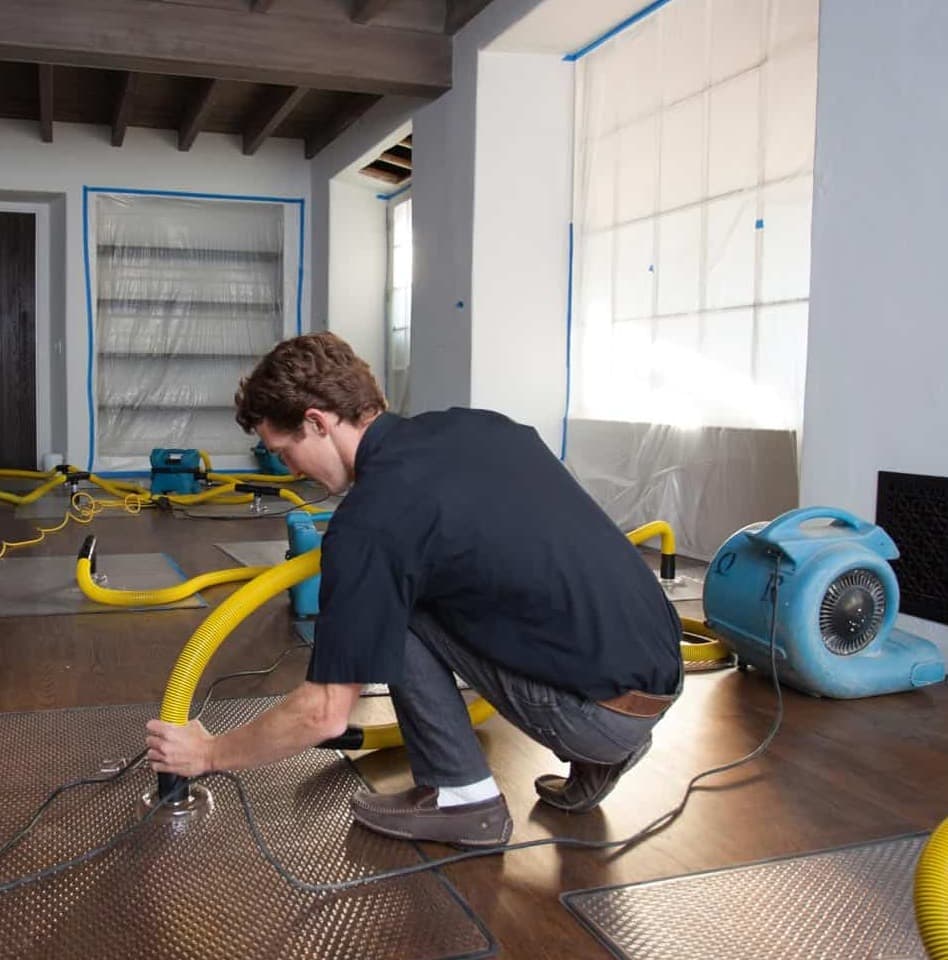
- Sewage extraction. Commercial-grade pumps and extractors remove standing sewage and contaminated water. We work in full personal protective equipment throughout this phase.
- Contaminated material removal. All porous materials that cannot be fully decontaminated — drywall, insulation, carpet, padding, wood flooring — are removed and double-bagged for disposal per Michigan environmental regulations.
- Structural disinfection. Non-porous surfaces are cleaned with commercial hospital-grade disinfectants effective against the full spectrum of sewage pathogens. Multiple application cycles ensure complete coverage.
- Drying and dehumidification. After disinfection, we set industrial drying equipment to bring structural moisture levels back to normal range. Sewage events introduce substantial water into floors, walls, and subfloor systems.
- Air quality remediation. HEPA air scrubbers run continuously throughout the project to capture airborne biological particles and hydrogen sulfide.
- Post-remediation verification. We confirm successful remediation through moisture readings and, where appropriate, ATP surface testing before reconstruction begins.
How Long Does Sewage Cleanup Take?
A straightforward sewage backup confined to a basement floor drain area can often be remediated within two to three days. More extensive events involving finished basements, multiple rooms, or significant structural absorption typically take five to seven days for full remediation and drying before reconstruction can begin.
Reconstruction — replacing drywall, flooring, insulation, and trim — is scheduled after the structure reaches proper dryness and clearance is confirmed. We coordinate the full process from remediation through reconstruction so you have one point of contact throughout your claim.
Can You Stay in Your Home During Sewage Cleanup?
In most cases, yes — but with important qualifications. If the sewage event is confined to an isolated basement area that can be fully sealed and the rest of the home is unaffected and ventilated, temporary occupancy is often feasible. However, if the contamination has spread to living areas, the HVAC system has been running, or there is any question about air quality, we recommend temporary relocation for the duration of active remediation.
We will give you a straightforward assessment after our initial inspection so you can make an informed decision about your family's situation.
Preventing Future Sewage Backups in Macomb County
After your remediation is complete, a few targeted measures can significantly reduce your risk of a repeat event:
- Install a backwater valve if your home does not have one. A licensed plumber can install this in your main drain line to physically prevent municipal sewer surges from entering your home.
- Have your sewer line camera-inspected to identify root infiltration, cracks, or buildup. Annual inspection is particularly valuable for homes more than 30 years old.
- Avoid flushing anything except toilet paper. "Flushable" wipes, paper towels, and hygiene products are leading causes of residential sewer line blockages.
- Keep floor drains clear and functioning. A floor drain with a working trap primer or a properly maintained trap prevents sewer gas entry and provides an early warning for sewer surges.
- Review your homeowner's insurance policy for water backup and sewer coverage. Standard policies typically do not cover sewage backup without a specific endorsement.
Serving All of Macomb County
Prime Restoration is a top-rated, highly local restoration company with a 5-star Google rating, BBB A+ accreditation, and Certified Best Pick 2027 recognition, providing 24/7 emergency sewage cleanup throughout Macomb County, including Sterling Heights, Clinton Township, Shelby Township, Warren, Roseville, St. Clair Shores, Chesterfield Township, Mount Clemens, Fraser, Eastpointe, Harrison Township, New Baltimore, Utica, Romeo, and Center Line. Call (586) 277-1069 any time — day or night — for immediate dispatch. Our trained restoration team typically arrives within 25 minutes with everything needed to begin safe, professional Category 3 remediation.
When sewage enters your home, every minute you wait increases both the health risk and the scope of damage. Call us now at (586) 277-1069 and let our certified team handle the rest.
Tags
24/7 Emergency Response
Need Professional Restoration Now?
Call now and speak directly with our trained restoration team. On-site within 25 minutes.
(586) 277-1069