
Basement flooding is the single most common water damage event for Michigan homeowners. The state's clay-heavy soil, high water tables, aging municipal sewer infrastructure, and intense weather patterns create a perfect storm (often literally) for basement water intrusion. Whether it is a slow seep after a heavy rain or a sudden catastrophic flood from a sump pump failure, basement flooding causes extensive damage, creates serious health hazards from mold and bacteria, and costs Michigan homeowners thousands of dollars annually.
This guide explains the most common causes of basement flooding in Michigan, provides practical prevention strategies, and details what professional restoration involves when flooding does occur.
The 8 Most Common Causes of Basement Flooding in Michigan
1. Sump Pump Failure
Sump pumps are the primary defense against basement flooding in Michigan homes, and when they fail, the results are often catastrophic. The most common reasons sump pumps fail include:
- Power outage: Michigan storms frequently knock out power, disabling the sump pump at the exact moment it is needed most. Without a battery backup system, your basement is unprotected.
- Mechanical failure: Float switches stick, impellers wear out, and check valves fail. Pumps have an average lifespan of 7-10 years.
- Overwhelmed capacity: During extreme rain events, the volume of water entering the sump pit can exceed the pump's capacity, especially if the pump is undersized for the home.
- Clogged inlet or discharge line: Debris in the sump pit or ice in the discharge line during winter can prevent the pump from operating.
2. Sewer Backup
When Michigan's aging combined sewer systems become overwhelmed during heavy rainfall, sewage can back up through basement floor drains. This is Category 3 (black water) contamination, the most dangerous and expensive type of water damage. Communities across Macomb County and Oakland County with older sewer infrastructure are particularly vulnerable to this problem.
3. Foundation Cracks and Seepage
Hydrostatic pressure from water-saturated soil pushes against your foundation walls and floor slab. Water finds its way through any crack, joint, or gap in the foundation. Michigan's clay soil retains water and expands when wet, increasing pressure against foundation walls. Freeze-thaw cycles widen existing cracks over time.
4. Heavy Rainfall and Flash Flooding
Michigan can experience rainfall rates of 1-3 inches per hour during severe thunderstorms. This volume of water overwhelms storm drains, saturates the soil, and raises the water table, all of which push water toward and into basements. The summer storm events of recent years have produced record-breaking rainfall that caused widespread basement flooding across Southeast Michigan.
5. Snowmelt and Spring Thaw
Michigan's spring thaw releases enormous amounts of water as accumulated snow and ice melt over several weeks. When the ground is still frozen, this water cannot absorb into the soil and instead runs toward and against foundations. Rapid thaw events, especially when combined with rain, are a leading cause of spring basement flooding.
6. Poor Exterior Drainage
Improper grading around the foundation, clogged gutters, disconnected downspouts, or downspouts that discharge too close to the house all direct water toward the basement rather than away from it. Over time, soil settlement around the foundation can reverse the grade, causing water to pool against the house.
7. Window Well Flooding
Basement window wells without proper drainage or covers collect rainwater and snowmelt. When the well fills faster than it drains, water enters through the window or the joint between the window and the foundation.
8. Burst or Leaking Pipes
Supply lines, water heaters, and laundry connections in the basement can leak or rupture, releasing water directly into the lowest level of the home. Frozen pipes during Michigan winters are a common cause of basement flooding from internal plumbing.
How to Prevent Basement Flooding
While you cannot control Michigan's weather, you can take practical steps to significantly reduce your basement flooding risk:
Sump Pump Protection
- Install a battery backup sump pump. This is the single most important prevention measure for Michigan homeowners. Battery backup systems automatically activate during power outages and can pump thousands of gallons before the battery is depleted.
- Test your sump pump monthly. Pour water into the pit to verify the pump activates, pumps water out, and the check valve prevents backflow.
- Replace your sump pump every 7-10 years or at the first sign of decreased performance.
- Install a sump pump alarm that alerts you if the water level in the pit rises above normal, indicating a pump failure or overwhelmed capacity.
Exterior Drainage
- Ensure proper grading. The ground should slope away from your foundation at a rate of at least 1 inch per foot for the first 6 feet.
- Clean gutters and downspouts at least twice per year, in spring and fall.
- Extend downspouts at least 6 feet from the foundation. Underground downspout extensions that discharge to daylight are even more effective.
- Install window well covers and drains. Clear polycarbonate covers keep rain and debris out while allowing light in.
Foundation Protection
- Seal foundation cracks with polyurethane injection or hydraulic cement, depending on the type and severity of the crack.
- Apply waterproof coatings to interior basement walls. While not a solution for major water intrusion, coatings help with minor seepage and dampness.
- Consider an interior drain tile system if you experience recurring basement water. These systems collect water that enters the basement and channel it to the sump pump for removal.
- Install a backwater valve on your main sewer line to prevent sewage from backing up into the basement during heavy storms.
Plumbing Maintenance
- Inspect water heater for rust, corrosion, and leaks annually
- Replace washing machine hoses every 5 years
- Insulate exposed pipes to prevent freezing
- Know the location of your main water shutoff valve
What to Do When Your Basement Floods
- Do not enter a flooded basement if the water is above the electrical outlets or if you can see or smell sewage. Call a professional first.
- Turn off electricity to the basement at the circuit breaker panel (if you can do so safely from outside the flooded area).
- Call Prime Restoration at (586) 277-1069 for immediate emergency extraction and restoration.
- Document the damage with photos and video before any cleanup begins.
- Contact your insurance company to report the flooding.
- Do not use electrical appliances in or near the flooded area.
Professional Basement Flood Restoration
Basement flood restoration is more complex than many homeowners realize, particularly in finished basements. Here is what professional restoration typically involves:
Phase 1: Emergency Water Extraction
Truck-mounted and portable extraction units remove standing water. Submersible pumps handle deep water situations. All standing water is removed as quickly as possible to begin reducing moisture levels.
Phase 2: Material Assessment and Removal
Flood-damaged materials are assessed for salvageability. In most basement flood scenarios, carpet and pad, drywall below the flood line, and wet insulation must be removed. Decisions are based on professional moisture readings and the category of water involved.
Phase 3: Structural Drying
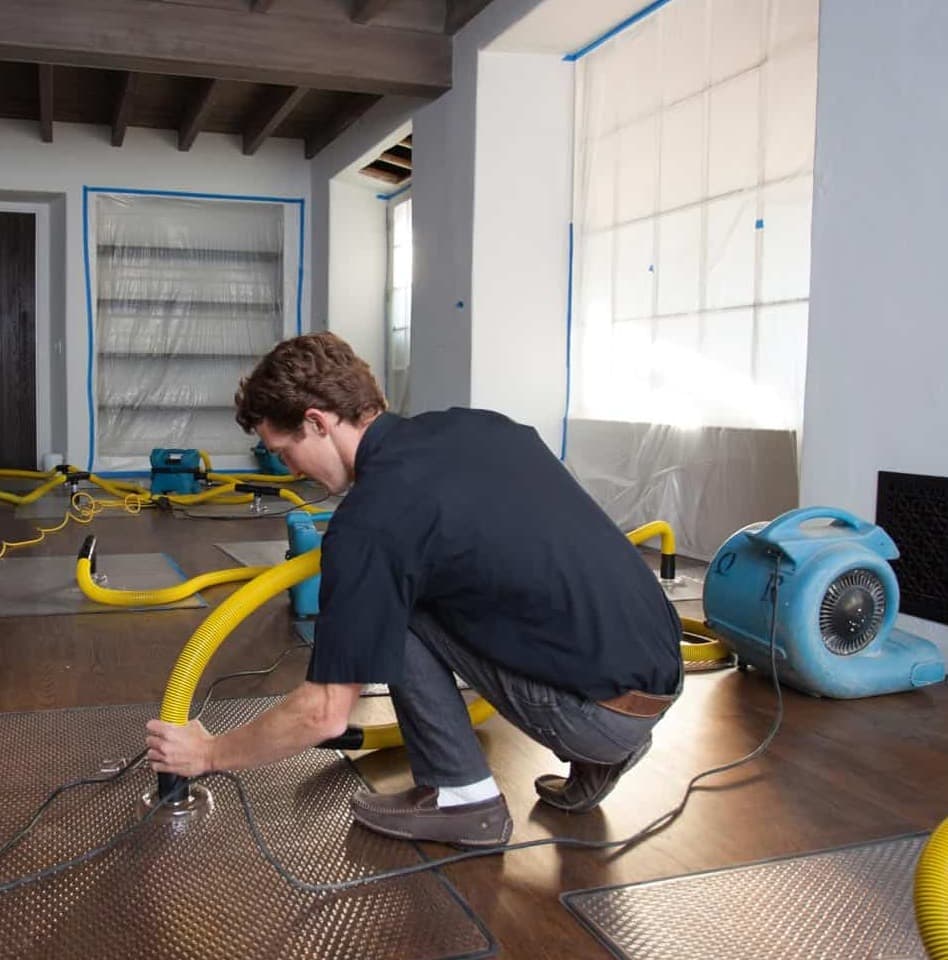
Industrial dehumidifiers and air movers are deployed to dry the concrete slab, framing, and any remaining building materials. Basement drying is particularly challenging because concrete absorbs and retains moisture for weeks. Daily moisture monitoring ensures drying progresses to completion.
Phase 4: Antimicrobial Treatment and Decontamination
All affected surfaces are treated with professional-grade antimicrobial agents. If sewage was involved, additional decontamination and sanitization steps are required.
Phase 5: Reconstruction
Once the structure is completely dry, reconstruction begins. This includes installing new drywall, insulation, flooring, trim, and any other materials that were removed. Many homeowners take the opportunity during reconstruction to upgrade their basement finishing and add waterproofing measures.
Basement Flooding Insurance Coverage in Michigan
Insurance coverage for basement flooding depends on the cause:
- Burst pipe or appliance failure: Covered by standard homeowner's insurance.
- Storm-driven water through windows or walls: Usually covered as wind/storm damage.
- Sump pump failure: Covered only if you have a sump pump/water backup endorsement on your policy.
- Sewer backup: Covered only with a sewer backup endorsement.
- External flooding (rising water): Not covered by homeowner's insurance; requires separate flood insurance.
- Foundation seepage: Typically not covered as it is considered a maintenance issue.
We strongly recommend that all Michigan homeowners add sewer backup and sump pump failure endorsements to their policies. These endorsements typically cost $40-$70 per year and provide $5,000-$25,000 in coverage for two of the most common basement flooding scenarios.
24/7 Basement Flood Emergency Response
When your Michigan basement floods, every minute matters. Mold begins growing within 24-48 hours, and the longer water sits, the more extensive and expensive the restoration becomes. Call Prime Restoration at (586) 277-1069 for immediate emergency response. We serve all of Macomb County and Oakland County with typical 60-minute response times, commercial-grade extraction equipment, and complete restoration services from extraction through reconstruction.
Tags
24/7 Emergency Response
Need Professional Restoration Now?
Call now and speak directly with our trained restoration team. On-site within 60 minutes.
(586) 277-1069