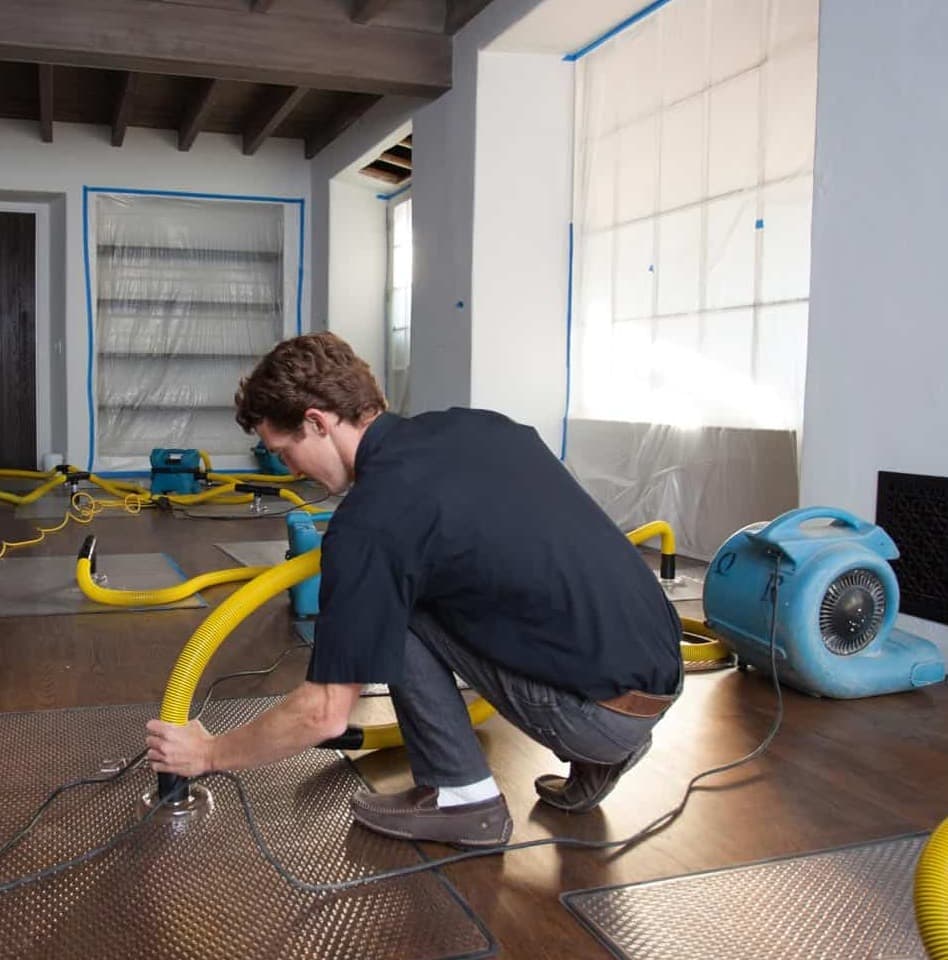
We find the leak, dry it out, and repair the ceiling. Free inspection. On site in 60 minutes.
Before anything else
Do I need a plumber or you?
We handle this. If water is still arriving you may also need a plumber to stop the source — that is their trade, not ours. What we do is everything after and around it: finding where the water actually went, drying the structure, and repairing the ceiling, the insulation and anything else it reached. Plenty of our calls start with someone who has already had a plumber out and now has a stained, sagging ceiling nobody has dealt with.
What if I do not know where it is coming from?
That is the most common version of this call and it is genuinely our job rather than a plumber’s. Finding a leak that has no obvious source is a moisture-mapping and thermal problem, and a plumber will usually want to be told where to cut. We locate it, and then you know whether you need a plumber, a roofer, or neither.
It is only a small stain. Is this even worth a call?
Yes, and small is the best time. A stain the size of a dinner plate on the ceiling means the cavity above it has been wet for a while, and the cavity is always wetter and wider than the mark. Caught early it is frequently a dry-in-place job with a patch. Left alone it becomes insulation removal, a flood cut and sometimes mould. We would rather look at ten small ones than one that sat.
What does it cost to have you look?
Nothing. The inspection, the moisture readings and the written scope are free, and you keep them whether or not you hire us. If we get there and it turns out to be nothing, or it turns out to be a plumbing repair with no restoration needed, we will say so and go. That happens and it is fine.
Published by Prime Restoration, a Michigan licensed residential builder dispatching from Sterling Heights. We are not a plumbing contractor and we do not perform plumbing repair. Last updated 2026-04-14.
Diagnosis
You can narrow this down a long way before anyone opens a ceiling, and it is worth doing because it decides who you should be calling. The single most useful observation is when the stain changes — not what it looks like.
| Likely source | How it behaves | Check this yourself | Who you need |
|---|---|---|---|
| Upstairs bathroom — the wax ring or the shower pan | Stain appears or grows shortly after someone uses the fixture above. Often a slow ring that darkens over weeks rather than a drip. | Is the ceiling directly under a toilet, a shower or a tub? Does the stain change after a shower? | Plumber for the repair. Us for finding it and for everything the water reached. |
| A supply line in the ceiling cavity | Constant, unrelated to anyone using anything. Can run for weeks. Often the fastest-growing stain of the lot. | Does it get worse whether or not the house is occupied? That points at supply rather than drain. | Plumber stops it. This is the one where speed changes the whole scope. |
| A drain line, not a supply line | Only when something drains — a sink emptying, a washing machine cycling, a bath being let out. Intermittent by nature. | Run the fixture above and watch. Intermittent almost always means drain. | Plumber. Usually a smaller repair than a supply failure, and usually a longer-running leak. |
| HVAC condensate | Cooling season only, and it correlates with the system running. The water is cold. | Is there an air handler above, and is this happening in July rather than January? | Mechanical contractor. A clogged condensate drain is one of the most common ceiling stains that has nothing to do with plumbing. |
| The roof — and it is rarely above the stain | Tied to weather. Wind-driven rain from one direction, or a thaw after snow sat on the roof. | Did it appear after a storm, or after a thaw? Water runs along rafters before it drops, so the entry point is usually well upslope of the mark. | Roofer for the covering. We cover the tracing and the interior in full on our roof-leak page. |
| Nothing above it at all | No bathroom, no plumbing, no HVAC, no roof directly above — and still a stain. | This is where people give up. Water travels along framing and drops where it finds a gap, so a stain fifteen feet from the entry point is ordinary rather than strange. | Us. This is the moisture-mapping and thermal case, and it is the version a plumber cannot solve by looking. |
If it is bulging, read this first
This is the one genuinely time-sensitive thing on the page. Everything else here can wait until tomorrow. This cannot.
A bulge is a pocket of water, not a stain
Drywall holds water on top of it. A four-foot by four-foot pocket can hold five to ten gallons, which is forty to eighty pounds of unsupported weight sitting on paper-faced board that is already losing its bond. It does not fail gradually. It comes down as a sheet.
Clear the room first, not last
Furniture, electronics and anything on the floor beneath it. This takes two minutes and it is the difference between a ceiling repair and a ceiling repair plus a contents claim.
Drain it deliberately rather than waiting
A bucket under the low point and a small hole punched at the very lowest part of the bulge lets it come down in a controlled way instead of all at once. It feels wrong to put a hole in your own ceiling. It is the right call, and the hole is inside the area that is coming out anyway.
Do not point a fan at it
The wet zone is the cavity above, not the painted face. A box fan aimed at the ceiling dries the one surface that was never the problem and does nothing to the insulation and joists holding the water.
Do not paint or seal it
Stain-blocking primer over a wet cavity traps it and hides the evidence of how far it spread. Every restorer has walked into a room where the ceiling was painted three times before somebody called.
When to leave the room entirely
If the bulge is large, if the drywall is visibly separating at the seams, or if there is a light fixture or a fan in the affected area. Water plus a ceiling fixture is an electrical question as well as a structural one, and that is a call to make from the hallway.
Above the stain
The stain is the last thing to happen, not the first, and the wet area above it is always wider than the mark. This is what a scope should address — and the two items people are most often surprised by are the insulation and the floor above.
The drywall itself
Paper-faced gypsum wicks well past the visible stain. The removal line is set by a meter, not by the mark, which is why the cut is almost always wider than the homeowner expects. A ceiling that is sound and only discoloured can frequently be dried in place and repainted.
The insulation above it
The part nobody sees and the part that decides the timeline. Wet batt insulation holds water against the joists for weeks, loses its R-value permanently because the loft is what was insulating, and stops you getting reliable readings on the framing. In the affected area it comes out.
The joists and the subfloor above
Usually recoverable. Solid framing takes water on the surface rather than through it, and it dries with directed airflow. This is the structural question and it is answered with penetrating readings rather than by looking.
The floor above the leak
Frequently forgotten. If the source was an upstairs bathroom, the subfloor and the finish above the joist bay are part of the wet zone too. A scope that only addresses the ceiling below has fixed the half you can see.
Light fixtures, fans and the boxes
Anything electrical that had water in or on it is evaluated by a licensed electrician rather than dried and re-energised. Corrosion inside a box is not visible and does not fail immediately.
Textured ceilings in a pre-1980 home
Stop before disturbing it. Textured and sprayed ceiling finishes from that era may contain asbestos, and cutting or scraping releases fibres. It gets tested by a qualified party first. Abatement is a licensed specialty and it is not restoration work.
Asbestos testing and abatement, plumbing repair and electrical work are separate licensed trades. We name them in the scope and route them out rather than performing them.
Not an emergency?
If the ceiling is bulging or water is actively coming through, call — do not use a form. This is for the slow ones: a ring that has been there a while, a mark that got bigger, or a smell with nothing visible. The look and the written scope are free either way, and if it turns out to be nothing we will tell you that.
24/7 Emergency
Free inspection and moisture readings. You keep them whether or not you hire us.
(586) 277-1069Upstairs fixture inspection — toilet, shower pan, tub overflow, supply lines, washing machine, or plumbing in the ceiling cavity. Rule out AC condensate (see /ac-condensate-leak-water-damage) before cutting anything open.
Clear the room below of contents. Controlled weep hole in any sagging ceiling bulge to drain a trapped water pocket. Water shutoff upstream of the failed component.
Ceiling inspection hole cut under the stain. Moisture readings on drywall, joists, subfloor above, and insulation. Scope drawn from readings, not from the stain footprint.
Saturated drywall and wet insulation removed where readings or structural integrity require it. In-place cavity drying used where the drywall is salvageable and the cavity is accessible.
2 to 6 air movers and 1 to 2 LGR dehumidifiers for 2 to 5 days. Joist bay drying with directed airflow. Daily moisture logs against a dry standard from an unaffected section.
Professional-grade antimicrobial on framing and substrate. Reconstruction estimates (ceiling drywall, insulation, upstairs flooring, trim) written as detailed, itemized line-item estimates. Rebuild sequenced after the cavity is back to dry standard.
A ceiling stain is a paper-and-paint problem. A ceiling sag is a structural and safety problem. Once drywall is holding several gallons of pooled water on its top side, the gypsum has already lost its bond with the paper and the sheet is one disturbance away from failing. We see this most often on losses where the homeowner noticed the stain at night and waited until morning to call. Clearing the room below and draining the pocket in a controlled way is the single most important step before any other work begins.
Once the immediate hazard is stable, the real scope begins: find the source, open the cavity, dry the framing, and document the work. Most Macomb County upstairs-source ceiling losses dry in 3 to 5 days when they are handled properly. The ones that turn into expensive mold and structural projects are the ones where the homeowner waited, the cavity stayed wet, and the drywall was never actively dried.
They look similar at the stain level — both produce brown ringed spots on ceiling drywall — but they come from different failure modes and have different fixes. A plumbing or bathroom leak from above is usually warm or room-temperature water, often accompanied by a second drip pattern when someone uses the fixture above (shower, toilet, sink). AC condensate leaks are cold, typically only during cooling season, and correlate with the system running. If the ceiling is directly under a bathroom, kitchen, or laundry room and the house has an upstairs air handler, both are possible — we check both sources before cutting anything open. For condensate-specific scenarios and scope see our dedicated page at /ac-condensate-leak-water-damage.
A sagging ceiling with a visible bulge is holding a pocket of water on top of the drywall, and yes, it can collapse. A 4-foot by 4-foot pocket can hold 5 to 10 gallons, which is 40 to 80 pounds of unsupported weight on paper-faced drywall that is already losing its bond. The emergency step is to clear the room below of furniture and electronics, place a bucket or tub directly under the low point, and carefully punch a half-inch hole in the lowest point of the bulge with a screwdriver to drain the pocket in a controlled way. This prevents a full sheet collapse. Then call a restoration company. Do not try to dry the cavity with a box fan from below — the cavity above is the actual wet zone and a fan aimed at the ceiling face does nothing useful.
The upstairs bathroom is the source and also part of the damage scope. We pull the toilet (or at least the base wax ring area), lift a section of the bathroom floor finish if it is vinyl or tile over a wood subfloor, and inspect the subfloor and the joist bay below. Downstairs, we cut a ceiling inspection hole under the wettest part of the stain and assess the cavity. Saturated batt insulation comes out, wet drywall gets flood-cut back to dry material, and the joists are dried with directed airflow. Tile bathroom floors over a fully cured mud bed often survive; vinyl over particle-board underlayment almost never does. The scope crosses two rooms and two floors even though the visible damage is mostly on one ceiling.
Homes built in Macomb, Warren, Roseville, and East Detroit from about 1948 through 1968 often used galvanized steel supply lines and cast iron drain-waste-vent (DWV) stacks that are now 60 to 75 years old and at the end of their useful life. Galvanized pipe rusts from the inside out and eventually develops pinholes at threaded joints. Cast iron drain lines develop hairline cracks and the horizontal runs under upstairs bathrooms sag at the hangers. Shower drain assemblies (the cast rubber gasket or lead-and-oakum seal between the drain and the trap) dry out and leak only when the shower is used. These failures hide in the ceiling cavity for months before a stain appears because the drip is slow and the cavity absorbs it.
Sudden and accidental plumbing discharge is a covered peril on standard Michigan HO-3 policies. A burst supply line, a shower pan failure that dumped water during a single shower, a toilet supply line that let go, or an upstairs washing machine overflow are typically covered. Excluded: long-term seepage (a dripping shower drain that stained the ceiling over six months), gradual deterioration of fixtures, wear and tear, and damage from lack of maintenance. The adjuster is looking at the size and age of the stain, whether there is visible mold on the back of the drywall, whether a prior claim or service record shows the system had been leaking, and whether the cause of loss was a single event or ongoing. Payment decisions, coverage determinations, and settlement amounts are made solely by the insurance carrier after their own inspection.
A small contained leak with a 2-by-2 drywall patch, cavity dry, and localized insulation replacement runs $1,200 to $2,800 for mitigation. A typical upstairs bathroom loss with a section of ceiling flood cut, joist bay drying, wet insulation removal, and partial bathroom floor demo runs $3,500 to $8,500. A larger loss with a significant ceiling collapse, extensive cavity drying across multiple joist bays, and upstairs subfloor replacement runs $8,500 to $18,000 before rebuild on the finished surfaces. Rebuild (new drywall, tape, mud, stain-block primer, ceiling paint, bathroom floor reinstall) is a separate scope that usually runs 40 to 70 percent of mitigation cost. These are 2026 Macomb County averages and not a quote.
If the drywall is still structurally sound and moisture readings in the cavity are recoverable, we cut a 4-to-8-inch inspection hole at the low point, insert a drying cavity hose or a directed air mover tube, and use the existing drywall as a partial enclosure for the drying chamber. An LGR dehumidifier controls the room below. This is called an in-place cavity dry and it saves the ceiling when the cavity is accessible and not packed with wet cellulose. When the cavity is full of saturated blown-in insulation or the drywall is already sagging, we flood-cut the ceiling and dry the joist bays directly because that is faster and more reliable than trying to save failing drywall.
No — and this is the mistake that turns a mitigation claim into a bigger one. A wet ceiling cavity in a heated Michigan house sits at the right temperature and humidity for microbial growth, and paper-faced drywall begins colonizing within 48 to 72 hours. Passive drying by leaving a hole in the ceiling does not move enough air to actually dry the joists and subfloor — it just ventilates the room below. Documented active drying with air movers and dehumidifiers under controlled psychrometric conditions is what the restoration industry standard calls for and what insurance carriers expect to see on the estimate. Skipping it is also how carriers deny the mold portion of a later claim.
This is the most common version of this call and it is genuinely solvable, because water does not drop where it enters. It runs along framing — a rafter, a joist, the top plate of a wall — and falls at the first gap it finds, so a stain can be ten or fifteen feet from the actual source and one floor below it. That is why looking directly above the mark so often finds nothing. What narrows it fast is timing rather than geography: if it changes after someone showers, it is the fixture above; if it is constant regardless of who is home, it is a supply line; if it only happens when something drains, it is a drain line; if it only happens in cooling season, it is HVAC condensate; and if it only happens after weather, it is the roof. If none of those fit, that is the moisture-mapping and thermal-imaging case, which is our work rather than a plumber’s. A plumber generally wants to be told where to cut. We find it first, and then you know who you actually need.
Only once you know the cavity above it is dry, and painting is how most people find out too late that it was not. Stain-blocking primer will cover the mark beautifully and it does nothing to the wet insulation and framing sitting above it, so the stain comes back — usually within weeks, sometimes bigger than before. It also destroys the evidence of how far the water actually spread, which matters if this ever becomes a claim. Every restorer has walked into a room where a ceiling was painted three times before somebody called. The sequence that works is: find the source, stop it, confirm the cavity is at a dry standard with a meter rather than by feel, then repair and paint. If the readings come back dry and the stain is purely cosmetic, painting is exactly the right answer and it is a cheap afternoon.
Longer than people expect, which is why the size of the stain is a poor guide to the size of the problem. Water entering a ceiling cavity soaks the insulation first, then travels along the framing, and only shows on the painted face once enough has accumulated to saturate the drywall from above and carry the discolouration through. That can take days, and on a slow drip it can take weeks. The practical consequence is that a stain the size of a dinner plate usually means the wet zone above it has been building for a while and is considerably wider than the mark. It also means a stain that appeared today is not necessarily a leak that started today, so trying to date the loss by when you noticed it is unreliable. What is reliable is a moisture map.
Both, usually, and the order depends on whether water is still arriving. If it is actively coming through, a plumber stops the source and that is the right first call — plumbing repair is a licensed trade and it is not one we perform. If it has already stopped, or if you cannot work out where it is coming from, a moisture inspection is the more useful first step, because it tells the plumber where to look and it tells you how much of the ceiling, insulation and floor above is actually wet. A great many of our ceiling calls start with a homeowner who has already had a plumber out, had the pipe fixed, and is now looking at a stained sagging ceiling that nobody has dealt with. Describe it on the phone and we will tell you honestly which one you need — including when the answer is that you only need the plumber.
The distinction that usually decides it on a standard Michigan HO-3 is sudden and accidental versus gradual. A supply line that let go, or an overflow, is generally treated as sudden and accidental and the resulting damage is usually addressed. A fitting that had been weeping into the ceiling for months, where there is staining history and deterioration, is more often treated as gradual and excluded as maintenance. There is also frequently a distinction between the failed component itself and the damage it caused, which are handled differently in most policies. Coverage determinations, payment decisions and settlement amounts are made solely by your insurance carrier after their own inspection. What we control is the record: photographs before anything is opened, moisture readings against a dry standard, and a written scope of what was removed and why.
Trained mitigation crews across Macomb County and Metro Detroit. Cavity drying, upstairs-source scope, and detailed, itemized line-item reconstruction estimates. Claim filing and payment decisions stay between you and your carrier.
Call (586) 277-1069Prime Restoration is a Michigan licensed residential builder and full-service water damage restoration contractor. Payment decisions, coverage determinations, and settlement amounts are made solely by the insurance carrier after their own inspection. Cost ranges on this page are 2026 Macomb County averages and are not a quote; every project is priced from actual moisture readings and affected square footage.