
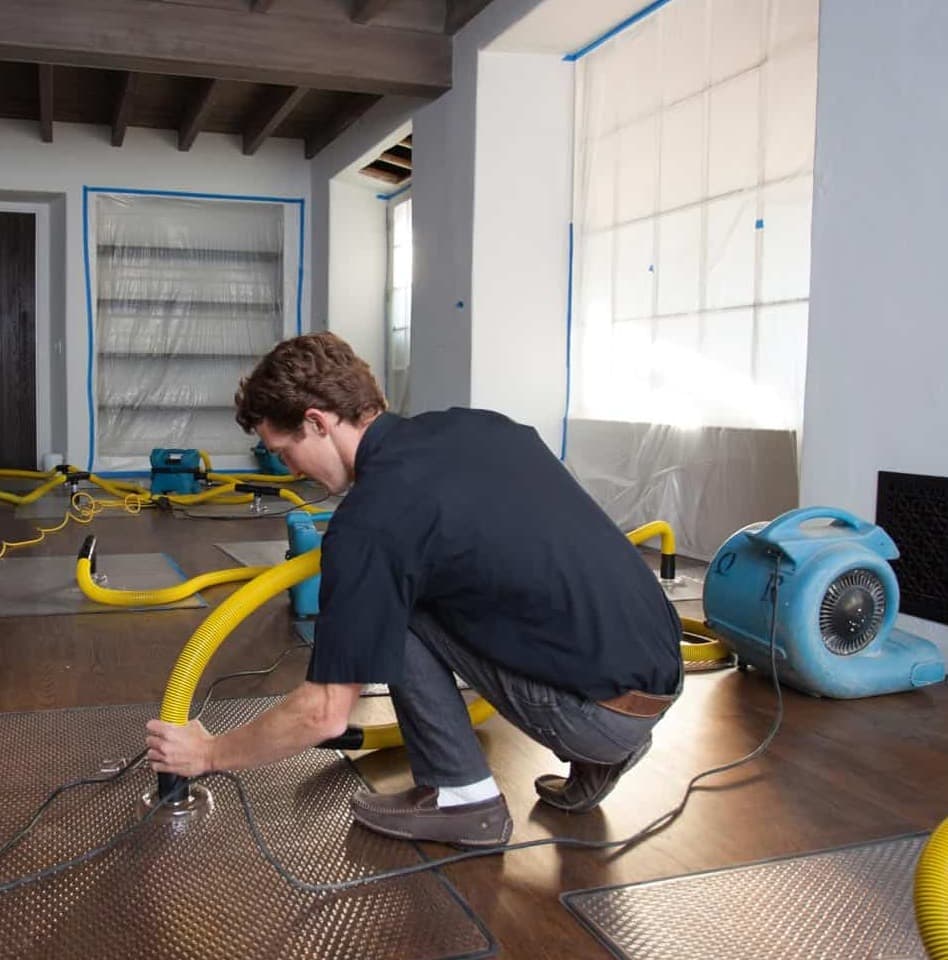
Sewage Backup Cleanup in St. Clair Shores, MI
Most municipal sewer backups in Southeast Michigan happen during heavy rain when the combined sewer system exceeds capacity. The backup comes up through basement floor drains. The material that has touched sewage — carpet pad, drywall bottom, MDF baseboards — is disposed of, not cleaned.
Family-Owned · Insured & Licensed · 24/7 Emergency Dispatch
What St. Clair Shores Homeowners Need to Know
Canal and lakefront homes along Jefferson in St. Clair Shores sit only a few feet above Lake St. Clair’s water level — any surface flooding finds its way into crawlspaces and basements fast.
Housing here is predominantly Classic 1950s–1960s waterfront and canal homes, many built on backfilled lake muck. The most common restoration-related issues in St. Clair Shores are canal proximity, seawall failure, high water table. Our crews treat each property as its own project — scope, drying time, and rebuild needs are written based on what we measure on site, not a generic playbook.
St. Clair Shores canal homes along Jefferson sit only a few feet above Lake St. Clair's water level, which creates restoration conditions unusual for inland Michigan: crawl spaces and basements take on water from seawall overtopping during east-wind storms, not just from roof or plumbing failures. Drying projects here frequently involve structural components that have been saturated from outside in, requiring longer monitored drying cycles and careful attention to sub-floor moisture.
Sewage cleanup projects in St. Clair Shores are handled with strict Category 3 sewage precautions regardless of location — but the conditions that make canal proximity common here also shape how contamination migrates through substrates and what physical removal looks like in practice.
Seasonal pattern — St. Clair Shores
East-wind lake events can push canal water over seawalls in any season; heaviest concentration is late fall through early spring.
Local conditions in St. Clair Shores
Soil & Water Table
St. Clair Shores canal and lakefront homes sit only a few feet above Lake St. Clair's water level. The effective water table is essentially the lake surface, and seawall integrity is the primary defense against basement and crawlspace intrusion. Soil is often backfilled lake muck — poor drainage characteristics.
Building Stock
St. Clair Shores canal and lakefront homes are largely 1950s-1960s construction, many built on backfilled lake muck with poor load-bearing soil. Foundation settling is a recurring issue separate from moisture, and any restoration project near the waterfront has to consider structural movement as well as drying.
Dispatch & Access
Canal and lakefront homes along Jefferson Avenue sometimes require extended hose runs from street-staged equipment to reach basement and crawlspace access points. Single-family inland neighborhoods have standard suburban access.
St. Clair Shores Neighborhoods and Districts We Cover
St. Clair Shores is built around a dense network of canals feeding into Lake St. Clair, and restoration work concentrates around three sub-areas. The Nautical Mile along Jefferson and the canal districts off Masonic, Martin, and Nine Mile contain seawall-lined residential canals where lake levels, ice damage, and seawall failures translate directly into below-grade water intrusion. The Lakeshore Village and Lakepointe areas hold mid-century brick ranches and bungalows with original clay tile laterals, a population well represented in sewer backup claims. The inland St. Gertrude and Masonic Heights neighborhoods, set back from the canals, present standard finished-basement losses driven by main-line surcharge rather than lake exposure. Across the city, the dominant 1950s-1970s housing stock means asbestos-suspect floor tile, mastic, and plaster systems factor into every demolition scope under Michigan Part 602.
Recent Storm History — St. Clair Shores, MI
St. Clair Shores sits in the heart of the Lake St. Clair flood corridor and carries a long history of significant restoration events. The August 11, 2014 Metro Detroit flood produced one of the largest sanitary-sewer backup events in Macomb County history, with thousands of finished basements taking Category 3 water through floor drains and laterals along the canal districts and inland neighborhoods alike. The June-July 2021 Metro Detroit flooding generated a comparable wave of sewer backups. East-wind events on Lake St. Clair and occasional seiche events shift water levels rapidly along the canals, and the 2020 record Great Lakes levels left seawalls undermined and weakened across the city. The April 15, 2026 Macomb County windstorm added wind, debris, and tree-impact damage to a stock already stressed by repeated water events.
Working With Your Insurance Carrier in St. Clair Shores
St. Clair Shores sees broad participation from AAA/Auto Club Group, Auto-Owners, State Farm, Allstate, Citizens, Farm Bureau, and Hanover, with the canal districts adding NFIP considerations on top of standard HO-3 coverage. Seawall and dock structures are typically excluded from dwelling coverage and require separate scheduling or NFIP treatment where applicable. The Michigan water-backup or sewer-backup endorsement is critical for the older neighborhoods with clay-tile laterals, where main-line surcharge events generate the bulk of sanitary losses. Xactimate is the standard estimating platform, and adjusters routinely apply Macomb-area price lists with seasonal updates. Endorsement sublimits in the $5,000-$25,000 range are common and frequently insufficient for full finished-basement reconstruction.
Prime Restoration is a licensed Michigan restoration contractor. We document project scope with detailed, itemized paperwork so homeowners have clear line-item records to submit to their carrier.
Permits & Code Compliance — St. Clair Shores
Permits in St. Clair Shores are issued through the City of St. Clair Shores Building Department, which enforces the 2015 Michigan Building Code and Michigan Residential Code. Category 3 water restoration rebuilds and post-fire reconstruction typically require building, electrical, mechanical, and plumbing permits when regulated systems are opened or replaced. Canal-front properties present additional review for seawall repair, dock work, and any shoreline alteration, which fall under EGLE jurisdiction through Part 325 Great Lakes Submerged Lands and the relevant inland-waters programs. The city also administers a separate seawall and dock permitting overlay. Asbestos abatement in pre-1980 housing stock requires Michigan Part 602 notification before demolition.
Sewage Backup Cleanup — St. Clair Shores, MI
Sewage backup is classified as Category 3 "black water" and requires strict containment, PPE, and disposal protocols. Porous materials that have contacted sewage are removed and disposed of — they cannot be cleaned. Non-porous surfaces are cleaned and treated with commercial-grade disinfectant. The scope is documented in Xactimate for your insurance carrier.
Common causes we see in St. Clair Shores
- •Municipal sewer backup during heavy rain
- •Clogged main line
- •Tree root intrusion in lateral
- •Collapsed sewer line
- •Failed ejector pump
Signs to watch for
- •Water coming up through floor drains
- •Strong sewage smell in basement
- •Toilet or tub backing up when draining
- •Multiple fixtures draining slowly
Our Sewage Backup Process in St. Clair Shores
The same documented process on every project.
1. Full PPE Setup
Crews enter in Tyvek suits, gloves, boots, eye protection, and P-100 respirators. Entry and exit are controlled through a decontamination zone.
2. Sewage Extraction
Sewage is pumped out with dedicated equipment. Pump discharge is to sanitary sewer per code, not storm sewer.
3. Affected Material Removal
All porous materials in contact with sewage — carpet, pad, drywall bottom 24", MDF trim, insulation — are removed and disposed of. Non-porous materials stay.
4. Cleaning & Disinfection
Non-porous surfaces are cleaned and treated with commercial-grade disinfectant rated for Category 3 water. Two-step clean-then-disinfect process.
5. Structural Drying
After disinfection, air movers and dehumidifiers dry affected framing and concrete following industry-standard mitigation protocol.
6. Verification & Rebuild
Moisture verification confirms dry standard. Drywall, trim, flooring, and paint are rebuilt. Documented in Xactimate.
Equipment we bring to St. Clair Shores
Reviews
What St. Clair Shores Area Homeowners Say
5.0 Stars · 133 Verified Google Reviews
“Had a really good experience with Prime Restoration for mold remediation. They were professional, clear about the process, and actually made me feel confident about the process. Not pushy. I'd definitely recommend them around Bloomfield Hills”
Christian H.
Bloomfield Hills, MI
“Prime Restoration is a solid company in Michigan for basement floods and water damage. They're professional, knowledgeable and the kind of team you'd want handling a stressful situation.”
Nathan M.
Verified Google Review
“Prime Restoration in Bloomfield has an outstanding team for water damage restoration. Their crew is phenomenal. great people with top notch character who clearly know their stuff. Highly recommend for anyone facing water damage in Bloomfield.”
Ahmed W.
Bloomfield, MI
“Best in the game did my basement because it flooded and they left no messes clean and efficient”
Adam J.
Verified Google Review
“The Prime Restoration team was absolutely fantastic! Very professional and communicative. Completed the job in a timely manner. I would highly recommend!”
Jerome K.
Verified Google Review
“I called five different companies for restoration work, and Prime Restoration was hands down the fastest and most fair on price. They got me a quote the same day, while others were still "getting back to me." Their team works fast.”
Sean B.
Verified Google Review
Sewage Backup Questions — St. Clair Shores, MI
Common questions from St. Clair Shores homeowners before they call.
My St. Clair Shores canal home's seawall held — why did my basement still flood?
Canal homes along Jefferson often sit only a few feet above Lake St. Clair's water level, which means the effective water table is essentially the lake surface. Even when a seawall prevents surface overtopping, elevated groundwater during high lake levels or east-wind events can push moisture upward through the slab and through foundation wall joints from below. This kind of intrusion doesn't require visible surface flooding and is common in St. Clair Shores waterfront homes.
Is sewage backup covered by insurance?
Most standard homeowner policies exclude sewer backups unless you have a specific water/sewer backup rider. Coverage and limits vary widely. We document the full scope in Xactimate so you have itemized paperwork regardless of coverage decision.
Can the carpet be saved?
Per industry-standard practice, carpet pad exposed to Category 3 water must be disposed of. Carpet itself is typically removed with the pad unless it can be cleaned and disinfected to return it to pre-loss condition — uncommon with sewage exposure.
Is it safe to be in the house?
The affected area should be avoided until cleanup is complete. For a contained basement backup, most homeowners can stay on upper floors. For first-floor sewage events, temporary relocation during active cleanup is typical.
Prime Restoration is a licensed restoration contractor. We document the full project scope with detailed, itemized paperwork so you have clear line-item records to submit to your carrier.
Related Services in St. Clair Shores
Sewage & Biohazard
Biohazard & Trauma Cleanup in St. Clair Shores
Careful, discreet biohazard, trauma, and unattended death cleanup.
Water Damage
Basement Flooding Cleanup in St. Clair Shores
Basement water extraction, contents pack-out, structural drying, and sanitization.
Water Damage
Water Damage Restoration in St. Clair Shores
Industry-standard water extraction, structural drying, and full restoration with Xactimate documentation.
Sewage Backup Near St. Clair Shores
We also serve these nearby Macomb and Oakland County communities.
Need Sewage Backup in St. Clair Shores Now?
24/7 emergency dispatch. trained restoration crews. Typical response within 60 minutes across our core service area.