Prime Restoration · Data Study · 2026-07-13
What the public record shows about flooding, freezes, and basement loss across Macomb & Oakland County, Michigan — and why so many of these losses land on homeowners. Compiled from FEMA, NOAA/NWS, SEMCOG, the U.S. Census, and the Insurance Information Institute.
24/7 Emergency? Call (586) 277-1069Metro Detroit has been hit by two federally declared flood disasters in the last decade. The August 11–13, 2014 storms (FEMA DR-4195) dropped 4.57 inches of rain at Detroit Metro Airport — the city’s second-heaviest rainfall on record — damaging more than 100,000 homes and causing over $1 billion in damage across Macomb, Oakland, and Wayne counties. It was the largest U.S. natural disaster of 2014, and it sent roughly 10 billion gallons of sewage into local waterways.
Seven years later, the June 25–26, 2021 flood (FEMA DR-4607) did it again. 94,356 households applied for FEMA aid and 62,498 had verified losses; federal assistance approved in the first 60 days neared $205 million. Macomb and Oakland County residents were added to the individual-assistance declaration by amendment that September.
The 2021 flood is the clearest illustration of why basements here flood. The storm dropped 6+ inches of rain in about 12 hours. The region’s sewer system was engineered for roughly 3.31 inches in 24 hours — so it was overwhelmed by nearly double its design capacity in half the time, and the excess backed up into homes.
That gap is structural. More than 60% of the region’s sewer infrastructure predates the 1970s (SEMCOG), and upgrading it has been estimated at $14–26 billion. Meanwhile the rain keeps increasing: Detroit-area precipitation is up about 20% (+6.2 inches/year) since 1951, and the frequency of heavy two-inch rain events reached a multi-year high in the late 2010s.
Water damage here isn’t only a summer story. In the January 2026 polar vortex, 115+ homes in Sterling Heights lost water in a single morning (January 28) after six cold-driven water-main breaks, part of a statewide deep freeze that pushed Flint to −24°F. Deep cold is when frozen and burst pipes spike — a supply line failing behind a wall can release hundreds of gallons per hour before anyone notices.
Macomb County has 376,721 housing units (about 75% owner-occupied) and Oakland County has 567,215 units (about 73% owner-occupied), with a median build year around the mid-1970s in both. Roughly 43% of U.S. homes have basements — a share that runs much higher across the Midwest — and finished basements turn a minor water event into a costly one, soaking flooring, drywall, and belongings.
Standard homeowners policies generally exclude surface flooding, and many exclude sump-pump or sewer-backup failure unless a specific endorsement is added. Michigan also has one of the lowest flood-insurance take-up rates in the nation — roughly 0.4% of homes carry NFIP coverage. After the June 2021 flood, tens of thousands of claims were filed and many were denied. The result: nationally, water damage and freezing are among the most common and costly homeowners claims, averaging about $12,514 (Insurance Information Institute) — and in Metro Detroit, a large share of that is paid out of pocket.
By Cole Hartwell, CEO & Founder, Prime Restoration · certified water-damage restoration specialist · Michigan Residential Builder #262500492
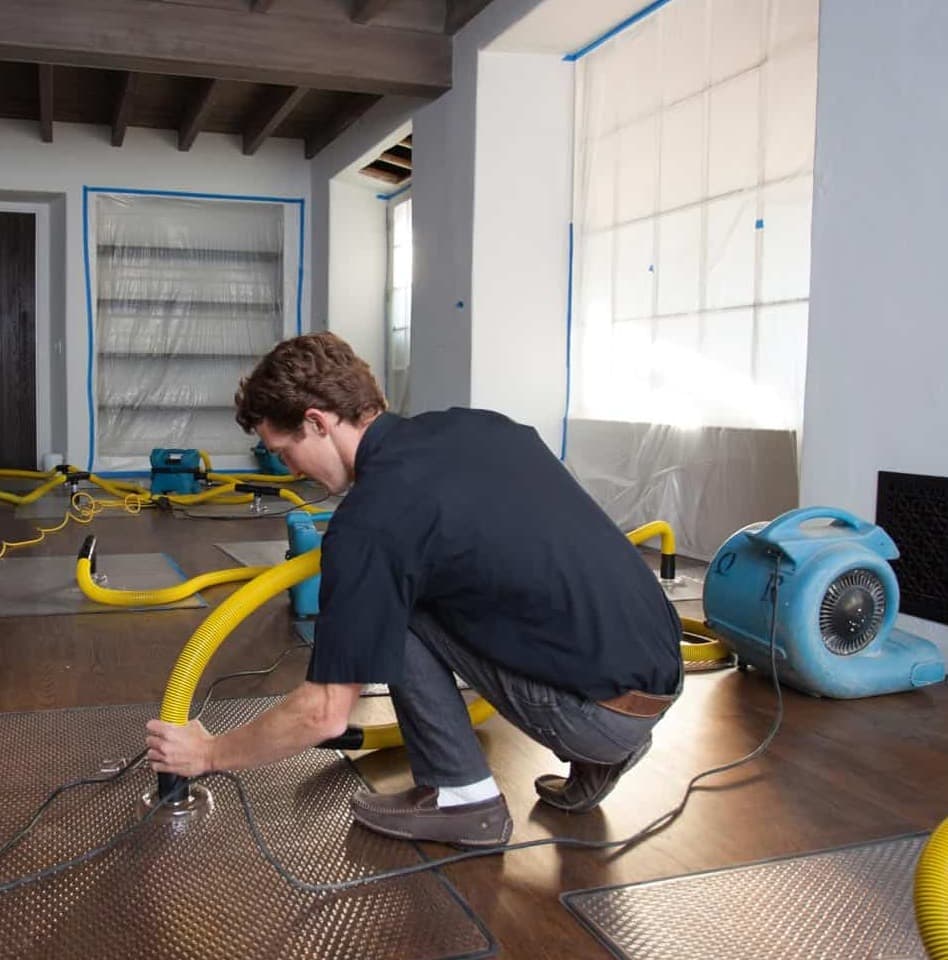
Most water damage that becomes mold is the water a crew never found. That’s why every Prime job runs on The Prime Find-First Method — we map the full extent of the water before we dry:
Prime Restoration holds a 5.0-star rating across 143 Google reviews, is IICRC-certified and licensed (Michigan Residential Builder #262500492), and bills your insurance carrier directly when assigned. We compile our own project data across Macomb & Oakland County and update the operational benchmarks in this report periodically.
Water damage now? Call (586) 277-1069Very common. Two federally declared floods in the last decade — August 2014 (FEMA DR-4195) and June 2021 (FEMA DR-4607) — each caused over $1 billion in damage across Macomb, Oakland, and Wayne counties. Nationally, water damage and freezing rank among the most frequent homeowners-insurance claims, at roughly $12,514 per claim (Insurance Information Institute).
Two reasons. First, rainfall has increased about 20% (+6.2 inches per year) in the Detroit area since 1951 (GLISA/University of Michigan). Second, more than 60% of the region’s sewer system predates the 1970s (SEMCOG) and was designed for roughly 3.31 inches of rain in 24 hours — far less than the 6+ inches that fell in 12 hours during the June 2021 flood, which overwhelmed the system and backed water into tens of thousands of basements.
Often not. Standard homeowners policies generally exclude surface flooding and, in many cases, sump-pump or sewer-backup failure unless a specific endorsement is added. Michigan also has one of the lowest flood-insurance take-up rates in the country (~0.4% of homes carry NFIP coverage). After the June 2021 flood, roughly 67,000 FEMA claims were filed and many were denied — a major reason these losses fall on homeowners out of pocket.
Basement flooding peaks with spring thaw and summer thunderstorms; frozen and burst pipes spike in deep winter. In the January 2026 polar vortex, 115+ homes in Sterling Heights lost water in a single morning after six cold-driven water-main breaks (Jan 28, 2026).
Shut off the water source and the power to affected circuits if safe, photograph everything before cleanup (adjusters need it), and call a professional for extraction within 24 hours — mold can begin within 24–48 hours. Prime Restoration provides 24/7 emergency response across Macomb and Oakland County at (586) 277-1069.
FEMA disaster declarations DR-4195-MI & DR-4607-MI (fema.gov); Federal Register (2014-24801); Michigan State Police / EMHSD flood recovery; NWS Detroit “August 11, 2014 Historic Rainfall” (weather.gov/dtx); Crain’s Detroit Business (sewer-overflow/damage totals); SEMCOG (sewer-infrastructure age); GLISA / University of Michigan (precipitation trend); U.S. Census / ACS (housing units & tenure); American Housing Survey (basement share); Insurance Information Institute (water-damage claim frequency & average); Michigan EGLE (NFIP take-up). Figures reflect the most recent published data available as of 2026-07-13 and are cited in full in our source dossier; some county-level breakouts are federal- or state-aggregated where noted.
© 2026 Prime Restoration. This report may be cited with attribution and a link to this page.