
Fire Damage Restoration in Utica, MI
A house fire does three kinds of damage at once: thermal (what burned), soot (what the smoke touched), and water (what the fire department used to put it out). Each has to be scoped separately or the rebuild estimate misses 30% of the work.
Family-Owned · Insured & Licensed · 24/7 Emergency Dispatch
What Utica Homeowners Need to Know
Historic homes close to the Clinton River in Utica face occasional flood plain events — the river swells during spring thaw and heavy storm runoff from the wider watershed.
Housing here is predominantly Small historic downtown, plus 1950s–1970s surrounding residential. The most common restoration-related issues in Utica are Clinton River flooding, historic plumbing, sewer backup. Our crews treat each property as its own project — scope, drying time, and rebuild needs are written based on what we measure on site, not a generic playbook.
Utica's historic homes close to the Clinton River face occasional floodplain events driven by spring thaw and heavy watershed runoff. Restoration work here combines standard water-damage scope with additional attention to the age and condition of original plaster, hardwood, and trim work that is often the whole reason a family is living in an older home in the first place. Drying strategy is conservative and monitored daily.
Fire and smoke restoration in Utica is shaped by the local building stock — the same factors that make Clinton River flooding a common local concern also affect how soot and odor migrate through a home during and after a fire event.
Seasonal pattern — Utica
Clinton River floodplain events concentrate in spring; summer thunderstorm flash-flood events are the second annual spike.
Local conditions in Utica
Soil & Water Table
Utica's historic core sits close to the Clinton River, with a seasonally elevated water table that can rise several feet during spring thaw. Older stone and brick foundations in the downtown area were never waterproofed to modern standards — intrusion is common even without surface flooding events during high-water periods.
Building Stock
Utica mixes small historic downtown homes from the 1800s-early 1900s with surrounding 1950s-1970s postwar residential construction. Historic homes have stone foundations, lath-and-plaster, and original wood floors, while newer homes are typical era ranch and bungalow construction.
Dispatch & Access
Historic downtown homes have compact lots with constrained driveway access; surrounding residential areas have standard suburban access. Dispatches from Sterling Heights reach Utica in 15-25 minutes.
Utica Neighborhoods and Districts We Cover
Utica is geographically compact and split between an older historic core and newer residential pockets that ring the city. The downtown area along Auburn Road and Cass Avenue contains a concentration of pre-1940 wood-frame homes and small commercial buildings with balloon framing, plaster-and-lath walls, and unconditioned attics, all of which complicate fire-damage smoke residue removal and structural drying because of stack-effect air movement. Neighborhoods east of Van Dyke and north of Hall Road include 1960s and 1970s ranches with finished basements that sit close to the Clinton River, raising flood-loss exposure during regional storm events. The Shelby Road corridor and the area near Stevenson High School blend mid-century ranches with a smaller stock of 1990s infill, requiring restoration crews to adjust scopes between legacy framing assemblies and modern engineered systems on the same street.
Recent Storm History — Utica, MI
Utica's compact footprint along the Clinton River means it shares the regional storm-damage record that has defined Macomb County over the past decade. The August 11, 2014 Metro Detroit flood produced severe rainfall totals that drove Clinton River flooding and widespread Category 3 sewer backups in basements throughout the city, particularly in the older housing stock near downtown. The June and July 2021 Metro Detroit flooding again generated saturated-soil and groundwater intrusion in low-lying neighborhoods. The April 15, 2026 Macomb County windstorm contributed a fresh wave of wind-driven envelope damage, with roof and siding failures producing secondary water intrusion that required structural drying and selective demolition in homes with original plaster substrates.
Working With Your Insurance Carrier in Utica
Utica homeowners are insured through the same Michigan carrier set that dominates Macomb County, including AAA/Auto Club Group, Auto-Owners, State Farm, Allstate, Citizens, Farm Bureau, and Hanover. Because the city's older housing stock often involves plaster-and-lath substrates, knob-and-tube remnants, and asbestos-containing materials in original assemblies, carriers expect Xactimate scopes to address selective demolition, hazardous-material protocols, and abatement coordination as discrete line items. Documentation tied to industry-standard categorization for water losses and industry-standard fire restoration protocols for fire and smoke losses helps frame supplements when concealed conditions are uncovered during demolition.
Prime Restoration is a licensed Michigan restoration contractor. We document project scope with detailed, itemized paperwork so homeowners have clear line-item records to submit to their carrier.
Permits & Code Compliance — Utica
Building permits within the City of Utica are issued by the city's municipal building department, distinct from the surrounding township departments. Restoration reconstruction following Category 3 water losses or post-fire structural repairs typically requires building, electrical, mechanical, and plumbing permits, with separate applications when work involves framing repairs, rewiring, HVAC replacement, or supply and waste-line modifications. Michigan's adopted 2015 Michigan Building Code and 2015 Michigan Residential Code govern framing, fire-resistance ratings, egress, and energy-code requirements. The city's older pre-1940 housing stock often involves concealed conditions such as balloon framing or legacy electrical assemblies that surface during demolition and trigger scope expansions requiring additional inspection sign-offs.
Fire & Smoke Damage Restoration — Utica, MI
Fire damage restoration is more than cleaning up soot — it is a sequenced process of securing the structure, inventorying affected contents, cleaning hard and soft surfaces following industry-standard fire restoration practice, eliminating smoke odor at its source, and rebuilding. Every project is documented in Xactimate so homeowners have complete line-item paperwork for their carrier.
Common causes we see in Utica
- •Kitchen cooking fire
- •Electrical / outlet failure
- •Furnace or boiler malfunction
- •Dryer vent lint fire
- •Candle or open flame
- •Christmas tree or holiday decoration fire
Signs to watch for
- •Visible char or burn damage
- •Smoke residue on walls and ceilings
- •Persistent smoke odor
- •Soot on HVAC vents
- •Yellow discoloration on curtains and upholstery
Our Fire Damage Process in Utica
The same documented process on every project.
1. Emergency Board-Up & Tarping
Windows, doors, and roof penetrations are secured against weather and theft within hours of the fire being extinguished.
2. Scene Documentation
Before anything is moved, the entire scene is photographed and video-documented for the insurance inspection.
3. Contents Pack-Out
Salvageable contents are inventoried, packed, and transported for off-site cleaning. Non-restorable contents are documented and disposed of.
4. Water Damage Mitigation
Water used in firefighting is extracted immediately. Affected framing and drywall are dried before soot cleaning begins.
5. Soot & Residue Cleaning
Per industry-standard fire restoration practice, dry or wet cleaning methods are selected based on residue type (protein, synthetic, natural). HEPA vacuuming precedes surface cleaning.
6. Odor Elimination
Thermal fogging, hydroxyl generators, and sealed-surface treatments address embedded smoke odor. HVAC ducts are cleaned or replaced.
7. Structural Rebuild
Drywall, flooring, cabinetry, trim, and paint are rebuilt. Every line item is documented in Xactimate.
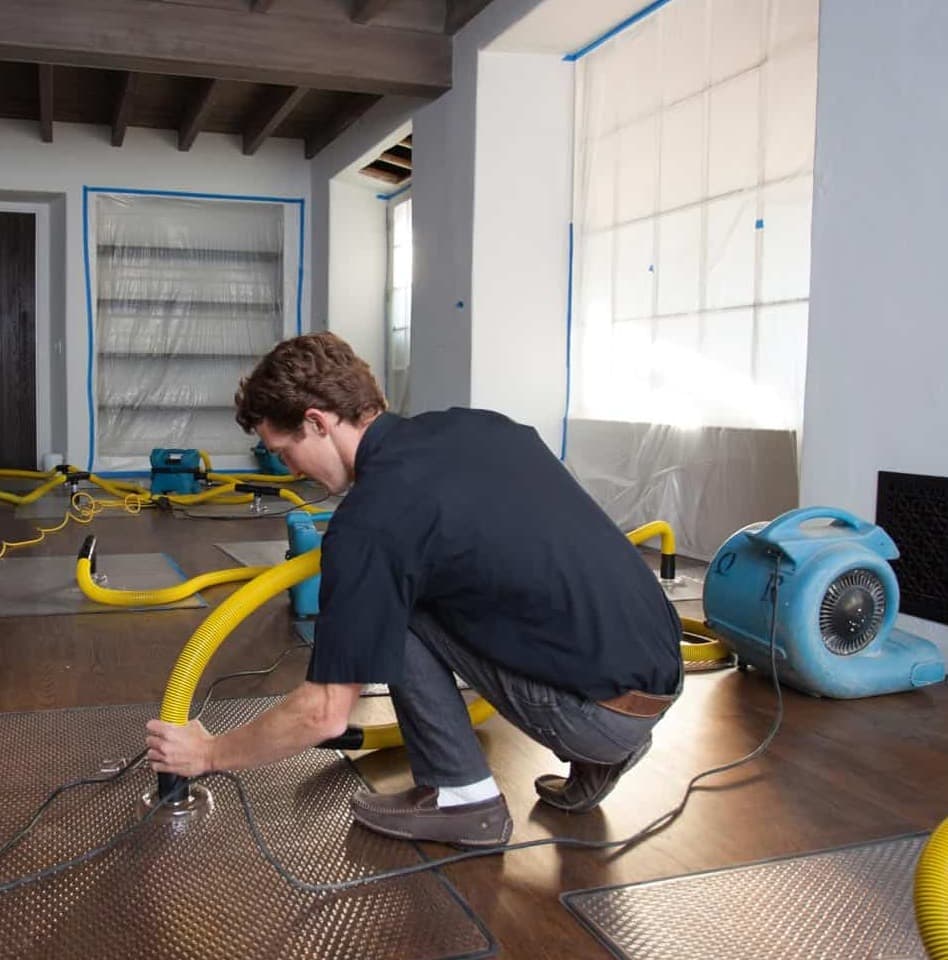
Equipment we bring to Utica
Reviews
What Utica Area Homeowners Say
5.0 Stars · 133 Verified Google Reviews
“Had a really good experience with Prime Restoration for mold remediation. They were professional, clear about the process, and actually made me feel confident about the process. Not pushy. I'd definitely recommend them around Bloomfield Hills”
Christian H.
Bloomfield Hills, MI
“Prime Restoration is a solid company in Michigan for basement floods and water damage. They're professional, knowledgeable and the kind of team you'd want handling a stressful situation.”
Nathan M.
Verified Google Review
“Prime Restoration in Bloomfield has an outstanding team for water damage restoration. Their crew is phenomenal. great people with top notch character who clearly know their stuff. Highly recommend for anyone facing water damage in Bloomfield.”
Ahmed W.
Bloomfield, MI
“Best in the game did my basement because it flooded and they left no messes clean and efficient”
Adam J.
Verified Google Review
“The Prime Restoration team was absolutely fantastic! Very professional and communicative. Completed the job in a timely manner. I would highly recommend!”
Jerome K.
Verified Google Review
“I called five different companies for restoration work, and Prime Restoration was hands down the fastest and most fair on price. They got me a quote the same day, while others were still "getting back to me." Their team works fast.”
Sean B.
Verified Google Review
Fire Damage Questions — Utica, MI
Common questions from Utica homeowners before they call.
Does being near the Clinton River in Utica put my home at extra flood risk?
Yes, particularly during spring thaw and heavy rain events that drive watershed runoff into the river. Homes within the Clinton River corridor can experience elevated groundwater and occasional floodplain events even when FEMA maps don't designate specific properties as high-risk. Historic homes close to the river often have stone foundations that weren't waterproofed to any modern standard, which compounds the risk during high-water periods.
Can I enter the house after the fire?
Only after the fire marshal or your insurance adjuster has authorized re-entry. Even then, limit entry to documenting and retrieving essentials — soot residue is harmful to breathe without PPE.
Will all my belongings be thrown away?
No. Professional contents cleaning can recover most electronics, furniture, clothing, and personal items. Items are inventoried, packed, and cleaned off-site. Only items damaged beyond restoration are disposed of, and each is documented.
How long does the smoke smell last?
With proper odor elimination — thermal fogging, HVAC cleaning, sealed-surface treatment, and replacement of porous materials that cannot be cleaned — the smell should be gone at project completion. If it comes back, there is still soot in a cavity or duct that was not addressed.
Prime Restoration is a licensed restoration contractor. We document the full project scope with detailed, itemized paperwork so you have clear line-item records to submit to your carrier.
Related Services in Utica
Fire & Smoke
Smoke Damage Cleanup in Utica
Smoke residue cleaning, soot removal, and odor elimination after fire or puff-back events.
Fire & Smoke
Soot Removal & Odor Elimination in Utica
Post-fire soot removal, HVAC decontamination, and permanent odor elimination.
Commercial & Rebuild
Reconstruction & Rebuild in Utica
Full reconstruction of drywall, flooring, trim, cabinetry, and finishes after restoration.
Fire Damage Near Utica
We also serve these nearby Macomb and Oakland County communities.
Need Fire Damage in Utica Now?
24/7 emergency dispatch. trained restoration crews. Typical response within 60 minutes across our core service area.