
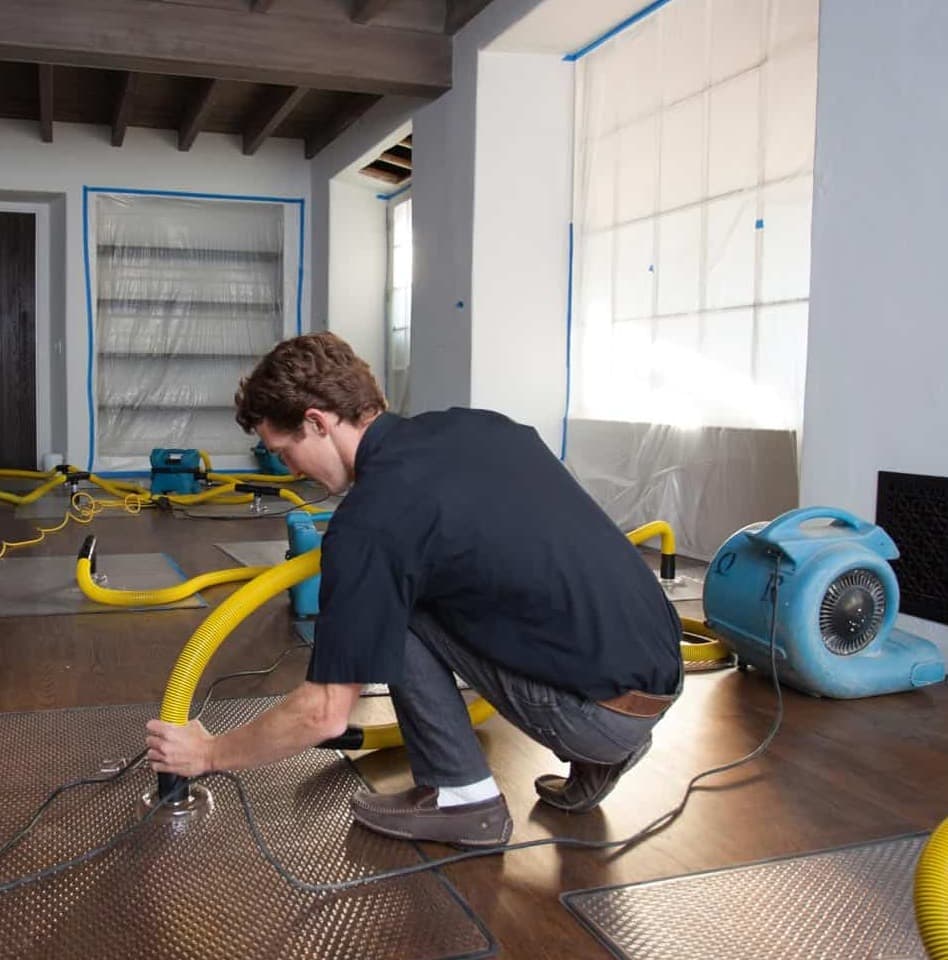
Fire Damage Restoration in Warren, MI
Smoke odor is not a smell problem — it is a chemistry problem. Soot particles embed in drywall, HVAC ducts, insulation, and contents. Masking the smell with deodorizer only works until the humidity changes. Proper odor elimination requires cleaning or replacing the surface the particles attached to.
Family-Owned · Insured & Licensed · 24/7 Emergency Dispatch
What Warren Homeowners Need to Know
Warren homes built in the 1950s often have original cast-iron waste stacks now 70+ years old, which commonly fail at joints and threaded sections.
Housing here is predominantly Much of the housing stock dates to the 1950s post-war building boom — cast iron drain lines and galvanized supply lines are common. The most common restoration-related issues in Warren are aging supply lines, basement flooding, sewer backups. Our crews treat each property as its own project — scope, drying time, and rebuild needs are written based on what we measure on site, not a generic playbook.
Warren homes built during the 1950s post-war boom were plumbed with cast iron drain lines and galvanized supply lines that are now seven decades old. Hidden pinhole leaks above ceilings and behind kitchen walls are the leading cause of slow water damage here, and they often go unnoticed until drywall begins to bubble or flooring cups. Restoration projects in Warren routinely require selective demo to locate the failed section before drying can begin.
Fire and smoke restoration in Warren is shaped by the local building stock — the same factors that make aging supply lines a common local concern also affect how soot and odor migrate through a home during and after a fire event.
Seasonal pattern — Warren
Slow pinhole and drain-stack failures run year-round; January freeze events and July thunderstorm backups are the two annual spikes.
Local conditions in Warren
Soil & Water Table
Warren's 1950s-era neighborhoods were built when combined stormwater and sanitary sewer systems were still common. Clay soil and flat topography mean surface water drains slowly, and the underground infrastructure is now 70+ years old. Water table is moderate but storm surcharge events can push groundwater upward through floor-slab cracks in older basements.
Building Stock
Warren's housing stock is defined by the 1950s postwar boom: compact three-bedroom ranches and bungalows with 900-1300 square feet of living space, original cast-iron waste stacks, and galvanized supply lines. Basements are partially finished in many homes, and 70-year-old plumbing frequently fails at thread joints and transition fittings.
Dispatch & Access
Sterling Heights office dispatches reach Warren quickly in most conditions. Compact postwar lots can make equipment staging tight on narrow driveways, and crews often stage from the street when driveways are too small for full equipment trucks.
Warren Neighborhoods and Districts We Cover
Warren's housing stock is concentrated in post-war 1950s and 1960s brick ranch construction, particularly in the South Warren neighborhoods between 8 Mile and 10 Mile Roads. Many of these homes retain original cast-iron drain stacks and clay sewer laterals, which contributes to recurring sewage backup losses governed by industry-standard Category 3 protocols. The Van Dyke corridor near GM Tech Center supports a mix of light-industrial and residential parcels, and adjacent homes on Stephens Road and Toepfer often share storm-sewer capacity with commercial sites. The Warren Woods area near 12 Mile and Hoover Roads features 1970s and 1980s subdivisions with full basements and attached garages where vehicle-fluid contamination occasionally complicates water-damage scope. Lot density across most of Warren restricts truck-mount access, requiring portable extraction equipment in many tight side-yard placements.
Recent Storm History — Warren, MI
Warren absorbed some of the most severe basement-backup losses in the region during the August 11, 2014 Metro Detroit flood, when extreme short-duration rainfall combined with the city's aging combined-sewer infrastructure to produce Category 3 sewage intrusions across thousands of homes. The June and July 2021 Metro Detroit flooding events repeated similar patterns in many of the same neighborhoods, and the recurrence prompted broader scrutiny of sewer capacity in the southern half of the city. The April 15, 2026 Macomb County windstorm later produced widespread roof, siding, and tree-impact damage across Warren, with extended power outages affecting active drying operations and forcing generator-supported equipment placement on a significant volume of in-progress water mitigation jobs.
Working With Your Insurance Carrier in Warren
Warren's residential insurance market reflects the broader Macomb County mix of AAA/Auto Club Group, Auto-Owners, State Farm, Allstate, Citizens, Farm Bureau, and Hanover policies, with sewage-backup endorsement coverage varying significantly by carrier and by policy form. Because Warren's older sewer infrastructure produces a high incidence of Category 3 backup losses, careful endorsement review at the time of loss is critical to scope alignment. Xactimate is the estimating standard used by adjusters across these carriers, and restoration estimates submitted in current Xactimate format with macro-level scope notes, room sketches, and itemized mitigation pricing reduce supplement cycles during the claim review.
Prime Restoration is a licensed Michigan restoration contractor. We document project scope with detailed, itemized paperwork so homeowners have clear line-item records to submit to their carrier.
Permits & Code Compliance — Warren
Warren building permits are issued through the City of Warren Building Division, which enforces the 2015 Michigan Building Code along with the adopted Michigan mechanical, electrical, plumbing, and residential codes. Category 3 water-restoration and post-fire reconstruction projects in Warren generally require trade permits for any electrical service or branch-circuit replacement, mechanical work involving HVAC ductwork or furnace replacement, and plumbing work where drains, vents, or supply lines are altered. Structural permits apply when framing, sheathing, or load-bearing wall assemblies are reconstructed. Inspections proceed through standard rough-in, insulation, and final stages, and Michigan-licensed builders and trade contractors are required to pull the corresponding permits.
Fire & Smoke Damage Restoration — Warren, MI
Fire damage restoration is more than cleaning up soot — it is a sequenced process of securing the structure, inventorying affected contents, cleaning hard and soft surfaces following industry-standard fire restoration practice, eliminating smoke odor at its source, and rebuilding. Every project is documented in Xactimate so homeowners have complete line-item paperwork for their carrier.
Common causes we see in Warren
- •Kitchen cooking fire
- •Electrical / outlet failure
- •Furnace or boiler malfunction
- •Dryer vent lint fire
- •Candle or open flame
- •Christmas tree or holiday decoration fire
Signs to watch for
- •Visible char or burn damage
- •Smoke residue on walls and ceilings
- •Persistent smoke odor
- •Soot on HVAC vents
- •Yellow discoloration on curtains and upholstery
Our Fire Damage Process in Warren
The same documented process on every project.
1. Emergency Board-Up & Tarping
Windows, doors, and roof penetrations are secured against weather and theft within hours of the fire being extinguished.
2. Scene Documentation
Before anything is moved, the entire scene is photographed and video-documented for the insurance inspection.
3. Contents Pack-Out
Salvageable contents are inventoried, packed, and transported for off-site cleaning. Non-restorable contents are documented and disposed of.
4. Water Damage Mitigation
Water used in firefighting is extracted immediately. Affected framing and drywall are dried before soot cleaning begins.
5. Soot & Residue Cleaning
Per industry-standard fire restoration practice, dry or wet cleaning methods are selected based on residue type (protein, synthetic, natural). HEPA vacuuming precedes surface cleaning.
6. Odor Elimination
Thermal fogging, hydroxyl generators, and sealed-surface treatments address embedded smoke odor. HVAC ducts are cleaned or replaced.
7. Structural Rebuild
Drywall, flooring, cabinetry, trim, and paint are rebuilt. Every line item is documented in Xactimate.
Equipment we bring to Warren
Reviews
What Warren Area Homeowners Say
5.0 Stars · 133 Verified Google Reviews
“Had a really good experience with Prime Restoration for mold remediation. They were professional, clear about the process, and actually made me feel confident about the process. Not pushy. I'd definitely recommend them around Bloomfield Hills”
Christian H.
Bloomfield Hills, MI
“Prime Restoration is a solid company in Michigan for basement floods and water damage. They're professional, knowledgeable and the kind of team you'd want handling a stressful situation.”
Nathan M.
Verified Google Review
“Prime Restoration in Bloomfield has an outstanding team for water damage restoration. Their crew is phenomenal. great people with top notch character who clearly know their stuff. Highly recommend for anyone facing water damage in Bloomfield.”
Ahmed W.
Bloomfield, MI
“Best in the game did my basement because it flooded and they left no messes clean and efficient”
Adam J.
Verified Google Review
“The Prime Restoration team was absolutely fantastic! Very professional and communicative. Completed the job in a timely manner. I would highly recommend!”
Jerome K.
Verified Google Review
“I called five different companies for restoration work, and Prime Restoration was hands down the fastest and most fair on price. They got me a quote the same day, while others were still "getting back to me." Their team works fast.”
Sean B.
Verified Google Review
Fire Damage Questions — Warren, MI
Common questions from Warren homeowners before they call.
Why do Warren homes get so many hidden pipe leaks?
Most Warren homes were built during the 1950s postwar housing boom with galvanized water supply lines and cast-iron drain stacks. Both materials have service lives that peaked 40-60 years ago, and failures at threaded joints and transition fittings are now common. Leaks often happen inside walls and above ceilings where they can't be seen for days or weeks, which is why hidden water damage is disproportionately represented in Warren restoration calls compared to newer suburbs.
Can I enter the house after the fire?
Only after the fire marshal or your insurance adjuster has authorized re-entry. Even then, limit entry to documenting and retrieving essentials — soot residue is harmful to breathe without PPE.
Will all my belongings be thrown away?
No. Professional contents cleaning can recover most electronics, furniture, clothing, and personal items. Items are inventoried, packed, and cleaned off-site. Only items damaged beyond restoration are disposed of, and each is documented.
How long does the smoke smell last?
With proper odor elimination — thermal fogging, HVAC cleaning, sealed-surface treatment, and replacement of porous materials that cannot be cleaned — the smell should be gone at project completion. If it comes back, there is still soot in a cavity or duct that was not addressed.
Prime Restoration is a licensed restoration contractor. We document the full project scope with detailed, itemized paperwork so you have clear line-item records to submit to your carrier.
Related Services in Warren
Fire & Smoke
Smoke Damage Cleanup in Warren
Smoke residue cleaning, soot removal, and odor elimination after fire or puff-back events.
Fire & Smoke
Soot Removal & Odor Elimination in Warren
Post-fire soot removal, HVAC decontamination, and permanent odor elimination.
Commercial & Rebuild
Reconstruction & Rebuild in Warren
Full reconstruction of drywall, flooring, trim, cabinetry, and finishes after restoration.
Fire Damage Near Warren
We also serve these nearby Macomb and Oakland County communities.
Need Fire Damage in Warren Now?
24/7 emergency dispatch. trained restoration crews. Typical response within 60 minutes across our core service area.