
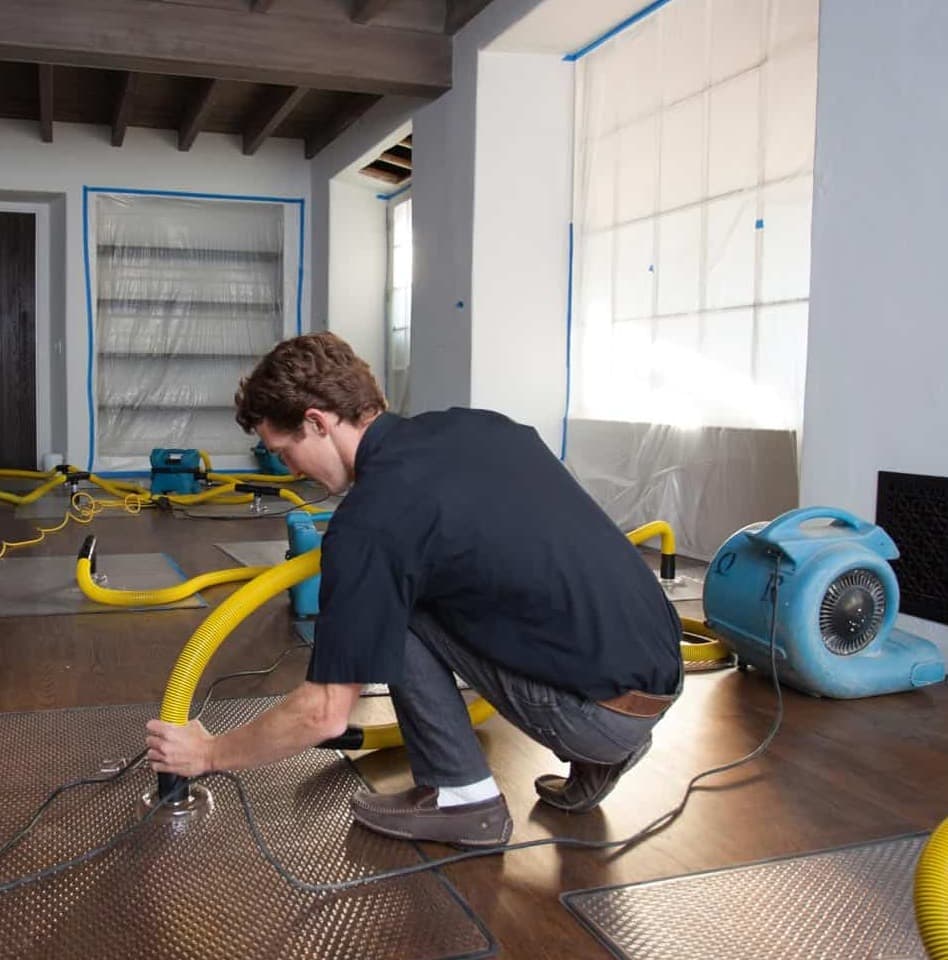
Commercial Water Damage Restoration in Utica, MI
Commercial water losses cost more in lost revenue than in rebuild. A flooded retail store losing $5,000 a day in sales turns a $15,000 dry-out into a $30,000 total loss if drying takes five days instead of three. Speed is the main cost driver, not square footage.
Family-Owned · Insured & Licensed · 24/7 Emergency Dispatch
What Utica Homeowners Need to Know
Historic homes close to the Clinton River in Utica face occasional flood plain events — the river swells during spring thaw and heavy storm runoff from the wider watershed.
Housing here is predominantly Small historic downtown, plus 1950s–1970s surrounding residential. The most common restoration-related issues in Utica are Clinton River flooding, historic plumbing, sewer backup. Our crews treat each property as its own project — scope, drying time, and rebuild needs are written based on what we measure on site, not a generic playbook.
Utica's historic homes close to the Clinton River face occasional floodplain events driven by spring thaw and heavy watershed runoff. Restoration work here combines standard water-damage scope with additional attention to the age and condition of original plaster, hardwood, and trim work that is often the whole reason a family is living in an older home in the first place. Drying strategy is conservative and monitored daily.
Commercial restoration work in Utica has to fit around tenant operations and business continuity — and the local building conditions that drive Clinton River flooding in residential work affect commercial scopes too, just across larger square footage and more complex mechanical systems.
Seasonal pattern — Utica
Clinton River floodplain events concentrate in spring; summer thunderstorm flash-flood events are the second annual spike.
Local conditions in Utica
Soil & Water Table
Utica's historic core sits close to the Clinton River, with a seasonally elevated water table that can rise several feet during spring thaw. Older stone and brick foundations in the downtown area were never waterproofed to modern standards — intrusion is common even without surface flooding events during high-water periods.
Building Stock
Utica mixes small historic downtown homes from the 1800s-early 1900s with surrounding 1950s-1970s postwar residential construction. Historic homes have stone foundations, lath-and-plaster, and original wood floors, while newer homes are typical era ranch and bungalow construction.
Dispatch & Access
Historic downtown homes have compact lots with constrained driveway access; surrounding residential areas have standard suburban access. Dispatches from Sterling Heights reach Utica in 15-25 minutes.
Utica Neighborhoods and Districts We Cover
Utica is geographically compact and split between an older historic core and newer residential pockets that ring the city. The downtown area along Auburn Road and Cass Avenue contains a concentration of pre-1940 wood-frame homes and small commercial buildings with balloon framing, plaster-and-lath walls, and unconditioned attics, all of which complicate fire-damage smoke residue removal and structural drying because of stack-effect air movement. Neighborhoods east of Van Dyke and north of Hall Road include 1960s and 1970s ranches with finished basements that sit close to the Clinton River, raising flood-loss exposure during regional storm events. The Shelby Road corridor and the area near Stevenson High School blend mid-century ranches with a smaller stock of 1990s infill, requiring restoration crews to adjust scopes between legacy framing assemblies and modern engineered systems on the same street.
Recent Storm History — Utica, MI
Utica's compact footprint along the Clinton River means it shares the regional storm-damage record that has defined Macomb County over the past decade. The August 11, 2014 Metro Detroit flood produced severe rainfall totals that drove Clinton River flooding and widespread Category 3 sewer backups in basements throughout the city, particularly in the older housing stock near downtown. The June and July 2021 Metro Detroit flooding again generated saturated-soil and groundwater intrusion in low-lying neighborhoods. The April 15, 2026 Macomb County windstorm contributed a fresh wave of wind-driven envelope damage, with roof and siding failures producing secondary water intrusion that required structural drying and selective demolition in homes with original plaster substrates.
Working With Your Insurance Carrier in Utica
Utica homeowners are insured through the same Michigan carrier set that dominates Macomb County, including AAA/Auto Club Group, Auto-Owners, State Farm, Allstate, Citizens, Farm Bureau, and Hanover. Because the city's older housing stock often involves plaster-and-lath substrates, knob-and-tube remnants, and asbestos-containing materials in original assemblies, carriers expect Xactimate scopes to address selective demolition, hazardous-material protocols, and abatement coordination as discrete line items. Documentation tied to industry-standard categorization for water losses and industry-standard fire restoration protocols for fire and smoke losses helps frame supplements when concealed conditions are uncovered during demolition.
Prime Restoration is a licensed Michigan restoration contractor. We document project scope with detailed, itemized paperwork so homeowners have clear line-item records to submit to their carrier.
Permits & Code Compliance — Utica
Building permits within the City of Utica are issued by the city's municipal building department, distinct from the surrounding township departments. Restoration reconstruction following Category 3 water losses or post-fire structural repairs typically requires building, electrical, mechanical, and plumbing permits, with separate applications when work involves framing repairs, rewiring, HVAC replacement, or supply and waste-line modifications. Michigan's adopted 2015 Michigan Building Code and 2015 Michigan Residential Code govern framing, fire-resistance ratings, egress, and energy-code requirements. The city's older pre-1940 housing stock often involves concealed conditions such as balloon framing or legacy electrical assemblies that surface during demolition and trigger scope expansions requiring additional inspection sign-offs.
Commercial Water Damage Restoration — Utica, MI
Commercial water losses are scoped around business continuity — the goal is to get the property dry and open as fast as safely possible. Our crews coordinate after-hours work, containment around operating areas, and documentation that works for commercial insurance carriers. Industry-standard mitigation protocol applies the same way it does residentially, but scale and coordination are the main differences.
Common causes we see in Utica
- •Sprinkler system discharge
- •Roof leak
- •HVAC condensate overflow
- •Plumbing failure in restroom or kitchen
- •Storm-driven water intrusion
- •Fire suppression water
Signs to watch for
- •Water accumulation on commercial flooring
- •Saturated ceiling tiles
- •Musty smell in office or retail space
- •Electrical issues after water event
Our Commercial Water Process in Utica
The same documented process on every project.
1. Business Continuity Planning
Before any demolition, we coordinate with facility management on which areas can stay operational during mitigation.
2. Containment & Isolation
6-mil poly and negative air isolate affected areas so operations in other zones can continue.
3. Water Extraction & Drying
Truck-mounted extractors, large-capacity LGR dehumidifiers, and industrial air movers are deployed at commercial scale.
4. Contents Protection
Office furniture, electronics, inventory, and documents are protected or packed out. Contents inventory is documented for the carrier.
5. Reconstruction
Ceiling tiles, carpet, drywall, and finishes are rebuilt around the business operation schedule.
Equipment we bring to Utica
Reviews
What Utica Area Homeowners Say
5.0 Stars · 133 Verified Google Reviews
“Had a really good experience with Prime Restoration for mold remediation. They were professional, clear about the process, and actually made me feel confident about the process. Not pushy. I'd definitely recommend them around Bloomfield Hills”
Christian H.
Bloomfield Hills, MI
“Prime Restoration is a solid company in Michigan for basement floods and water damage. They're professional, knowledgeable and the kind of team you'd want handling a stressful situation.”
Nathan M.
Verified Google Review
“Prime Restoration in Bloomfield has an outstanding team for water damage restoration. Their crew is phenomenal. great people with top notch character who clearly know their stuff. Highly recommend for anyone facing water damage in Bloomfield.”
Ahmed W.
Bloomfield, MI
“Best in the game did my basement because it flooded and they left no messes clean and efficient”
Adam J.
Verified Google Review
“The Prime Restoration team was absolutely fantastic! Very professional and communicative. Completed the job in a timely manner. I would highly recommend!”
Jerome K.
Verified Google Review
“I called five different companies for restoration work, and Prime Restoration was hands down the fastest and most fair on price. They got me a quote the same day, while others were still "getting back to me." Their team works fast.”
Sean B.
Verified Google Review
Commercial Water Questions — Utica, MI
Common questions from Utica homeowners before they call.
Does being near the Clinton River in Utica put my home at extra flood risk?
Yes, particularly during spring thaw and heavy rain events that drive watershed runoff into the river. Homes within the Clinton River corridor can experience elevated groundwater and occasional floodplain events even when FEMA maps don't designate specific properties as high-risk. Historic homes close to the river often have stone foundations that weren't waterproofed to any modern standard, which compounds the risk during high-water periods.
Can the business stay open during mitigation?
In most cases, yes. Containment isolates the affected area and work can proceed after hours. This is coordinated with facility management on a project-by-project basis.
Do you work with commercial insurance carriers?
We provide detailed Xactimate documentation that commercial insurance carriers and third-party adjusters use as a starting point. Claim submission and any follow-up discussions remain between the property owner and their carrier.
Prime Restoration is a licensed restoration contractor. We document the full project scope with detailed, itemized paperwork so you have clear line-item records to submit to your carrier.
Related Services in Utica
Commercial Water Near Utica
We also serve these nearby Macomb and Oakland County communities.
Need Commercial Water in Utica Now?
24/7 emergency dispatch. trained restoration crews. Typical response within 60 minutes across our core service area.