
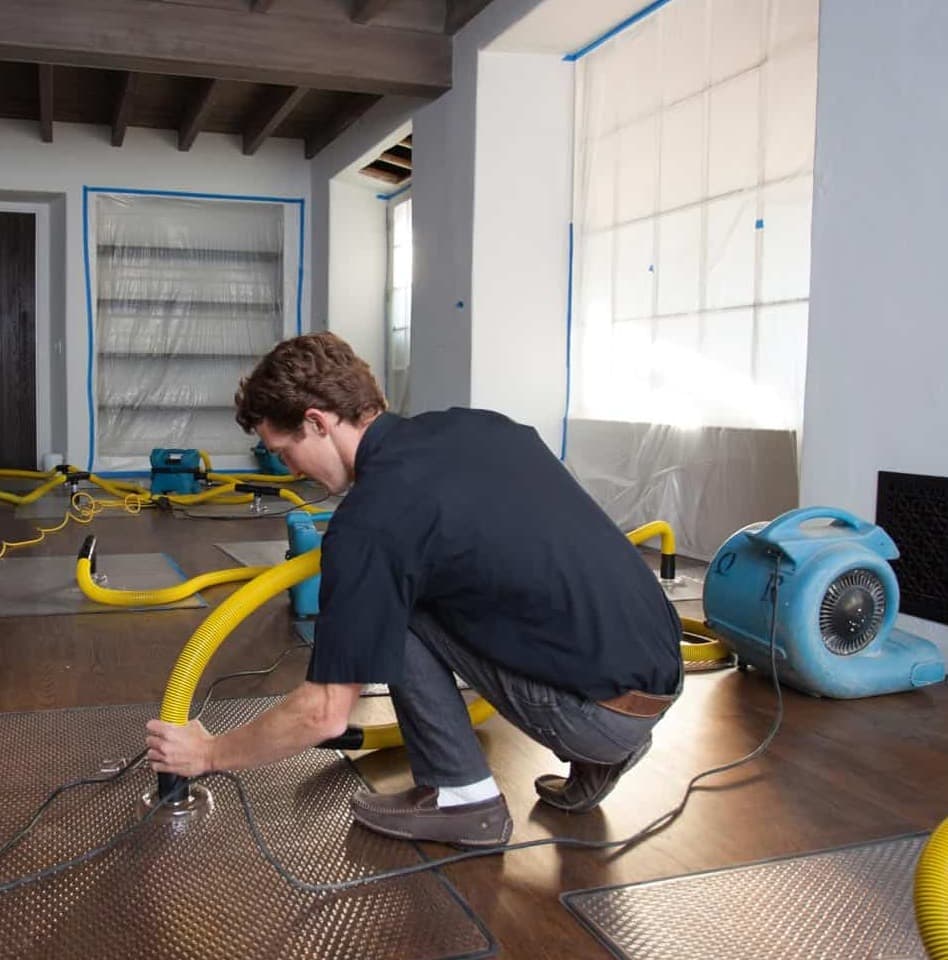
Water damage, mold growth, and restoration emergencies are a fact of life for Michigan homeowners. Heavy spring rains, polar-vortex pipe bursts, ice dams, summer humidity in finished basements, and aging plumbing in mid-century homes mean almost every Michigan house will face a restoration event at some point. This guide covers what to look for, what to do, what it costs, what insurance actually pays, and a path many Michigan homeowners do not know about — using HSA or FSA funds with a Letter of Medical Necessity when an insurance carrier denies a mold claim. Written by the Prime Restoration field team for Macomb County, Oakland County, and broader Metro Detroit homeowners.
When Water Damage Hits Michigan: The Seasonal Calendar
Michigan produces predictable peaks in restoration calls across the year. Knowing the calendar helps homeowners prepare:
- December through February. Frozen and burst pipe season. Recent polar-vortex events have pushed indoor temperatures below the freeze threshold in cantilevered great rooms, exterior-wall plumbing, and unheated basements. A typical burst supply line releases 4 to 6 gallons of water per minute until the main valve is closed.
- February through April. Ice dam season transitioning to spring thaw. Ice dams form when warm attic air melts roof snow that refreezes at the eave; trapped water then backs up under shingles and into the ceiling cavity below. Spring thaw saturates Macomb County clay soil, the water table rises, and seepage appears through cove joints, mortar seams, and crack lines.
- April through July. Heavy rain and severe-storm season. The June 2021 Southeast Michigan flooding showed how a single rainfall can overwhelm combined sewer systems and push Category 3 water into thousands of basements at once.
- July through September. Summer humidity drives microbial growth in any basement without active dehumidification. Indoor relative humidity above 60 percent for sustained periods supports microbial growth on susceptible surfaces.
- October through November. Final storm season before winter, plus the early frosts that expose vulnerable plumbing.
Common Signs of Water Damage in Your Home
The visible indicators most Michigan homeowners notice first:
- Brown, yellow, or rust-colored ringed stains on ceilings, walls, or trim
- Peeling, bubbling, or cracking paint or wallpaper
- Soft, sagging, or visibly bowed drywall
- Warped, cupped, or buckled hardwood floors
- Swollen baseboards, door frames, or trim — especially near floor level
- A persistent musty or earthy odor that does not clear with normal cleaning
- Visible mold growth on baseboards, wall corners, or HVAC vents
Less obvious indicators that often point to hidden water damage:
- Sudden, unexplained increase in your water bill
- Dripping sounds behind walls or above ceilings
- Cold spots or condensation on interior walls
- Persistent high humidity in a basement or crawl space
- Insulation that feels heavy or appears compressed in attic or wall cavities
- White mineral staining (efflorescence) at the base of a basement wall — a marker of long-term seepage
Common Signs of Mold in Your House
Mold grows where moisture accumulates and airflow is limited. The most common indicators:
- A persistent musty or earthy odor. Particularly in basements, bathrooms, attics, and HVAC return air. The odor often appears weeks before visible growth and is the most reliable early signal.
- Visible discoloration. Gray, green, black, or fuzzy white growth on walls, ceilings, grout, baseboards, framing, or HVAC vents. Any cluster of small dots in a damp area should be inspected.
- Water staining around any plumbing or roof penetration. Almost always a precursor to mold growth in the cavity behind.
- Hidden growth locations. Wall cavities, under flooring, behind tubs and shower surrounds, in HVAC plenums and ductwork, and on the underside of roof sheathing in attics with poor ventilation.
Mold Exposure Symptoms: What Public-Health Guidance Says
Public-health guidance notes that some people may experience reactions to airborne mold spores, with sensitivity varying significantly between individuals. Reported reactions can include respiratory irritation, coughing, congestion, watery or itchy eyes, and allergy-like symptoms. Individuals with asthma, immune-system compromise, or pre-existing respiratory conditions are sometimes considered more sensitive.
For health-related questions, symptom evaluation, or medical determinations, consult a licensed medical professional or a certified industrial hygienist. Prime Restoration is a restoration contractor and does not provide medical advice, diagnose health conditions, or certify habitability or air quality.
The First 24 Hours After Water Damage
The single biggest factor in the eventual cost of a water-damage event is how quickly mitigation begins. Porous materials including drywall, carpet pad, and insulation are sometimes salvageable if dried within 24 to 48 hours; after that window, microbial growth typically forces removal. The first-24-hour checklist:
- Shut off the source. Close the main water valve for plumbing failures. For roof leaks or storm intrusion, position buckets and tarps where reachable.
- De-energize the affected area. Shut off power at the panel for any circuit serving a wet room before stepping into the area. Standing water near outlets or appliances is an electrical hazard.
- Document the original state. Photograph and video every affected surface from multiple angles. Open closet doors, lift loose rugs, and capture every wet area before anything is moved.
- Move contents out. Remove furniture, electronics, rugs, and personal items from the wet area to a dry, elevated location. Photograph contents before and after movement.
- Call a restoration contractor. A typical 60-minute emergency response across Macomb and Oakland County allows mitigation to begin while porous materials are still salvageable. Prime Restoration runs 24/7 emergency dispatch — call (586) 277-1069.
- Notify your insurance carrier. Open a claim and request the claim number, your adjuster's contact information, and any specific instructions from the carrier on documentation.
- Do not attempt DIY cleanup of contaminated water. Category 2 (gray water) and Category 3 (black water — sewage, flood water) require professional containment, PPE, and disposal — homeowner cleanup creates a health hazard and can compromise the eventual claim.
Water Damage Categories: 1, 2, and 3
The category of water determines the entire restoration scope, the cost, and what materials are salvageable:
- Category 1 (clean water). Source is a supply line, water heater, appliance line, or other clean source. Restoration scope is the lightest — extraction, drying, and minor demolition only where readings indicate. Carpet and pad over a Category 1 spill is sometimes salvageable if dried within 24 hours.
- Category 2 (gray water). Moderate contamination — washing machine overflow, dishwasher leaks, aquarium failures, or sustained Category 1 water that has sat for more than 24 to 48 hours. Antimicrobial treatment is part of every Category 2 scope. Carpet and pad are sometimes salvageable; porous wall materials below the flood line typically come out.
- Category 3 (black water). Grossly contaminated — sewage backups, sewer-line failures, ground-source flooding, toilet overflows from beyond the trap, or any sustained loss past 72 hours. Every porous material that contacted Category 3 water is removed and disposed of as regulated waste. Containment, PPE, HEPA-filtered air scrubbers, and commercial-grade disinfectants are part of every Category 3 scope.
Reclassification happens fast: a Category 1 leak left for 48 hours is reclassified Category 2, and a Category 2 loss left over a long weekend can be reclassified Category 3. Response time directly affects what is salvageable and what the project ultimately costs.
Mold Remediation: DIY vs Professional
Industry guidance generally recommends professional remediation in the following situations:
- Total visible mold growth exceeds approximately 10 square feet
- Mold is inside wall cavities, HVAC systems, or under flooring
- The cause was Category 2 or Category 3 water
- Occupants have asthma, allergies, immune-system compromise, or other respiratory sensitivities
- Mold is on porous materials (drywall, insulation, carpet, particleboard) rather than on a non-porous surface
Small surface mold on non-porous materials such as ceramic tile, glass shower doors, or grout can sometimes be cleaned with commercial mold-removal products and proper protective equipment (N95 respirator, gloves, eye protection). The risk in DIY mold work is that disturbing growth without containment releases spores throughout the home, often turning a small problem into a much larger one. When in doubt, professional inspection costs less than cleaning up a spore-spread event.
2026 Restoration Cost Ranges in Michigan
The figures below reflect 2026 Macomb and Oakland County averages for residential projects. Every project is priced from actual moisture readings, affected square footage, and material conditions:
Water Damage Mitigation
- Small contained loss (single-room Category 1, partial drywall and insulation, 2 to 4 days drying): $2,500 to $7,500
- Typical finished basement (multiple-wall flood cuts, carpet and pad removal, 4 to 6 days drying): $6,000 to $14,000
- Large multi-room loss (whole-floor scope, extensive demolition, content manipulation): $15,000 to $35,000 or more
- Category 3 / sewage scope. Two to four times the equivalent Category 1 scope due to containment, PPE, and regulated-waste disposal
Mold Remediation
- Small contained area (under 10 square feet, no demolition, single visit): $500 to $1,500
- Single bathroom, attic patch, or basement section (containment, HEPA filtration, partial demolition): $2,000 to $6,000
- Multi-room finished basement or attic-wide growth (full containment, extended demolition, post-remediation verification): $6,000 to $20,000 or more
Reconstruction (priced separately)
Drywall, flooring, paint, trim, cabinetry, and any millwork affected by mitigation. Reconstruction commonly runs 40 to 100 percent of mitigation cost depending on the finish level of the original space.
Insurance Coverage Realities in Michigan
Insurance is the single most-asked-about topic in restoration. The honest answer is that coverage depends almost entirely on the source of the loss and the specific policy language:
- Sudden and accidental. Burst pipes, supply-line failures, water-heater ruptures, appliance hose failures, and roof leaks from wind or hail are typically covered under a standard Michigan HO-3 policy.
- Surface flooding and groundwater. Generally excluded from standard policies. NFIP flood insurance or a private flood endorsement is required.
- Sewer backup. Usually excluded unless a sewer-and-drain backup endorsement has been added, which most carriers offer at $40 to $150 annually.
- Foundation seepage and hydrostatic pressure. Almost always excluded as a maintenance issue, even when the visible damage looks identical to a covered loss.
- Mold. Heavily restricted. Most policies cap mold remediation at $5,000 to $10,000 and only when mold results directly from a covered water-damage event.
- Long-term or gradual leaks. Generally excluded as deferred maintenance. The threshold for "long-term" varies by carrier but commonly hinges on whether the leak was reasonably discoverable.
Coverage determinations, payment decisions, and settlement amounts are made solely by the insurance carrier after their own inspection. Prime Restoration writes itemized reconstruction estimates so homeowners have the rebuild paperwork their adjusters expect — but we do not interpret policies, advocate with carriers, or guarantee claim outcomes. For policy questions, consult your insurance agent, carrier, or a licensed insurance professional.
When Insurance Denies Mold: The HSA and FSA Path with a Letter of Medical Necessity
Most Michigan mold remediation projects are partially or fully denied by the homeowner's insurance carrier. Mold endorsements are capped, foundation-seepage causes are excluded, and "deferred maintenance" denials are common. Many homeowners do not know there is a separate path that can apply when an insurance claim is denied: paying with pre-tax funds from a Health Savings Account (HSA), Flexible Spending Account (FSA), or Health Reimbursement Arrangement (HRA), supported by a Letter of Medical Necessity (LMN) from a licensed medical professional.
How the HSA / FSA Path Works for Mold Work
The Internal Revenue Service governs which medical expenses are eligible for HSA, FSA, and HRA reimbursement under IRS Publication 502. Capital expenses for the diagnosis, cure, mitigation, treatment, or prevention of disease can qualify as medical expenses when they are primarily for medical care and are recommended by a medical professional. Mold remediation has been analyzed under that framework, and many account administrators reimburse documented mold testing or remediation when the file includes:
- A Letter of Medical Necessity from a licensed medical professional documenting a diagnosed condition (commonly mold-related allergy, asthma, or respiratory illness) and explaining why mold testing or remediation is medically necessary for that patient
- The itemized invoice for the testing or remediation work
- Any inspection or lab reports (when applicable)
- Submission through the account administrator's standard reimbursement process
Where the LMN Comes From
The Letter of Medical Necessity is issued by a licensed medical professional, not by a restoration contractor. A homeowner's primary-care physician, allergist, or pulmonologist can issue an LMN if the homeowner has a relevant diagnosis. Third-party platforms such as Truemed exist to connect consumers with licensed providers who can review a health survey and, if eligible, issue an LMN within one to two days. The LMN is retained by the homeowner with the receipt for the duration the IRS allows audit of the claim.
What This Means for Michigan Homeowners
For a Michigan homeowner facing a denied mold claim, the practical sequence is often:
- Insurance claim filed and denied (or capped at a low policy limit).
- Homeowner reviews medical history with their licensed medical provider; if there is a documented mold-related condition, the provider issues an LMN tying the diagnosis to the recommended remediation work.
- Homeowner pays the restoration company for the work (typically with personal funds first, not the HSA/FSA card directly).
- Homeowner submits the receipt, LMN, and any supporting reports through their HSA, FSA, or HRA administrator's reimbursement process.
- Account administrator applies IRS rules and approves or denies the reimbursement based on the documentation.
Important Disclaimers Before You Rely on This Path
Eligibility is not guaranteed and is determined by the account administrator and the IRS based on the homeowner's specific medical circumstances and the documentation provided — not by Prime Restoration. Some account administrators reimburse mold-related expenses readily; others scrutinize them closely or treat portions as non-deductible capital improvements when remediation increases the value of the home (similar to the analysis in IRS Publication 502 for items such as lead paint removal and home modifications).
Prime Restoration is a restoration contractor. We are not a medical provider, not a tax advisor, and not an HSA/FSA administrator. We can issue itemized invoices and standard restoration documentation that homeowners submit through their own administrator's process, but we do not issue Letters of Medical Necessity (those come from a licensed medical provider) and we do not determine HSA/FSA eligibility (your administrator and the IRS do). Every homeowner considering this path should consult their tax advisor, their HSA or FSA administrator, and their medical provider before making decisions based on it.
How Long Restoration Takes
Realistic timelines for residential projects:
- Water-damage mitigation. 3 to 7 days. Day one is extraction and unsalvageable demolition. Days two through five are structural drying with daily moisture monitoring. Once readings reach a dry standard, equipment is removed.
- Mold remediation. 3 to 10 days for a typical contained project. Containment setup, HEPA-filtered negative-air machines, demolition of affected porous materials, antimicrobial treatment, and (when required) post-remediation verification air sampling.
- Reconstruction. Depends entirely on scope. A small ceiling repaint may add 5 to 7 days. A full finished-basement rebuild commonly runs 4 to 8 weeks depending on materials, permits, and trade scheduling. Custom millwork or hardwood matching can extend timelines further.
How to Choose a Restoration Company in Michigan
The right restoration company for a Michigan homeowner generally checks a short list of criteria:
- 60-minute emergency response — measurable, not aspirational
- Trained accountable crew managing your project from extraction through reconstruction
- Carrier-direct billing when assigned by the policyholder — Macomb County homeowners we serve carry policies from major Michigan carriers including State Farm, AAA, Auto-Owners, Citizens, Allstate, Farmers, USAA, Progressive, Liberty Mutual, Travelers, Nationwide, American Family, Erie, The Hartford, Hanover, Meemic, Frankenmuth, Hastings Mutual, Pioneer State Mutual, Chubb, PURE, AIG Private Client, and Cincinnati Insurance
- Itemized reconstruction estimates so adjusters have line-item rebuild paperwork to evaluate
- 5-star reviews from local Michigan homeowners verifiable on Google, Thumbtack, and Facebook
- Michigan licensed — for any reconstruction work, a Michigan Residential Builder license is required
- Itemized documentation homeowners can submit to their HSA, FSA, or HRA administrator if pursuing the medical-necessity reimbursement path
Prime Restoration brings each of these to homeowners across Macomb County, Oakland County, and the broader Metro Detroit area, with our Sterling Heights HQ at 13854 Lakeside Circle, Suite 558, and 5-star reviews across Google, Thumbtack, and Facebook.
Call Prime Restoration
If you are dealing with active water damage, suspected mold, sewer backup, fire damage, or storm damage anywhere in Macomb or Oakland County, call Prime Restoration at (586) 277-1069 for 24/7 emergency dispatch. Our trained crews handle extraction, structural drying, mold remediation, and full reconstruction under one scope — one accountable team from emergency response through final rebuild. Free on-site estimates, direct insurance billing to major Michigan carriers, and detailed itemized documentation on every project.
Prime Restoration is a Michigan licensed residential builder and full-service restoration contractor based in Sterling Heights. We are not a licensed insurance professional, insurance agent, medical provider, tax advisor, HSA or FSA administrator, or law firm. Nothing in this article is legal, insurance, medical, tax, electrical, plumbing, or engineering advice. For policy and coverage questions consult your insurance agent, your carrier, or a licensed insurance professional. For health-related questions consult a licensed medical professional or industrial hygienist. For HSA, FSA, or HRA eligibility questions consult your tax advisor and your account administrator. Coverage determinations, claim payment decisions, and HSA/FSA reimbursement decisions are made solely by the insurance carrier or account administrator — not by Prime Restoration.
Frequently asked questions
How do I know if I have water damage in my home?
Visible signs of water damage include brown or yellow ringed stains on ceilings or walls, peeling or bubbling paint, soft or sagging drywall, warped or cupped hardwood floors, swollen baseboards, and a persistent musty odor. Hidden indicators include a sudden rise in your water bill, dripping sounds behind walls, unusually high humidity in a basement or crawl space, and unexplained mold growth in low-airflow areas. In Michigan, basement seepage stains along the cove joint of a foundation wall are one of the most common signs, especially after spring thaw or a heavy rain.
How do I know if I have mold in my house?
The most common indicator of mold is a persistent musty or earthy odor that does not clear with cleaning, particularly in basements, bathrooms, and HVAC return air. Visible mold appears as gray, green, black, or fuzzy white discoloration on walls, ceilings, grout, baseboards, framing, or HVAC vents. Hidden mold often grows inside wall cavities, under flooring, behind shower surrounds, in attic sheathing with poor ventilation, and inside HVAC ductwork — places where moisture accumulates and airflow is limited.
What does mold smell like?
Mold produces a musty, earthy, damp-basement odor that homeowners commonly describe as similar to wet cardboard, old books, or rotten leaves. The smell comes from microbial volatile organic compounds released as mold metabolizes its substrate. The odor is often the first detectable sign of hidden mold growth and sometimes appears weeks before any visible discoloration.
What are the symptoms of mold exposure?
Public-health guidance notes that some people may experience reactions to airborne mold including respiratory irritation, coughing, congestion, watery or itchy eyes, and allergy-like symptoms; sensitivity varies significantly between individuals, and people with asthma, allergies, immune-system compromise, or pre-existing respiratory conditions are sometimes considered more sensitive. For symptom evaluation, diagnosis, or any medical determination, consult a licensed medical professional or industrial hygienist. Prime Restoration is a restoration contractor and does not provide medical advice or diagnose health conditions.
How fast does mold grow after water damage?
Under typical Michigan indoor conditions, microbial growth can begin on damp porous materials such as drywall, carpet pad, and insulation within 24 to 48 hours of becoming wet. Faster growth is associated with warmer temperatures, higher humidity, and Category 2 or Category 3 water sources. Rapid extraction and structural drying within the first 24 to 48 hours is the most important factor in preventing a water-damage event from becoming a larger mold remediation event.
What is Category 1, 2, and 3 water damage?
Category 1 water is from a clean source — supply line, water heater, or appliance line — with the lightest restoration scope. Category 2 (gray water) contains moderate contamination — washing machine overflow, dishwasher leak, aquarium failure — and requires antimicrobial treatment. Category 3 (black water) is grossly contaminated — sewage backup, sewer-line failure, ground-source flooding, or any water sitting more than 48 to 72 hours — and requires the most aggressive scope including full PPE, containment, and removal of every porous material that contacted the water.
Can I clean mold myself or do I need a professional?
Industry guidance generally recommends professional remediation when total visible mold exceeds approximately 10 square feet, when mold is inside wall cavities or HVAC systems, when the cause was Category 2 or Category 3 water, or when occupants have respiratory sensitivities. Small surface mold on non-porous materials such as tile, glass, or grout can sometimes be cleaned with appropriate products and protective equipment, but disturbing mold without containment can spread spores throughout the home and create a much larger problem. When in doubt, professional inspection costs less than cleaning up a spore-spread event.
How much does mold remediation cost in Michigan in 2026?
Small contained mold projects (under 10 square feet, single area, no demolition) typically run $500 to $1,500 in Macomb and Oakland County. Medium projects — a single bathroom, attic patch, or basement section requiring containment, HEPA filtration, and partial demolition — run $2,000 to $6,000. Larger projects covering multi-room finished basements, attic-wide growth, or post-flooding remediation run $6,000 to $20,000 or more. Pricing reflects square footage, containment complexity, demolition scope, and whether post-remediation verification testing is required.
How much does water damage restoration cost in Michigan?
Mitigation-only costs (extraction, drying, antimicrobial, and demolition of unsalvageable materials) typically fall between $2,500 and $7,500 for a contained residential loss, $6,000 to $14,000 for a typical full-room finished basement loss, and $15,000 to $35,000 or more for large-scale or multi-room losses. Reconstruction and rebuild — drywall, flooring, paint, trim, cabinetry — is priced separately and can match or exceed the mitigation total. These are 2026 Macomb and Oakland County averages and not a quote; every project is priced from actual moisture readings and affected square footage.
Does homeowners insurance cover water damage in Michigan?
Standard Michigan homeowner policies typically cover sudden and accidental interior water damage from sources such as burst pipes, supply-line failures, water-heater ruptures, and roof leaks from wind or hail. Standard policies generally exclude surface flooding from rain, rising groundwater, foundation seepage, sewer backups (unless a sewer-and-drain endorsement is added), and gradual leaks that go unaddressed. Coverage decisions, deductibles, and settlement amounts are made solely by the insurance carrier after their own inspection. Consult your policy documents and your agent for specific coverage questions.
Does homeowners insurance cover mold remediation in Michigan?
Mold coverage is one of the most heavily restricted areas of Michigan homeowner policies. Most carriers limit mold remediation coverage to a small dollar cap — commonly $5,000 to $10,000 — and only when the mold results directly from a covered water-damage event. Mold from long-term seepage, deferred maintenance, foundation seepage, or excluded sources is generally not covered. Coverage determinations are made by the carrier; your specific policy language controls.
Can I use HSA or FSA funds to pay for mold remediation in Michigan?
Mold testing and mold remediation may qualify as a reimbursable medical expense under HSA, FSA, or HRA accounts when the work is recommended in writing by a licensed medical professional through a Letter of Medical Necessity (LMN) tied to a diagnosed medical condition such as mold-related allergies or respiratory illness. IRS Publication 502 governs which medical expenses are deductible, and account administrators apply those rules when processing reimbursements. Eligibility is determined by your HSA or FSA administrator and the IRS based on your specific medical circumstances — not by Prime Restoration. Third-party platforms such as Truemed exist to connect consumers with licensed providers who can issue LMNs for qualifying purchases. Consult your tax advisor, your HSA or FSA administrator, and your medical provider before relying on this path.
What is a Letter of Medical Necessity (LMN) for mold remediation?
A Letter of Medical Necessity is a written statement from a licensed medical professional documenting that a specific product or service is medically necessary to treat or mitigate a diagnosed condition. For mold-related HSA or FSA reimbursement, the LMN typically describes the patient's medical condition (such as mold-related asthma, allergy, or respiratory illness), explains why mold testing or remediation is medically necessary, and ties the work to the diagnosis. The LMN is issued by a licensed medical professional, not by a restoration company, and must be retained with the receipt for the duration the IRS allows audit of the claim.
Does Prime Restoration help with HSA, FSA, or LMN paperwork?
Prime Restoration is a restoration contractor, not a medical provider, tax advisor, or HSA/FSA administrator. We provide itemized invoices and line-item reconstruction estimates that the homeowner can submit through their own administrator's reimbursement process. The Letter of Medical Necessity that supports a mold-related HSA or FSA claim must be issued by a licensed medical professional. Whether your specific purchase qualifies for HSA or FSA reimbursement is determined by your account administrator and the IRS, not by us. Consult your tax advisor and your medical provider before relying on this path to pay.
What should I do in the first 24 hours after water damage?
Shut off the water source if possible, then de-energize affected circuits at the panel before stepping into a wet area. Photograph and video every affected surface from multiple angles before moving anything — adjusters need clear before-state documentation. Move valuables and contents out of the wet area onto dry, elevated surfaces. Call a restoration contractor for emergency extraction; response time often affects the size of the eventual loss because porous materials are sometimes salvageable if dried within 24 to 48 hours. Notify your insurance carrier and request a claim number. Do not attempt DIY cleanup of contaminated water (Category 2 or 3) — it requires professional containment, PPE, and disposal.
Tags
24/7 Emergency Response
Need Professional Restoration Now?
Call now and speak directly with our trained restoration team. On-site within 60 minutes.
(586) 277-1069