Of all the ways water damage finds its way into Michigan homes, appliance failures are among the most surprising — and, in many cases, the most expensive. A burst washing machine hose, a cracked dishwasher door seal, or a corroded water heater can release hundreds of gallons before anyone realizes there is a problem. By the time it is discovered, the water has already saturated flooring, wicked up drywall, and begun seeping into structural cavities.
In Southeast Michigan, appliance water damage is one of the most common calls we receive at Prime Restoration. Homeowners across Sterling Heights, Clinton Township, Troy, and Rochester Hills are often shocked by how quickly and completely water from a single failed appliance can spread through a home. This guide explains exactly how these failures happen, what the real scope of damage looks like, and what steps give you the best chance of limiting the loss.
How Appliance Failures Cause Serious Water Damage
Water supply appliances — washing machines, dishwashers, refrigerators, water heaters, and ice makers — are connected to your home's pressurized water supply. Unlike a slow drip from a faucet, a failed supply line or cracked hose releases water at full line pressure: typically 40 to 80 psi. At that rate, a 3/4-inch supply line can discharge 600 gallons per hour or more.
The damage equation compounds quickly. Water flows to the lowest point available, meaning it spreads laterally across floors, drains through gaps around cabinets and baseboards, and drops through subfloor seams to the floor below or into the crawl space or basement. Within a few hours, what started as a single appliance failure can affect multiple rooms on multiple floors.
Washing Machine Water Damage: The Most Common Appliance Flood
Washing machine failures account for more appliance-related water damage claims than any other category. The most frequent causes include:
Burst Supply Hoses
The rubber supply hoses connecting your washing machine to the wall shutoff valves have a typical service life of five to eight years. After that, the rubber deteriorates, cracks, and can fail suddenly — often when the machine is running unattended. A burst washing machine hose is one of the highest-flow water damage events possible in a residential home. If you have rubber hoses that are more than five years old, replacing them with braided stainless steel hoses is one of the highest-return maintenance investments you can make. Braided stainless hoses rarely fail catastrophically and cost approximately $15 to $25 per pair.
Drain Hose Overflow or Disconnection
The drain hose from a washing machine is typically secured to a standpipe or laundry sink with a loose clip or nothing at all. If the machine pumps water faster than the drain can handle, or if the hose works loose during a spin cycle, water exits the drain line and flows across the laundry room floor. This is a lower-flow event than a supply line burst, but it often goes unnoticed until significant water has accumulated.
Overflows and Internal Failures
A malfunctioning fill valve, stuck float, or failing door seal on front-load machines can allow water to overflow the drum during operation. These failures tend to develop gradually and may produce smaller volumes of water over a longer period — conditions that promote hidden mold growth behind and beneath the machine.
Dishwasher Water Damage: Hidden and Destructive
Dishwasher water damage is particularly insidious because of where dishwashers are installed: directly adjacent to kitchen cabinetry, under countertops, and often next to hardwood or tile flooring. A slow dishwasher leak can go undetected for weeks or months while silently rotting cabinet bases, saturating subfloor systems, and creating ideal conditions for mold growth behind the toe kick.
Common Dishwasher Failure Points
- Door gasket failure: The rubber door seal degrades over time, allowing water to leak from the front or bottom of the door during cycles.
- Supply line connection: The fitting where the supply hose connects to the dishwasher inlet can loosen or corrode, creating a steady drip beneath the unit.
- Float switch failure: The float switch prevents overfilling. When it fails, the dishwasher continues to fill past normal levels, eventually overflowing through the door or bottom.
- Pump and hose failures: Internal pump seals and drain hose connections can fail, releasing water into the base of the unit and onto the floor.
By the time a dishwasher leak is discovered, the base cabinet and subfloor beneath the unit frequently need replacement. In Michigan homes with hardwood kitchen floors, a multi-week dishwasher leak can mean complete floor replacement across a significant portion of the kitchen.
Water Heater Failure: The Largest-Volume Appliance Flood
A standard 40- to 50-gallon water heater holds enough water to cause serious damage on its own — but the real risk is when the tank fails while connected to a running supply line. Tank corrosion is the primary cause of catastrophic water heater failures in Michigan. Our hard water, combined with mineral deposits that accumulate inside the tank over years of use, accelerates the corrosion process.
Signs Your Water Heater May Fail Soon
- The unit is more than 10 years old (average lifespan is 8 to 12 years)
- Rust-colored hot water or sediment in your water
- Rumbling or popping noises during heating cycles (sediment buildup)
- Visible corrosion or moisture around the base of the tank
- The pressure relief valve has discharged previously
Water heaters located in finished basements or utility rooms adjacent to finished living spaces pose the highest property damage risk when they fail. Consider installing a water heater drip pan with a drain connection and a flood sensor alarm for early detection.
Refrigerator Ice Maker and Water Line Leaks
Refrigerators with ice makers and water dispensers connect to a dedicated water supply line — typically a 1/4-inch copper or plastic tube running from a saddle valve on a nearby water pipe. These supply lines are the source of a surprisingly common water damage scenario: a hairline crack or loose fitting drips slowly onto the kitchen floor, migrating under the refrigerator and across the floor toward adjacent cabinets and walls before it becomes visible.
Plastic supply tubing degrades with age and can crack from the constant pressure cycling as the ice maker fills. Replacing plastic tubing with a braided stainless steel refrigerator supply line eliminates this failure mode entirely and costs less than $20 at any hardware store.
What to Do Immediately After an Appliance Flood
The first minutes after discovering an appliance flood determine a great deal about the eventual scope of damage. Here is what to do in sequence:
- Shut off the water source. Every appliance has a dedicated shutoff valve — behind the washing machine, under the sink for dishwashers, and at the water heater itself. Close it immediately. If you cannot locate or reach the appliance shutoff, turn off your home's main water supply.
- Turn off electricity to the affected area if water has reached any electrical outlets, fixtures, or panels. Water and electricity are a dangerous combination. If in doubt, call your utility company for guidance.
- Call Prime Restoration at (586) 277-1069. The faster professional extraction begins, the more flooring, cabinetry, and structural materials can be saved. Every 30 minutes of additional soaking pushes materials closer to the replacement threshold.
- Remove standing water with a wet/dry vacuum if it is safe to operate electrical equipment. Do not use a regular household vacuum.
- Move furniture and valuables off wet flooring and place aluminum foil or plastic under furniture legs to prevent staining on wet surfaces.
- Document everything. Photograph all visible water, all affected surfaces, and all damaged belongings before any cleanup occurs.
How Much Damage Can a Single Appliance Leak Cause?
The scope of appliance water damage in Michigan homes routinely surprises homeowners who expect a simple cleanup. Consider what happens when a washing machine supply hose fails in an upstairs laundry room:
- Water saturates the laundry room floor and subfloor within minutes
- It penetrates through seams and drops to the ceiling of the room directly below
- The ceiling drywall becomes saturated, sags, and may collapse
- Water spreads across the floor below, affecting carpet, hardwood, or tile and the subfloor beneath
- Any adjacent closets, hallways, or bedrooms within the natural water flow path receive damage
A 30-minute washing machine supply line failure in an upstairs laundry room can easily produce $15,000 to $40,000 in property damage depending on the home's layout and finishes. Professional extraction within the first few hours significantly narrows this range.
The Role of Moisture Detection in Appliance Water Damage
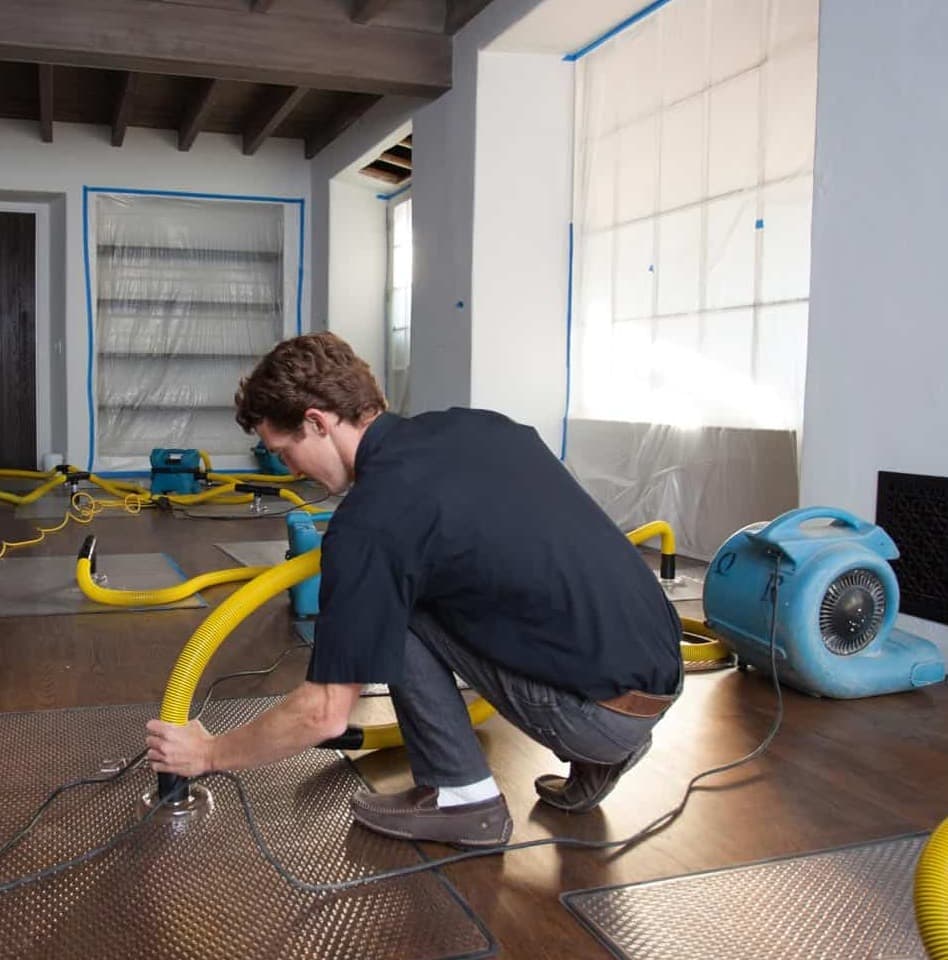
One of the most critical tools our technicians use is the moisture meter and thermal imaging camera. What you can see — standing water on the floor — is almost never the full picture. Water from appliance failures migrates laterally for surprising distances under flooring and inside wall cavities. We map the full extent of moisture intrusion in every affected area before establishing a drying scope, ensuring no hidden moisture pocket gets left behind to produce mold weeks later.
This is why DIY appliance flood cleanup so frequently results in mold problems two to four weeks later — the visible water was removed, but moisture trapped in cavities, subfloor systems, and wall framing was never addressed.
Preventing Appliance Water Damage: A Practical Checklist for Michigan Homeowners
- Replace rubber washing machine supply hoses with braided stainless steel every five to seven years
- Install automatic washing machine shutoff valves that detect floor water and close immediately
- Inspect your dishwasher door gasket annually and replace at the first sign of cracking or hardening
- Install a flood sensor alarm beneath your dishwasher and refrigerator
- Replace your water heater at 10 to 12 years old, or sooner if you see rust-colored water
- Replace plastic refrigerator supply lines with braided stainless
- Know where your main water shutoff valve is located and confirm it operates freely at least once per year
Serving Macomb and Oakland County Homeowners
Prime Restoration is a top-rated, highly local restoration company with a 5-star Google rating, BBB A+ accreditation, and Certified Best Pick 2027 recognition, providing 24/7 emergency water damage response throughout Macomb County and Oakland County, including Sterling Heights, Clinton Township, Shelby Township, Warren, Troy, Rochester Hills, Auburn Hills, Royal Oak, and all surrounding communities. When an appliance fails in your home, call (586) 277-1069 immediately. Our trained restoration team typically arrives within 25 minutes with commercial extraction equipment, industrial drying systems, and thermal imaging to map and dry every affected area — not just what you can see on the surface.
Do not wait to call. The difference between a manageable repair and a major loss often comes down to how quickly professional drying begins. Call (586) 277-1069 now.
Tags
24/7 Emergency Response
Need Professional Restoration Now?
Call now and speak directly with our trained restoration team. On-site within 25 minutes.
(586) 277-1069