

Editor’s note: Written the night of the April 15, 2026 windstorm. The 48-hour documentation playbook below applies to any Michigan wind event — start it the night the storm hits.
The photos you take in the next 48 hours decide your claim's outcome. Everything else is negotiation around what your camera roll already proved or failed to prove. Tonight's windstorm ripped across Macomb and Oakland Counties (see our live Macomb windstorm response guide) with gusts that peeled shingles in Utica, snapped limbs onto roofs in Shelby Township, and drove rain sideways into attic vents from New Haven to Birmingham. If water is showing up on your ceiling right now, the adjuster who visits next week will not see what you are seeing tonight. Only your phone can.
This is a tactical playbook, not a general insurance explainer. Every step below is something you can execute in the next hour with the phone already in your pocket. Follow it in order. Do not skip the baseline photos to chase the dramatic ones. Carriers pay on evidence, and evidence is built in layers.
Before You Touch Anything: The 30-Photo Baseline
Before you move a single piece of furniture, grab a bucket, or call anyone, you are going to shoot thirty photographs in a specific order. Think of this as the establishing shots a film crew takes before the action. Every area gets three frames: wide, medium, tight.
Exterior front of house (shots 1 to 6): Stand at the street. Wide shot showing the full front elevation, gutters, and roofline. Medium shot framing just the roof plane and fascia. Tight shot zoomed into any visible shingle lift, granule loss, or missing tabs. Repeat from the opposite front corner for parallax. Hold the phone level, not tilted up, to avoid keystone distortion that adjusters flag as exaggeration.
Exterior each side and rear (shots 7 to 18): Same wide, medium, tight pattern for the left side, right side, and rear elevations. In Sterling Heights and Rochester Hills subdivisions where homes sit close together, step onto the neighbor's lawn if you must to get the full elevation in frame. Do not crop in post. Original framing matters.
Debris field (shots 19 to 24): Photograph every piece of shingle, flashing, or fascia on the ground exactly where it landed. Place a tape measure, a dollar bill, or your shoe in frame for scale. The debris field is your wind-direction proof. Do not pick anything up until all six shots are banked.
Interior ceiling and wall stains (shots 25 to 30): Every ceiling stain, every damp drywall seam, every baseboard puddle gets a wide room shot, a medium shot of the affected wall or ceiling section, and a tight shot with a ruler or coin for scale. Turn on every light. Use your phone flash for tight shots even in daylight to reveal texture variance.
Critical metadata note: Keep your phone's location services and date/time set to automatic. Every photo embeds EXIF data including GPS coordinates, timestamp, and device model. This metadata is what separates your documentation from something a carrier can argue was taken months ago or at another property. Never screenshot your own photos. Screenshots strip EXIF. Always share originals.
How to Shoot a Roof You Can't Climb
Do not climb a wet roof. Not tonight, not tomorrow. Wet asphalt shingles shed people. Even dry, a storm-loosened shingle can slide under your foot. You have three legal and safer options.
Ground-based zoom: Modern phone cameras shoot 10x to 100x zoom. Stand at each corner of your house and shoot the roof plane at maximum optical zoom, not digital. On iPhone, that is the 3x or 5x lens. On Samsung, the 3x or 10x periscope. Digital zoom above those limits turns into mush and adjusters dismiss it. Shoot the ridge, the field, the valleys, the drip edge, and every penetration including plumbing stacks, bathroom fans, and the chimney flashing.
Drone footage: If you do not own a drone, post in your Macomb Township or New Haven neighborhood Facebook group. Someone within three streets has a DJI Mini. Ask them to fly a perimeter orbit at thirty feet and a top-down at eighty feet. Request the raw MP4 and JPG files, not compressed social media uploads. Compressed files lose the detail an adjuster needs to see creased shingle tabs.
Attic interior angles: This is the move most homeowners skip, and it wins claims. Go into your attic with a flashlight and your phone. Photograph the underside of the roof deck at every rafter bay. Look for daylight, wet insulation, dark stains on the sheathing, and drips off nails. A wet nail head is a perfect photograph because it timestamps active intrusion. Shoot wide down the attic, medium at each truss section, and tight on any wet spot. This attic series is often the single strongest piece of evidence in a Birmingham or Rochester Hills claim where the exterior roof looks deceptively intact.
Interior Water Damage: The Moisture Trail
Water moves. It moved through your roof, across your decking, down a rafter, along a top plate, down inside a wall cavity, and out onto your ceiling or floor. Your job is to photograph the entire trail, not just the endpoint.
Ceiling stain borders: Use painter's tape or a pencil to mark the outer edge of every stain tonight. Then photograph it. Six hours from now, mark and photograph the new border. Twelve hours from now, do it again. This progression series helps document active damage.
Wall and baseboard swell: Run your hand along every baseboard in rooms below the roof leak. Any soft, swollen, or warped section gets a tight photo with a ruler. Pull the baseboard gently at one corner and photograph behind it. Wet bottom plates and wicking drywall paper are line items your contractor will need to scope.
Flooring cupping: Hardwood and engineered floors cup upward at the edges when saturated from below. LVP bubbles at seams. Laminate swells at joints. Photograph at a low angle, phone almost on the floor, shooting across the plank surface so the cupping casts a visible shadow. A flat top-down shot shows nothing. The raking-light angle shows everything.
Your insurer's estimator will build the scope in Xactimate. If you believe items are missing, ask your adjuster in writing to explain the line items used for roof tear-off, underlayment, drip edge, ice barrier, and drying equipment.
The Paper Trail: 7 Documents to Gather Before the Adjuster Arrives
Before your adjuster walks through the door, have these seven items ready in a single folder, digital or physical.
- Your declarations page: Shows coverage limits, deductibles, and endorsements. Pull it from your carrier's app tonight.
- Prior roof inspection or real estate disclosure: Proves the roof was in known condition before the storm.
- Weather report from NOAA for April 15, 2026: Print the Storm Prediction Center summary for your zip code with peak gust readings.
- Neighbor damage photos: If three houses on your street have tarps, that is corroborating evidence.
- Prior roofing receipts or warranty: Establishes age and quality of the existing roof.
- Your own photo log with shot numbers and captions: The thirty-photo baseline above, numbered and described.
- A written damage narrative: One page, chronological, tonight through today. Who noticed what, when, and where.
Wind vs Flood Coverage
Coverage for wind-driven rain versus flood depends on your specific policy. Contact your carrier or a licensed insurance professional with policy questions. Ground water rising into your basement during the same system is a separate problem we break down in our wind-driven basement flooding guide.
If You Disagree with the Carrier's Estimate
If you disagree with your carrier's estimate, your options — reinspection, appraisal, or retaining a licensed insurance professional or attorney — are described in your policy.
Sample 14-Day Claim Timeline
Day 1 tonight: Thirty-photo baseline. Attic shots. Mark stain borders. Call your carrier's claim line to open a claim and get a claim number. Place buckets and tarps. Do not sign anything.
Day 2: Daylight ground-based zoom roof shots. Drone orbit if available. Second stain border mark and photo. Gather the seven documents.
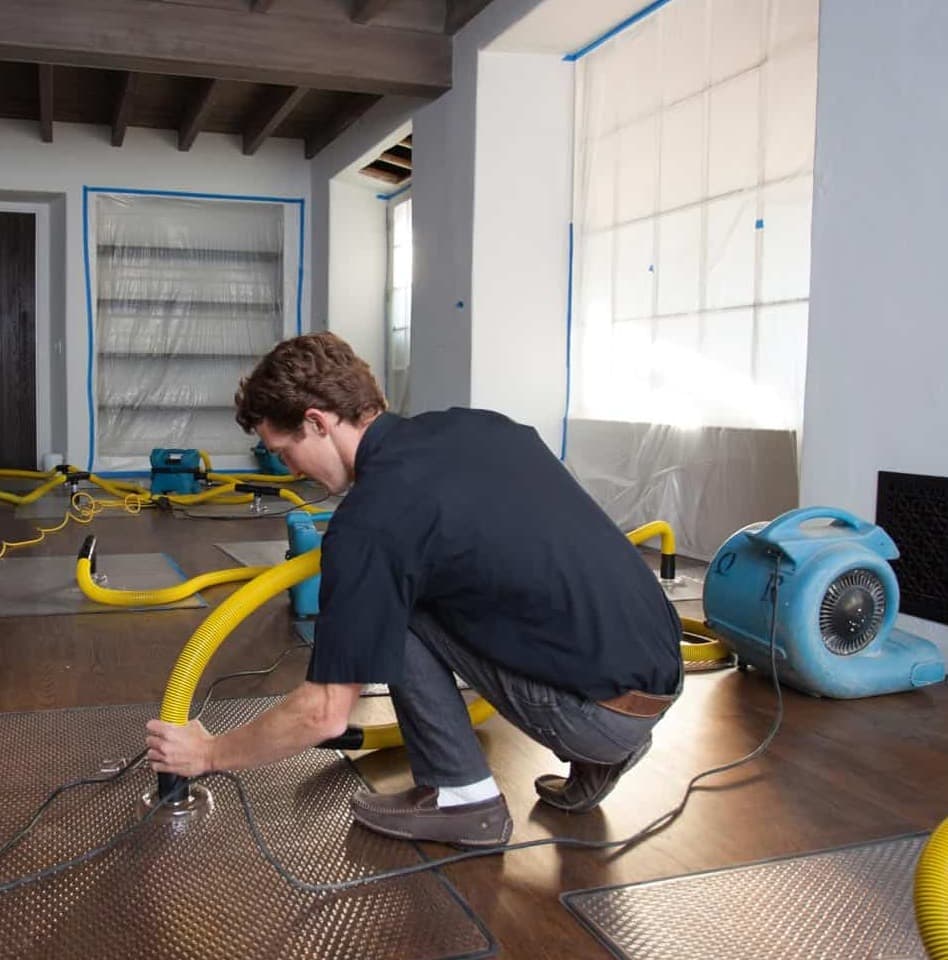
Day 3: Emergency mitigation begins. Water extraction, drying equipment placement. Photograph every piece of equipment before it runs.
Day 4 to 5: Tarp the roof if not already done. Photograph the tarp installation. Continue equipment photo log.
Day 6 to 7: Initial adjuster visit. Walk through with your photo log in hand. Do not let the visit end without a verbal summary of what they scoped.
Day 8 to 10: Receive initial estimate. Compare line by line against your codes list. Identify gaps.
Day 11: Submit written reinspection request if needed. Include photo references.
Day 12 to 14: Reinspection or supplement negotiation. Equipment removal and moisture verification photos.
If any of this feels overwhelming while your ceiling is still dripping, call Prime Restoration at (586) 277-1069. We are a top-rated, highly local restoration company with a 5-star Google rating, BBB A+ accreditation, and Certified Best Pick 2027 recognition, and we respond across Macomb Township, Shelby Township, Utica, New Haven, Sterling Heights, Rochester Hills, and Birmingham, and we document every step of mitigation in a format built specifically to support your claim. Take the photos tonight. Make the call when you are ready. We dispatch as quickly as crew availability and road conditions allow; response times vary during active weather events.
Prime Restoration is a Michigan restoration contractor. For policy, legal, electrical, plumbing, or engineering questions, talk to your insurance agent, carrier, a licensed insurance professional, an attorney, or the right licensed trade professional.
Frequently asked questions
My shingles are scattered across my Shelby Township lawn. Should I pick them up before photos?
No. Photograph them exactly where they landed first, with a tape measure or shoe in frame for scale. Debris field patterns help prove wind direction and intensity to your adjuster. Bag them only after you have wide, medium, and tight shots of each piece.
How late tonight can I still document damage in Macomb Township and have it count?
Photos are valid any time, but EXIF timestamps within 24 to 48 hours of the April 15 windstorm carry the most weight. If it is already dark, use your phone flashlight for interior shots tonight and retake roof ground shots at first light tomorrow.
I live in Birmingham and my ceiling is bulging but has not burst. Do I puncture it?
Photograph the bulge from three angles first, then yes, relieve the pressure with a small screwdriver puncture over a bucket. An unpunctured bulge that collapses overnight causes far more secondary damage and can be labeled preventable by the carrier.
Can I use a neighbor's drone footage of my Utica roof as evidence?
Yes, as long as the file retains original metadata. Ask them to AirDrop or email the raw file, not a screenshot or compressed social media upload. Compressed images strip EXIF and weaken the evidentiary value.
The adjuster in Rochester Hills scoped only three shingles. My whole slope looks beat up. What now?
Request a reinspection in writing within seven days and cite specific Xactimate codes you believe are missing, such as RFG SHGC&R per square and RFG DRIP for drip edge. Include your own photo log with shot numbers referenced in the request.
Tags
24/7 Emergency Response
Need Professional Restoration Now?
Call now and speak directly with our trained restoration team. On-site within 25 minutes.
(586) 277-1069