
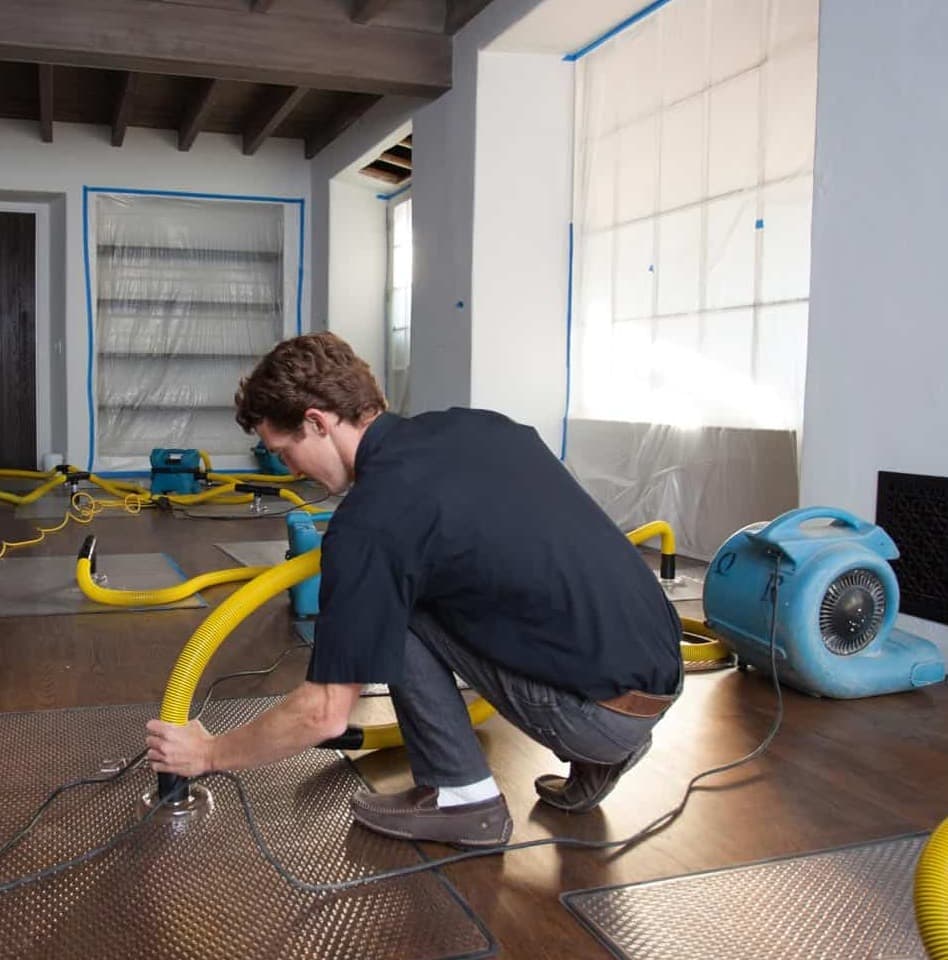
When water damages a downtown Rochester historic home, choosing a restoration company is not a small decision. Plaster-and-lath walls are not drywall. Original wood lath, three-coat plaster, lead paint, and possible asbestos in the plaster mix all change the protocol — and the wrong company on a roof leak from 1928 finishes the job by causing more damage than the original event.
The best restoration company for historic homes in Rochester is not the firm with the largest crew. It is the company that knows how to tap-test plaster, dries lath assemblies on the right timeline, follows lead-safe work practices on pre-1978 demolition, and reconstructs walls without leaving a visible step where new drywall meets original 7/8-inch plaster. Prime Restoration brings that approach to Rochester historic homes.
What Rochester Homeowners Look For
Across the Rochester Historic District and the broader Rochester / Rochester Hills area, owners of pre-1940 homes weigh a short list of criteria during a water loss:
- Plaster-and-lath drying experience. The tap test, the moisture meter calibration, the indirect-airflow protocol, the 7-10 day monitoring window. The right company knows the difference between a drywall job and a plaster job.
- Lead-safe work practices. Pre-1978 painted plaster is presumed lead-bearing. Lead-safe handling is non-negotiable on this housing stock, and the fines for non-compliance are real.
- Asbestos sampling protocol. Some 1920s-1930s plaster mixes contain asbestos fibers. The right company arranges sampling before significant demolition.
- Historic Commission familiarity. Interior plaster repairs do not require a Certificate of Appropriateness in Rochester, but exterior work does. The company should know the local rules.
- Surface-match reconstruction. Blue board with veneer plaster, furred-out drywall, or thicker drywall to match original wall thickness. A flush 1/2-inch drywall install in a historic home is a cosmetic problem that haunts resale.
Below is a deeper look at how plaster-and-lath walls actually behave when wet, the tap-test assessment that drives the drying decision, and the local historic-commission rules that govern reconstruction — so homeowners can evaluate restoration companies with a sharper sense of what specifically matters on this housing stock.
What Pre-1940 Plaster Walls Actually Are
The downtown Rochester housing stock from the 1880s through the late 1930s was built almost exclusively with three-coat plaster on wood lath. Understanding the assembly is the first step in scoping a water-damage job correctly:
- Wood lath. Thin strips of wood (typically 1.25 inches wide by .25 inches thick) nailed horizontally across the studs with roughly .25 to .375-inch gaps between strips.
- Scratch coat. The first plaster coat, pushed through the gaps in the lath. The plaster squeezes through and curls behind the lath, forming "keys" that mechanically lock the wall together.
- Brown coat. The second, leveling coat that builds the wall up to thickness.
- Finish coat. A thin lime-and-gauging-plaster coat that gives the smooth, hard surface generations of homeowners have painted over.
This system was largely replaced by gypsum lath (rock lath) in the 1930s and 1940s, and then by modern drywall after World War II. By the late 1950s, wood lath was almost entirely gone from new construction. Most of downtown Rochester's contributing structures predate the transition.
Why This Matters When the Wall Gets Wet
Drywall is a homogenous gypsum-and-paper product. It either survives a wetting event or it doesn't, and moisture meter readings track its drying behavior closely. Plaster is a layered cementitious assembly bonded to a hygroscopic wood substrate. When water enters the system, several things happen at once:
- The plaster surface absorbs water relatively slowly because lime-finish coats are dense.
- Water that does get behind the wall (from a roof leak above, for instance) saturates the wood lath, which holds moisture far longer than the plaster itself.
- The plaster keys behind the lath can soften or fail if the wood lath swells and shifts.
- Salts in the original plaster mix can mobilize, leading to efflorescence (white crystalline deposits) that appears days or weeks after the visible water is gone.
A standard pin-type moisture meter calibrated for gypsum drywall will not give you a reliable reading on plaster, and it tells you almost nothing about the wood lath behind it.
The Tap Test: Old Trade Knowledge Still Matters
Before any drying decision is made on a plaster wall, the wall needs to be physically assessed by sound. A qualified restorer will tap the surface with a knuckle or the back of a screwdriver handle in a grid pattern. The sounds tell you what the moisture meter cannot:
- Solid, high-pitched tap. Plaster is still keyed to the lath. The system is intact.
- Hollow, drum-like tap. The plaster has separated from the lath in that area. The keys are broken or the lath has shifted. This area cannot be saved by drying alone.
- Crumbly or soft response. The plaster itself is failing, often from prolonged wetness. Cut-out is required.
- Crack patterns radiating from a single point. Localized impact or settlement; usually unrelated to water but worth documenting in the loss scope.
This assessment is not optional. Skipping it and treating the entire wall as a drying-only problem is how seemingly successful restorations end up with bulging, sagging plaster eight months later when the unkeyed sections finally let go.
Drying Plaster the Right Way
Where the plaster system passes the tap test and the wall is dimensionally sound, drying is feasible — but the equipment plan is different from a drywall job:
- Establish baseline moisture content. A pinless meter calibrated for non-gypsum substrates is used on the plaster surface. A pin meter is then used through small drilled access holes in inconspicuous locations (behind switch plates, in closets) to read the wood lath directly.
- Open contained cavities where appropriate. In some cases, drilling small ventilation holes behind baseboards or at the top of the wall allows airflow into the cavity without damaging the plaster face. This is a judgment call based on whether the wall is solid-keyed.
- Lower humidity aggressively. Plaster dries from the inside out. Low-grain refrigerant (LGR) dehumidifiers held below 40% relative humidity drive the moisture gradient correctly.
- Use indirect, low-velocity airflow. Air movers pointed directly at plaster surfaces can over-dry the finish coat and cause hairline crazing. Indirect circulation along the floor and ceiling is more appropriate.
- Monitor for 7 to 10 days. Plaster does not hit dry standard on the same timeline as drywall. Extended monitoring catches the slow release of moisture from the wood lath.
The industry-standard mitigation practice provides the framework. The execution differs because the substrate differs.
When to Replace, and With What
Sometimes the right answer is removal and replacement. The decision points usually come down to:
- Extent of unkeyed area. If more than roughly 30% of a wall has lost its plaster-to-lath bond, spot patching becomes impractical and a full-wall replacement is more durable.
- Lead paint considerations. Pre-1978 painted plaster is presumed lead-bearing under federal Renovation, Repair, and Painting (RRP) rules. Demolition triggers lead-safe handling, which adds cost but is non-negotiable.
- Asbestos in the plaster mix. Some 1920s and 1930s plaster mixes contained asbestos fibers. A licensed inspector should sample any wall scheduled for significant demolition in homes from that era.
- Insurance scope and homeowner preference. Some homeowners value the original plaster as a historic feature; others prefer the smoother finish and faster install of modern drywall.
Drywall Replacement: Done Right vs. Done Wrong
If the choice is to replace damaged plaster sections with drywall, the wrong way is to install standard 1/2-inch drywall flush with the existing plaster face. Plaster walls in pre-1940 homes are typically 7/8 inch thick. A flush install creates a visible step at the seam. The right way uses one of three approaches:
- Blue board and veneer plaster. Specialized gypsum board accepts a thin plaster veneer that matches the original surface texture and thickness. This is the highest-fidelity option for historic homes.
- Furred-out drywall. 1/2-inch drywall installed over wood furring strips to bring the surface flush with the original plaster.
- 5/8-inch drywall plus joint compound buildup. The most common compromise; works well in less-visible locations but produces a less-faithful texture match in formal rooms.
The Rochester Historic District: What Triggers Commission Review
The City of Rochester's Historic District covers a defined area of downtown including portions of Main Street, Walnut, University, Pine, Wilcox, and Romeo Streets. The Rochester Historic District Commission reviews exterior modifications to contributing structures within the district. Practical guidance for water-damage restoration:
- Interior plaster repairs do not require a Certificate of Appropriateness.
- Exterior masonry repointing, window replacement, soffit and fascia work, roofing, and exterior paint color changes generally do require review.
- Emergency stabilization (board-up, tarping, structural shoring) is permitted without prior approval but should be documented and reported.
- Replacement-in-kind of damaged exterior elements is typically approved more quickly than substitution with modern materials.
Rochester Hills, by contrast, does not maintain a comparable historic-district overlay for residential properties. Most pre-1940 housing stock is concentrated in the City of Rochester proper rather than the surrounding township area.
A Practical Workflow for a Plaster-Wall Water Loss
- Stop the source. Until the leak is stopped, drying is futile.
- Document with photos, including date-stamped close-ups of staining patterns, ceiling rings, and any visible cracking.
- Have a qualified restorer perform a tap-test assessment before any equipment is set. This is the single most important step.
- Confirm whether asbestos sampling is appropriate based on home age and demolition scope.
- If RRP rules apply (almost certain in pre-1978 homes), confirm the contractor is RRP-certified.
- Allow extended drying time — plan for 7 to 10 days, not 3 to 5.
- For partial replacements, specify the surface-match approach (veneer plaster, furring, or thicker drywall) in writing before reconstruction begins.
- Verify the insurance scope reflects the actual labor cost of historic-appropriate work, which typically runs 40% to 80% above standard drywall rates.
Common Mistakes That Cost Homeowners Money
- Accepting a scope that treats plaster like drywall and budgets standard drying timelines. The job ends early, the lath is still wet, and mold appears later.
- Allowing aggressive direct airflow on intact plaster. Surface crazing on a finish coat is hard to repair and often shows under raking light.
- Skipping the tap test and discovering unkeyed sections during reconstruction, when budget and timeline are already locked.
- Using non-RRP-certified labor on pre-1978 demolition. The fines are real, and the lead-dust exposure to occupants is a genuine health issue.
- Replacing plaster with flush 1/2-inch drywall and creating a visible step in formal rooms — a cosmetic problem that haunts the home's resale value.
The Bottom Line for Historic Rochester Homeowners
Plaster walls in pre-1940 Rochester homes are a genuine architectural asset, and they reward owners who treat them as a specialized substrate rather than a vintage version of modern drywall. The drying decision is a craft judgment grounded in the tap test, the moisture profile of both plaster and lath, and the structural condition of the keys behind the wall. The replacement decision, when it comes, deserves a surface-match plan that respects the original wall thickness.
Prime Restoration regularly works on historic-district homes in downtown Rochester and coordinates with homeowners and adjusters when scopes need to reflect plaster-appropriate methods rather than drywall defaults. If your scope reads like a standard drywall job and your home is over 80 years old, that is usually the cue for a second look.
Frequently asked questions
Can wet plaster walls be saved or do they have to be replaced?
Plaster that is structurally sound, still keyed to the lath, and dried within roughly 72 hours can usually be saved. Plaster that has separated from the lath, lost its key, or shows efflorescence and crumbling at the edges typically needs cut-and-patch repair or selective replacement. The decision is made by feel and tap-test, not by moisture meter alone, because plaster holds moisture differently than gypsum drywall.
Do I need a Rochester Historic Commission permit to repair water-damaged plaster?
Interior plaster repairs in private residences within the Rochester Historic District generally do not require a Certificate of Appropriateness because the commission reviews exterior changes visible from the public right-of-way. Repairs to exterior masonry, windows, siding, and roofing on contributing structures do require commission review. Always confirm scope with the City of Rochester Planning Department before exterior work begins.
How long does it take to dry plaster walls compared to drywall?
Plaster-and-lath assemblies typically take 50% to 100% longer to dry than gypsum drywall — often 5 to 10 days versus 3 to 5 — because the wood lath behind the plaster is itself a hygroscopic material that holds and slowly releases moisture. The industry-standard mitigation practice does not change for plaster, but the equipment configuration and monitoring frequency should.
Tags
24/7 Emergency Response
Need Professional Restoration Now?
Call now and speak directly with our trained restoration team. On-site within 60 minutes.
(586) 277-1069